I had to mow the yard because I couldn’t find the house–or the cat

I think we’ve had rain for 10000000 days. When it’s not raining, the grass is too wet to mow, and/or the flu we’ve been fighting has kept us inside. I finally cut the grass after supper last night because I wasn’t sure whether I was coming home to my house or a neighbor’s house. Plus, when the cat went outside, he disappeared into the pasture primeaeval.
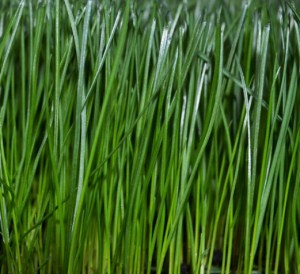
The grass was not only higher than the cat, it was higher than the mower. Dark clouds were rolling in. Vicious lightning owned the horizon off to the east. I had to move quickly or darkness would swallow the world and I’d run into the black Angus cattle in the adjoining pasture. (Before the farmer put in a new fence, the cattle got out on numerous occasions at night. I could hear them in the yard, but couldn’t see them. When cattle get out, the whole community comes out to round them up.)

The riding mower really wasn’t built for grass this high. Seriously, tall fescue needs a tractor with a bush hog. We used to have one, but the bush hog was shot and the tractor was old, so we sold it off. The mower stalled out numerous times and gulped gas faster than a sailor swigs beer on liberty. So, I ran out of gas before I got done and had to tow the mower back to the garage with my Buick about the time the rain hit.

In the light of day this morning, the yard looks like the cut grass is piled up and ready to bale. At least the house is visible from the road and doesn’t look like an abandoned homestead. I’m getting too old for this kind of crap. At least I had the presence of mind to put the cat in the house and to use the mower’s headlights in case any cows got in the yard. None did, but they raised a ruckus on the other side of the fence.

Frankly, I think it’s about time to hire a landscaping company and hope they show up for work.

–Malcolm

Malcolm R. Campbell grew up in the Florida Panhandle and sets his stories there.

“Wanda J. Dixon’s warmth and gorgeous singing voice are superb in this story about Conjure Woman Eulalie, which is told through the voice of her cat and spirit companion, Lena. Dixon zestfully portrays Eulalie, who is “older than dirt” and is kept busy casting spells, mixing potions, and advising people–that is, when the “sleeping” sign is removed from her door. Most distinctive is Eulalie’s recurring sigh, which conveys her frustration with Florida in the 1950s, when Jim Crow laws and “Colored Only” signs were routine. Dixon’s Lena is fully believable when she spies around town and reports to Eulalie that rednecks have raped and murdered a young woman. They almost escape until Eulalie persuades a witness to come forward. Listeners will marvel at the magical realism in this story and benefit from the helpful glossary of the charming local dialect. S.G.B. Winner of AudioFile Earphones Award © AudioFile 2016″

Another great crop of weeds this year, dang it

Philosophers have said that a weed is a perfectly innocent plant that just happens to be growing where you don’t want it to be.

I don’t buy it.

Field line plot on a day when the weeds have recently been cut.

Case in point: Septic Tank Field Line.

In the old days, when you built a house in the country, you added an outhouse. Later, when indoor plumbing came into fashion, the county required a perc test to make sure what you flush actually went away from the septic tank within a preferred amount of time. Our county changed the rules about a half hour before we started building our house.

First let me point out that our area has hundreds of houses with indoor plumbing that are connected to septic tanks placed after a perc test was done. So far, none of those houses has become an EPA clean-up site.

So now, the county requires a soil sample. Our test said we had bad soil except in a half-acre space that used to be a garden. The system of field lines required by the county was almost prohibitively expensive. Because those lines are close to the surface and because we’re next to a farm with heavy cows that would make a mess of those field lines if they walked through the old garden, we had to fence it in.

As we were paying for all this, my question to the county was why were two people living in a house such a big sanitation issue when there were over eighty head of cattle next door doing their business without environmental issues–or bad smells? I never got an answer because the county blamed the feds.

So, the highest weeds in the yard are in the fenced-in field line plot. Well, they’re certainly being watered often enough. If I mow them on the first day of the month, the weeds will have to be mowed again in a couple of weeks. By then, they’re taller than the riding mower.

Those vines weren’t there a half hour before I took this picture.

Case in Point: The Old Chicken House

Chickens haven’t lived in the old chicken house since before my wife was born. When she was a kid growing up on this property, bales of hay were stored there. At some point, a section of it burnt down and was just left that way because hay hadn’t been stored there for years. Mainly, it was full of farm debris nobody knew what to do with, so it ended up there.

A year ago, just after I stored a whole lot of new debris in there, we had the burnt end of it shored up. Also, a lot of the weeds and brush were cleared away from it. I haven’t needed to get rid of any junk for a while, so we haven’t been in there. Now that I cleaning out the other half of our 1920s garage and have stuff to move to the chicken house, I can’t get in.

Why not?

Weeds. I’m not talking about dandelions and other tiny plants, but big woody plants whose goal is to become the forest primeaeval. I tried to explain to them that there are a lot of other places on this property where they can set up housekeeping and raise families. No luck. So, I spent the morning with long-handled pruning shears clearing a tunnel through the mess so I could get into the chicken house with debris that one day down the road the heirs to this property will have to deal with.

Case in Point: The Yard

Modern-day environmentalists complain a lot about yards. Even in ticky-tacky subdivisions, they (the environmentalists) say the yard should be left in a wild state or turned into a garden. Homeowners associations and city commissions don’t like that because both plans destroy the conformity of the neighborhood, tick off neighbors, and purportedly provide places for evildoers to hide.

No luck trying to hire one of the goats that lives across the road.

We’re slowly getting rid of the grass in our yard by adding small trees so that one day, the yard will be nothing but shrubs, wildflowers, trees, and mulch. Until we finish this project, the yard is rather like a huge weed. We can have a month of drought followed by a day-long monsoon, and suddenly the yard-weed comes to life and grows so fast that after we mow it, people say we should have baled the cut grass for the cattle.

Nothing on the property grows as fast and as stubbornly as the weeds. I’m sure we’ll have to replace the riding mower blades soon because grass and weed height are doing them in. Some people say we should buy goats because they’ll take care of the problem, can “do their business” like the cows without an expensive septic tank, and are cute.

I guess we could put them in the chicken house if we can ever get inside. If we don’t, the coyotes will carry them off during the night. Grim people say that if the world ends, only the cockroaches will survive. They may be right. And they’ll have plenty of weeds to hide behind.

–Malcolm

Sea of Grass

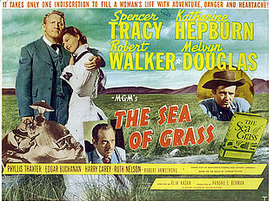
Sea of Grass was a 1936 Conrad Richter novel about the cattlemen vs. the homesteaders on prairie land referred to as a “sea of grass.”  Katharine Hepburn, Spencer Tracy and Melvyn Douglas starred in the 1947 Elias Kazan film based on the novel.

seaofgrassEven though I saw this movie a long time ago, I think of it when the “yard” gets out of control. I put that word in quotation marks because when you live on a section of a farm, yard grass tends to run into general non-yard grass along the roadway, between the out buildings, and into other seemingly huge expanses green stuff between the house and the fence.

The plan is for the cattle to stay on the other side of the fence. We’ve talked about the getting several goats to help tend to the grass on this side of the fence. More trees, too, so that there are vast areas natural ground cover rather than the grass.

The problem with the grass, other than the fact there’s a lot of it, is that, say, on a Monday it looks pretty good. Then there’s a monsoon on Tuesday and Wednesday. On Friday, the grass is suddenly several feet high and that’s a chore even for the riding mower.

I’m generally a fan of prairie and am fascinated by the tenacity of the grass with it’s long root systems searching for moisture during dry periods. Mowing that grass is another thing. There’s an old Ford tractor (still runs) sitting in one of the out buildings and we’re really tempted to buy a bush hog for it so we can reduce a day-long mowing adventure down to a half-day adventure.

On the Christmas list!

Frankly, I think the neighbors sneak over here at night and throw 10-10-10 fertilizer in all the yard and non-yard miniature prairie habitats so that when we get up in the morning still tired from mowing the day before, the grass looks again like it hasn’t been cut in weeks.

The neighbor on the other side of the fence who leased and then bought the majority of our old farm, suggests that we bale our into large rolls so he can put it in the barn to dry for his cattle. Interesting idea.

My wife mowed for two hours after dinner last night. I mowed for two hours this afternoon after the grass finally dried out enough from last night’s rain. Grass (not marijuana) doesn’t make for a very philosophical or celestial post. It’s more something to do while I’m cooling off from our sea of grass.

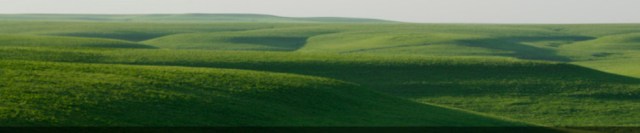
There’s more to mow, of course. While mowing, the yard seems about the size of the Tallgrass Prairie Preserve in Kansas:

tallgrass

There used to be 170 million acres of tallgrass prairie in the U.S. Now, about 96% of it’s gone. Somebody obviously loaded up some of that 96% and brought it down to north Georgia during a night with no moon so I would have to cut it.

If you just bought yourself a brand new riding mower and then realized you don’t have a yard, feel free to bring it out to our place. We’ll even give you a free beer when you’re done unless you run over the shrubs or tear off a section of the back porch.

–Malcolm

KIndle cover 200x300(1)Malcolm R. Campbell is the author of “Conjure Woman’s Cat,” a granny-vs-the-KKK novella set in the Jim Crow era of the Florida Panhandle. The Kindle edition is on sale for 99 cents today (9/10) and tomorrow (9/11).