Writers, what brings you feelings of awe?

“The heart of it all is mystery, and science is at best only the peripheral trappings to that mystery–a ragged barbed-wire fence through which mystery travels, back and forth, unencumbered by anything so frail as man’s knowledge.” – ― Rick Bass, The Sky, the Stars, the Wilderness

Montana thunderstorm - photo by chrisdat on Flickr
Montana thunderstorm – photo by chrisdat on Flickr

We often use the phrase awe-inspiring to describe sunsets, powerful storms, scenic mountain vistas, our favorite music, heroes and heroines and all manner of other things that are larger and more wondrous and more powerful than ourselves.

Before we can tell memorable stories, we need to discover what in our lives is awe-inspiring and then hold that close in our hearts and celebrate it and allow it to flavor our writing. When we do this, we link up to the readers’ on-going search for the kinds of plots and themes and characters that add magic and wonder to their lives.

Larger than life characters are part of the mix. So, too, exotic locations, the dangers of wind and sea and storms, tranquility and peace so dear one can almost touch their source, memorable choices that place characters at risk, and love in many forms.

If you, as a writer, feel awe as you think about the subject matter, location, plots, themes and characters of a prospective story, you have a better chance of connecting with readers than you would if everything about the project seemed rather flat and monotonal.

Your story need not be something over the top like Lord of the Rings, The Da Vinci Code, Raiders of the Lost Ark or Game of Thrones to inspire awe as you write it and as readers discover it. Quiet moments can also inspire awe; so can low-key plots. The awe comes from you and on how you react to the world.

If mountains inspire you, then you will write of mountains. If children inspire you, they will find their way into your stories. If something attracts and holds your attention and “asks you” to contemplate its beauty, mystery and power, then you will end up the best kind of nourishment for writers.

Malcolm

I find awe and wonder in mountains. I cannot help but write about them. You will find mountains in The Sun Singer, Sarabande and The Seeker and, I hope, a dash of awe. They also contain magic, but you expect that because they are contemporary fantasies!

A Glacier Park Novel

The Most Popular Fantasy Novels

#1

“As you review the list in search of your favorite book or series, it may help to keep in mind that, despite its rather grandiose name, the Top 100 Science Fiction/Fantasy Novels of All Time Summer Readers’ Survey isn’t, of course, a measure of literary quality, or boldness of ideas, or richness of detail — it’s a popularity contest.” — Glen Weldon in Monkey See

If you enjoy science fiction and fantasy, you’ll find a lot of old favorites on NPR’s list of the top 100. This list came about as a result of an NPR poll in which some 60,000 people voted for their favorites. The book sitting on the top of the list is The Lord of the Rings published between 1937 and 1949. Perhaps it’s popularity in the voting is due in part to Peter Jackson’s well-received trilogy of featue films released between 2001 and 2003. It’s a good choice, though, with over 29,000 votes in the poll. (The poll did not include young adult books; if it had, you can be sure J. K. Rowling’s Harry Potter series would have made the list.)

Lord of the Rings isn’t the only old book on the list. Weldon notes in his blog post that “only four titles in the top 20 have been published in the past ten years: George R. R. Martin’s A Song of Ice and Fire series at #5; Neil Gaiman’s American Gods at #10; the last few volumes of Robert Jordan’s The Wheel of Time series at #12; and Patrick Rothfuss’ Kingkiller Chronicle series at #18.”

#11

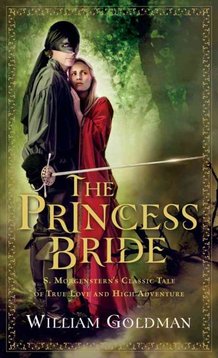
I’m somewhat surprised by this. Definitely, the older books on the list have staying power even if they got a boost in the poll in part from Hollywood–as was the case with William Goldman’s 1973 The Princes Bride that was adapted for the screen in 1987 by Rob Reiner. Rounding out the top five in the poll were The Hitchhiker’s Guide to the Galaxy (Adams), Ender’s Game (Card), The Dune Chronicles (Herbert), and A Song of Fire and Ice Series (Martin).

For me, the results for fantasy are somewhat skewed because the poll included science fiction. While there’s often a lot of overlap between the fantasy and science fiction genres that makes it difficult to categorize some novels as either one or the other, I would have enjoyed seeing the poll separated into two. That might have produced more representative results. For example, the inclusion of science fiction in the mix is partly responsible for the fact that The Mists of Avalon (Bradley) is sitting at 42 and that The Chronicles of Thomas Covenant (Donaldson) didn’t even make the list.

Nonetheless, the list is interesting. If you’re in the mood for a popular fantasy or a popular science fiction novel, it’s a good place to look. Next year, NPR plans to run a survey looking for people’s favorite young adult novels. I wonder how many times a Harry Potter book will make the list.

–Malcolm

Fantasy with a Sharp Edge

A car chase with meaning

On my writer’s website, I refer to my “Garden of Heaven” (coming soon to print) and “The Sun Singer” novels as adventures for the spirit. I often call them mythic, though that sometimes causes people’s eyes to glaze over when they think back to their boring high school mythology class.

Last year a friend and I talked about how odd it was that we both watched the exploits of Jack Bauer on the popular TV series “24.” It was odd because both of us are non-violent and–in real life–would never sanction more than a fraction of the stuff Bauer got away with as a government operative on that show.

So why did we watch a show where people were getting shot, knifed, kicked, blown up, or crushed during one of the many car chases? Because it was fun seeing somebody getting results in a world where there are so many shades of grey, it’s often hard to make any project move forward. Jack brought out the dark and dangerous hero in us–while we were watching the show.

Weeks later, we had little memory of one episode of “24” or another because it was all rather like pure sex, a string of one-night stands, an orgy of sensation that–while hot and thrilling at the moment–didn’t mean anything, didn’t help anyone, and didn’t leave anyone with any food for thought.

An adventure of the spirit is rather like a car chase with meaning. “Star Wars,” “Lord of the Rings,” “The Matrix” “The Golden Compass” and similar feature films have their share of high-pitched action, but they are also mythic. They address universal themes, show characters struggling against great odds (including their personal demons) to improve themselves and the world around them.

In the process, mythic books and films also leave the reader with food for thought, something to ponder and talk about after the thrill of the car chase or the gun fight in the lobby or the battle is over. If an author is lucky, some readers find ways to improve their own lives after seeing how the fictional characters did it.

If you’ve seen one Hollywood car chase down a busy street and through a crowded parking garage, you’ve seen them all. Each new car chase sequence has to show larger explosions, more cars flipping over or careening through plate glass windows, or we’ll all be bored. That’s how it is with one-night stands and drugs: without a higher peak experience, there’s nothing there.

Neither “The Sun Singer” nor “Garden of Heaven” have a car chase in them. But each has elements of grief, mystery and danger. I hope readers will find meaning in the way my characters resolve their challenges. One is caught in a battle, and the other is kidnapped. Both discover their lives are at in danger.

Unlike so many of the lives in a non-stop-action car chase movie, I want you to come away from “The Sun Singer” and “Garden of Heaven” thinking “these lives matter.” I want you to care what happens to Robert Adams and to David Ward. I want you to feel that they’re more than one of the innocent people along the street Jack Bauer runs over them en route to catching a world-class criminal.

That’s an adventure of the spirit, a car chase or a plane crash or a battlefield scene that stays with you–perhaps even bothers you–long after you’ve read the book.

Malcolm R. Campbell is the author of “Garden of Heaven,” “The Sun Singer” and “Jock Stewart and the Missing Sea of Fire.”