You’d think a writer would be good at Scrabble

I lose most of the “Words with Friends” games I play on Facebook because I just can’t see prospective words in a pile of letters. I was never very good at the original Scrabble with the wood tiles. I wonder if they’re made out of plastic now. I’m sure I’d be doubly bad at the various sanitized versions of Scrabble that are weeding out words that aren’t politically correct.
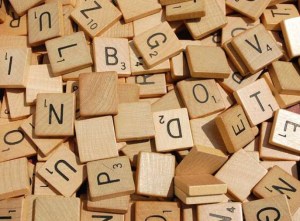
There’s a joke floating around Facebook that shows an Ikea-style, assemble-it-your-self novel that arrives on your doorstep as a box of letters. I get nightmares thinking about it it.

I can’t speak for other writers, but I have never viewed words as collections of letters that must be assembled into what I want to say. I think of the word first and then type the letters without really noticing them. So Scrabble is the exact opposite of how my mind works. It’s embarrassing, though, because people who see writers as wordsmiths expect them to be impossible to defeat in a game about words.

I console myself by thinking that most carpenters and others who create miracles out of wood know little or nothing about the building blocks of matter. If you gave them a box of protons, neutrons, and electrons, they probably couldn’t turn them into a birdfeeder or a table. They’d be even more lost if the box contained quarks and other elementary particles.

Most craftspeople don’t make their raw materials from scratch. Writers don’t either. This is my excuse and naturally, I’m sticking to it with the determination of a covalent bond.

–Malcolm

Malcolm R. Campbell

Publisher: Thomas-Jacob Publishing

Website

Facebook Author’s Page

Amazon Author’s Page

The ending I did not see coming! You think you know somebody then BAM, right out of left field it knocks you for a loop! I found Fate’s Arrows well told with several threads woven together to make it an encompassing tale of the era. It’s raw and fraught with danger. The Klan may operate differently these days, but it is still alive and well. – Big Al’s Books and Pals

Mail Call – Are you sending mail?

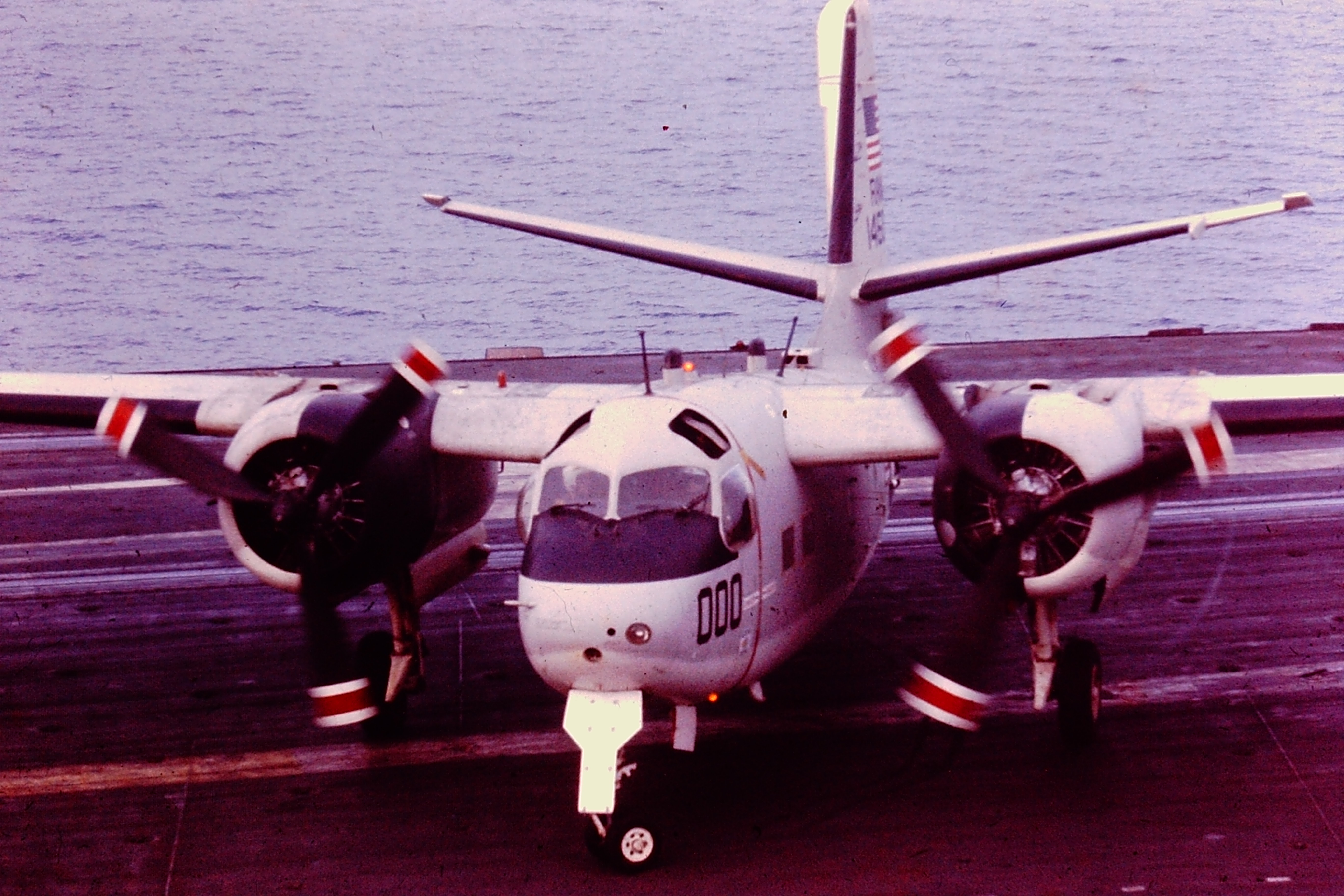
“Carrier onboard delivery (COD) is the use of aircraft to ferry personnel, mail, supplies, and high-priority cargo, such as replacement parts, from shore bases to an aircraft carrier at sea. Several types of aircraft, including helicopters, have been used by navies in the COD role. The Grumman C-2 Greyhound has been the United States Navy’s primary COD aircraft since the mid-1960s.” – Wikipedia

On board ship, we heard an endless chatter of messages over the 1-MC “public address” system. We disliked “General Quarters” because it meant something bad was happening or we were going into another endless drill. We liked “Mail Call” because that meant messages from home, something perfume scented from a lover or spouse, something to eat from mom or grandmother such as pre-crushed cookies or flattened fruitcake.

C-1A Trader - USN Photo
C-1A Trader – USN Photo

While carrier onboard delivery refers to a service, we tended to refer to the mail plane itself as “the COD.” Launch and recovery operations were available on closed-circuit TV throughout the ship, so we often saw the COD land. We knew then it was a matter of time before we’d hear “Mail Call” announced.

I served onboard the USS Ranger during the Vietnam War and mail arrived via a C-2 Greyhound or the carrier’s smaller C-1 Trader. Both were made by Grumman. I liked the Trader best because we saw it the most. Plus, I flew off the ship in a Trader when I transferred to shore duty.

1-MC speaker
1-MC speaker

I have no idea what it was like to be “in-country” in a hostile environment and receive a letter. A treasure, it was, I imagine.

Those of us onboard ship outside the direct line of fire welcomed mail because it was a positive interruption in the daily grind during cruises that often took us away from home for nine months at a time. Word from home: nothing was more important.

Like many factory settings, a carrier was in many ways a dangerous place when you think of large equipment, stores of aviation gasoline and jet fuel, bombs and missiles, aircraft launch and recovery, and all the things that could possible go wrong. Mail Call was an oasis in this madness afloat. In fact, it reminded us of why we were putting up with the madness.

Ranger's COD - Malcolm R. Campbell photo
Ranger’s COD – Malcolm R. Campbell photo

Today, of course, sailors on board ship get e-mail and, as far as I know, Skype. So there’s a faster way to connect if folks will just remember to do it. Mail in 1968 took a long time to go to and from an aircraft carrier at sea. If we went for a while without letters, it took a long time to find out why. Today, one can send an e-mail with a header like “where are you?” or “everything okay?”

However your service man or woman gets to hear from you, I hope you’re sending snail mail and/or e-mail. I assume cookies are still in demand. Things you can hold in your hand are a change of pace from words and JPGs on the screen: a locket, a lock of hair, a color-crayon card from one of the kids, a pressed flower, a program from a play or recital, something you touched and took the time to put in an envelope with an APO or FPO address on the front.

COD is still important even in a world of e-mail and Skype. Keep in touch.

You May Also Like: Where is Hong Kong’s Li Lai Ha Today? – Kong Kong girl visits Ranger’s Marine Detachment

–Malcolm

Flight Deck - Malcolm R. Campbell photo
Flight Deck – Malcolm R. Campbell photo

P.S. Most of you who served onboard the USS Ranger (CVA-61) know by now that the Navy dishonored all of us by selling the ship to a scrapper for a penny rather that turning it into a museum. It sits at the scrap yard now where cutting torches will do what time, storms, accidents and the enemy couldn’t accomplish.