Well-Read Parents Might Be Dangerous

When well-read parents own a lot of books–mine had several thousand or more–multiple ideas lurk on those shelves like landmines and/or philosopher’s stones waiting for curious kids to find. I found plenty. Whether or not I found these by my folks’ and mischievous spirits’ designs or by  coincidence when I was ready to read them, I don’t know except to say that I don’t believe in coincidences.
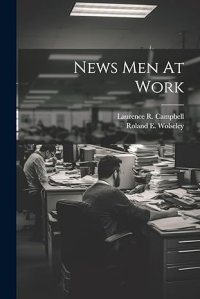
Both of my parents were high school student publications advisers and my dad was a college journalism dean and the author of journalism textbooks. So, I became a writer, a college journalism instructor, and an adviser for a college’s student newspaper. Like my father, I ultimately married one of my students. My father’s journalism school and my journalism program were both destroyed by politics, though our marriages endured.
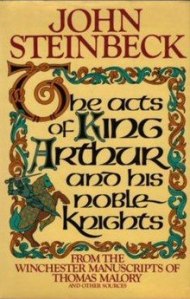
My long-time interest in King Arthur and the Grail romances began when I found John Steinbeck’s posthumously published The Acts of King Arthur and his Noble Knights on the shelf.  After discovering that book, I went on to read everything I could find about King Arthur who, strange as it may seem, actually appears in the genealogy of the Clan Campbell family in Scotland.

I’ve written often here about magic and ancient mysteries books, and without a doubt that interest began with James Allen’s 1903 book As a Man Thinketh. Over time, the beliefs in that book changed my life.

My favorite poet St.-John Perse came into my consciousness when I found a 1944 book published in English and French called Éloges and Other Poems. I remember my college English teacher who threw me out of class for disagreeing with him about the value of journalism, telling me, talk to me after you know about poets like St.-John Perse. I showed him a copy of this book at the next meeting of the class.  “This has been in my family since the year I was born. Any questions?” He wanted to buy the copy which I said belonged to my mother and was not for sale. Nonetheless, I was re-admitted to the class. I don’t deal well with know-it-all English teachers, especially those who say journalistic writing is bad writing.

Perhaps you remember finding some of your parents’ books that influenced your interests years later. I hope so. My parents and I disagreed about a lot of things, many of which stemmed from their books left out in the open on the family’s shelves. Ironic, I think.

I never really needed a library because all I could ever want was under my own roof–for better or worse.

–Malcolm

Grail myths, where they came from, and how they were changed

I suppose I was probably destroyed <g> at an early age by the originals of Grimm’s Fairy Tales. Or maybe the vicissitudes of magic led me into a mythic approach to understanding “the big picture” and the storytelling surrounding it. Be that as it may, I enjoy deepening my understanding (or further brainwashing myself) about myths and legends by constantly looking for new resources and re-reading old resources.

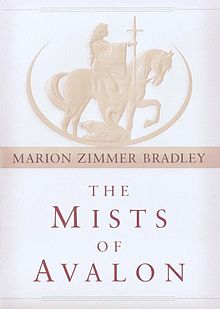
This past weekend, it was King Arthur and the Holy Grail. I can’t count the number of variations of this story I’ve read since childhood. Early on, I liked T. H. White’s Once and Future King, Mary Stewart’s trilogy, and Marion Zimmer Bradley’s alternative approach in The Mists of Avalon. The approach of these and other authors is as varied as the approach of those credited with the early versions of the stories. This weekend’s reading was Joseph Campbell’s The Romance of the Grail.

Campbell, best known for The Hero with a Thousand Faces, spent a lifetime studying the Grail stories. In reading his book, we see immediately that there are two major approaches. One comes from Celtic sources and is probably indigenous to Ireland. This approach sees the Grail stories as a pagan manifestation of tales about fertility gods. The other major approach shows the stories as Christianized, that is to say, in which the Grail was considered to be the chalice from the Last Supper and the lance was said to be the one brought to Britain by Joseph of Arimathea. I see this second approach as a “cleaning up” of older stories so that they were acceptable to the church. Yet another theme, further “touches up” the stories with mythic stories and practices from mysteries out of ancient Greece.

Joseph Campbell died in 1987, a few years after Holy Blood, Holy Grail (1982) was published, advancing the theory that Mary Magdalene was, in fact, the Grail, had been Jesus’ wife, and carried his bloodline. I wonder if Campbell was aware of this theory before he died.

I tend to like the original sources of myths rather than the glosses painted over them by subsequent poets. So, I see the Christianized versions of the Grail stories as deviant. Yet, those are the versions most people know and accept as part of the entire King Arthur and the Knights of the Round Table storyline. It’s too late to change that, I suppose. Yet, paradoxically, I do wonder about the realities of Mary Magdalene even though she’s outside the Grail romances.

One issue that arises when the myths are retold properly (Elliott’s The Waste Land) or badly (Tennyson’s “Balin and Balan” in Idylls of the King) is that modern authors may or may not understand the deeper meanings of the original myths. So, those stories become–to put it crudely–writing prompts that can be spun out into all kinds of fiction that–due to egotism or ignorance–distort the intent of the basic story.

Writers of local and regional myths and legends from their own countries face the same problem. We want to base our stories to one extent or another on the legends surrounding the place, but may not have the time or resources to fully explore where those legends came from or why they were passed down through the ages. As writers, we do the best we can because, unlike Joseph Campbell and the Grail stories, we don’t have a lifetime’s worth of scholarship with which to shore up our stories.

Malcolm

You can find more information about Joseph Campbell and his work on the Joseph Campbell Foundation website.


Behind great fantasy, there’s usually a great myth

When the late Marion Zimmer Bradley’s The Mists of Avalon was published in 1983, Bradley (1930 – 1999) had already made a splash in the public’s fantasy reading consciousnous with her Darkover Series which she introduced in The Planet Savers in 1958. For a less experienced, less widely known author, tackling and re-imagining the legends of King Arthur and the Round Table from a femine perspective would have been a great risk.

After all, whoever writes about King Arthur is not only up against  Thomas Mallory’s “Le Morte d’Arthur” (1485), Edmund Spenser’s epic Elizabethan poem ”The Faerie Queene” (issued in 1590 and 1596) and Alfred, Lord Tennyson’s twelve-part Victorian series of poems “Idylls of the King” (issued between 1856 and 1885), but some well-received modern versions of the story as well. Nobel Prize winner John Steinbeck’s “The Acts of King Arthur and His Noble Knights” (posthumously published in 1976), Mary Stewart’s Merlin Trilogy (1970, 1973, 1979) and T. H. White’s “The Once and Future King” (1958) probably top the list. Based on White’s novel, the musical “Camelot” had already made a hit on Broadway in 1960 and as a film in 1967.

In her 1983 New York Times review of “The Mists of Avalon,”  Maureen Quilligan wrote, “Of the various great matters of Western literature – the story of Troy, the legend of Charlemagne, the tales of Araby – none has more profoundly captured the imagination of English civilization than the saga of its own imperial dream, the romance of King Arthur and the Round Table.” We continue to be fascinated with versions and off-shoots of the story whether they surface in nonfiction accounts such as “The Holy Blood and the Holy Grail” (1982), “The Da Vinci Code” (2003, film in 2006) or the continuing novels in the Avalon Series written by Diana L. Paxson.

The myths, whether you see them as illustrations of the hero’s or heroine’s journeys or as tales of struggling peoples of a bygone era, feature larger-than-life personages fighting the powers of darkness and opposing armies in quests focused on personal transformation and/or an ideal society. Merlin’s teachings appear and re-appear in various guises (such as Deepak Chopra’s “The Way of the Wizard: Twenty Spiritual Lessons for Creating the Life You Want”) as lessons for seekers on the mystical path, while King Athur and his knights have been presented—through tales of glory and folly—as archetypes to follow after or to be wary of.

Quilligan, in noting that Bradley looked at the Arthurian legends from the perspective of the women involved, said, “This, the untold Arthurian story, is no less tragic, but it has gained a mythic coherence; reading it is a deeply moving and at times uncanny experience.”

The stories of Arthur, his Knights, Merlin, Viviane, Gwynyfar, Morgaine, Igraine, and old Uther Pendragon come to us with such strength that it’s difficult for lovers of fantasy—perhaps even the general public—not to suspect there is a truth or a reality to them that cannot quite be proven. We react to the stories as though the authors are interpreting real events. Perhaps we’ll never know whether there was or wasn’t a King Arthur who had anything in common with the stories we read and rell about him, but we hope there was.

What great myths, though! They bring us the best and the worst we can be as humans with hints of the kind of magic many of us hope in our heart of hearts exists alongside our technological world of science and logic. The myths are a part of our shared vision of the world and humankind, waiting, ever waiting for more interpretations, versions and re-imaginings.

Malcolm

contemporary fantasy