I stand with Israel

While I think the creation of Israel by the British was bound to create a focus for fighting that would (apparently) last for all time and while I think Israeli treatment of Palestinian interests has been far from perfect, I stand by the country’s right to defend itself and for Jewish people worldwide to have the right to live in harmony without being targeted by rising antisemitism.

It’s intolerable that Jews, according to the FBI, faced more hate crimes in 2022 than any other religious group. This makes no sense to me any more than progressive college students supporting Hamas makes any sense to me.

According to a PBS story, “The rise in Jew-hatred in the U.S. is not limited to white supremacists. It said that “the antisemitism of the far-right and far-left are pushing into the mainstream of American culture and politics from both sides.” The intolerance is so old that it’s difficult to sort it out other than to say it often leads to spurious beliefs held by the Nazis during WWII.

The Anti-Defamation League exists “To stop the defamation of the Jewish people and to secure justice and fair treatment to all.” I don’t think that’s too much to ask. According to the ADL website, “Our values guide our internal culture and shape the approach we take to our programs and initiatives externally. Confronting antisemitism, our founders established ADL based on their Jewish values. We build on their legacy as we speak out on behalf of all marginalized communities across the country and around the globe.”

The recent attacks against Israel some from a terrorist organization supported by rogue states. Why do so many Americans support this? Apparently, they have been brainwashed by old myths and old fears.  I have no tolerance for that any more than I have any tolerance for those who said the 9/11 attacks were justified and proclaimed their support for Bin Laden. They are like those who support the KKK.

I’m a pacifist and cannot support violence against individuals or legal states of any kind and so I fear that those who openly support Hamas are creating a larger problem that ensures the violence against Israel will continue. And it will probably never end.
Malcolm

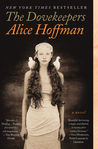
Review: ‘The Dovekeepers’ by Alice Hoffman

The DovekeepersThe Dovekeepers by Alice Hoffman
My rating: 5 of 5 stars

“Masada The last bastion of the Jewish freedom fighters against the Roman army symbolizes the end of the Kingdom of Judah at the end of the Second Temple period and its violent destruction. On the mountaintop there are remains of magnificent palaces from the reign of King Herod and silent committees for the Roman siege and the bitter end. The mountain that became a symbol.” – Masada National Park Website

Our knowledge of the siege of Masada by the Roman legion comes to us primarily from the chronicle written by Josephus, a Jewish rebel leader who was captured by Rome in an earlier battle, became a Roman Citizen, and was commissioned to write about the Jewish-Roman war. Josephus’ account, which some consider problematic and likely to have a Roman bias, has been enhanced by conservation, restoration, geographical, and archaeological work that’s ongoing at the site in modern-day Israel.

Alice Hoffman’s imagined and heavily researched retelling of those final days at Masada through the eyes of four strong and complex women characters, Aziza, Yael, Revka, and Shirah, breathes new life into our understanding of what has been called the Giant Revolt as well as the freedom fighters’ culture, daily lives and spiritual beliefs. These four women are Masada’s dovekeepers, looking after massive dovecotes where the birds are fed and cared for, the eggs gathered for food, and the excrement taken to enrich the mountain’s gardens and fields.

The storyline follows these women–who to varying degrees follow the outlawed practices of witchcraft–as they travel to the mountain, become part of the daily life and commerce of the community there, and as the Roman Legion approaches and begins its siege, how they coped with the developing reality of a Roman victory.

These four women, as well as many other players in the story, are deeply developed by Hoffman to the extent that we know their inner-most thoughts and dreams and the secrets of their souls. Hoffman’s penchant for magic plays a strong role here. Since the outcome of the novel cannot go against history, the magic will not defeat the Romans. But it will play a role in the characters’ lives.

Magical realism ties the book together in many respects because magic cannot be separated from the four women’s view of the world or their daily practices. Also, like modern-day traditional witchcraft and conjure, magic cannot be easily separated from the place where it lives. The result for the reader is an immersion into Masada. What we know after reading the novel may not be wholly factual (thought Hoffman defers to Josephus’ account), but it is definitely true.

The truth of the matter is that we come away from this wondrous book, having read a compelling story and with a greater understanding of what it might have been like to be trapped within that mountain fortress nearly 2000 years ago. Some critics say The Dovekeepers is Hoffman’s masterpiece. That’s an understatement. You must read it when you’re ready to read it, for it’s not an easy story. It will probably change you. Some day–but not today–I will forgive Alice Hoffman for plunging me into the horrors and triumphs of that faraway world.

–Malcolm

Malcolm R. Campbell is the author of two Florida folk magic novels, “Conjure Woman’s Cat” and “Eulalie and Washerwoman.” Learn more on his website.

View all my reviews

Briefly noted: ‘Refiner’s Fire’ by Mark Helprin

While Kirkus Reviews called Mark Helprin’s first novel Refiner’s Fire (1978) “grandiose,” it received more positive reviews from other major media outlets. I first read it five years after it came out when, my excited reading of Winter’s Tale (1983), led me on a search for another Helprin book. Winter’s Tale remains my favorite, followed by A Soldier of the Great War (1991). While In Sunlight and Shadow (2012) seemed to be to be less successful than the others, it contains the same dazzling images, imagination, and prose I loved in Winter’s Tale and Refiner’s Fire. In rereading Refiner’ Fire this past week, I believe it still holds up as a compelling novel about a man whose diverse experience refine and purify him as surely as a refiner’s fire purifies silver.

Publisher’s Description: “Born on an illegal immigrant ship off the coast of Palestine, Marshall Pearl is immediately orphaned and soon brought to America, where he grows up amidst fascinating and idiosyncratic privilege that is, however, not nearly as influential in regard to his formation as the pull of his origins though they are unknown to him. A cross between Fielding´s Tom Jones and the story of Moses, Refiner´s Fire is a great and colorful adventure that ends in a crucible of battle, suffering, and death, from which Marshall Pearl rises purely by the grace of God. Addressing the holy and the profane, but never heavy handedly, it is not so much a meditation on the fate of the Jews after the Holocaust, the rise of Israel, and the spirit of America, as it is an elegy and a song in which the powers of life and regeneration are shown to gorgeous effect.”

From the Reviews: 

  • “Mark Helprin, who must be legend to his friends, risks more than most novelists dare in ten years. Helprin writes like a saint, plots like a demon, and has an imagination that would be felonious in all but the larger democracies . . . . The sound that drowns all others in this novel is that of kingdom-come ignition.” (The Village Voice)
  • “Marvelous . . . . A brilliantly sinuous tale that sets an Augie March-like young man into a Gabriel Garcia Marquez universe . . . There are so many things to admire in Mark Helprin’s first novel that one’s problem is where to begin.” (Joyce Carol Oates, The New York Times Book Review)

From the Novel: “You know,” said Al in a daze of hunger and cold, “when you see this, you realize that despite all the crap that goes on in the cities, despite all the words and accusations, the country has balance and momentum. The whole thing is symmetrical and beautiful; it works. The cities are like bulbs on a Christmas tree. They may bum, swell, and shatter, but the green stays green. Look at it,” he said, eyes fixed on the horizon, not unmoved by the motion of the train. “Look at it. It’s alive.”

There is a lot of magic in Helprin’s writing, though I believe he doesn’t care for the term “magical realism” and doesn’t see his work in that way. However, the fact that much of this novel is told in flashbacks dreamt by protagonist Matther Pearl, allows Helprin a lot of flexibility in his use of dazzling images and exuberant language. I’m glad I experienced the story again.

–Malcolm

Malcolm R. Campbell is the author of two, magical realism “conjure and crime” novels, “Conjure Woman’s Cat” and “Eulalie and Washerwoman.”