 Our tax app filed our income taxes with the imperial federal government and the state so that chore is off the plate for another year. I sure don’t miss the days when we had a small business and had to account for sales taxes collected, equipment depreciation, payments to temporary employees, and enough forms to choke a goat. Things are much easier now.
-

Iranian missiles near al-Aqsa Last night as my wife and I watched the news coverage of Iran’s missile and drone attack against Israel, my first thought was what’s the point. The attack was so dangerous because it could have (and still might) morph into a larger confrontation. I was happy to hear that 99% of the incoming drones and missiles were destroyed and that one of those that was intercepted through the U.S. Navy’s use of a relatively new Layered Laser Defense (LLD) system which ought to be much safer aboard ships than explosives-based weapons.
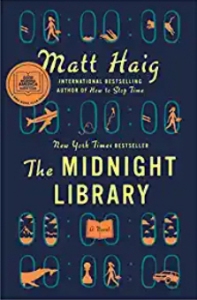 I’m enjoying re-reading Matt Haig’s The Midnight Library in which a person can choose one probable version of his/her life or another, see what it’s like, and then if s/he doesn’t, try another version. I like the associations of the plot with the many worlds’ interpretation of quantum physics. My only quibble with the storyline is that when people drop into the middle of one of their probable selves’ lives, they don’t know what that self would know at that moment. So. they’re flying blind and that means a lot of time is lost figuring out what’s going on.
- In my novel in progress, my characters are discussing the devil’s outhouse. Since I’m writing magical realism, I don’t have to worry about how they’d know anything about that outhouse.
 I still have IBS (Irritable Bowel Syndrome). Since this is a family values-oriented blog (hahaha), I’ll spare you the details of how that works. My long list of things I can no longer eat or drink isn’t too terrible. For example, I’ve switched from milk to Lactaid; that’s worked out fine. I’m not supposed to have booze, including wine or moonshine. But sometimes I can’t resist even though I’ll pay for that indiscretion later in pretty much the same way I pay for putting too much Tabasco sauce in my chili or buying lunch from Popeyes Chicken (my favorite).
- I hope the lawn mower still works. It’s past time to find out.
–Malcolm
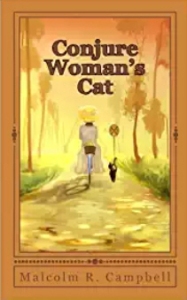 Malcolm R. Campbell is the author of the Florida Folk Magic series about a conjure woman fighting the KKK in the 1950s Florida Panhandle

 According to
  Following that introduction, the site lists specific uses, including wounds, skin inflamation, menstrual paint, IBS (irritual bowel syndrome), and ailments for which its use has been studied. Check the site for site effects and precautions.
 What I got, is Irritable Bowel Syndrome (IBS). Everyone seems to agree that the bowels are irritated one way or another, but opinions are mixed about what causes it and what (if anything) gets rid of it.
 “Low FODMAP is a three-step elimination diet:
 Malcolm's Round Table