How a writer sees locations for prospective stories

In How to be doomed as a writer, I mentioned that author Stephen King prefers to look at story possibilities as situations rather than plots.

Over time, a writer becomes attracted to certain kinds of settings and the kinds of situations that might occur there. I’m attracted to natural wonders, especially mountains, as well as old buildings. My novels The Sun Singer and The Seeker both arise from a natural wonders setting, Glacier National Park. When I contemplated writing about the park, my first thoughts were about the kinds of things (situations) that might happen there. My Kindle short story “Moonlight and Ghosts” came to mind when I looked at an abandoned building near the house where I grew up.

Suppose you’re in a writing class and the instructor shows you the following picture obtained from the Florida Division of Historical Resources. All you’re told is that it’s an old and restored opera house in a small north Florida town.

PerkinsOperaHouse

Perhaps the instructor has influenced your brainstorming about this picture by showing you the building on a sunny afternoon with cars along the street. If s/he had shown you a photograph of the same structure as it sat on a moonlit night with the trees missing leaves during December, you’d come up with a different set of situations.

  • If you’re a fan of TV police shows, perhaps this looks like a place where a crime is committed.
  • If you’re drawn to opera and/or to theater, maybe you’ll think of stars, set designers, directors, little theater groups, professional “theater people” or amateurs coming together to put on a play that somebody hopes will fail.
  • Maybe there’s a secret about the building, some old legend or a will uncovered in a dusty attic that describes how, when the building was constructed, several hundred bars of gold were hidden beneath the box seats.
This picture gives you a very different feeling about the building.
This picture gives you a very different feeling about the building. – Florida Division of Historical Resources.

Okay, I’ve withheld some information, so with a few more facts, are your prospective story situations the same or do you change them?

  • The Opera House, which consists of a large second-floor theater and first floor shops, was built in 1880.
  • Traveling productions, including vaudeville groups, put on shows at this theater for a number of years. But then, when the railroads re-routed their lines and there was no easy way for out-of-town visitors to get to town, the theater fell into disuse.
  • Ghost hunters claim the owner died of a broken heart and still haunts the now-restored building. Purportedly, the former owner has been “seen” by the ghost hunters and a glowing orb of light.
  • The building is now used as a venue for weddings, local-area stage productions, and other functions where a seating capacity of 600 is desired.

If your instructor asked you to write a short story about this building, would you see it as just a building where anything might happen, a setting for a theater-oriented tale filled with clashing egos and temperamental stars, or would you try to link the local legends and the history of the building into your story? The only catch is, the instructor will expect you to convey–one way or another–a sense of the building. So, it can’t be a generic structure.

Well, unless you know the building already and/or are a historic preservation specialist, you’rre at a disadvantage when you try to describe it. If I were the instructor, I’d have several information sheets prepared as handouts.

  1. Those who wanted to use the building as a place setting would get a general description of the interior and some architectural information about the architectural style of the building, it’s size, etc.
  2. Those who wanted to use the location for a theater-oriented story, would receive information about the stage, the seating, the lighting, and the dressing rooms.
  3. Those who didn’t know yet what was going to happen but wanted real background, would be told about the building’s history and the ghostly legends.

What do you see here?

Interior as it looks now. - The Florida Center for Instructional Technology, University of South Florida photo.
Interior as it looks now. – The Florida Center for Instructional Technology, University of South Florida photo.

In a classroom exercise, you’re “research”–if you think any is needed–is limited by what you see in the photograph and what the instructor will tell you either in a lecture, a question and answer session, or via handouts. Since I am attracted by legends, especially paranormal stories, I’m going to see this as a place where something ghostly will happen.

How you tend to view real locations, whether they’re lakes, mountains, buildings, or city streets, will influence what “your muse” draws you to consider. Your inclinations may suggest that the instructor should have had several more handouts about the building. One might be how the building is used today. Another might be the kinds of businesses on the first floor and on adjacent streets.

As writers, we look at locations as places where something might happen or where something did happen. Whether you like tying in real history and legends or whether you see locations in terms of what’s happening there in the present day, once you’re attracted to a setting for who knows what reason, story situations may come to mind as you Google (or go to) the setting.

When I first saw pictures of this building, my first thought was, “Good, here’s a cool old building in the Florida Panhandle where I’ve been placing many of my recent stories.”

As I learned about the building–its history, its ghosts, its restoration–ideas began to float around for prospective stories. As this process unfolds, we may never write a story…unless we’re in a classroom and have no choice. If a story comes out of it, the setting was the catalyst and the result was a marriage of the real and the writer’s imagination.

Malcolm

P.S. If the actual building intrigues you, you can learn more about it here.
Briefly Noted: ‘Fire Lookouts of Glacier National Park’

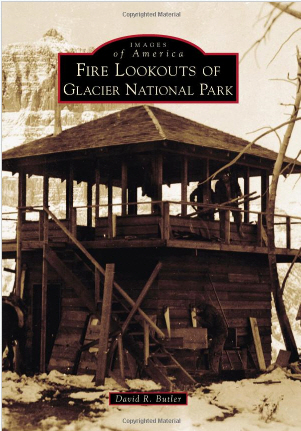
Fire Lookouts of Glacier National Park (Images of America), by David R. Butler, Arcadia Publishing (June 9, 2014), 128pp, photographs.

I’m happy to see the release of David R. Butler’s new book about Glacier National Park’s fire lookouts. Several years ago, in Heavens Peak Fire Lookout Assessment Open For Comments, I mentioned the developing plans to refurbish the historic fire lookout on Heaven’s Peak. David told me that most of that work was completed in 2012 and that his book includes before and after pictures. This is good news.

firelookoutsFrom the Publisher: The first fire lookouts in the Glacier National Park region were simply high points atop mountain peaks with unimpeded views of the surrounding terrain. Widespread fires in the 1910s and 1920s led to the construction of more permanent lookouts, first as wooden pole structures and subsequently as a variety of one- and two-story cabin designs. Cooperating lookouts in Glacier Park, the Flathead National Forest, and the Blackfeet Indian Reservation provided coverage of forests throughout Glacier National Park. Beginning in the 1950s, many of the lookouts were decommissioned and eventually destroyed. This volume tells the story of the rise and fall of the extensive fire lookout network that protected Glacier National Park during times of high fire danger, including lookouts still operating today.

From the Book: “Fire lookouts are described by many writers as magical places, and are well-known as inspirational sites for writers and poets such as Jack Kerouac, Normal Maclean, and Gary Snyder, as well as environmental writers and naturalists such as Edward Abbey and Doug Peacock. They also serve as nostalgic, historical reminders of a simpler time before the Internet, wireless communication, and the widespread use of advanced technology for spotting and monitoring fire boundaries.”

A small percentage of hikers and climbers see the nine remaining lookouts (a few of which are still in use) in Glacier, sticking to the more well-known trails, saddle trips and launch trips. For those who have never seen the lookouts, the photographs in this book open new worlds. For those who know, or who would like to more, Butler brings us another chapter in Glacier’s colorful history.

Update: Arcadia is offering the book at 20% off through Father’s Day 2014. Here’s the link.

You may also like:  Researcher documents history of Glacier’s fire lookouts in the Great Falls Tribune.

Malcolm

BearsWhereTheyFoughtCoverMalcolm R. Campbell is the author of three contemporary fantasy novels (“The Seeker,” “The Sun Singer,” “Sarabande” set in Glacier National Park as well as his non-fiction “Bears; Where They Fought,” a historical look at Glacier’s Swiftcurrent Valley.

Book Note: ‘More Montana Moments,’ by Ellen Baumler

moremontanamomentsHistorian Ellen Baumler (“Montana Moments: History on the Go,” April 2012) returned six months later with another book of Montana vignettes originating from her “History on the Go” radio program in Helena, Montana. Published by Montana Historical Society in October 2012), the 220-page book is available on Kindle and in paperback is aptly titled More Montana Moments.

The cover art, “Laugh Kills Lonesome,” comes from Charlie Russell. The text is supplemented with illustrations.

From the Publisher

Forget dreary dates and boring facts. More Montana Moments serves up a fresh batch of the most funny, bizarre, and interesting stories from Montana’s history. Meet the colorful cast of the famous and not-so-famous desperadoes, vigilantes, madams, and darned good men and women (and a few critters) who made the state’s history. Best of all, each vignette takes about two minutes to read. So have fun exploring Montana—and enjoy a little history as you go.

From the Montana Historical Society Bookstore

When Evelyn Cameron first rode into Miles City in the dark blue divided riding skirt she had ordered from California, oh, the scandal it caused. Ellen Baumler tells that story and more in More Montana Moments, a collection of more of the most funny, bizarre, and interesting stories from Montana’s history.

From the Book

“Artist Charles Marion Russell carefully chose the subjects of his art based on personal experience. He, more than any other western artist, painted what he knew with great longing and nostalgia for the cowboy way of life he lived and loved so well. In 1925, a year before his death, Russell painted “Laugh Kills Lonesome,” a tribute to this vanishing cowboy lifestyle…He painted himself into the picture as an old cowpoke stoppping by the warm and friendly circle fo a cup of coffee by an a hearty laugh at the end of a long day in the saddle.”

You can keep up with Ellen Baumler at her Montana Moments site.

Malcolm

Set in Montana, Malcolm R. Campbell’s contemporary fantasies include “The Seeker.”

Navy to Scrap Historic Aircraft Carrier – 2015 UPDATES (now in Port of Brownsville)

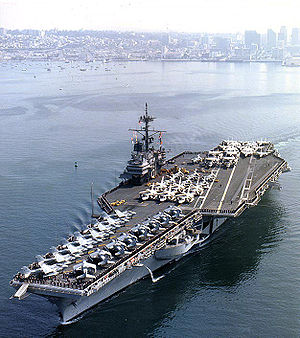
Ranger - Wikipedia Photo
Ranger – Wikipedia Photo

“The seventh USS Ranger (CV/CVA-61) is one of four Forrestal-class supercarriers built for the US Navy in the 1950s. Although all four ships of the class were completed with angled decks,Ranger had the distinction of being the first US carrier built from the very beginning as an angled deck ship.” – Wikipedia (See continuing updates at the end of this post.)

In matters of war, I am a pacifist.

That said, I believe our troops merit our support whether or not the war they’re fighting in is popular or not.

I also think history and historical artifacts, objects and memorabilia are important, for they help communicate the stories of other eras. It’s been a pleasure working with museums as a grant writer and as a collections manager and seeing first hand how excited people can get when shown historic equipment, documents and photographs.

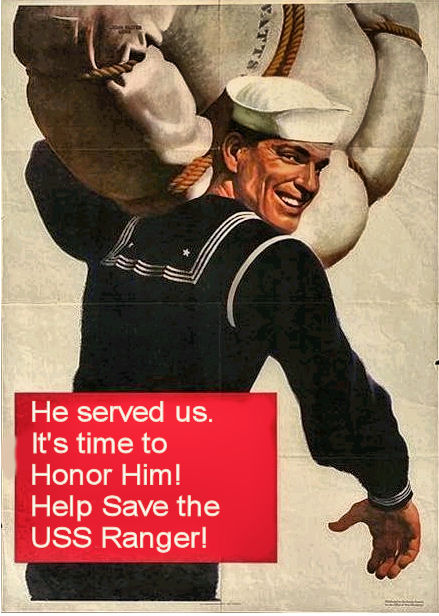
RangerPosterI served aboard the USS Ranger (CVA-61) during the Vietnam War. The war was probably the country’s most unpopular war. When I appeared in public wearing my uniform, I was intentionally bumped into on the street, spat on, and called a baby killer. Yet our history and memories of that time must be preserved.

So, in matters of history, especially those that focus on museums and other educational experiences, I am an activist. In Charleston, I have seen the displays on the USS Yorktown and I have seen the reactions of tourists and school groups as they toured the flight deck, the hangar deck, the mess decks, bridge and ready rooms of the old ship.

When the USS Ranger Foundation was formed in Oregon with the hope of following the examples of those who saved the USS Yorktown in Charleston and the USS Midway in San Diego as museums, I was happy to join up even though I don’t have the financial means to donate money nor the proximity to the ship and selected museum site to volunteer.

Ranger in 1961 - Kemon01 photo on Flickr
Ranger in 1961 – Kemon01 photo on Flickr

First, the educational opportunities here are immense. It’s one thing to read about military history. It’s quite another to walk through a fort, battlefield or restored ship. Aircraft carriers have evolved since the Vietnam War—I can hardly even recognize the modern navy uniform. As I write this, there have been tests of flying drones off of carriers rather than expensive manned aircraft. As a museum, Ranger could have been a piece of history on the Columbia River at the donated site in Fairview for many years to come.

Second, museums and other cultural tourism sites bring dollars and jobs into communities. Many studies have been done showing that a tourist destination such as the USS Ranger can bring in a higher percentage of every tourist dollar than other attractions.

Apparently this is not to be

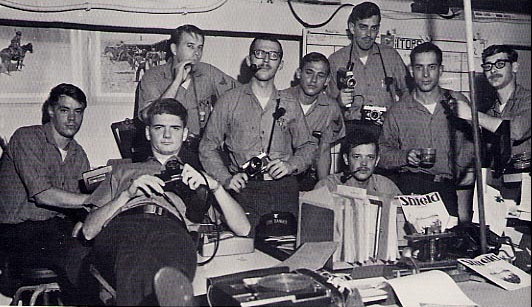
USS Ranger Public Affairs Office on the 03 level. I am second from the right.
USS Ranger Public Affairs Office on the 03 level. I am second from the right here in 1968.

I salute the long hours and dedicated efforts of the volunteers and directors of the USS Ranger Foundation. But I think I missed a memo.

The application process for the acquisition of a decommissioned navy ship is difficult, expensive and lengthy. Unfortunately, the Foundation’s application was rejected by the Navy last October. (See Foundation to Fight NAVSEA Decision to Scrap Ranger) At that time, the Foundation was looking for ways to have that decision reversed.

Over the Christmas holidays, the Foundation said that constraints were keeping them from having more time to develop their application. Here’s where I missed the memo, I think.

I never heard what those constraints were, what (if anything) was missing or incomplete in the Foundation’s original application, or whether or not the support of influential people in and out of government could influence the Navy to provide more time, reconsider, or otherwise work with the Foundation to save the ship rather than scrapping the ship.

rangerlogoNow, the Foundation is looking for another ship. That’s probably a reasonable backup approach. Nonetheless, I think we need to know:

  • Why the application was rejected.
  • What, if anything, could be done to make the application acceptable.
  • Who, if anyone, could be enlisted to garner political and public attention to urge the Navy to delay the scrapping schedule and,
  • Who, if anyone, could raise additional funds and increased public support within the State of Oregon to save the ship and bring it to the Portland area.

We don’t know any of these things. Perhaps, in knowing them, we would see that placing a historic aircraft carrier in a Columbia River museum site had too many insurmountable obstacles in it to ever succeed even if the navy waited five more years or ten more years.

A-4 Skyhawk landing in 1980 - Kookaburra2011 photo on flickr
A-4 Skyhawk landing in 1980 – Kookaburra2011 photo on flickr

I have worked with museums and I have seen the impossible done before. Those in the know said “It will never happen.” But it did happen, with money left over and with the partnering help of those who had been thought, by those afraid to ask, to be the least likely to assist a museum.

So it is, that I do not like seeing this project fade away without a ramped up, viral PR campaign and without the help of high-level thought leaders and influencers who might be able to make a USS Ranger museum a reality. A successful aircraft carrier museum helps everyone, including the Navy. A scrapped ship frees up space at a pier and brings in a few dollars, but otherwise helps no one.

Worse yet, our history is lost in the bureaucratic shuffle. Rather than fading away, I would have preferred seeing this project end, if it had to end, with nothing less than a noisy, failure-is-not-an-option, Hail Mary, damn-the-torpedoes effort.

As always, I wish the Foundation fair winds and following seas.

Malcolm R. Campbell, Journalist
USS Ranger Public Affairs Office and Naval Station Great Lakes  1968 – 1970

Update – January 9, 2014

Those of you who live in the Bremmerton area may have a better means of finding out whether the ship has been scrapped already than I do. However, I have checked with the Navy about the rationale for disposing of the ship (in addition to the costs of maintaining mothballed ships).

From the Navy’s perspective, the USS Ranger Foundation’s progress throughout the entire application process was slow and it finally appeared that little or no progress was being made on some fairly large obstacles:

  • En route to the ship’s proposed mooring site, the BNSF bridge at river mile 80.9 had not been solved. Basically, the ship couldn’t clear the bridge without a major effort on the railroad’s part.
  • The foundation’s cost estimates for the project were incomplete. They gave an overall figure to the Navy about projected costs, but only documented a fraction of those costs.
  • The USS Ranger was placed on a donation hold in 2004. Even though the foundation had expressed an interest in the ship in 2003, the application wasn’t filed until 2009. With the ship available for an eight-year period and with major obstacles not being resolved, it seemed unlikely that the foundation would ever present a complete and viable application. Unfortunately, the Navy’s assessment about this is probably correct.

Update – February 3, 2014

More Updates:

–Malcolm

Malcolm R. Campbell, who  served on the USS Ranger during the Vietnam War, is the author of the Jim Crow era novella “Conjure Woman’s Cat.”

Briefly Noted: ‘The Missoula Mercantile’ by Minie Smith

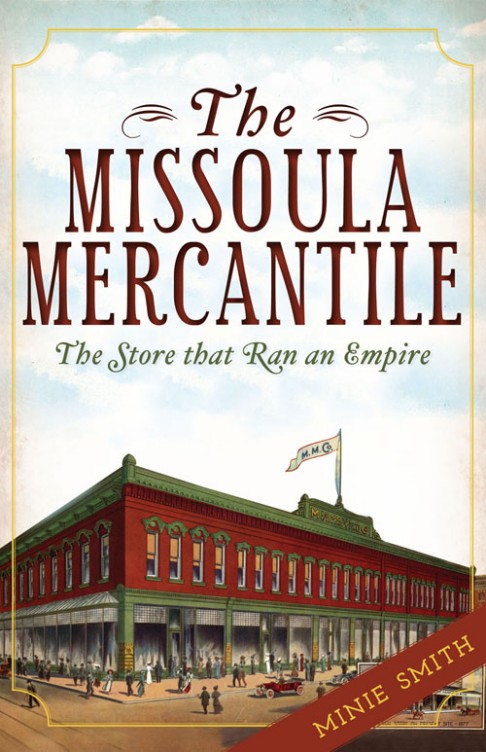
Minie Smith’s The Missoula Mercantile traces the history of an 1866 Missoula, Montana trading post that ultimately became—according to a story about the book in The Missoulian–“the largest department store between Minneapolis and Seattle.” The 192-page book, which includes 82 historic pictures–was released by The History Press in August.

According to The Missoulian, “Allied Stores Corp. bought the Merc in 1960 but retained the name until the Bon Marche bought Allied in 1978. Federated Department Stores took over in 1989, and the name changed over the years from the Bon to Bon-Macy’s and, in 2005, to Macy’s. Macy’s closed the doors in early 2010.” Smith’s history follows the store up until 1960.

Publisher’s Description: From its log cabin beginnings at a dusty crossroads in Montana Territory, the Missoula Mercantile grew to become the largest department store between Minneapolis and Seattle. Under the guidance of A.B. Hammond and C.H. McLeod and their policy of community involvement and customer satisfaction, the Merc became a household word in Montana, synonymous with square dealing. Join historian Minie Smith as she traces the story of a western institution, remembering everything from the Missoula Mercantile’s hardware department, with its creaky wooden floors and drawers of nuts and bolts, to its ladies’ apparel department, which offered a taste of the big city with silks, satins and velveteens. From horseshoes to hosieries, the Merc had what customers needed and knew what they wanted.

Today’s look-alike stores are pretty much the same from town to town, but the old stores were a part of local history, giving one the impression that if the old walls could talk, one would know everything about a place that could ever be known. Fortunately, the store’s old building is being preserved and The Missoula Mercantile is telling its story.

Book Signing: Smith will be signing copies of The Missoula Mercantile this Saturday Morning at 10:30 at Fact and Fiction Downtown  in Missoula and at the University of Montana Bookstore at 2 p.m. on Friday, September 21.

Malcolm

A Glacier Park fantasy for your Nook.

Briefly Noted: ‘Border to Border: Historic Quilts and Quiltmakers of Montana’

The quilts featured in this richly illustrated, carefully researched book chronicle 150 years of Montana history. They tell stories about struggles for women’s suffrage, the Great depression, two world wars and Montana’s statehood. You’ll see detailed information about individual quilts and those who made them.

Published by the Montana Historical Society Press last year, Border to Border is available in both hard cover and paperback.

Excerpt from the Book

This lovely Goose in the Pond quilt was possibly the oldest one found by the Montana Historic Quilt Project, and it offered a bit
of a mystery to the documenters. The owners knew the quilt had traveled to Montana with Maxine Otis’s parents, who came to homestead near Hobson in 1916;  ther details about the quilt were sparse. Initially this quilt was thought to be made between 1830 and 1850, but these dates conflicted with family tradition that the quilt had been made in 1812. Upon closer inspection, the documenters discovered that the fabric was older than they originally thought, some of it dating to the late 1700s. A second look at the quilt also revealed a date and name buried in the quilting: 1811, Robert McInnis. Soon, additional hints about the quilt popped out of the fabric. An ink inscription appeared stamped in a corner block with the name Sarah H. Jones and the town Erie, Pennsylvania. Robert McInnis’s name was also inked into the quilt elsewhere, although by now the “c” and “I” in his name had started to fade. Whatever the bond Robert McInnis and Sarah Jones shared, the quilt was clearly a treasured possession. As reliable permanent ink was not available until the 1830s, the ink inscription was probably added after the quilt was made to leave a lasting record of those connected to it.

For more information about Montana quilts, see also the Montana Historic Quilt Project index. According to the site, “The Quilt Index” is a growing research and reference tool designed to provide unprecedented access to information and images about quilts held in private and public hands.”

–Malcolm

New fantasy adventure coming soon

The Greater Journey: Americans in Paris

Historian David McCullough first caught my attention with his excellent and highly readable Mornings on Horseback: The Story of an Extraordinary Family, a Vanished Way of Life and the Unique Child Who Became Theodore Roosevelt in 1982. He’s also focused on President Truman, the Panama Canal and the Brooklyn Bridge.

In May his publisher Simon and Schuster released The Greater Journey: Americans in Paris, a book that Kirkus Reviews calls, “An ambitious, wide-ranging study of how being in Paris helped spark generations of American genius. . . . A gorgeously rich, sparkling patchwork, eliciting stories from diaries and memoirs to create the human drama McCullough depicts so well.”

I am definitely adding this book to my wish list. Meanwhile, you’ll find an interesting article about the book on the NPR web site called The Best Of The Louvre, On A Single Canvas. Among the Americans mentioned in the book is Samuel F. B. Morse, the inventor of the telegraph. Morse also fancied himself an artist, painting a huge canvas showing the then-famous paintings in the Louvre.

You can see the painting at the National Gallery of Art in Washington, D.C and online on the NPR web site.

Upcoming Reviews

When the de la Cruz Family Danced by Donna Miscolta

The Witch of Babylon by D. J. McIntosh

The Butterfly’s Kingdom by Gwendolyn Greer Field

Malcolm

Western Books, Briefly Noted

“Forced to Abandon Our Fields: The 1914 Clay Southworth Gila River Pima Interviews” by David H. DeJong – 192 pages with eight photographs and three maps, March 31. 2011.

Publisher’s Description: During the nineteenth century, upstream diversions from the Gila River decreased the arable land on the Gila River Indian Reservation to only a few thousand acres. As a result the Pima Indians, primarily an agricultural people, fell into poverty. Many Pima farmers and leaders lamented this suffering and in 1914 the United States Indian Irrigation Service assigned a 33-year-old engineer named Clay “Charles” Southworth to oversee the Gila River adjudication. As part of that process, Southworth interviewed 34 Pima elders, thus putting a face on the depth of hardships facing many Indians in the late nineteenth century.

Reviewer’s Comment: “DeJong’s presentation of the oral interview transcripts is excellent. These interviews are a rich source of cultural and historical information about the Pimas.”—David Rich Lewis, Utah State University

“Montana Moments: History on the Go” by Ellen Baumlier – 200 pages, September 14, 2010, by the Montana Historical Society’s interpretative historian.

Publisher’s Description: Forget dreary dates and boring facts. Montana Moments distills the most funny, bizarre, and interesting stories from Montana’s history into pure entertainment. Meet the colorful cast of the famous and not-so-famous desperadoes, vigilantes, madams, and darned good men and women (and a few critters) who made the state’s history. You’ll get a laugh from the story of the transient vaudevillian who wrote Montana’s state song. Captain James C. Kerr’s tale of the Flathead Lake monster might make you shiver. No matter your reaction, the episodes recounted here always entertain. Best of all, each vignette takes about ninety seconds to read. So have fun exploring Montana – and enjoy a little history as you go.

Reviewer’s Comment: “The pages of Montana Moments overflow with enjoyable historical vignettes that cover nearly everything important that has happened in Montana’s history. Newcomers will find an excellent introduction to what makes Montana tick, while Baumler’s careful research and entertaining writing style will delight old timers.” — Harry Fritz, University of Montana

You may also like:

Montana’s Historical Highway Markers by Jon Axline and Glenda Clay Bradshaw

Montana Place Names from Alzada to Zortman by MHS Research Staff

Montana Native Plants and Early Peoples by Jeff Hart

–Malcolm


set in Glacier National Park


Montana: Glacier Park Issue

Readers, tourists, hikers, and climbers who are fans of Glacier National Park will enjoy the Summer 2010 centennial issue of Montana: The Magazine of Western History beginning with the John Fery painting on the cover.

The issue not only contains a great overview of the park, but includes dozens of photographs and paintings in support of the text. Read it for the information, then keep it as a collector’s item.

Here’s what you’ll find inside:

“Conceiving Nature: THE CREATION OF MONTANA’S GLACIER NATIONAL PARK” by Andrew C. Harper

“Where the Prairie Ends and the Sky Begins: MAYNARD DIXON IN MONTANA” by Donald J. Hagerty

“Glacier National Park: PEOPLE, A PLAYGROUND, AND A PARK” by
Jennifer Bottomly-O’ looney and Deirdre Shaw

“The Miraculous Survival of the Art of Glacier National Park” by Hipólito Rafael Chacón

Cover Art: “The iconic mountain goat on the front cover is a detail from a painting by John Fery, one of the park’s foremost painters. Fery made it the centerpiece of his untitled collage of Glacier views (n.d., oil on canvas, 65″ x 115″) commissioned by the Great Northern Railway.”

Congratulations to the editors, writers and photographers on a wonderful commemorative issue.

Malcolm

Available in multiple e-book formats for only $5.99

Glacier Centennial: Several Favorite Books

With the 2010 Glacier National Park Centennial, some great new books have appeared, including “100 Years – 100 Stories” from the National Park Service and Carol Guthrie’s beautiful large-format book “Glacier National Park: The First Hundred Years” from Farcountry Press.

If you’ve been lucky, you’ve been able to catch one of Guthrie’s book signings in Montana during the past six months.

I have two old favorites by the late Warren L. Hanna I would like to mention for your consideration for your reference shelf. The first is is “Montana’s Many Splendored Glacier Land” that provides an overview of the park from the early explorers up into modern times.


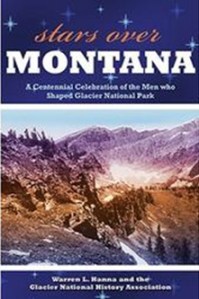
The other, which for reasons I don’t understand, is no longer sold by the Glacier Association. It’s “Stars Over Montana: A Centennial Celebration of the Men Who Shaped the Park.” Originally published in 1988, the book provides mini-biographies of the major players during the days when the shining mountains were discovered, including Hugh Monroe, Father DeSmet, William Jackson, James Willard Schultz, and Walter McClintock.

It’s still available here and there on the Internet in a reprint by TWODOT.

This book has served as an excellent reference for some of my earlier posts about the park and its early advocates. Hanna also wrote “The Grizzlies of Glacier.”

An adventure set in Glacier National Park