Book Review: ‘Her Fearful Symmetry’

Her Fearful Symmetry Her Fearful Symmetry by Audrey Niffenegger

My rating: 3 of 5 stars
Tyger! Tyger! burning bright
In the forests of the night,
What immortal hand or eye
Could frame thy fearful symmetry?
–William Blake, “The Tyger”

When an acclaimed author (Audrey Niffenegger) takes a phrase from an inscrutable poem (“The Tyger”), readers (such as myself) are apt to expect a great story. Without a doubt Niffenegger’s prose is elegant, her place descriptions (London and Highgate Cemetery) are exceptional, and her intricate plot has great promise.

That promise is not fulfilled.

Niffenegger speaks of ghosts that dissipate in to the ether, so to speak, because they haven’t been dead long enough to figure out how to keep themselves together and harness their intent. I like this viewpoint within the story. Unfortunately, it also describes the story.

We are introduced to several sets of twins who, as it turns out, are so focused on being twins that they (in one case) do fearful and silly things and (in another case) are relatively boring. In each set, one twin wants freedom and the other wants the status quo. Interesting? Could have been, but it wasn’t.

At best, most of the characters were totally dysfunctional with the possible exception (oddly enough) of the man with OCD who lived in the flat upstairs, up above the American twins who come to London when their aunt (Espeth) dies and leaves them an apartment up above Robert who works as a volunteer at the adjoining Highgate Cemetery. He was Espeth’s lover both before and after she died.

Like ghosts without sufficient practice and power to organize themselves and enjoy the afterlife (with or without haunting the living), the plot becomes weaker and weaker as the novel goes on until on the final pages it evaporates altogether. Yes, there’s a grim resolution to it all, but it’s a weak one and we no longer care.

I suspect the author fell in love with the cemetery and wanted to write a story about it. Naturally, the dead came to mind. But they weren’t strong enough to frighten us or make us care about the symmetry.

View all my reviews >>

Other Blogs:

Morning Satirical News: Talking to a real reporter about Operation E-Book Drop

Mythrider: Natural, But Not Human (our poor perception of the natural world)

Sun Singer’s Travels: Writing one word at a time

Copyright (c) 2009 by Malcolm R. Campbell, author of the comedy/thriller “Jock Stewart and the Missing Sea of Fire”

Sometimes a discussion beats sales

I went up to the Maysville, Georgia, public library today for a Jackson County Authors Showcase. Along with me were authors Caine Campbell, Pamela Dodd, and Jackie White.

Including the assistant librarian who sat in on the whole event, there were four authors and four in the audience, two of whom had to leave before it was over. I sold one copy of “Jock Stewart and the Missing Sea of Fire.”

A waste of time? Not at all. The two people who came both had a lot of questions; one of them has a grand daughter interested in writing and wanted to know if we had any tips. Of course we talked about our books, how we got started, and how we try to market our work.

I had a good time. Plus, it was nice to get away from the house on a sunny Saturday and drive 30 minutes on a country road from my small town to the next small town north of here.

The discussion was worth a lot. Oh, and the library gave each of us a fancy jar of pears, something a starving writer doesn’t buy for himself!

Malcolm

P.S. Don’t forget this is National Book Store Day, the day in which each of us is expected to go out any buy a pickup truck full of literature from (hopefully) a locally owned store.

New Jock Stewart satire posted at the Morning Satirical News: “Love is the Morning and the Evening Star”

Book Note: ‘Across Time’ by Linda Kay Silva

Across Time Across Time by Linda Kay Silva

My rating: 4 of 5 stars
A beautifully written book with a teenage protagonist who gets her life back together by helping others who live 2000 years in the past.

Author Linda Kay Silva has created believable characters and an imaginative plot in a book filled with deep wisdom.

View all my reviews >>

“Across Time” was published by Spinsters Ink in 2008. Protagonist Jessie Ferguson and some of the other primary characters also appear in Silva’s “Second Time Around” published in July.

Malcolm

Real journalists vs. great targets for satire

I am often critical of journalists. That’s because my father was a journalist and journalism educator, and I heard a lot from him while I was growing up how real journalists ought to approach the skills and ethics of their profession

HowToReportSeveral years ago, I accepted a posthumously awarded press association award on behalf of my father, Laurence R. Campbell (1903-1987). Standing up there in front of a room full of veteran student publications advisers, a few of whom were once my father’s students, I wondered how a writer who didn’t follow in his father’s footsteps could possibly connect with the audience.

All I knew to say was: “I worked as a college journalism instructor and student publications adviser for three years. I have to tell you that I felt like I was on a runaway horse.”

They knew what I meant. My father spent his life training others to be real journalists. He wrote hundreds of trade publication articles, ran summer journalism institutes and authored or co-authored numerous textbooks. The advisers attending that Florida scholastic Press Association convention in Tampa knew these books better than I even though I was there when Dad wrote them. I think, though, that I connected with the luncheon audience that day because, while I was an outsider, I cared a great deal about the profession.

SeaOfFireCoverWith my novel Jock Stewart and the Missing Sea of Fire coming out this summer from Vanilla Heart Publishing, I’m still an outsider looking into a world my father knew so well. My novel is a thriller with a lot of satire and comedy in it. To some extent, I’m satirizing the journalism profession and to some extent, I’m satirizing some of the pretentious people who make the news.

If I didn’t care, I couldn’t write the satire. I’m not a real journalist, but I know what one looks like and how he or she ought to act. For me, it was a real hoot poking fun at those who don’t live up to my expectations. I think my father would understand.

Copyright (c) 2009 by Malcolm R. Campbell

Oklahoma Panhandle Perfect Setting for Zabel’s New Novel

300-croppedVivian Zabel, author of Prairie Dog Cowboy joins us today to talk about the setting for her new novel published in October by 4RV Publishing. The 180-page book set in the Oklahoma Panhandle in 1899 is primarily intended for ages 9-12.
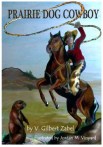
Buddy, the main character begins learning how to work a ranch when he’s just four years old. The work of a cowboy is in his blood and that’s what he wants to do when he grows up. A neighbor who believes in him makes him a promise: when you’re good enough to rope a prairie dog, you can have a job on my ranch.

I met Vivian on the Published Authors Forum. She’s a fellow contributor to the Forever Friends anthology published last year and the author of Midnight Hours and Case of the Missing Coach. I’m happy to welcome her to the Round Table.

The Prairie of Prairie Dog Cowboy
by Vivian Zabel

cowboy The setting for Prairie Dog Cowboy was fictionalized but exists in the Oklahoma Panhandle. The prairie runs from what is now northeast Oklahoma, the Texas Panhandle, and north into Kansas and Nebraska. The area is also considered part of the High Plains.

Many people think the panhandle is drab, ugly, and flat. Not so. Yes, a person may think the land is flat because few, if any hills, are found, but the land has unexpected valleys and gullies that contain green, living things.

The view is spectacular in its own way. I’ve stood outside the house where my husband grew up and looked “forever” in all directions. The sky bright and blue arched above my head. The horizon stretched at the edge of the skyline miles and miles away. At night, the stars against the black velvet of darkness seemed closer than in other places. The lights of towns twenty to thirty miles away could be seen without trouble.

The gullies, deep and rather narrow cuts in the land caused by wind and rain run-offs, often hide green grass when the land above is dry and grass is brown. Valleys, which are different than gullies in that they are usually wider and have more flood plain created by rivers, are filled with trees and lush plant life.

Along the roads, in pastures of prairie grass and man-induced plants, cattle graze, slick and fat. Fields of wheat or milo, sometimes corn, can be found creating breaks between thousands of acres of native pasture.

In the book, the ranches owned by the Hyman family and James Buck are found along the Beaver River. Much of the area used as the Buck ranch and a portion of the ranch used as the Hyman ranch were taken by the government to make Optima Lake and a reserve and hunting area. The land still exists though, cutting through the Oklahoma Panhandle prairie.

Buddy rode and worked the land that can still be found, rich and valuable, filled with hardworking people.

Prairie Dog Cowboy can be purchased through any book store, Amazon.com, Barnes and Noble.com, and/or 4RV Publishing.

Prairie Dog Cowboy
4RV Publishing
Vivian Gilbert Zabel

Note: anyone leaving a question or comment will be entered into a drawing to receive one (1) of four (4) canvas bags with a 4RV logo.

Review: “Burning Bright”

Burning Bright Burning Bright by Tracy Chevalier

My review


rating: 3 of 5 stars
London at the time of the French revolution takes center stage in this beautifully written novel featuring location and themes over plot. When craftsman Thomas Kellaway moves his wife Anne and teen-aged children Jem and Masie from the Piddle Valley in Dorset to London in March of 1792, they are all but overwhelmed by the contrasting grandeur and ugliness of the big city. Thomas hopes he can better support the family making chairs for the circus and Anne hopes distance will heal her tortured mind after the accidental death of their son Tommy.

Tracy Chevalier has drawn a deep and richly detailed portrait of London, especially the Borough of Lambeth where the noisy, dirty and boisterous lifestyle of the poor that differs so greatly from the quieter world of Dorset is accentuated when the circus comes to town.

Contrasts flow through the Kellaway’s lives as surely as the Thames flows through London, and here the author draws upon William Blake’s focus on “contraries,” or pairs of opposites, for the novel’s theme. London, in “Burning Bright” becomes an alchemist’s athanor wherein the Kellaways will undergo their transformations beneath the piercing gaze of Blake, the adept who applies his “Songs of Innocence” and “Songs of Experience” within the novel as Holy Scripture.

Blake serves as a catalyst within the story line, yet he is a one-dimensional character who primary speaks in philosophic riddles and quotes from his favorite poems. While Jem, Masie and their new, streetwise friend, Maggie, view the home of William and Kate Blake as calm sanctuary within a world where the trials of childhood are greatly magnified by the dangerous environment, the reader will come away having learned more about the Borough of Lambeth and than the famous poet and print maker.

Like her adult characters in “Burning Bright,” Chevalier appears unwilling to step past Blake’s fame, notoriety and fiery persona and confront the poet head on. Doing so would have brought closure to the novel for readers and characters alike. We have a well-crafted slice-of-life portrait of a rural family’s brief sojourn into the big city. What we don’t have is an overt look at what it finally meant to them.

View all my reviews.