Smoky Zeidel and ‘The Storyteller’s Bracelet’

Smoky and Tufa

Today I’m happy to welcome back author Smoky Trudeau Zeidel (On the Choptank Shores, The Cabin). Her new novel, The Storyteller’s Bracelet (out this month from Vanilla Heart Publishing) is a historical romance set in the late 1800s during the period when the U. S. Government forced Indian youths into boarding schools where they would learn the “American way of life.” (See my preview of the book here.)

Malcolm: What is a storyteller’s bracelet, and what gave you the idea of using one as the centerpiece in your story about two young Indians from the southwest?

Smoky: A storyteller’s bracelet is a silver bracelet engraved with pictographs that tell some sort of story. My sister Bonnie gave me one as a gift about five years ago. I knew immediately I wanted to create a story about such a bracelet.

Malcolm: While the culture of Otter and Sun Song appears to influenced by the ways of the Tewa and Diné, your protagonists’ tribe isn’t identified in the novel. What led to your decision not to use a specific Indian nation for their background?

Smoky: You’re right about the Tewa and Diné/Navajo, but there also are Hopi influences in the story. I decided not to identify a specific tribe because I’m not Indian, and I didn’t want readers to presume that I am. I did not want to presume to know how a member of a specific tribe would act in any particular situation. Plus, I wanted to be able to pull aspects of different tribal lore into my story, especially when it came to telling the creation stories, because the different stories are beautiful. Also, by not identifying a particular tribe, I was able to bend the stories just a bit to fit the novel. I wouldn’t have felt right doing that if I had identified a particular tribe.

Malcolm: Like many young Indians, Otter and Sun Song were sent away to a white-run Indian school where the intent was to remove the students’ Indian language, beliefs, and culture and replace English, Christianity, and white clothing styles and laborer skills. Most of us didn’t hear about this in our high school history classes. It must have been difficult to place your characters into such an environment. How did you cope with this during the writing process?
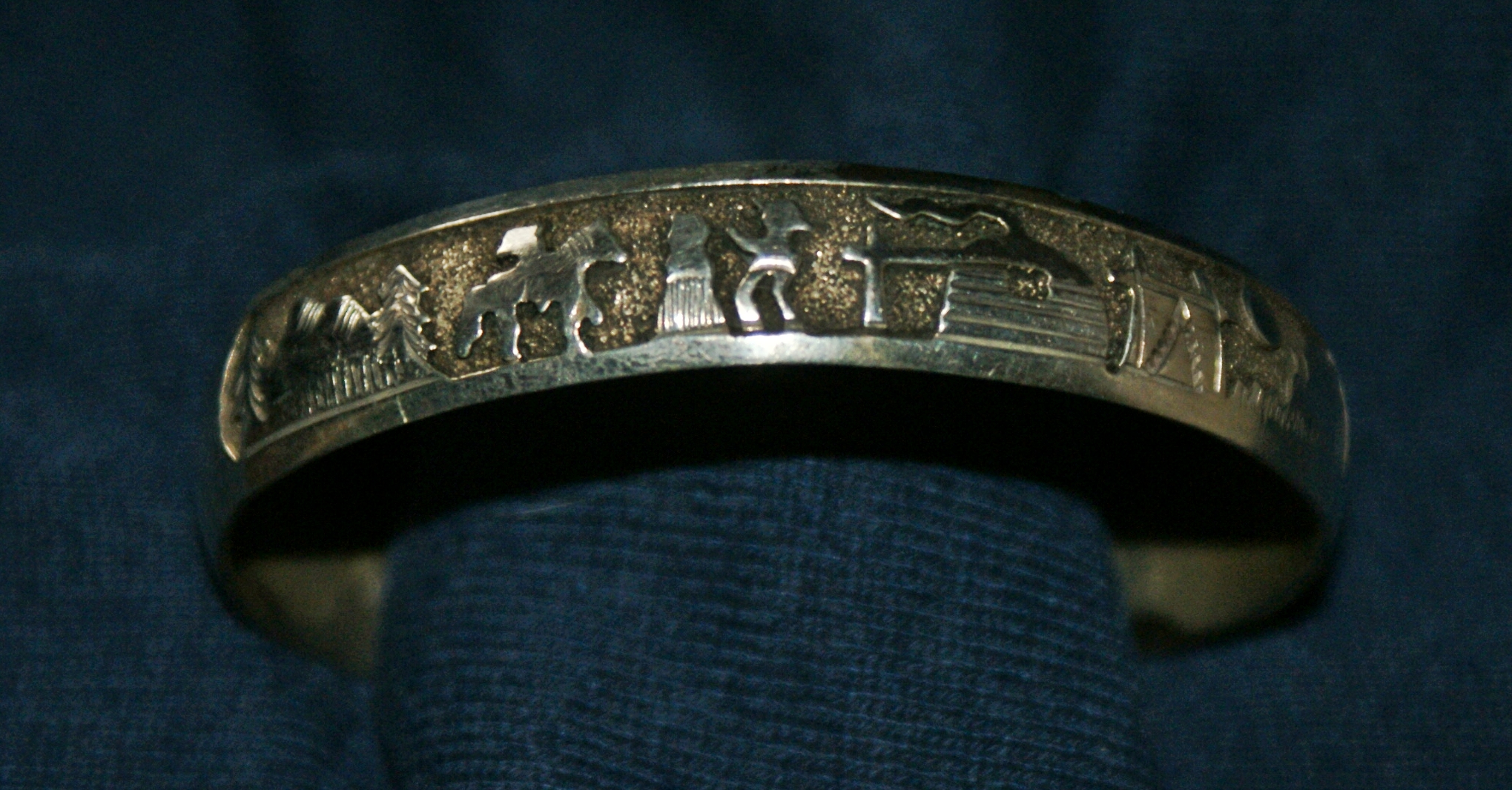
Smoky’s Bracelet

Smoky: No, we didn’t hear about the Indian Schools in our history classes, just as we didn’t hear about the Japanese Interment camps. History often has overlooked the ugly things our culture has done, and these are just two examples of that. It was hard to place Sun Song and Otter in the school, but it was crucial to the plot. I also wanted to bring some awareness of what our government did to all the Indian Nations by ripping children and young people away from their tribes, their families, their culture. It was a shameful thing to do. Most of the time, when I was writing particularly tense scenes at the school, I raged at my computer. I felt really angry, even ashamed to have white skin. I guess, in a way, The Storyteller’s Bracelet is an apology to indigenous people everywhere for the way my birth tribe–white people of European descent–treated them.

Malcolm: The Storyteller’s Bracelet has a touch of magical realism in it, as does your earlier novel The Cabin. In both novels, the magic is a natural outgrowth of the places and the characters’ beliefs. Do you often wonder if such magic exists in “real life,” or do you approach it more as a viable storytelling technique?

Smoky: It is, of course, a viable storytelling technique, and is an integral part of the plot of The Storyteller’s Bracelet, as it was in my earlier novel, The Cabin. But yes, I do believe such magic exists in real life, at least for those of us who know how to tap into it. I’ve experienced it firsthand on several occasions. Does my body physically move from one plane to another in a different place and time, like in my books? No–at least, I don’t think so. But I have traveled to a cave in a faraway mountain range to converse with a Spirit Bear, and I have found myself transported to an island on a raft that is pushed by a great gray whale, with whom I also converse. Is it magic? Or is it imagination? I’m not sure there’s a difference.

Malcolm: Otter and Sun Song are in touch with their environment and treat wild creatures and special places there with respect.  This reminded me of your own approach to nature as you wrote about it in Observations of an Earth Mage. Did your own view of the natural world help you tell Otter’s and Sun Song’s story or did you have to “step away” from your own views to allow your characters’ views to be truly their own?

Smoky: No, I didn’t have to step away. Sun Song and Otter are like my own children–I created them, gave birth to them. It was critical to me that they shared my belief that we are all one with nature, neither above nor below every living creature, whether it be the smallest of insects or the powerful mountain lion or brown bear. We are nature. All of us. Intentionally harming any living thing is like harming a family member, for we are all the same, we are all one, to Mother Nature.

Malcolm: As a historical romance, The Storyteller’s Bracelet focuses on the feelings between Otter and Sun Song as well as the forbidden and dangerous feelings between Otter and the white girl Wendy whom he meets in the town where the Indian school is located. However, since these relationships unfold on a much broader canvas than the classic love triangle, were the two women a planned part of the plot from the outset or were you simply “following your characters” as you wrote when Wendy appeared on the scene?

Smoky: The two women were always in the planned plot, but they ended up being much feistier that I ever imagined. Sun Song, for example, in my initial story idea had a much smaller role than she ended up with. I ended up following her, because she made it clear this was to be her story as much as Otter’s. My planned original ending is nothing like how the actual novel turned out. Following Sun Song’s lead, I was able to work my way to these characters’ true story. And both I and the publisher, Kimberlee Williams of Vanilla Heart Publishing, think this story is much, much better than the one I originally planned.

Malcolm: Thank you, Smoky.

Where to find Smoky on the Internet

Website and Blogs

Author fan page on Facebook

Twitter

Amazon book listing

Book Review: ‘The Subversive Harry Potter’ by Vandana Saxena

Vandana Saxena has done a careful and credible job surveying themes of fantasy fiction and adolescence in The Subversive Harry Potter: Adolescent Rebellion and Containment in the J. K. Rowling Novels (McFarland, April 2012). Substantiated by the source materials, her approach views the years between childhood and adulthood as a time of testing, experimentation and rebellion that society allows and/or tolerates with the expectation that youth will ultimately enter “normal” adult society within the confines of generally accepted social and cultural values.

Saxena demonstrates that, paradoxically, young adult novels—such as the Potter series—not only facilitate the rebellious and experimental mindset of their expected readers (and protagonists), they also serve to contain it. J. K. Rowling, for example, leans heavily on the hero monomyth (hero’s journey) theme which, no matter how strange the journey, envisions the hero joining “normal society” once the quest is complete. Saxena correctly notes that the monomyth always arises on a foundation of the norms and beliefs of the culture or country where the story is set.

Rowling also draws heavily on the tradition of English Boarding School fiction that echoes what such schools were intended to do in society: mold raw, undisciplined youths into model citizens. Harry and the other students at Hogwarts are expected, by the powers that be at the Ministry of Magic, to play by the rules after they leave school in spite of their love of pranks and disobedience prior to graduation.

“The school story, as a narrative emerging from a specific cultural context and being situated in a socio-cultural institution like a school,” writes Saxena, “is doubly bound to the ideas and ideologies of its epoch.”

Hero, Schoolboy, Savior and Monsters

In addition to its focus on the literary and cultural traditions of hero and school themes, The Subversive Harry Potter explores Harry’s role as the savior of his magical world as well as that world’s marginalized monsters (giants, house-elves, werewolves) whom he and Hermione befriend out of their humanity and their defiance of societal norms.

Saxena points out that while Rowling’s books have often been criticized for their positive approach to magic and witchcraft, the series has two strong Christian themes. First, Harry becomes the savior who accepts death, not as a fearful end, but as a grace he receives while offering up his own life on behalf of his friends, fellow students and magical world. Second, love is called the strongest magic of all with a power so great that Lily Potter’s love for her son Harry lives on long after her sacrificial death on his behalf.

The hero, schoolboy and savior themes are not only skewed outside their normal linear evolution by the friendship and help of such outcasts as Hagrid, Dobby and Lupin, but by the presence of magic itself. Saxena’s study portrays adolescents—from the viewpoint adults—as “other,” that is to say, alien. However, within our consensual mainstream reality, magic, witchcraft and anything else regarded as supernatural, are much more alien.

The Subversive Harry Potter shows that, like Philip Pullman’s His Dark Materials trilogy, Rowling’s use of magic not only makes for exciting reading, but introduces elements that impact the protagonist’s expected evolution from adolescent/other to mainstream adult. It’s as though society is saying, “You can play with fantasy during your teenage years, but we expect you to grow out of it.” Yet, what if the supernatural is too strong and too compelling to leave behind? This is a “danger” society perceives in wildly popular fantasy literature as well as an interesting counterpoint to the hero, schoolboy and savior themes in the Potter series itself.

The Influence of “Queer Theory”

Saxena’s view of magic and fantasy within adolescent fiction is strongly influenced by her study’s reliance on “Queer Theory” as a means of exploring potentially discordant themes and values. As a post-structuralist critical theory that defines everything outside of society’s norms as “queer,” the theory would suggest that the hero/savior who exhibits a larger-than-life performance of his role is not exhibiting normal behaviors. The study suggests that magic further “queers” the functions of the monomyth, the boarding school theme, and the savior roles within the series.

While the words “queer” and “queer theory” in context within an academic study illustrate society’s view of everything different (including fantasy and magic), the tightly focused 1990s terminology is in my view unfortunate and out of date when extrapolated upon in 2012 for a wider research project.

“Queer analysis,” writes Saxena, “of the narrative of boyhood therefore reveals the essentially performative aspect of boy-to-man growth. The elements of fantasy and magic denaturalize this cultural project. The narrative of fantasy revolves around the power of magic, an illegitimate force whose presence in society has been characterized by simultaneous ubiquity and secrecy.”

The author’s role?

Unfortunately, the fantasy author’s role (if any) in either orchestrating or intuitively utilizing the hero, schoolboy, savior, monster and magical themes to facilitate/contain adolescent rebellion through instructional or inspirational storytelling was outside the parameters of the study. This leaves an open question about whether the themes explored in the study are overt elements of authorial intent or simply part and parcel of fantasy and hero’s journey fiction. Saxena shows that Rowling knew very well the traditions—within British society—of school fiction, the evolution of a hero, and of giant and elf folklore.  But she doesn’t explore whether Rowling intended for her fiction to impact adolescent needs within society in the manner viewed by theorists.

The Subversive Harry Potter grew out of a doctoral dissertation and, as such, is a formal academic study intended for literary theorists, psychologists, sociologists and other scholars. The retail price ($40 for a 218-page paperback) is within the realm of scholarly and professional publication pricing rather than that of general nonfiction.

For an academic audience, The Subversive Harry Potter meets its goals while providing fantasy authors and fans with some very interesting food for thought.

Malcolm

Malcolm R. Campbell is the author of magical realism and contemporary fantasy novels, including the hero”s journey “The Sun Singer” and the heroine’s journey “Sarabande.”

Review: ‘The Divine Comics’ by Philip Lee Williams

“In a great comedy, we are always made aware of the darkness in life, but the ending must be happy or it’s not a comedy. A man’s journey to wholeness is therefore most rightly named ‘The Comedy,’ for the end is the final awareness of that love which is the joy of the universe.” – Helen M. Luke in “Dark Wood to White Rose: Journey and Transformation in Dante’s ‘Divine Comedy’”

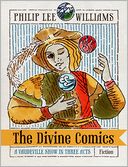
Philip Lee Williams’ magnificent “The Divine Comics: a Vaudeville Show in Three Acts” begins and ends with Whitman Bentley, a young man with gangly legs who’s been dreaming again, perhaps to escape the fact that among the eccentrics at The School of Music, he “may be the weakest, torn with every phobia in the catalogue.”

Since the novel’s back-cover informs readers that Williams’ novel reimagines and updates Dante’s “The Divine Comedy,” we know going in that Whitman Bentley will, to put it crudely, go to hell and back, after—as Dante might put it—the eccentric second-string symphony conductor awakes to find himself in a dark wood where the right road is wholly lost and gone.

En route to the ending of “The Divine Comics,” (which is pure poetry and white rose wonderment) the reader—as well as Williams’ huge cast of dysfunctional characters—may sense that that there is no right road and that the trickster gods (known as the Divine Comics, aka “The Lords of the Inner Kingdom”) are plagued with every manner of dark joke in the catalogue. Ah, but the chapters in “The Divine Comics” are called skits for a reason.

The novel’s three sections, “Fire,” “Earth” and “Air,” match Dante’s “Inferno,” “Purgatorio,” and “Paradiso.” “Fire” focuses on a school of music, “Earth” on the followers of a lady who takes her friends on a cruise to France where they will be well paid to treat her as their queen, and “Air” on a mixed group of artists, politicians and scientists who have been assembled as honored fellows at a rich man’s Rocky Mountain retreat.

Each troop of trekkers has its own farcical road of trials, puns, groaners, riffs, improvisations on every imaginable subject under heaven, and assorted terrors to follow, complete with a guide, until all the skits merge into one with the novel’s almost-overpowering crescendo of an ending. Like “The Divine Comedy,” Williams’ “The Divine Comics” has four levels of meaning: literal, allegorical, moral and mystical. While the novel has great depth and a near-infinite number of overt and covert references to music, popular culture, history and religion, it is a very readable and entertaining story.

At this point in the review, Dante purists may be wondering if any of the groups in the story is guided by Virgil. No, but there’s a good reason for that. Former used car salesman Al Carswell, who hosts Whitman Bentley’s group in the vestibule of hell, says that “the Big V” isn’t around much. “Last people he brought through was a bunch of Jaycees who died of ptomaine in Butte, Montana. After that, he turned sort of sour on things, don’t you know?”

Williams has done one hell of a job updating hell, purgatory and paradise for today’s savvy seekers of a great story and/or the white rose. Observers—such as the readers of this novel—left standing  in the dark wood for eternity will sooner or later shout, as James Joyce might put it, “Here Comes Everybody,” for Dante’s epic poem and Williams’ update some 690 years later are both masterpieces describing the human condition. This is not to say everybody must use “The Divine Comics” as a personal heaven and hell travel guide. After all, how will we know at any moment whether we’re in or out of Whitman Bentley’s dream? As Williams says many times in the novel as an author commenting on the story he’s telling, “It’s a question well worth our attention.”

“The Divine Comics” is, indeed a comedy. But rest assured that before you reach that happy ending, The Lords of the Inner Kingdom, will capture your attention and then leave you breathlessly rolling in the aisles at a Vaudeville show filled with enough black humor to last a lifetime, and then some.

Malcolm

Malcolm R. Campbell is the author of four novels, including the satire “Jock Stewart and the Missing Sea of Fire”

Review: ‘Should I Not Return’ by Jeffrey T. Babcock

“Denali, that Great Grail Castle in the Clouds continues to thrill and kill with each passing year. As of the fall of 2011, 133 climbers have perished on Denali, ever since Allen Carpe and Theodore Koven became the first to die on its icy slopes in 1932.” – Jeffrey T. Babcock in the dedication to “Should I Not Return”

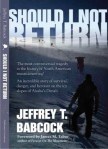
When Jeffrey T. Babcock and his older brother Bill set out to climb the highest mountain in North America, Alaska’s 20,320-foot Denali (Mt. McKinley) in 1967, they knew before they reached “The Great One” that they would be tested in a dangerous world of rock, ice, snow and wind where every climber is at risk and may not return. They did stand on top of the continent on a cold and windy day that July, but en route to the summit, their Mountaineering Club of Alaska (MCA) team stared into the eyes of tragedy from an unexpected combination of events.

The MCA team was several days behind the twelve-person Wilcox-Snyder Expedition. A class-6 storm suddenly raged over Denali, separating the members into those who were able to retreat and those who were stranded high up on the mountain in the bitter cold blizzard conditions. Injured and greatly worried about the other members of their group, the descending Wilcox-Snyder team members met the advancing MCA team, made radio contact with the National Park Service to report their status, and then made their way off Denali. Due to its position on the mountain, the MCA team became the primary rescue group. Jeffrey and Bill Babcock found two of the dead; the others were never found.

The death of seven members of the Wilcox-Snyder group in one day has been called North America’s worst mountaineering tragedy. It has also generated a fair amount of controversy as the actions of leaders Joe Wilcox and Howard Snyder and the National Park Service have been scrutinized under multiple microscopes leading to multiple accusations of blame. Jeffrey T. Babcock, who went on to lead other climbing expeditions including another successful summiting of Denali, has spent a lifetime pondering whether or not the MCA team could have accomplished the impossible and saved any of the Wilcox-Snyder climbers. Now, most experts think not.  But nobody knew this during the summer of 1967.

Babcock has, to the extent it’s possible, come to terms with Denali in 1967 via his “non-fiction novel” Should I Not Return. While the novelization combines real life events from two climbs into protagonist Henry Locke’s coming-of-age climb of Denali on a team led by his brother Johnny, the book’s account of the tragedy and the rescue attempt is based on facts. The result is a compelling and accessible adventure story for a general audience as well as a riveting true-to-life account of a widely known mountaineering event for climbers familiar with techniques, routes and high-altitude weather conditions.

West Buttress of Denali – NPS Photo

Should I Not Return is richly illustrated with photographs from the MCA and other teams as well as sidebars containing historical information about earlier Denali ascents and the climbers involved. While the sidebars are nice time capsules for climbers and others interested in Alaska and its mountains, they can be skipped by those who prefer to stick with Henry and Johnny’s trial by wind and ice.

The emotional and practical need for young Henry—whom some of the other characters view as “Johnny’s baby brother”—to prove himself adds impact to the story. While Johnny and the other MCA team members know each other well, Henry is viewed as a neophyte easterner who will more than likely them back or put them at risk. The terror of the story is amplified because readers see events unfold through the eyes of the youngest team member rather than a veteran climber.

In addition to their geographical and historical value, the photographs serve the same purpose as the illustrations in adventure novels of an earlier era. For example, when Johnny falls through a snow bridge into a crevasse, an accompanying photograph of a Lower Ice Fall snow bridge on Muldrow Glacier demonstrates for non-climbing readers how precarious Johnny’s situation was. The inhospitable conditions Henry and the others face on that glacier is illustrated by a bleak photograph  (by the author) showing just how tiny a man is when he stands next to the sheer walls of Pioneer Ridge. While Babcock’s prose is strong enough to stand on its own, the pictures add greatly to the reading experience.

If Should I Not Return were the product of Jeffrey T. Babcock’s imagination, I would recommend it to everyone who loves compelling adventure stories. For mountaineers, the book adds immeasurably to the historical record of Denali from a very capable writer who was first on the scene of a controversial climbing tragedy.

Malcolm R. Campbell

Malcolm R.  Campbell is the author of four novels, including the 2011 contemporary fantasy adventure “Sarabande”

E. B. White and a swan named Louis

“Even today, White’s book continues to foster the conservation efforts he deeply believed in. Each year, the Red Rock Lakes National Wildlife Refuge receives numerous letters from young readers who inquire about Louis and seek information about the refuge and the trumpeter swans.” – Marcia Melton, in “E. B. White’s Montana and ‘The Trumpet of the Swan,'” Montana – The Magazine of Western History, Spring 2012

Most of us remember E. B. White (1899 – 1985) primarily for his children’s books Stuart Little (1945), Charlotte’s Web (1952) and as co-author (with William Strunk, Jr.) of The Elements of Style (1959). But a book that grew out of his 1922 trip to Montana in a Model T Ford when he was 22 is not only equally notable but demonstrates how well-told stories about the natural world can influence young readers to help protect the treasures they first discover in fiction.

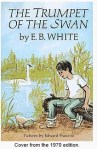
“Montana made a lasting impression on White,” writes Marcia Melton in her feature article in the current issue of Montana – The Magazine of Western History. Fifty years later, that impression was still strong enough to lead to The Trumpet of the Swan about a young cygnet who had no voice. Even though White worked for a while on a Montana ranch and saw a lot of scenery, he never saw a swan and never visited the Red Rock Lakes National Wildlife Refuge where his story is set. (He knew how to do research.)

Red Rock Lakes NWR photo

Founded in 1935, the refuge is in the greater Yellowstone area near the Centennial Mountains and the headwaters of the Missouri River. According to the refuge’s website, “A very shy bird by nature, the trumpeter swan is the subject of intense study in an attempt to learn how to ensure their survival. Rescued from near extinction, trumpeters breeding in the Greater Yellowstone Ecosystem, including Red Rock Lakes, have grown in number from a low of only 200 birds in 1932, to a success of more than 500 in recent years.”

As Melton notes, the swans were heavily hunted in the 19th century and early 20th century for meat, quills, down, and feathers. Fortunately,  by the time White’s book was published inn 1970, the insanity of hunting wild creatures into extinction kept us from losing the swan. However, the bird still faces threats, as The Trumpeter Swan Society informs us, from illegal shooting, power lines, lead poisoning, and habitat loss. The Society, with the help of numerous volunteers, is one of the trumpeter’s strongest allies.

When White accepted the National Medal for Literature for The Trumpet and the Swan in 1971, he said “Only hope can carry us aloft, can keep us afloat. Only hope, and a certain faith that the incredible structure that has been fashioned for this most strange and ingenious of mamals cannot end in ruin and disaster.”

Reading Melton’s article about the man who wrote a story about a young swan named after Louis Armstrong who finds his voice in the form of a trumpet at a store in Billings, Montana, reminds me of the strength of a writer’s “act of faith,” as White calls it, and how that faith can be carried far and wide on the winds on white wings.

Malcolm

Contemporary fantasy set in Montana

If you ask me what I’m reading, you’re on your own recognizance

A writer friend of mine once told me she looks at my book reviews here as prospective To Be Read books for her Kindle. “You have never steered me wrong, Malcolm,” she said. Perhaps he fingers were crossed behind her back.

Take a look at my current reading shelf. It should be a warning. I say that because I am probably the only person in the known universe who has these three books on his shelf at one time. Or at any time. My reading tastes are both wide-ranging and eccentric. (Not always because, hey, I can enjoy a good Nora Roberts or John Grisham novel like anyone else.)

People sometimes note that most of my reviews on GoodReads and Amazon end up with four or five stars and suggest that I’m just trying to be nice. No, I’m doing that because I usually only review books I like a lot—well, unless I read something that really ticks me off.

However, five stars from me doesn’t mean the book will get give stars from you.This was proven conclusively several years ago when I gave  Dow Mossman’s novel The Stones of Summer a glowing review. People told me I was crazy. Possibly so even though I was one of 30 people who felt that way.

Consider the Source

So, when I tell you what I’m reading, you need to consider the source (me) and remember that even though I often read mainstream bestsellers, I probably read them for the wrong reasons. The other books on my shelf are going to have a very strong flavor of magical realism, speculative fiction, fantasy, folktales, literary fiction, and stuff that—for the want of a better words—is just plain weird.

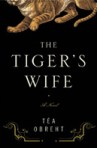
Now, my writer friend hasn’t told me directly that I inadvertently steered her wrong on a book last year, that one being The Tiger’s Wife by Téa Obreht,  but I noticed she gave it three stars on GoodReads. Sigh. After The Night Circus, that was my favorite novel of the year. I think both of these novels are Pulitzer Prize level novels, though I doubt either one was nominated (or seriously considered) since the rules say the novels must be truly American stories and neither of these books were.

Your Own Recognizance

As it turns out, this post is a disclaimer, meaning that I am often drawn to stories that mesh one way or another into my sense of wonder and my world view of real life and fiction. Before spending your money on anything on my To Be Read shelf, you better get a second opinion.

What’s on your shelf these days?

Malcolm

Review: ‘The Comrades’ by Lynne Sears Williams

Lynne Sears Williams’ beautifully told historical romance “The Comrades,” carries readers back into Medieval Wales when the post-Roman Kingdoms of Powys and Gwynedd were at odds with each other while contending with ongoing threats from the English and the Norse.

In Williams’ 9th century tale, Evan, King of Powys, responds to a nasty cross-border raid from Gwynedd by ordering his commanders to kidnap Gwynedd’s princess Morleyna to use as leverage in negotiations with the neighboring kingdom. Carefully planned and boldly implemented, the successful abduction brings consequences the king and his warbrothers aren’t prepared for: a shrewd, highly intelligent “guest” at the castle who is also blessed with The Sight.

“The Comrades” is a stirring romance, graced with memorable characters, historically accurate place settings and customs, a first-rate writing style, and a rousing good plot. The interplay between Evan and his men, his aunt, his concubine and the princess is believable and flows easily between humor, statecraft and crisis. The story unfolds as the kingdom waits for a response from Morleyna’s brothers. Will they bring an army, a ransom or both?

Williams’ decision to tell the story from multiple points of view was a wise one. Readers see castle life and the world of Powys from the from the perspectives of Evan, Morlenya and other principal characters. While that world is long ago and far away, it shines clearly and brightly in “The Comrades.”

The story is supported by a helpful map and glossary.

–Malcolm

Upcoming book reviews

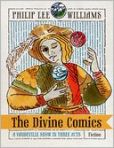
I’ve got my work cut out for me with Philip Lee Williams’ huge new novel The Divine Comics: A Vaudeville Show in Three Acts. It’s a 1,000+ page, two-inch thick novel from an award-winning Georgia author. However, I’m really looking forward to this one. I’ve previously enjoyed his poetry in Elegies for the Water, his natural history about the ridge he calls home in In the Morning, and his civil war novel  A Distant Flame. Williams, who is also a composer of classical music, recently retired from the  University of Georgia.

I’ve had the pleasure of meeting Williams several times at our local library when he was on tour.

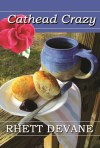
I’m also looking forward to Rhett DeVane’s new novel Cathead Crazy. She wrote a guest post about the novel’s background here on March 12. I’ve started reading the book—it’s great. I’m not surprised. I liked Rhett’s Evenings on Dark Island, co-written with Larry Rock. What a great vampire spoof that was. While Rhett lives in Tallahassee, Florida, the town where I grew up, I’ve never met her. She needs to do a book tour into the Northeast Georgia region where we also happen to like large biscuits.

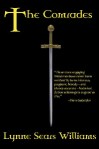
Meanwhile, I’ve been reading and enjoying Lynne Sears Williams wonderful novel about the long-ago days in the country now known as Wales. I’ll be talking more about The Comrades on this blog very soon.

Meanwhile, I’m busy keeping up with my Book Bits blog (writer’s links) while working on short stories. (I’m not yet ready to tackle another book-length story.) And then, too, the website has undergone a major overhaul lately. That can happen when you switch the domain from one ISP to another.

The weather’s heating up in northeast Georgia, the grass is growing faster than I like, pollen is covering the cars, the cats are constantly miaowing about something, and I’m starting to think I’m ready for a vacation.

Malcolm

Review: ‘An Uncertain Age’ by Ulrica Hume

At the beginning of Ulrica Hume’s metaphysical and spiritual novel An Uncertain Age, Justine meets Miles Peabody on the Eurostar en route from London to Paris. While they appear to meet by chance, it’s more likely destiny is involved. An aspiring artist, Justine is looking for certainty and stability after losing her job and her fiancé. A retired librarian, Miles is focused on twilight of life issues. They are drawn together despite their differences of age and lifestyle and end up site seeing together while Miles considers making the traditional Santiago de Compostela pilgrimage. He wants Justine to accompany him; before she can decide what to do, Miles disappears on a routine errand in Chartres.

Miles is fascinated to the point of obsession with the tragic love story of the 12th century French philosopher Peter Abelard and his student Héloïse d’Argenteuil. In fact, it’s nearly impossible for Justine to converse with him about anything without hearing what Abelard and Héloïse thought or did under similar circumstances. Abelard founded a monastery called the Oratory of the Paraclete. Some years after the powers that be forced Abelard and Héloïse into separate lives (both in religious orders) after their illicit affair was discovered, she ended up at the Paraclete as its abbess. In their honor, Miles’ house in London is named The Paraclete.

The relationship between Justine and Miles takes on some of the overtones of Abelard and Héloïse’s relationship. Inasmuch as destiny seldom presents its happenings with a definitive guidebook, it’s impossible to say whether Miles and Justine are drawn together and then separated from each other because Miles wants to mimic Abelard’s life as part of his own search for meaning or because their spiritual quests cannot move forward on the same path.

While much of Abelard’s work was considered heresy by the church, he did convince the Pope to accept his doctrine of limbo. The irony here is that Miles’ Abelard-like disappearance casts Justine into an ongoing temporal limbo. First, the nature and direction of their relationship could not be pinned down to Justine’s satisfaction. When Miles disappears, the French police won’t allow Justine to leave town until they are satisfied she is innocent of potential crimes that might explain his absence. When Miles isn’t found and she is free to leave Chartres, Justine is uncertain what to do next because other than working on her art, her specific plans aren’t well defined.

Wherever Justine is, she knows she will be waiting for Miles to return, perhaps as Héloïse longed for Abelard. Drawn to spiritual ideas, she seeks out a safe haven where she can ponder religious writings, work on her art and share her days with others of like mind. Those she ultimately meets on are missing something and are on their own quests based on the tenets of their diverse faiths.

The strengths of An Uncertain Age include the many layers of meaning flowing through the steps Justine, Miles and the other rather eccentric characters take while seamlessly sharing prospective routes to fulfillment that are traditionally at odds with each other. Hume’s novel is well plotted, well crafted and well researched. Some readers may be turned away at Hume’s characters’ heavy reliance on quoting and pondering scholars and religious leaders. To some extent, the philosophy delays the story.

At the same time, the philosophy drives the story. An Uncertain Age has the depth and power to inspire readers to ponder their own choices while waiting for the moment when each of Hume’s characters moves forward in faith or certainty instead of doing what Abelard and Héloïse would do. Hume’s prose makes this journey a rewarding trip.

Malcolm R. Campbell is the author of four novels, including the contemporary fantasy “Sarabande.”

contemporary fantasy for your Nook

Review: ‘Identity: Lost’ a legal thriller by Pascal Marco

When I review a book, I check the publisher’s description online and on the back cover to make sure I don’t inadvertently divulge plot twists and other surprises that readers won’t know when they start reading. I was a bit surprised to find a blurb on Pascal Marco’s Identity: Lost from an author claiming that this “electrifying debut puts him firmly in the hunt to succeed John Grisham.”  Really?

By the time I finished reading this intricate and heartbreaking legal thriller, I decided that blurb might be right.

After twelve-year-old James Overstreet witnesses a 1975 murder in a lakefront Chicago park in a dangerous neighborhood, his life changes dramatically because police and prosecutors botch the trial. James identifies the black gang members who killed the 85-year-old white man in Burnham Park. But once the judge says, “I have no choice but to find the defendants not guilty of murder,” James and his family know their lives are at risk if they ever go home again.

Readers know going into this book that thirty years later James Overstreet will no longer be James Overstreet, but a man named Stan Kobe who has gone to law school, learned his craft well, and become a successful prosecutor in Maricopa County,  Arizona. Savvy readers will guess that even though James has been reincarnated as Stan 1,400 miles away from the scene of the crime, one way or another, “Ice Pick” and the Oakwood Rangers will cross his path again.

Crime shows on TV often imply that once a person goes into the Witness Protection Program, life is safe and good. Pascal Marco does a wonderful job of counteracting that myth. When James becomes Stan, nobody can know. All ties to his past, and his parents’ past are cut. Even if Stan is good at pretending he didn’t come from Chicago and knows little or nothing about the town, there are a hundred ways a chance statement or a chance meeting will bring the Oakwood Rangers to his front door. While James/Stan might be a bit more paranoid about such things than most, his fears are not without cause.

Marco’s plot is complex, for any future encounters between the young man who was torn away from his favorite lakefront park and plunked down in the Southwest must be handled carefully. If not, the novel would appear to rest on a string of unlikely coincidences. While the novel slows down a little while James is going to law school and turning into Maricopa County’s “most ruthless prosecutor,” Identity: Lost moves forward at flank speed through a labyrinth of thrills and chills en route to a surprising and satisfying ending.

Electrifying is a reasonable superlative for this novel. Marco, a native Chicagoan and current Arizona resident, uses his streetwise knowledge of both locations to great advantage in bringing this story to life. The characters are richly and realistically created from James/Stan to Chicago detectives “Stick” and “Timbo” to Ice Pick and his Rangers to Manny Fleischman (the victim) who once played for James/Stan’s beloved White Sox. Identity: Lost is a well-told tale with a fine mix of courtroom, Chicagoland and baseball ambiance and many dangerous moments.

–Malcolm

Malcolm R. Campbell is the author of four novels, including the 2011 contemporary fantasy “Sarabande.”