CBS news reports that “Three dozen endangered Florida panthers died this year, the most in nearly a decade, according to the state’s Fish and Wildlife Conservation Commission. It’s the most panther deaths since 2016, when 42 panthers were killed.”
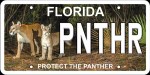 All the more reason to read this 2023 book, follow panther-related conservation organizations such as Wildpath, for FL residents purchase a protect the panther license plate, and keep up with news about Florida conservation efforts.
From the Publisher
 “The panther is the state animal of Florida, the last big cat surviving east of the Mississippi River, and an emblem of the Endangered Species Act. It was driven to extinction in the eastern United States, except for a small remnant population that persisted in Florida’s Everglades. Panther numbers had dwindled to fewer than 20 individuals by the 1980s, but heroic conservation efforts have helped panthers come back to nearly 200 today. The biggest obstacle for the panther’s continued recovery is access to enough of its historic territory throughout Florida and beyond.
“The tale of the Florida panther has grown from the unlikely survival of a rare cat to a story of hope for all of wild Florida. Path of the Panther in now a call to action to recognize and protect the Florida Wildlife Corridor – a network of public and private land that connects the panther’s current range in south Florida to suitable habitat throughout the state of Florida and adjoining states.
“The Florida Wildlife Corridor is the panther’s path to recovery and a western-scale conservation opportunity that remains largely hidden in the east. It is now as a Last Wild Places partnership with the National Geographic Society. With 27 percent of Florida already protected as public land, this project aims to inspire the additional one million acres of conservation needed over the next decade so that Florida can be a leader in the goal of protecting 30 percent of the planet by 2030.
“Photographer Carlton Ward helped put the Florida Wildlife Corridor on the map by trekking from the Everglades to Georgia in 2012 and from the Everglades Headwaters around the Gulf of Mexico to Alabama in 2015. Through these National Geographic–supported expeditions, he and his team have witnessed that a path for the panther’s recovery still exists. But with 1,000 new residents moving to Florida every day, and more than 100,000 acres of habitat lost to development each year, to window to save it is closing quickly. Through Ward’s intimate photographs, expert essays and compelling maps, the Path of the Panther book, combined with a National Geographic magazine article, National Geographic Society Last Wild Places campaign, and feature documentary film, is poised to awaken people to wild Florida and inspire them to save it.”
Happy New Year
–Malcolm

 Everglades National Park…home to the largest wilderness area east of the Rockies; home to the largest protected mangrove ecosystem in the western hemisphere; and home to 68 federally threatened and endangered species.
 Malcolm's Round Table