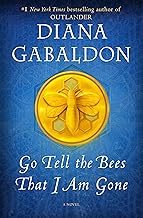
 I’ve enjoyed Diana Gabaldon’s “Outlander” series and am just about done reading the latest installment Go Tell The Bees That I Am Gone. I’m enjoying the novel: it has the series’ typically interesting characters, historically accurate themes, and the kind of humor that develops when characters have been together throughout many books. Even so, I’m a bit disappointed in this novel that’s set in North Carolina as the revolutionary war begins. Basically, I think the book has too much backstory almost as though we haven’t read the rest of the series and need to be brought up to date on what’s happened to everyone since the initial novel was published in 1991. The current novel is number nine out of a planned ten books. We need more action in this one.
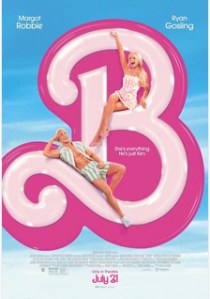 When I first heard about the “Barbie” movie, I assumed it was going to be all fluff like the OLD (1965) “Beach Blanket Bingo” and the 1989-2001 TV series “Baywatch.” What a surprise, “Barbie” is not only doing well at the box office but has gotten some good reviews such as this one on NPR: “‘Barbie’ review: Sometimes corporate propaganda can be fun as hell.” Here’s an excerpt: “Barbie isn’t just a movie that could never fully escape out from under the weight of its artistic compromises. It’s a hoot, a feast for the eyes and ears. Sarah Greenwood’s production design is sensorially astounding; Barbie Land is conceived as it’s appeared in kids’ imaginations for decades – both tangible (plastic shower, toaster, or car) and intangible (invisible water, toast, or motor). The makeup team confidently balances an essence of plasticity without drowning in it to the point of the uncanny. There are musical numbers and A+ cameos. (I’d love to get Lizzo to sing-narrate my life, too, please!)”
 I’ve recorded the 1971 movie “Klute,” a neo-noir thriller that I saw in a theater when it was released, and liked everything about it. I like noir a lot and neo-noir almost as much. I don’t know whether my wife will watch this one with me because she still hasn’t forgiven Fonda for her travels to Vietnam during the war. I haven’t either, but I see the movie as separate from its star’s Oscar-winning performance. According to Wikipedia, “Klute was widely praised by critics for its screenplay and Fonda’s performance, though some criticized Pakula’s unconventional direction. On review aggregator Rotten Tomatoes, Klute holds an approval rating of 93% based on 43 reviews, with an average rating of 8.2/10. The website’s critical consensus reads: ‘Donald Sutherland is coolly commanding and Jane Fonda a force of nature in Klute, a cuttingly intelligent thriller that generates its most agonizing tension from its stars’ repartee.’ On Metacritic, which assigns a rating to reviews, the film has a weighted average score of 81 out of 100, based on 47 critics, indicating ‘universal acclaim.'”
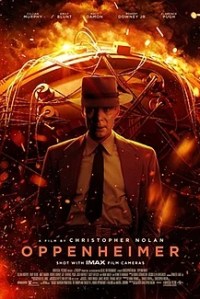 Are you planning to watch “Oppenheimer”? I’m thinking it’s one of those must-see films because it focuses on an important part of our history. Wikipedia writes that “The film was released on the same day as Barbie, a fantasy comedy film directed by Greta Gerwig based on Mattel‘s Barbie fashion dolls and media franchise, and distributed by Warner Bros. Due to the tonal and genre contrast between the two films, many social media users created memes about how the two films appealed to different audiences, and how they should be viewed as a double feature. The trend was dubbed “Barbenheimer“. In an interview with La Vanguardia, Cillian Murphy endorsed the phenomenon, saying “My advice would be for people to go see both, on the same day. If they are good films, then that’s cinema’s gain.” If I went to a theater to see “Barbie,” I’d have to wear my Batman costume to avoid attracting attention. As for “Oppenheimer,” I’ll probably watch it even though I think the bomb should not have been used against Japan in World War II.
Tag: Diana Gabaldon
Potpourri, &c., for July 9, 2023
If you live in north Georgia, you already know more rain is coming. If you don’t, then it doesn’t matter. More time to read while the grass slowly grows too tall for the riding mower to cut.
- I’m enjoying Diana Gabaldon’s Go Tell the Bees That I am gone. It’s 888 pages long in trade paperback, not counting the endnotes. I’ve often wondered if Diana or her publisher have considered including a synopsis of the series at the beginning of each novel to orient people who haven’t read prior books. If you started reading Bees without any knowledge of all the earlier books, you’d be completely lost.
- I don’t know who or what ticked off a skunk late last night, but getting the smell out of the house took a lot of Febreze. I was hoping our indoor/outdoor cat hadn’t “done anything bad” to the skunk and left it on the front porch. The smell’s gone now, so with luck, the skunk is freshening up one of our neighbor’s yards.
 We have been watching the TV series “1883.” It’s well-written but a bit gritty. Here’s Wikipedia’s synopsis of the overall plot: “The story is chronologically the first of several prequels to Sheridan’s Yellowstone and details how the Duttons came to own the land that would become the Yellowstone Ranch. It is the second installment produced in the Yellowstone franchise. The series consists of ten episodes and concluded on February 27, 2022.” It’s something to watch until”The Crown” resumes later this month.
 How many of you have seen “Indiana Jones and the Dial of Destiny”? The reviews have been lukewarm even though the trailer looks good. We’ll probably watch it out of nostalgia regardless of what the critics have to about it. As Wikipedia reports, “Owen Gleiberman of Variety described the film as a ‘dutifully eager but ultimately rather joyless piece of nostalgic hokum minus the thrill… Though it has its quota of ‘relentless’ action, it rarely tries to match (let alone top) the ingeniously staged kinetic bravura of Raiders of the Lost Ark … time travel, in Indiana Jones and the Dial of Destiny, is really an unconscious metaphor, since it’s the movie that wants to go back in time, completing our love affair with the defining action-movie-star role of Harrison Ford. In the abstract, at least, it accomplishes that, right down to the emotional diagram of a touching finale, but only by reminding you that even if you re-stage the action ethos of the past, recapturing the thrill is much harder.'”
 According to Variety, “‘Bones’ Creator on Potential Revival: ‘Every Once in a While, We Are All Nostalgic Enough to Think Maybe We Should Do It Again’” I hope this doesn’t happen because “they” may change some of the primary stars, and then the show just wouldn’t be the same. If it doesn’t get a reboot, I’m fine with that because the Kathy Reichs series is independent from the TV show.
Okay, I’ve ordered the latest installment in Diana Gabaldon’s ‘Outlander Series’
Go Tell the Bees That I Am Gone was released in 2021 and now that the prices have come down, I can afford to order the book that (due to its length) costs more than my house when it’s new.
I “knew” Diana online on the old CompuServe Litforum when Outlander, the first book in the series, was released in 1991. She was very helpful to those of us who were early on in our writing careers. She wrote a blurb for my novel The Sun Singer, and my wife and I met her once when she was in Atlanta for a book signing. The series, of which “Bees” is the 9th book, has been airing on Starz. I watched a few of the early episodes but took issue with the production and didn’t stay with it. However, I did approve of the series’ use of Scots Gaelic.
On her website, Diana writes, “Where did the title for this book come from? Talking to your bees is a very old Celtic custom (known in other parts of Europe, too) that made it to the Appalachians. You always tell the bees when someone is born, dies, comes or goes—because if you don’t keep them informed, they’ll fly away.”
The first three books in the series came out fairly close together, so I hoped that would continue. Then the books got longer, took more time to write, and have been released slowly. So I debated whether I want to stay with the series inasmuch as each installment represents quite an investment in time. But, once I get into the story, I won’t leave it,
From the Publisher
 War leaves nobody alone. Neither the past, the present, nor the future offers true safety, and the only refuge is what you can protect: your family, your friends, your home.
Jamie Fraser and Claire Randall were torn apart by the Jacobite Rising in 1746, and it took them twenty years of loss and heartbreak to find each other again. Now it’s 1779, and Claire and Jamie are finally reunited with their daughter, Brianna, her husband, Roger, and their children, and are rebuilding their home on Fraser’s Ridge—a fortress that may shelter them against the winds of war as well as weather.
But tensions in the Colonies are great: Battles rage from New York to Georgia and, even in the mountains of the backcountry, feelings run hot enough to boil Hell’s teakettle. Jamie knows that loyalties among his tenants are split and it won’t be long before the war is on his doorstep.
Brianna and Roger have their own worry: that the dangers that provoked their escape from the twentieth century might catch up to them. Sometimes they question whether risking the perils of the 1700s—among them disease, starvation, and an impending war—was indeed the safer choice for their family.
Not so far away, young William Ransom is coming to terms with the mysteries of his identity, his future, and the family he’s never known. His erstwhile father, Lord John Grey, has reconciliations to make and dangers to meet on his son’s behalf and on his own, and far to the north, Young Ian Murray fights his own battle between past and future, and the two women he’s loved.
Meanwhile, the Revolutionary War creeps ever closer to Fraser’s Ridge. Jamie sharpens his sword, while Claire whets her surgeon’s blade: It is a time for steel.
While I’m reading, I know I will feel it’s time well spent.
–Malcolm
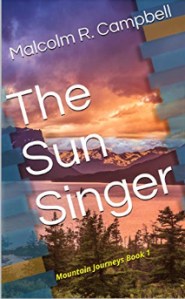 “The Sun Singer is gloriously convoluted, with threads that turn on themselves and lyrical prose on which you can float down the mysterious, sun-shaded channels of this charmingly liquid story” – Diana Gabaldon
Diana Gabaldon to receive Great Scot Award
from the National Trust for Scotland Foundation

January 18, 2022, New York City – American author Diana Gabaldon has brought the romance and drama of Scottish history to life for more than 50 million readers worldwide with her best-selling Outlander novels. Now, The National Trust for Scotland Foundation USA will recognize her extraordinary contributions to Scotland and America’s shared heritage by presenting her with the 2022 Great Scot Award at their 15th annual fundraising gala, A Celebration of Scotland’s Treasures, on April 14, 2022.
“2022 has been designated Scotland’s Year of Stories, and so it seems especially appropriate to honor Diana Gabaldon, whose stories have come to embody Scotland and Scottish culture for millions of readers and television watchers around the world,” said Helen E.R. Sayles CBE, The National Trust for Scotland Foundation USA’s chair. “We are delighted to have the opportunity to thank her for inspiring so many to explore and fall in love with Scotland.”
Ms. Gabaldon’s first novel, Outlander, was published in 1991, and the story has extended across eight additional New York Times bestselling volumes. The latest, Go Tell the Bees That I Am Gone, was published in November 2021.
Largely set in 18th-century Scotland, many of the Outlander novels use actual historic events as the backdrop for Claire and Jamie Fraser’s romance. Some of these, including the 1746 Battle of Culloden, are historic sites now in the care of the National Trust for Scotland.
In addition, National Trust for Scotland properties including Falkland Palace, Preston Mill, and the Village of Culross, have been used in filming the Sony / Starz television series based on Ms. Gabaldon’s work. The series stars Catriona Balfe and Sam Heughan, and its sixth season premieres on March 6, 2022.
“I have seen firsthand how American readers have embraced Scottish culture through their love of Outlander,” said Kirstin Bridier, executive director of NTSUSA. “Many of her readers have contributed generously to the preservation of National Trust for Scotland sites associated with the novels and television show – sites like Preston Mill. We could not ask for a better ambassador for our work.”
The presentation of the Great Scot Award is at the heart of a black-tie event that raises funds to support Scotland’s largest conservation charity. Past recipients of the award include documentary filmmaker Ken Burns, comedian Sir Billy Connolly, Golden Globe-winning actor Brian Cox, endurance athlete and world-record breaking cyclist Mark Beaumont, sculptor Andy Scott, and authors Denise Mina and Alexander McCall Smith.
A Celebration of Scotland’s Treasures is a festive evening that features a whisky tasting by The Macallan; the recitation of Burns’ Ode to a Haggis by Alasdair Nichol, Chairman of Freeman’s auction house and a frequent appraiser on PBS’s Antiques Roadshow; Scottish country dancing; and live and silent auctions. Before heading home, guests form a circle, clasp hands, and sing Auld Lang Syne.
—
Meal do naidheachd, a sheann charaid!
(Congratulations, old friend!)
Sunday miscellany
 Currently Reading: I’ve finally gotten around to reading Lauren Groff’s Florida (2018), a collection eleven well-crafted stories set in the state where I grew up. I like the stories’ strange characters. The New York Times called the stories “haunting,” and they certainly are that.
 - Are We Learning Anything in School? Jesse Watters, a conservative commentator, interviewed a bunch of people on the street for Veterans Day in a manner similar to what Jay Leno used to do on the Tonight Show. He asked such questions as “Who did we fight in World War II,” “Who bombed Pearl Harbor?” “Who did we fight in the revolutionary war?” and othe facts that seem basic to understanding the country from a history and civics point of view. There were a lot of wrong answers. Too many. Watters and I don’t agree on many things, but my take on this poor showing of knowledge is that it demonstrates one of the reasons everything is so polarized: we don’t seem to have a common base of information.
 Living Jackson Magazine. This short-lived Georgia magazine brought great articles with high production values and crisp writing to the readers of Jefferson, Georgia in the northeast section of the state. I wrote most of the magazine’s book reviews, focusing on local and regional authors. I felt a bit of nostalgia when I came across this old photograph that appeared with an article on Georgia writers, “A Truck Load of Authors” published in 2006. When I posted this picture on Facebook this past week, that 1961 Studebaker pickup truck got more attention than the people.
 Diana Gabadon: When Diana published the first of the nine novels (counting the one about to be released) in 1991, we were both members of the CompuServe Literary Forum. She posted snippets of Outlander (the first novel) on the forum and these created a lot of discussions about writing. The books are long, detailed, and require a great deal of research. However, I don’t think any of us thought then that the series would still be in progress thirty years later. Go Tell The Bees That I’m Gone comes out on November 23. I appreciate her work as well as the fact that as long as the forum was active, the help that she offered the aspiring writers there was a godsend. I was lucky to meet her once at a book signing in Atlanta. Plus, she wrote a blurb for one of my novels!
Have a great week.
A shortlist of stuff
- Today’s bad weather in Georgia came and went between dawn and noon. No tornados. Blowing rain and river flooding.
 Just wondering why I didn’t write Midnight in the Garden of Good and Evil. A comment from the character Miss Harty about Billy Sunday sets the tone for the novel: “There was great excitement. Mr. Sunday got up and declared at the top of his voice that Savannah was ‘the wickedest city in the world!’ Well, of course, we all thought that was perfectly marvelous.”
- Regardless of which side of the political divide we live on, I think all of us are tired of the crap at the Mexican border. We don’t need to mistreat people, nor do we need to be emotionally brainwashed into letting everyone in. This isn’t rocket science.
 I guess I’ve led a sheltered life. I’ve been vaccinated against mostly everything and haven’t given it a second thought. Now with COVID, I’m learning there are people whose distrust of vaccines is (for them) like holy writ. I don’t understand that. But it does raise the question about whether or not forced vaccinations and vaccination cards are too much government. I see this as rather like the Brits mandating blackout curtains during the blitz: it makes us all safer as long as the cops don’t hassle us on the street asking to see “our papers.”
 The ninth book in Diana Gabaldon’s “Outlander” series Go Tell The Bees That I’m Gone will be published this year (I think). I’ve read all the primary novels in the series, but few of those based on secondary characters. Who knew when this storyline began that reading it would be a lifetime pursuit? But I’ll probably get a copy after we get out of the expensive hardcover phase of book releases. I’m a Scot. I’m cheap even though I met Diana years ago in Atlanta.
- A friend of mine will probably have to drive several states away from her home to look after her aging parents again. Her last visit was more dear than she expected and yet she wonders why none of her siblings will lend a hand. She’s just as busy as her siblings, but they have unending excuses for not helping. Elderly parents often make decisions that make life harder for their children, and usually, the difficulties are left to the oldest daughter to solve.
 The Glacier Park employees’ reunion will take place this summer at Many Glacier Hotel. They happen from time to time but are too far away for me to attend. Everyone was worried about access to the east side of the park, but the Blackfeet Reservation has announced it will be open for travelers going to the park (unlike last summer). I will miss it more than I can say.

 I’ve written several novels set in the park.
Do as Diana Gabaldon does, not as I do
 Those of us who were members of the former CompuServe Literary Forum witnessed the birth of Diana Gabaldon’s Outlander series. She uploaded snippets of the work in progress, encouraged discussions about them, and later when she became a successful author continued to support the forum and answer our questions about the art and craft and business of writing novels. Her gracious support of other writers included her writing a blurb for my novel The Sun Singer.
In our craft discussions, she and I disagreed on one thing. And that was, should the author stop writing while completing a gap in the research, or should s/he continue writing and fill in the correct information later?
She said: “Keep writing.” I said: “Stop writing.”
She argued that when the author was on a roll, stopping to fill in historical or other information would simply derail the flow of the novel and the author’s daily writing process.
I argued that writing while something is still unknown could very well send the novel down the “wrong road” and necessitate a lot of needless rewriting later.
She preferred to put a “placeholder” in the manuscript, reminding her that she still had some facts to verify before submitting the book to her agent.
I preferred (and still prefer) to know the facts–whether they apply to history, geography, customs, or whatever–before I write the next scene or chapter.
It goes without saying that her Outlander series of books–and their spinoffs–have been infinitely more successful than my novels. So, I suggest you follow her advice and keep putting words down on the page even if you’re not finished verifying your information.
The fact that I’m eight years older than Diana doesn’t mean that I have more wisdom. It simply means that I’m eight years more set in my ways. I’ll freely admit that as I continue pausing my writing while checking my facts.
If you’re not set in your ways, putting a placeholder in our MS is probably the smart thing to do until you have time to look up what you still need to lookup.
My novel-in-progress, “Weeping Wall,” sat for several months while I verified the geological information I needed in the first paragraph.
Keeping those sequels consistent
At a book signing for his award-winning novel A Distant Flame, Philip Lee Williams told us that before he started worked on the manuscript, he created a timeline showing where everyone was at every moment as Union troops approached Atlanta. I told him my wife was going to hear about that because she thinks I’m overly picky about research. He said a lot of people’s eyes glazed over at the thought of such a timeline.
 I’ve been reading Diana Gabaldon’s “Outlander Series” ever since the first book appeared in 1991. I’m reading Written in My Own Heart’s Blood (2014) now. I doubt she outlined all of the English, Scots, and American history her series has covered leading up to the current novel set during the American revolution.
But her large, 800-page books are remarkably detailed and have a large cast of characters on multiple timelines. I wonder how she keeps it all straight. I wonder if Williams would have to re-read A Distant Flame in addition to his Civil War timeline if he wrote a sequel.
 Readers–like Star Trek fans–are always the first to catch inconsistencies the author and his/her editors missed. A minor character’s eyes change color between books or episodes, a battle fought one year is suddenly at a different time and place, a person who said he didn’t know the main character turns out to have met them dozens of times in earlier books.
I’m an intuitive writer. That means I never outline anything and don’t know before writing a scene how it’s going to end. I’ve had a good editor and she sees things I miss. But she can’t fix major goofs. I worried about making Sarabande consistent with The Sun Singer. And now, as I work on a sequel to Conjure Woman’s Cat, I’m amazed at how often I have to go back and check things to make sure the new book isn’t out of sync with the earlier book.
This is the only time I wish I were disciplined enough to write an outline. Truth be told, I sort of cheated in English classes where we were expected to turn in both the outline and the term paper because I always wrote the outline after the paper was done. I suppose I can do now, but my eyes glaze over at the thought.
It’s strange re-reading ones own work. I come across passages that I’m surprised that I was able to write. Other passages, I wish I’d handled slightly differently. And I marvel at how my detail-oriented mind will consider the growing seasons of plants the characters see while hiking through the woods, but cannot remember who they were hiking with.
Of course, if you’re submitting to major publishers and agents, they’re going to require a synopsis. I’ve written those several times and have to confess that having them later on as reference does help keep sequels consistent. Some writers make character lists and spend a great deal of time writing little character studies about them that include height, weight, eye color, hair color, and other details. If I did that, I wouldn’t have to search through my previous books using terms like “hair” or “eyes” to see what color I chose.
It’s not that that stuff doesn’t matter. It does. It’s an important part of making the character and his/her actions seem real and valid. Nobody ever accused me of having an encyclopedic mind. I’m horrible at Scrabble, Jeopardy and Trivial Pursuit. I think it all goes back to a college geology course in which the teacher said, in this class we don’t memorize things for tests; instead, we talk about larger concepts because anyone with a good set of reference books can look up the details.
That was my new mantra. Never again would I consider listing all the battles of a war and memorizing the dates they happened–much less all the characters in one of my books and the colors of their eyes, hair and favorite shirts and blouses.
While, I love writing without an outline, it plays hell with keeping all the facts straight when it’s time to write a sequel. Yes, I know, I can forget writing sequels. Unfortunately, I like the characters too much and can easily think of more stories to tell about them.
If you write, how do you keep your characters straight from book to book to book. If you read novels in a series, do you catch yourself going back to earlier books because you think the author has gotten something backwards?
Since I write magical realism, fantasy and paranormal stories, I’m ready for any reader who finds any inconsistency. “Hey, Dude, it’s magic.”
–Malcolm
 Malcolm R. Campbell is the author of “Sarabande,” a contemporary fantasy coming out in a new edition from Thomas-Jacob Publishing on November 1. You can pre-order the Kindle edition now.
Friday Finds: ‘The Space Between’ by Diana Gabaldon
FRIDAY FINDS, hosted Should Be Reading, showcases the books you ‘found’ and added to your To Be Read (TBR) list… whether you found them online, or in a bookstore, or in the library — wherever! (they aren’t necessarily books you purchased).
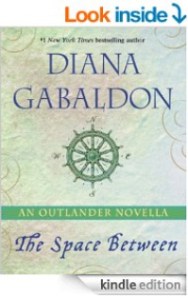 I’ve been reading Diana Gabaldon’s “Outlander Series” since it began in 1991. The latest novel in the series, An Echo in the Bone, was released in 2009, with Written in My Own Heart’s Blood expected this June.
While waiting for the June release, I was happy to find Gabaldon’s novella, The Space Between, which came out last month.
From the Publisher
Joan MacKimmie is on her way to Paris to take up her vocation as a nun. Yet her decision is less a matter of faith than fear, for Joan is plagued by mysterious voices that speak of the future, and by visions that mark those about to die. The sanctuary of the nunnery promises respite from these unwanted visitations . . . or so she prays. Her chaperone is Michael Murray, a young widower who, though he still mourns the death of his wife, finds himself powerfully drawn to his charge. But when the time-traveling Comte St. Germain learns of Joan’s presence in Paris, and of her link to Claire Fraser—La Dame Blanche—Murray is drawn into a battle whose stakes are not merely the life but the very soul of the Scotswoman who, without even trying, has won his heart.
–
While this book, like A Leaf on the Wind of All Hallows (2012), is outside the mainstream series, it’s an interesting look at related characters and themes.
 Malcolm R. Campbell is the author of the Garden of Heaven Series, a three-book fantasy and magical realism saga, including “The Seeker,” “The Sailor” and “The Betrayed.”
Book Review: ‘An Echo in the Bone’
 An Echo in the Bone by Diana Gabaldon
My rating: 5 of 5 stars
Like many fans of the “Outlander” series, I “met” author Diana Gabaldon on an online literary forum in the days of yore when CompuServe was the Internet service provider. At the time, Diana was posting what she referred to as “chunks” of her work-in-progress and garnering very enthusiastic comments and a fair amount of interesting discussion. The excerpts were so fluid and natural, I fair thought we might all end up speaking either Highland English or Gàidhlig before the manuscript was complete. In 1991, the writing chunks became “Outlander.”
In the years that followed, we traveled with Sassenach (English people and Lowlanders) Claire Beauchamp Randall through multiple countries in time lines beginning in 1945 and 1743. In 1945, she’s married to Frank Randall. In 1743, she’s in love with Highlander James Fraser.
As “Outlander” led to a sequel and then another sequel, I thought it rather presumptuous to review any of the installments of a series (heading toward 17 million copies sold in 21 languages and 24 countries) written by the very gracious mentor for the writers on the CompuServe Literary (now Books & Authors) Forum.
But 19 years and seven books have passed since I read the opening line “It wasn’t a very likely place for disappearances, at least not at first glance” as former combat nurse Claire Randall surveyed a 1945 Inverness bed and breakfast with “fading floral wallpaper” where she was celebrating a second honeymoon with Frank. Surely Diana would say “dinna fash” if I told her I was mustering up the grit to say a wee word or two.
Were I to distill this wordy review down to basics and say only a wee word or two, it would be this. “An Echo in the Bone” is the best book in the series since the first one.
Some readers have criticized the novel’s episodic presentation and multiple story lines. On the contrary, I view this approach as one of the novel’s many strengths, others being the evolving characterizations of individuals series readers have known for years, the exceptional detail and historical accuracy, and the author’s clear focus on the tension, danger and humor that make a darned fine story.
With “An Echo in the Bone,” we have regained the tension and tight plotting that we lost to come extent in “The Fiery Cross” and and “A Breath of Snow and Ashes” which spent too much time with everyday affairs at the expense of the stories’ primary thrusts. Well after “Outlander,” it was almost as though the uniqueness of a modern and highly skilled medical practitioner living two centuries before her own time was being asked to carry too much of the books’ weight.
“An Echo in the Bone,” however, is exceptionally strong. Multiple characters grow in multiple times and places, and the episodic approach strengthens the drama of the strong doses of harm’s way in each lifeline we’re following. Drama is not contained by linear time, a fact Diana has proven many times over, and this time out, she has honed her writer’s scalpel to a fine edge indeed.
The use Fort Ticonderoga and the September and October 1777 Battles of Saratoga as a major focal point anchors the novel in historic time and provides a memorable counterpane for compelling action sequences and character development without losing the series hallmark (often earthy and humorous) interactions between a feisty Sassenach and a volatile Highlander.
No one need try to read “An Echo in the Bone” as a standalone novel, for the characters have too much history for that and there’s no way to catch up with it short of, say, adding some distracting and/or helpful footnotes. And then there’s the cliffhanger ending, or–more accurately–the multiple cliffhanger endings. Some readers are saying (basically), “Diana, how can you do this to us?”
My last wee world or two is: How can she not, for storytelling doesn’t get better than this.
Copyright (c) 2010 by Malcolm R. Campbell
 With each purchase of my novel “The Sun Singer” in any format, Vanilla Heart Publishing makes a donation to Glacier National Park in support of this year’s centennial celebration. It’s only $5.99 on Kindle.
“The Sun Singer,” an adventure novel that also bends time, is set in Glacier National Park’s Swiftcurrent Valley.
 Malcolm's Round Table