

I don’t think my parents shoved me into many years of piano lessons when I was growing so that I’d end up writing songs like “Georgia on My Mind” and “Stardust.”
Their primary hope was that, by learning how to play the piano, I’d be the Hoagy Carmichael they saw in movies like “To Have and Have Not” and “The Las Vegas Story.”
The piano guy was always popular. He’d go into a club or a home where a piano sat idle, sit down, begin to play, and suddenly he was surrounded by people who wanted to listen, sing or dance. Popular, sure, I protested, but he never got the girl.
Bogart always had more going for him than Hoagy.
I Preferred Jazz, Ragtime and Boogie Woogie
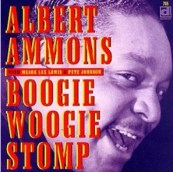 I didn’t want to play exactly like Hoagy Carmichael. I wanted to play more like Scott Joplin (“Maple Leaf Rag”) and Albert Ammons (“Boogie Woogie Stomp”). But my piano teacher, bless her heart, kept giving me classical stuff. I liked it, but I didn’t want to play it. I pointed out to my parents that Hoagy Carmichael never walked into a club and played the Chopin Polonaise Op. 53 in A flat major. (That piece was always beyond my “skills,” as it turned out.)
Even though I was long past piano lessons and no longer living at home when “The Sting” came out in 1973 creating a temporary resurgence in ragtime, I mentioned in a letter to my parents that if they’d allowed me to perfect the “Maple Leaf Rag” when I was growing up, I’d be a popular man about town rather than an unknown writer.
Goodness knows, I tried to perfect ragtime. Trouble was, the family piano was in the living room just in case Hoagy Carmichael dropped by. When I practiced my classical music, my parents heard every note. But when they went outside, I’d morph the stuff into ragtime or boogie woogie. Invariably, a window was open and they’d comment when they came back inside that they’d never heard Bach with an eight-to-the-bar boogie left hand.

My piano playing, such as it was, deteriorated (if that could be possible) down to pretty much nothing but “Chopsticks.” Sure, I listened to Horowitz playing Chopin and occasionally imagined I could play like that. Horowitz probably practiced more than I did. So did Scott Joplin and Albert Ammons, kings of ragtime and boogie woogie.
The characters in my stories often listen to the music I wanted to play. In “Sweetbay Magnolia” (in Emily’s Stories), Emily’s father is a ragtime fan and listens to Scott Joplin in his truck. This gave me an excuse to listen to Joplin as I timed the songs on an album to see how many of them one would hear on a typical trip between Tallahassee and St. Marks, Florida.
Now, I’m working on another Florida-based story, this one set in the 1950s. There’s a juke joint in the story and the customers there want to dance. In those days–and in my story–nothing made people want to dance more than the raw energy of a piano player with–as Peter Silvester called it in the title of his book–a left hand like God. Not that I need an excuse, but now I have a good reason for listening to Pine Top Smith, Albert Ammons and today’s Jools Holland.
Writers often tell their friends to “be good” or they’ll end up in a story. Good advice, I suppose. But there are times when I’m more interested in the skills my friends have that I never could perfect. If you can play Chopin or Bach, I might put you in a story. But seriously, if you sit down at the piano of my childhood which sits seldom-used in my living room now and play “The Entertainer” or “Boogie Woogie Blues,” your music will catch my attention faster than your real or imagined wicked deeds.
Then, as we used to say, we’ll be cooking with gas.

“I’ve recommended this audiobook more than any other I’ve listened to.” from M. Stein’s review
 Malcolm's Round Table