We lost a literary giant

Since reading is personal and visceral and very subjective, I cannot say what drew me to Cormac McCarthy’s novels year after year.  I liked his plots, his mix of minimalism and lyrical passages, the closeness of the land in his work, his ear for authentic dialogue, and a writing approach that dragged readers kicking and screaming into some of the most beautiful and the most violent tales they ever experienced.

As quoted in Wikipedia, In 2003, literary critic Harold Bloom named McCarthy as one of the four major living American novelists, alongside Don DeLilloThomas Pynchon, and Philip Roth. His 1994 book The Western Canon had listed Child of God, Suttree, and Blood Meridian among the works of contemporary literature he predicted would endure and become ‘‘canonical’“. Bloom reserved his highest praise for Blood Meridian, which he called ‘the greatest single book since Faulkner’s As I Lay Dying’“, and though he held less esteem for McCarthy’s other novels he said that ‘to have written even one book so authentically strong and allusive, and capable of the perpetual reverberation that Blood Meridian possesses more than justifies him. … He has attained genius with that book.'”

Oddly enough, his Pulitzer Prize Winning novel The Road is probably my least favorite, though I like journey stories in general. In many ways, I think it got the Pulitzer for the same reason actors sometimes win Academy Awards: the powers that be realize the recipient should have gotten the award for an early book/movie and hand out the honor as a last-ditch chance to even things up. I would have picked Blood Meridian over The Road, but I wasn’t consulted. <g>

There are quite a few McCarthy retrospectives and homages online today. It’s nice to see them because there are times when I think he’s “underread” by people who prefer lesser stuff and don’t think of him when new titles are announced.

I liked the subhead in the story in The Atlantic: “The worlds depicted in his novels are not built for mortal humans like you and me.”  CNN said, “Despite accolades, McCarthy remained relatively obscure for much of his career; as recently as 1992, 27 years after his first book was published, the New York Times Book Review said he “may be the best unknown novelist in America.”

Typical of his work are these quotes:

“You never know what worse luck your bad luck has saved you from.”

“War was always here. Before man was, war waited for him. The ultimate trade awaiting its ultimate practitioner.”

“Your heart’s desire is to be told some mystery. The mystery is that there is no mystery.”

“A man’s at odds to know his mind cause his mind is aught he has to know it with. He can know his heart, but he dont want to. Rightly so. Best not to look in there. It aint the heart of a creature that is bound in the way that God has set for it. You can find meanness in the least of creatures, but when God made man the devil was at his elbow. A creature that can do anything. Make a machine. And a machine to make the machine. And evil that can run itself a thousand years, no need to tend it.”

“That night he dreamt of horses in a field on a high plain where the spring rains had brought up the grass and the wildflowers out of the ground and the flowers ran all blue and yellow far as the eye could see and in the dream he was among the horses running and in the dream he himself could run with the horses and they coursed the young mares and fillies over the plain where their rich bay and their rich chestnut colors shone in the sun and the young colts ran with their dams and trampled down the flowers in a haze of pollen that hung in the sun like powdered gold and they ran he and the horses out along the high mesas where the ground resounded under their running hooves and they flowed and changed and ran and their manes and tails blew off of them like spume and there was nothing else at all in that high world and they moved all of them in a resonance that was like a music among them and they were none of them afraid neither horse nor colt nor mare and they ran in that resonance which is the world itself and which cannot be spoken but only praised.”

McCarthy always gave us a story and left us with divine PTSD.

–Malcolm

When the muses outdo themselves: Favorite passages from books

Sometimes sentence or paragraph in a novel stops me in my tracks because it’s perfect, perfectly beautiful, dangerously apt, and it flows from word to word like birds or gods singing. Here are a few of my favorites:

  1. The Prince of Tides by Pat Conroy: It was growing dark on this long southern evening, and suddenly, at the exact point her finger had indicated, the moon lifted a forehead of stunning gold above the horizon, lifted straight out of filigreed, light-intoxicated clouds that lay on the skyline in attendant veils. Behind us, the sun was setting in a simultaneous congruent withdrawal and the river turned to flame in a quiet duel of gold….The new gold of moon astonishing and ascendant, he depleted gold of sunset extinguishing itself in the long westward slide, it was the old dance of days in the Carolina marshes, the breathtaking death of days before the eyes of children, until the sun vanished, its final signature a ribbon of bullion strung across the tops of water oaks.
  2. Sunset Song in the Scots Quair trilogy by Lewis Grassic GibbonSo that was Chris and her reading and schooling, two Chrisses there were that fought for her heart and tormented her. You hated the land and the coarse speak of the folk and learning was brave and fine one day and the next you’d waken with the peewits crying across the hills, deep and deep, crying in the heart of you and the smell of the earth in your face, almost you’d cry for that, the beauty of it and the sweetness of the Scottish land and skies. You saw their faces in firelight, father’s and mother’s and the neighbours’, before the lamps lit up, tired and kind, faces dear and close to you, you wanted the words they’d known and used, forgotten in the far-off youngness of their lives, Scots words to tell to your heart, how they wrung it and held it, the toil of their days and unendingly their fight. And the next minute that passed from you, you were English, back to the English words so sharp and clean and true–for a while, for a while, till they slid so smooth from your throat you knew they could never say anything that was worth the saying at all.
  3. The Night Circus by Erin MorgensternSomeone needs to tell those tales. When the battles are fought and won and lost, when the pirates find their treasures and the dragons eat their foes for breakfast with a nice cup of Lapsang souchong, someone needs to tell their bits of overlapping narrative. There’s magic in that. It’s in the listener, and for each and every ear it will be different, and it will affect them in ways they can never predict. From the mundane to the profound. You may tell a tale that takes up residence in someone’s soul, becomes their blood and self and purpose. That tale will move them and drive them and who knows what they might do because of it, because of your words. That is your role, your gift. Your sister may be able to see the future, but you yourself can shape it, boy. Do not forget that… there are many kinds of magic, after all.
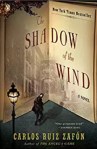
  4. The Shadow of the Wind by Carlos Ruiz ZafónEvery book, every volume you see here, has a soul. The soul of the person who wrote it and of those who read it and lived and dreamed with it. Every time a book changes hands, every time someone runs his eyes down its pages, its spirit grows and strengthens. And also this: Once, in my father’s bookshop, I heard a regular customer say that few things leave a deeper mark on a reader than the first book that finds its way into his heart. Those first images, the echo of words we think we have left behind, accompany us throughout our lives and sculpt a palace in our memory to which, sooner or later—no matter how many books we read, how many worlds we discover, or how much we learn or forget—we will return.
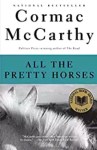
  5. All the Pretty Horses by Cormac McCarthy: They heard somewhere in that tenantless night a bell that tolled and ceased where no bell was and they rode out on the round dais of the earth which alone was dark and no light to it and which carried their figures and bore them up into the swarming stars so that they rode not under but among them and they rode at once jaunty and circumspect, like thieves newly loosed in that dark electric, like young thieves in a glowing orchard, loosely jacketed against the cold and ten thousand worlds for the choosing.

You probably have some favorite lines as well, lines you might even copy on to scraps of paper to be hidden away in your wallet or purse for those moment when you need to prove again to yourself that there is still hope for the world.

Malcolm

Great Fiction: Location, Location, Location

These days, most people say they like character-driven novels. As Barbra Streisand sang years ago, “People who need people, Are the luckiest people in the world.” We want to read about people, pretend to be them, laugh at them, hate them, learn from them and, if nothing else, see what they’ll do next.

nixNonetheless, location can make or break a novel. Picture this:

  • The Night Circus set in the day time or, worse yet, Dubuque.
  • The Prince of Tides without the tides or, worse yet, without the the lush bays and swamps an estuaries of the South Carolina coast. (“It was growing dark on this long southern evening, and suddenly, at the exact point her finger had indicated, the moon lifted a forehead of stunning gold above the horizon, lifted straight out of filigreed, light-intoxicated clouds that lay on the skyline in attendant veils.”)
  • Jonathan Strange & Mr Norrell set in modern times or, worse yet, within the 1950s neighborhood of Happy Days or the early 1960s city ambiance of American Graffiti. (“Where does the wind come from that blows upon your face, that fans the pages of your book? Where the harum-scarum magic of small wild creatures meets the magic of Man, where the language of the wind and the rain and the trees can be understood, there we will find the Raven King.”)
  • All the Pretty Horses moved from Texas onto a Star Wars planet or, worse yet,  the Catskill Mountains.

Setting is more than a generic backdrop for the action

In his essay, “Setting as Character,” Crawford Kilian wrote, “Whether it’s Scott Fitzgerald’s 1920s Long Island or Tolkien’s Shire, the setting really is a kind of character in the story. Geographically and socially, the setting shapes the other characters, making some actions inevitable and others impossible.” The novels I listed above not only didn’t happen somewhere else, they couldn’t.

ozmapOn a similar note, a recent post on ProActive Writer, explored the importance of settings with the idea that “ignoring setting, or even giving it only a passing consideration, will lead to an unconvincing story.” The post views setting as the framework or the skeleton that holds up your plot and characters. Some authors build worlds for their novels before writing the novels; others let the worlds evolve while they write their stories. Either way, the worlds—real or imagined—must be convincing, they must fit the story like a warm mitten on a winter evening.

My Location Settings

I say all this as a way of introducing a series of posts on my Sun Singer’s Travels blog about the location settings in my novels. These easy-to-read posts explain each setting, show or describe what happened there in the novel, and explain why I chose the setting.

My approach to settings is organic and intuitive. By that I mean that I don’t make fiction-class lists of the attributes of the settings I want to use. No literary theory here; just places and reasons why I liked them. So far, the series has three installments:

Future posts will look at the world of a city in the Midwest, an aircraft carrier, a bridge over a wild river, and a sailor town. Stop by and see what you think. Whether you agree or disagree with my rationale, perhaps these posts will help you choose the best possible settings for your short stories and novels.

Malcolm

Malcolm R. Campbell is the author of contemporary fantasy novels.

Read it now on your Kindle