I promise not to show you any KKK pictures

When I was growing up–gosh, I already sound like somebody’s grandpa–the KKK was everywhere. I didn’t take any pictures of them because I thought that would sully up my camera. More than once, I’ve thought of downloading some KKK pix and putting them into a post called “Why I Write the Novels I Write.”

Thing is, those pictures make me physically ill. I’d probably end up in the hospital before I finished my post if I filled it full of Klan pix. I feel the same way when I’m watching the news and suddenly here comes a video of some white supremacists who look like cretins who’ve never taken a shower and were disowned by their families back in grade school.

If the white supremacists are parading around as though they’re the best the White race has to offer, they’re failing big time. I live in the South. That means a lot of people in the “social” media assume I support the Klan and wish the South had won the Civil War. Nope, because I can’t tell the difference between a Klansman and a cockroach.

When I was little, I hoped the day would come when racism would no longer be an issue. Apparently, I was more naïve than I suspected because years later, today’s news is filled with it. I keep hoping there will be a breakthrough, a person all races can respect who comes along and stops the shouting and the violence.  Politics makes it difficult for such a person to arise because the powers that be love polarization. So, we yell and scream at each other rather than seeking common ground.

During the past months of pandemic and violence, a lot of writers are looking for the right words to write, some essay or op-ed that cools down the violence and the rhetoric and focuses all of us again on the loving democracy where we thought we lived. I’m not wise enough to write that essay, but surely there must be somebody out there who can write it, who can bring us back together, who can stop us from pointing fingers, who can fill us with empathy and compassion instead of the fears that lead people to support extremes.

We need, I think, to rally around the ideals on which this country was founded instead of looking for weeds in the personal and political lives of our founders and saying this country is a country of flaws. There’s a lot to fix, but I just can’t bring myself to see eye to eye with those who think they can fix the U.S. by destroying everything we hold dear because that “everything” isn’t perfect.

We can honor what our Founding Fathers intended, given the thinking of their times, and build on the best of it.

–Malcolm


Coming soon: ‘Fate’s Arrows’

Within a couple of weeks, more or less, Thomas-Jacob Publishing will release the fourth novel in my Florida Folk Magic Series, Fate’s Arrows.

This will be the first book in the series that isn’t narrated by the cat Lena. Instead, Pollyanna–introduced in book three–is the protagonist. Set in North Florida in 1955, this book focuses on Pollyanna’s fight against the Klan. Those of you who’ve read some of the previous books in the series will already know most of the characters.

Here’s a look at the cover:

Once we get to the cover art, formatting, and final proofreading, the book begins to seem to a reality to me.

Malcolm

Parents aren’t supposed to like one of their children more than the others

Shameless promotion from your sponsor (me)

Southwest Airlines used to raise eyebrows during the flight attendant’s monologue about the plane’s safety features when s/he said, “If the masks are lowered during a flight put yours on first and then put the next mask on the child most likely to support you in old age.” Or, “The child you like best.”

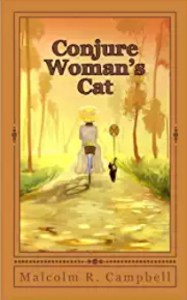
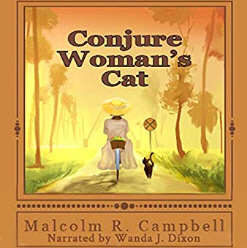
I thought of this when a friend asked several days ago which of my novels I liked best while acknowledging that that might be impossible to do. I can pick one even though that doesn’t mean I’m discounting all the others. I told her it’s Conjure Woman’s Cat.

Here’s why.

  • It represented a change of focus for me in that I finally decided to address a hot-button issue for me: racism, Jim Crow, and the KKK as it was in Florida during my childhood.
  • After focussing on contemporary fantasy and one satire, I embraced magical realism with a story that would give rise to two sequels (soon to be three) while exploring the folk magic that was all around me in the Florida Panhandle.
  • While two earlier novels, The Sun Singer and Sarabande, focused on the somewhat esoteric themes behind the hero’s journey and the heroine’s journey, Conjure Woman’s Cat focused on backyard magic with a lot of folklore and a lot of ingredients close at hand.
  • I had a chance to do something unique and that was using a cat as the narrator. Why did I do this? Because, after having one or more cats in our household at all times for thirty-five years, I thought it more likely I could accurately write from a cat’s perspective than that of an African American woman who was (as she puts it) “older than dirt.”
  • My publisher, Thomas-Jacob, and I were lucky in that we found a wonderful and highly talented narrator in Wanda J. Dixon for the audio edition. She’s gotten rave reader reviews on Audible and a coveted Earphones Award Winner review from AudioFile Magazine. (“Most distinctive is Eulalie’s recurring sigh, which conveys her frustration with Florida in the 1950s, when Jim Crow laws and ‘Colored Only’ signs were routine.”)

Long-time readers of this blog know that I’m partial to Virginia Woolf’s statement in her novel Orlando: “In short, every secret of a writer’s soul, every experience of his life, every quality of his mind is written large in his works.” I think that’s a given if an author is true to himself/herself. Yes, parts of me–my experiences and approach to life–live on in all my novels. But they loom the largest in Conjure Woman’s Cat.

The novel takes on more significance in my thoughts as riots and racism are looming large in the national consciousness–and major cities’ streets.

Malcolm

Does everyone re-imagine their past or is it just writers?

There are moments in everyone’s past that didn’t go well. Sometimes those moments grow out of our own mistakes and sometimes they seem like the so-called “cruel hand of fate” stirring perfect moments into swill.

Writers are used to saying, “What if.” So it feels completely natural to me when I happen to think of a bad moment out of the past to change it into a good moment. As if that moment is part of a novel, it’s as though I’ve changed my mind and I’m going to allow the protagonist to be happy rather than seeing them broken by criminals and car accidents and storms.
I like my re-imagings about such things so much, that they seem more real than what really happened. Does everyone do this, or is it just writers?

People say writers play God by moving their characters around like pieces on a chessboard. That’s not really true because my characters are more in control of their own destiny in my novels than I am. If a character wants to jump off a cliff, there’s little I can do to stop it.

Maybe a lot of us jumped off a lot of cliffs in our past and now we’re stuck with the memories of moments that didn’t go well–along with those that did go well. We can choose, I think, which group of moments defines us and what kind of attitude and belief system we project out into the world. Yet, playing let’s pretend is always tempting, like having Rhett tell Scarlett, “Actually, my dear, I do give a damn.”

So, too, I think back and pretend I didn’t hurt the people I hurt and that the people who hurt me changed their minds before they did it. To the extent that perception is reality, maybe our little games of let’s pretend alter the past in ways beyond our ken.

At any rate, that’s how writers see the world. I hope we’re not alone in this respect.

Malcolm

I’m sure you’re not surprised that I’m the author of magical realism and contemporary fantasy novels and short stories.

I’m so old, my secret crushes are dying off

My wife smiled when she told me twelve years ago when Suzanne Pleshette died that I need to find a fresh group of Hollywood actresses to fantasize about. At the time, I said, “Well, Millie Perkins is still around.” “Yes, but she’s older than you,” said my wife.

When Shirley Maclaine appeared on episodes of Downton Abbey, I had to acknowledge–even to myself–that she was no longer Fran Kubelik from my favorite movie “The Apartment” (1960).
I identify with the film’s C. C. Baxter (Jack Lemmon) because he’s the poor schmuck who’s always lending his apartment to the bigwigs at his company to facilitate their liaisons with women while he never “gets the girl.”

When I first saw “The Apartment,” I imagined that I’d be driving along a lonely road in my 1954 Chevy when what should I see, but a broken-down Rolls Royce Silver Cloud with Shirley alone in the back seat while her driver went in search of help but had been eaten by alligators when he cut across a swamp. (Damn fool.)

When I open the door, she says, “Oh, my love, my darling I’ve hungered for your touch, a long lonely time. . .”

“That song hasn’t been released yet,” I say.

“I get an AAC, and Advanced Actress Copy,” she says, demurely.

“If so, you should have told Hy Zaret that he screwed up the lyrics,” I said.

“How so?”

That first line should have said “Oh, my love, my darling love, I’ve hungered for your touch.'”

“When you’re right, you’re right, lyrics-wise and Everly Brothers-wise,” she says. “You can take me away from all this, can’t you?”

“All what?”

“The swamp, the alligators, the car, the long lonely time since Fran Kubelik shuffled the cards at the end of ‘The Apartment’ and told C. C. Baxter to shut up and deal. Are you ready to deal, Malcolm?”

I never get to answer because that’s when Mother wakes me up and says, “It’s time to run your paper route.”

Malcolm


Anniversary of the unconscionable acts at Hiroshima and Nagasaki

“A hundred thousand people were killed by the atomic bomb, and these six were among the survivors. They still wonder why they lived when so many others died. Each of them counts many small items of chance or volition—a step taken in time, a decision to go indoors, catching one streetcar instead of the next—that spared him. And now each knows that in the act of survival he lived a dozen lives and saw more death than he ever thought he would see. At the time, none of them knew anything.” – John Hersey, “Hiroshima,” The New Yorker, August 24, 1946

Today marks the anniversary of the bombing of Hiroshima when planes from the 393d Bombardment Squadron of B-29 aircraft participating in Operation Centerboard, including the Enola Gay with a 9,000-pound uranium-235 atomic bomb named Little Boy, flew to Japan on August 6, 1945, and killed  140,000 people.  Intended for a bridge, the bomb was caught in a crosswind and detonated over a clinic.

This is not the kind of anniversary one celebrates any more than the August 9th bombing of Nagasaki, killing 74,000 people, or the prior firebombing of Dresden in four raids by British and U.S. bombers in April 1945, killing 21,000 people and creating up to 200,000 refugees.

All of these controversial bombings have been debated by many panels, hearings, and books, including Kurt Vonnegut’s 1969 novel Slaughterhouse-Five, or The Children’s Crusade: A Duty-Dance with Death (Dresden) and  John Hersey’s 1946 non-fiction Hiroshima which grew out of the New Yorker article. Hersey had previously won the Pulitzer Prize for his 1944 novel A Bell for Adano.

President Truman argued that the bombs saved lives; be believed more people would die if the U.S. invaded Japan instead. Even if his prediction of 500,000 American and Japanese deaths in an invasion was reasonably accurate, I consider our attacks to be war crimes.

Why? As we remember both immediate deaths and the long-term radiation poisoning from those horrible days in August, let’s also remember that we broke a “rule” of war–the intentional killing of civilians in our version of Nazi Germany’s London Blitz.

–Malcolm


As ugly as homemade sin

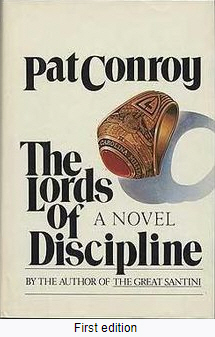
Okay, I stole that heading from a Pat Conroy book. One could spend a lifetime writing posts based on phrases like that out of his books. I like phrases like that because I like catching readers unaware–the flip side of relying on clichés.

All in all, I don’t think homemade sin is as popular as it used to be. In part, it takes more time than factory fresh sin. And, like those clothes people used to make from patterns or the cakes some people still make from scratch, homemade now seems to cost more than storebought.

Being pragmatic about my use of time, I’m willing to sacrifice a little bit of quality for easier living. Why make a pie crust when people can’t tell the difference between the one you made and the Pillsbury pie crusts next to the eggs and butter at the grocery store?

Unfortunately, most people won’t admit to practicing homemade sin, so it’s hard to compare its costs with the kind of sin that comes out of a can. Plus, a lot of people gave it up for the same reason people gave up homespun clothes–they got looked down on. Then, too, I think the sin consensus is that if it (the sin) can’t be mass-produced, it’s really something we don’t want to talk about, much less advertise on TV or display in a store window.

Frankly, I think sin–including so-called “original sin” is an invention of the church because–without it–we wouldn’t need the church. But that subject’s a whole nother post other than to note that whether you’re a church or a factory, sin is damn good business.

If you’ve read a lot of Pat Conroy’s books, you’ll not only find strong plots and lyrical prose but a fair number of real or imagined Southern expressions.  I grew up in the South, so I’ve heard some of the most twisted, profane, ludicrous, and humorous expressions folks can make up. Those that haven’t turned into clichés, I love to see in novels because they wonderfully define a character–the kind who would say such things vs. the kind that wouldn’t. Of course, the Navy has always been a fine source for beautiful profanity and other phrases most of us didn’t share with our families when we came on on leave.

And when it comes down to it, so-called sin makes better feature films and novels than everyday people being good. All you need is a little homemade sin to stir up the plot a little bit or–if you’re lucky–bring down an empire.

–Malcolm

Satire and sin. It doesn’t get much better than that in a story about an old fashioned reporter stuck in the modern age.

At least he died with his boots on.

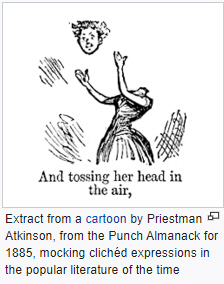
Any writer who starts to write “At least he died with his boots on” has got to know it’s an old cliché and doesn’t belong in his/her story unless s/he is writing a spoof. Assuming it’s not a spoof and assuming it’s important to say something that begins with the words “At least,” the author needs to take a breath and come up with something new to say.

And no, it’s not “At least he died doing what he loved” or “At least he took out ten bad guys with him.” I’m pretty sure “At least he died with his pants down” isn’t going to work either because that’s not new either.

Maybe it’s best not to have a character say, “At least he died. . .” like anything that smacks of that old cliché can possibly excuse or minimize what happened.

Moments ago, I came across the following: “The .44 was crap for long-range shooting, but Ramon liked. . .”

Where do you think that sentence is going? I knew before I turned the page because such sentences always end with “but Ramon”–or whoever–“liked working up close and personal.” Yawn.

Wikipedia graphic

Now here’s something that’s almost a cliché, though the exact words vary, “Detective Smith walked into the house where he three bodies that all looked like they’d been fed through the wood chipper in ‘Fargo.'” No, that’s not the cliché even though it sounds like one. What detective Smith actually said to his partner, Detective Jones, was “Jones, this looks like a home invasion gone bad.”

I’m really tired of that line. In the first place, it makes no sense. How can a home invasion go bad when it’s already bad from the beginning? Okay okay, maybe the invaders didn’t expect the homeowners to be waiting in the front hall with enough AK-47s to sink a battleship. Hmm, I think I’ve read that line before. Anyhow, so instead of killing the homeowners and grabbing the priceless Picasso (the painting, not the artist) off the wall, the invaders get smoked. Right, we’ve seen the word “smoked” before in this context.

Once upon a time, a reviewer (who wrote a wonderful review of one of my books) said, “I was just about to ding Campbell for using an ancient cliché when he said, ‘She shook loose her long hair…’ but I can’t because he took a sharp turn here and wrote ‘that mixed with the stuff of clouds.'” There are a million clichés that begin with a woman shaking loose her hair. I don’t know why they’re always going that. But if they have to do it in your book, they don’t have to do it in the same old way we’ve seen a thousand times before.

Fresh and knew just isn’t that hard to say.  So if you really need to say, “At least he died with,” then forget the boots and doing what he loved, and say “at least he died with a raspberry popsicle in his mouth” or “with a spare coral snake in his back pocket.”

See, those lines sound factory fresh and I’m willing to bet you’ve never seen either of them before.

Malcolm

Click on my name to check out my Amazon page.

‘Thank you for flying SpaceX’

NASA photo

Yes, I watched the splashdown of the SpaceX mission capsule Endevour returning from the International Space Station. What a historic mission, one that seemed to be flawless.

It’s the first ocean splashdown since the Apollo era of the 1970s, the first U.S. crewed ship to visit the space station since the shuttle program ended, and the first private enterprise mission.

I watched most of the early space flight liftoffs and splashdowns on TV–Mercury, Gemini, Apollo, and all the shuttle liftoffs and landings.

As StarTrek put it, space is the final frontier (as far as we know). Watching the SpaceX flight, I felt a lot of nostalgia for the earlier flights and my Cape Kennedy visits to the NASA facility. Now we won’t have to pay Moscow $90 million per seat when our astronauts ride to the space station on a Soyuz. I also felt that someday soon, space may become more accessible to humans (as opposed to all the satellites clogging up the skies overhead).

My friends never understood why I took risks to climb mountains, especially Colorado’s 14,000-foot peaks. I don’t understand why anyone would want to sit in a space capsule being launched by the Saturn V. But I’m glad they do because exploration is a large part of who we are and a fair amount of bravery is required.

Malcolm

Malcolm R. Campbell’s new novel “Fate’s Arrows” should be available by the end of the year. The novel will become part 4 of the “Florida Folk Magic Series” that began in 2015 with “Conjure Woman’s Cat.”

Remembering two of the best: Moss Hart and George S. Kaufman

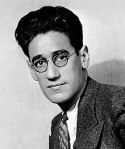
George Simon Kaufman (November 16, 1889 – June 2, 1961) was an American playwright, theatre director and producer, humorist, and drama critic. In addition to comedies and political satire, he wrote several musicals for the Marx Brothers and others. He won the Pulitzer Prize for Drama for the musical Of Thee I Sing (with Morrie Ryskind and Ira Gershwin) in 1932, and won again in 1937 for the play You Can’t Take It with You (with Moss Hart). He also won the Tony Award for Best Director in 1951 for the musical Guys and Dolls. – Wikipedia

After working several years as a director of amateur theatrical groups and an entertainment director at summer resorts, he scored his first Broadway hit with Once in a Lifetime (1930), a farce about the arrival of the sound era in Hollywood. The play was written in collaboration with Broadway veteran George S. Kaufman, who regularly wrote with others, notably Marc Connelly and Edna Ferber. (Kaufman also performed in the play’s original Broadway cast in the role of a frustrated playwright hired by Hollywood.) During the next decade, Kaufman and Hart teamed on a string of successes, including You Can’t Take It with You (1936) and The Man Who Came to Dinner (1939). Though Kaufman had hits with others, Hart is generally conceded to be his most important collaborator. – Wikipedia
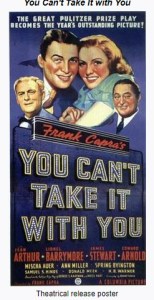

As my wife and I watched Frank Capra’s “You Can’t Take it With You,” based on the Pulitzer Prize-winning play by Kaufman and Hart, I thought back to how insular we were before the Internet and Satellite TV networks. Now we can watch all the old movies and research where they came from.

Growing up, I knew nothing of Kaufman and Hart even though they “owned” broadway for years and had worked on projects from the Marx brothers comedies to Camelot. I happened to hear of them in 1961, the same year they both died.

I went to a high school journalism institute at Indiana University in 1961, and one of our special trips was to the famous Brown County Playhouse, owned at the time by a foundation association with IU. On stage, that night was “Light Up the Sky” by Kaufman and Hart. What a hoot. And I wondered then, just who are these people that can write such wonderful (and humorous) dialog?

When I got home, I raced out and bought a copy of Hart’s autobiography Act One. For a Florida boy who knew nothing about Broadway and the world of plays, it was an eye-opener. It would be years before channels like Turner Classic Movies came along and allowed me to see the work of Kaufman and Hart. Somehow, it’s had an impact on me, my sense of how writers write, and produce what we go to the theater to enjoy.

Somehow, I have a feeling that in this fast-paced world when the Internet and satellite TV make so much available, that most people have never heard of either of these playwrights. What a shame. For me, learning about them was part of growing up and becoming a writer–and one who can finally enjoy what they wrote.

–Malcolm

Malcolm R. Campbell is the author of the comedy/satire “Special Investigative Reporter” which, he hopes, might remind some people of the dialogue of Kaufman and Hart.