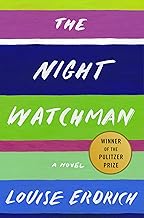
 I began reading Louise Erdrich’s novels with Love Medicine in 1984, thought about what might have been when her 2009 novel The Plague of Doves was a Pulitzer Prize finalist, and thought “about time” when The Night Watchman won the Pulitzer this year. I’m reading it now, a little over halfway through, and I have to say that like all of her books, it’s a parched drinking of high-octane fuel to my system.
I think a lot of writers, and readers as well, react to wonderful writing and important themes this way. Just what happens is difficult to describe. It’s more than inspiratiion, though it is that. What it is is transcendent, a reader recognizing heretofore unknown needs within himself/herself that are met by the book. Or, like a high-performance automobile that’s finally given high-performance fuel. Now body and soul are running on all cylinders.
I remember then in 1953 the subject of terminating Native Amerian Nations of the governmental support that had been mandated to them by treaty. (Andrew Jackson’s nasty spirit was still at work.) Among other things, it was a land steal, not the emancipation the governemtn claimed. What exactly was at risk? In part, this:
“The sun was low in the sky, casting slant regal light. As they plodded along, the golden radiance intensified until it seemed to emanate from every feature of the land. Trees, brush, snow, hills. She couldn’t stop looking. The road led past frozen sloughs that bristled with scorched reeds. Clutches of red willow burned. The fans and whips of branches glowed, alive. Winter clouds formed patterns against the fierce gray sky. Scales, looped ropes, the bones of fish. The world was tender with significance.”
If you know your history, you know how the battle against termination ends. If you don’t and if you plan to read this book, I won’t tell you here, for that would be a spoiler. Yet, nothing really can spoil this book except (momentarily) blurbs that just don’t work, like this one from the Boston Globe: “Thrills with luminous empathy.” What the hell does that even mean?
Okay, I think I’ve gotten past reading that blurb now and can absorb the wisdom of this novel. As the Tampa Bay Times wrote, “No one can break your heart and fill it with light quite like Louise Erdrich.” In this story, she’s not only writing about her Chippewa people, but her family. And that comes through the words, I think, and makes then dear and sad with no sentimentality, but raw power.
 The novel is easy to read but the most exciting part of the caper is provided by the hurricane, and this is where we find the book’s most effective writing. A man is killed during the story, purportedly by falling tree limbs, but bookstore owner Bruce Cable of Bay Books doesn’t think so. The local police don’t seem interested, so the caper aspect of the novel begins when Bruce and his friends start trying to find out what really happened.
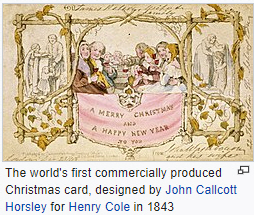 I don’t send out Christmas letters. But I do send snail mail cards. It’s a way of staying in touch, old fashioned as it may be. A few friends still send us Christmas letters, some interesting, some tedious. As people get older, they often spend a lot of time traveling: so what we get really isn’t a letter, but an intinerary. We skim those because we really don’t need to know the details of every roadtrip.
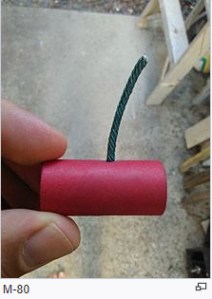 Old metal airplanes such as the kids’ versions to B-17s and B-29s. If you filled them with pine straw, lit the pine straw on fire, and ran through the pack yard holding the plane it’s wingtip, the result was pretty exciting. It looked wilder when the plane kit a tree.

 Our family was heavily involved from cub scouts to explorer scouts. My two brothers and I were eagle scouts as well as God and Country recipients. One was a member of the Order of the Arrow. My father as a pack leader and later an explorer post leader and my mother was a den mother. They were also involved at the council level.
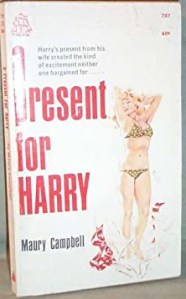 She said I want to show you something but you can never tell your father. That “something” was a paperback novel called A Present for Harry (1967) written my my father’s younger brother Maury. Maury didn’t want Dad to know about it because, well, the cover and the title made it look sexier than it was and, according to my aunt, Maury just didn’t think it would help family harmony for the existence of the book, worse yet, the book itself, to get back to Florida where my parents lived.
 Malcolm's Round Table