At 88, Marge Piercy, author of 17 volumes of poetry and fifteen novels, just sent a new manuscript to her agent. Time spent on the book had to be juggled with work spent on her prolific vegetable garden and the vicissitudes of life for people in the eighth decade of life.
 When I think of Piercy’s work, I’m always drawn back to Gone to Soldiers, the long, multi-character novel released in 1987. Its impact on me is still large and hunting.
Erin Madison, writing in “Off the Shelf” 2016, said that Gone to Soldiers” is the most complete, complex, and stunning piece of World War II literature I’ve ever encountered.” I have the same viewpoint. The book has nine major characters, and Piercy supplies each with a distinctive voice while weaving their stories through a powerful story.
As we remember 9/11 today, the trials of earlier conflicts are specially poignant.
From the Publisher
The New York Times bestselling novel of humans in conflict with inhuman events, Gone to Soldiers is “a landmark piece of literary prose…the most thorough and most captivating, most engrossing novel ever written about World War II” (Los Angeles Times).
In this “sweeping epic” (The Philadelphia Inquirer) of World War II, Marge Piercy moves from the United States to Europe, from the North African campaign to New Zealand, from Japan to Palestine, brilliantly recreating the atmosphere of the wartime capitals: the sexual abandon, the luxury and deprivation, the terror and excitement.
Gone to Soldiers interweaves the stories of ten remarkable characters: The New York divorcee and writer of romances-turned-war correspondent… her ex-husband, involved in intelligence for the OSS… Daniel Balaban, whose mission is to crack the Japanese codes… Bernice Coates, who escapes life to fly fighters as a Woman’s Airforce Service Pilot… a painter who parachutes into Nazi-occupied France to fight with the Resistance… Zachary Barrington Taylor, for whom war is the most exciting game… Jacqueline Levy-Monot, who leads Jewish children over the Pyrenees to safety… her sister, Naomi, a troubled adolescent… their cousin, Ruthie Siegal, a touching young woman who tries to keep alive her love for her boyfriend, while working on an assembly line in Detroit… These characters wage memorable and passionate public and private battles, as war casts them into their ultimate dreams and nightmares, daring them to act out their brightest and darkest fantasies.
Written with unmatched authority about the cataclysmic events and passions of war, Gone to Soldiers “is a literary triumph for Marge Piercy and a landmark volume in the literature of war” (USA TODAY).
Here’s an apt blurb from the Boston Globe on Piercy’s website that sums up the author’s work well: “Marge Piercy is not just an author, she’s a cultural touchstone. Few writers in modern memory have sustained her passion, and skill, for creating stories of consequence.”
–Malcolm
 Malcolm R. Campbell is the author of the anti-war Vietnam novel, “At Sea.”
 Typing with two to three fingers and the thumbs–derogatorily called “hunt and peck–was (and perhaps still is) used by reporters who (naturally) didn’t go to secretarial school to learn touch typing. This style was prevalent 75 or so years ago when reporters hammered out the words as best they could. Like my father before me, I grew up using this style and, for years, could type faster than many touch typists due to long practice.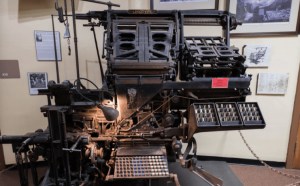
 I first learned about the short life of Anne Frank in school, probably about the time the 1952 English publication of “The Diary of a Young Girl” was released. Still, the movie engraved the story in my consciousness along with a brief schoolboy crush on Millie Perkins who portrayed Frank in the 1959 film.
 Millie Perkins had a long career–up to 2006–but whenever I saw her in a film or TV series episode, I thought of “The Diary of Anne Frank” and my crush on the young actress.
 According to Anne Frank House website, “The Anne Frank House was established on 3 May 1957 in cooperation with Otto Frank, Anne Frank’s father. We are an independent non-profit organisation that runs a museum in the house where Anne Frank went into hiding and we try to increase awareness of Anne’s life story all over the world.”



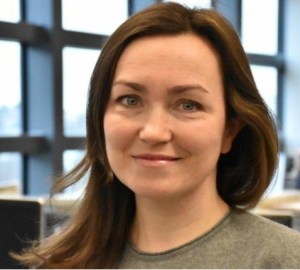 “We condemn the sentencing of Alsu Kurmasheva for the basic act of exercising her right to free speech which is rapidly becoming criminalized in Putin’s Russia,” said Polina Sadovskaya, advocacy and Eurasia director at PEN America. “Kurmasheva was targeted for her courageous and honest coverage of Russia’s war on Ukraine. Her sentencing, following a speedy and closed-door trial, is just the latest of Russia’s ongoing assaults against free expression, which clearly poses a great threat to Putin’s authoritarianism. We call on the U.S. government to do everything in its power to facilitate the immediate release of Kurmasheva so that she can return home to her children and family.”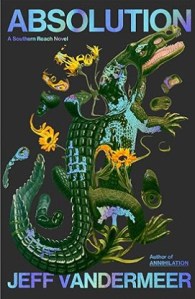
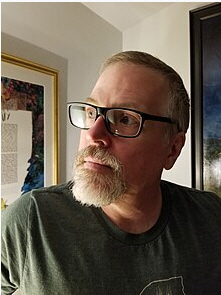 “Drawing heavily on bioresearch and scientific extrapolations, this foray into the human cost of bureaucratic paranoia and the abandonment of logic to “hope, prayers, and blessings” provokes, mystifies, and challenges readers in turn. VanderMeer’s horrifying declaration of the impossibility of knowing the other is a knockout.”
 In general, it’s a mistake to use the 2nd Amendment to justify the purchase of military weapons by civilians.
 Malcolm's Round Table