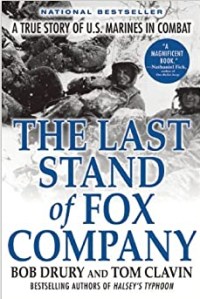
 I’m fairly sure I’ve read all of Jeff Shaara’s novels from his two novels about Gettysburg up to his novel about the Korean War The Frozen Hours. Before I read it, I had already included a backstory about two characters in my Florida Folk Magic Series that included service in the 1st Marine Division in Korea. Since my work in progress, Pollyanna Hoskins includes these characters, I’ve placed one of them with Fox Company tasked with guarding a strategic pass.
Here we have 234 marines holding off 10,000 Chinese soldiers. This is mentioned, of course, in Shaara’s book that covers the entire war. I wanted more specific information about the brave and determined men of Fox Company. There’s plenty of information online, but The Last Stand of Fox Company is very specific about Captain Barber’s three platoons and how they faired day by day against a vastly superior force in a harsh Korean winter when the temperatures were -34 °. While water and food and feet were frozen, the low temperatures saved some of the wounded whose wounds were frozen, keeping them from bleeding to death.
The entire campaign around the Chosin Reservoir in North Korea is called “frozen Chosin” for a reason.
Using the terminology of the day, my character is still “shook” in his life in the years after the war. “Shook” meant “to go mental,” later described as shell shock and then PTSD. After reading the account of Fox Company’s defense of a major road at Toktong Pass, I’d expect all of them, the few left standing to be shook.
From the Publisher
November 1950, the Korean Peninsula: After General MacArthur ignores Mao’s warnings and pushes his UN forces deep into North Korea, his 10,000 First Division Marines find themselves surrounded and hopelessly outnumbered by 100,000 Chinese soldiers near the Chosin Reservoir. Their only chance for survival is to fight their way south through the Toktong Pass, a narrow gorge that will need to be held open at all costs. The mission is handed to Captain William Barber and the 234 Marines of Fox Company, a courageous but undermanned unit of the First Marines. Barber and his men climb seven miles of frozen terrain to a rocky promontory overlooking the pass, where they will endure four days and five nights of nearly continuous Chinese attempts to take Fox Hill. Amid the relentless violence, three-quarters of Fox’s Marines are killed, wounded, or captured. Just when it looks like they will be overrun, Lt. Colonel Raymond Davis, a fearless Marine officer who is fighting south from Chosin, volunteers to lead a daring mission that will seek to cut a hole in the Chinese lines and relieve the men of Fox. This is a fast-paced and gripping account of heroism in the face of impossible odds.
 When I was in elementary school, I saw many headlines in the daily papers about the Korean War. Needless to say, I didn’t understand the big picture. But the war has fascinated me in part because it’s more or less forgotten. But, it occurred just a few years before my novel-in-progress Pollyanna Hoskins is set. So, one way I’m adding depth to my novel is by including characters who were in Korea, the man as a marine corporal, and the woman (Pollyanna) as a marine nurse serving in MASH units and field hospitals.
The title of Jeff Shaara’s book comes from a poem by one of the marines on Fox Hill:
The long nights. Too long.
Time stops, frozen in place.
I beg the frozen hours for the
Sunrise.
Too many many memories
Ice and Death
I’m ready to join my friends.
And so, I can’t help but include bits and pieces of this war, partly because the heroism there has been mostly forgotten and partly because it’s a major factor in the world where my characters lived in the early 1950s.
—Malcolm
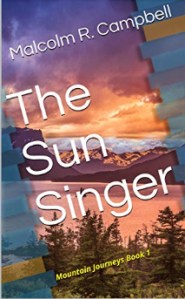
 Malcolm R. Campbell is the author of the Vietnam War Novel “At Sea.”
 What he does like is the really hot (spicey) Jazzy Jambalaya soup from Campbell’s. I have it with late-night movies but often need an Alka Seltzer as soon as I finish it. If I leave any in the bowl, Robbie jumps up on my TV tray and licks it all up. No chaser. No hairballs. No crazy behavior. What’s wrong with this kitty?
 I love Cajun food, so the soup works for me even though you probably won’t find it on the menu at the Atchafalaya Restaurant in New Orleans. They also serve Creole food, but I won’t hold that against them!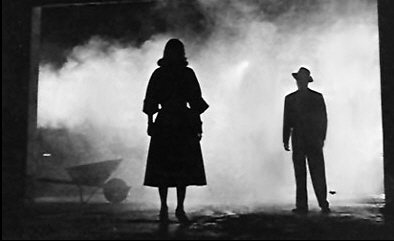
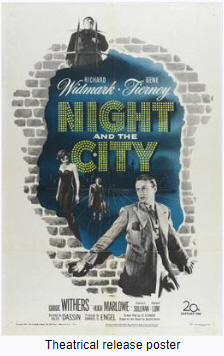 Wikipedia describes Night and the City as “a 1950 film noir directed by Jules Dassin and starring Richard Widmark, Gene Tierney and Googie Withers. It is based on the novel of the same name by Gerald Kersh. Shot on location in London and at Shepperton Studios, the plot revolves around an ambitious hustler who meets continuous failures.” One can’t help but notice: This is like the Greyhound station for DEATH!
 The oldest of my granddaughters starts high school this fall. In trying to learn more about the place, I visited the website. What a mistake. Seemed Greek to me from the curriculums to the clubs. We had chess club, math club, and physics club. They have clubs like Taylor Swift’s music club which sound more like Facebook groups than H.S. clubs. Sigh. Her school begins with 9th graders, the system I’m used to.
 As a journalism school graduate, I found this story in the Guardian discouraging:
  When your regular shows are on hiatus, we fall into the depths of nonsense by watching HGTV where people are buying houses with price tags that sound like they belong in San Francisco and/or feature open-plan houses where the entire main floor looks like a gymnasium with little clusters of stuff that remind of my high school’s career day. Many people say they entertain a lot and seem to want a home that reminds them of a cruise ship or a nightclub. We think most of these house plans, to use a technical term, are horseshit, especially when I see that our entire house will fit in the dining room/kitchen.
 If you have a cat, does it like cantaloupe? Robbie always wants to know what we have on our plates. We tend to eat off of TV trays rather than sitting in the dining room, so it’s easy for him to walk across the furniture to see what we have. He wants to drink out of our water glasses; that causes a tug of war over who gets to hold the glass. Twice lately, I had the rind of a finished cantaloupe on my plate and wondered what he’d do with it. He licked the things for ten minutes. This seems a bit odd. Cats!

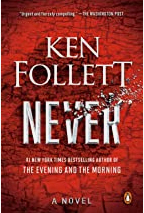 Today, I see a lot of novels in which the culprit is climate change, and that’s to be expected. Early on, I read Hiroshima (1946) by John Hersey, On the Beach (1957) by Nevil Shute, and countless nuclear war-related novels since. Those books probably influenced my belief that Truman was wrong when he dropped atomic bombs on Hiroshima and Nagasaki.

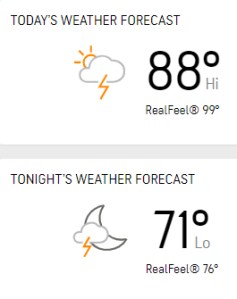 As you can see by the AccuWeather graphic, our heat wave in North Georgia has eased up a bit, leaving us with an outdoor sauna bath without anyone handing out fresh towels and cold beer. At present, my desktop weather simply says “rain off and on.” Other than not having fresh towels, we’re also not having grass dry enough to mow. The yard’s not looking its best right now. About all I’m doing outside these days is pulling the wheelie bin out to the road and going out to buy groceries (which ensures that I’ll have to keep moving garbage from the house to the road).
 I was happy to see this news: “Novelist Jesmyn Ward has become the youngest person ever to win the Library of Congress Prize for American Fiction.” Her words are well controlled and still carry magic in them. According to Michael Shaub’s story on Kirkus, Ward said, the award “not only because it aligns my work with legendary company, but because it also recognizes the difficulty and rigor of meeting America on the page, of appraising her as a lover would: clear-eyed, open-hearted, keen to empathize and connect.”
 We’ve been watching old movies at night because most of our “regular shows” have taken their usual long summer vacation. How long has it been since saw you Sydney Pollack’s neo-noir “Absence of Malice” from way back in 1981? Since my wife and I started out as journalists, it was fun seeing an old-style functioning newsroom. As Wikipedia notes, Variety called it “a splendidly disturbing look at the power of sloppy reporting to inflict harm on the innocent.” I always liked Melinda Dillon, Wilford Brimley, and then, Paul Newman wasn’t bad either. I kept expecting Sally Field to show up looking like the flying nun or Forrest Gump’s mom in which she’d explain the whole box of chocolates thing to Paul Newman.
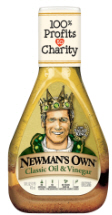 On a completely irrelevant side note, our local Food Lion grocery store has finally started carrying Newman’s Own salad dressings and other products. The product shown here not only tastes great on a tossed salad but also works as a great marinade for steak. According to the company’s website, “When Newman’s Own first began, Paul Newman declared that 100% of the profits would go to good causes. The mission continues today through Newman’s Own Foundation. In total, more than $570 million has been donated to good causes since 1982.” By the way, Newman wasn’t wearing that crown in the movie.
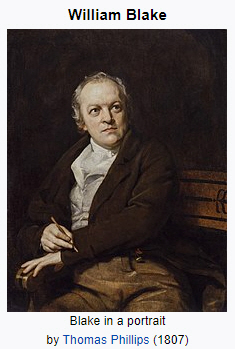 Those of you who know me, whether you’ll admit it or not, know that I’m a fan of poet/engraver William Blake (1757-1827). So I was happy to see a story about him in The Marginalian,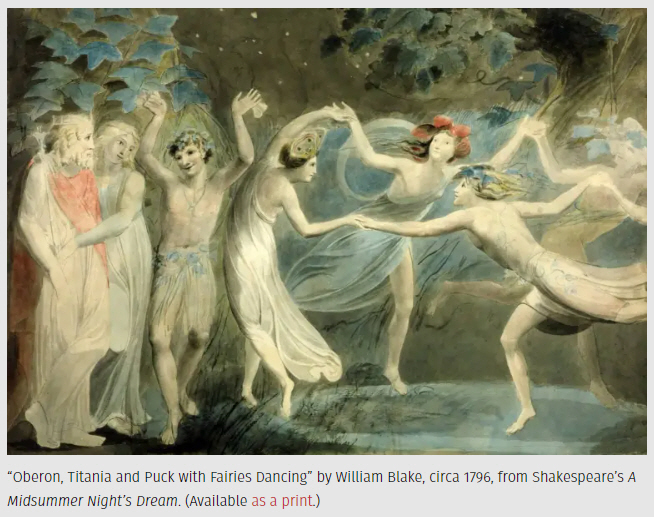
 Malcolm's Round Table