Masterchef-style cooking drives me nuts

We watched the recent “Masterchef – Back to Win” TV series because it’s fun watching “home cooks” trying to create modern Gordon Ramsay-style meals in 45 minutes. Some of the meals looked interesting, even good enough that I would try them out if I had a chance and didn’t have to pay $200 for a meal at some fru-fru restaurant.

It comes down to this: my mother and grandmother cooked midwestern-style and southern-style food the way those dishes were prepared in the 1940s and 1950s in home economics courses or as presented in cookbooks like the Joy of Cooking.

  • Among other things, this means that a meal was composed of various elements that were placed separately on the plate rather than as something called a “dish” in which the elements are placed in an artistically assembled thing that’s viewed as one item–meaning stuff is piled top of each other.
  • I generally refuse to eat rare meat even though Ramsay and the other judges consider anything cooked longer than rare to be ruined. I don’t know when rare became the default cooking level when, to me, it’s basically still raw.
  • Whatever I order, I don’t want it placed on top of or next to some horrid-looking puree. This stuff looks (and tastes) like wallpaper paste and makes me want to pass a law that blenders cannot be used in food preparation.
  • If I order meat and asparagus, I don’t want the meat sitting on top of the asparagus. Why the hell would I want each bite of steak to include a piece of asparagus on the fork?
  • I love potatoes, grits, and other starchy stuff, but definitely don’t want it piled on top of the meat.
  • I also don’t want a handful of mixed greens thrown on top of the whole shebang and called a salad. Sautéd arugula is not a salad.
  • Random crap strewn around the plate (connected by colorful smears of puree) and called a garnish and/or an artistic presentation of the “dish” is horse hockey. Place the stuff in small serving dishes so those who want it can dump it on their entrées.
  • I believe that if chefs want to ruin food they should do it in the privacy of their own homes rather than serving it to others as something special for $200 a plate.

I know I’m out of sync with the kind of meals that TV’s Masterchef and Hell’s Kitchen promote, but I like what I like and would rather have a sack of Louisiana chicken and dirty rice from Popeye’s than the swill I see on these purported upper-crust cooking shows.

–Malcolm

Friday’s potpourri

Yeah, I know, I’m supposed to save these news roundup posts until Sunday, but the week’s been strange.

  • We moved into this house, which we built new, in 2014, and since then the land has destroyed three mowers, leaving us with nothing at present to mow the lawn with. So, the fourth tractor is on order. If it weren’t for the continuing supply chain woes, some or all of these mowers could have been repaired–if anyone could get parts or employees to accomplish the task. Our mowers really weren’t built for such rough land or such high grass. So, they break down even though they’re nighly rated. Yes, we’re the 5th generation of the family to live here, but we didn’t expect that maintaining “the lawn” would become such a chore.
  • When “Bones” began airing on TV in 2005, my wife and I watched all the episodes. Now, with our “regular” TV shows on hiatus for the summer, we’re watching them again when we can’t find an old movie that fits our mood. The show is loosely based on the books and career of forensic anthropologist Kathy Reichs. After all these years, I finally became curious about her novels of which there are over thirty. So, I ordered the latest for a change of pace, reading-wise. Now I’ll find out how the Temperance Brennan in print compares with the Temperance Brannan on TV played by actress Emily Deschanel. This will be a change from Winterkill and The Watchmaker of Dachau. I’m looking forward to something that’s new to me.
  • I’ve finally found a way to include short excerpts from my novels on my limited-space website. I’ve stolen half of the ABOUT page. I decided nobody needed to know that much about me when they did need to know more about the flavor of the books. The HOME page now has a picture of a book with the word “excerpt” superimposed over it that links to the current excerpt. I began with Fate’s Arrows, the most recent novel in the Florida Folk Magic series.
  • Current temperatures here are in the 80s, decent weather for cutting grass if all of our mowers weren’t broken down. And we’ve gone without rain for several days as well. We’re fortunate that we don’t have a SoCal rainfall from tropical storm Kay or an Alaska weather problem from an incoming typhoon.
  • According to Publishers Weekly, “ALA officials reported 681 documented attempts to ban or restrict library resources in schools, universities, and public libraries through the first eight months of 2022, on pace to shatter the 729 challenges ALA tracked in 2021. The challenges thus far in 2022 have targeted some 1,651 different titles—already more than during all of 2021—with some 70% of this year’s challenges targeting multiple titles. In past years, most challenges sought to remove or restrict a single title.” This is a good time to be aware of banned books week.

–Malcolm

Review: ‘Winterkill,’ a novel by Marsha Forchuk Skrypuch

Holodomor is а genocide of Ukrainian nation committed in 1932–1933. It was committed by leadership of the Soviet Union in order to suppress Ukrainians obedient and the ultimate elimination of Ukrainian opposition regime including efforts to build an independent from Moscow Ukrainian State. In 2006 by the Law of Ukraine “About the Holodomor of 1932-1933 in Ukraine” Holodomor was recognized as genocide against Ukrainian people. In 2010, by the resolution of Court of Appeal in Kyiv region was proved the genocidal nature of Holodomor, the intention of Stalin, Molotov, Kaganovich, Postyshev, Chubar, Khatayevych, Kosior to destroy a part of the Ukrainian nation. In 1932–1933 were killed more than 7 million people in the Ukrainian SSR and 3 million of Ukrainians abroad in the regions which were historically populated by Ukrainian: Kuban, the North Caucasus, Lower Volga and Kazakhstan. – National Museum of the Holodomor-Genocide

Winterkill, by Marsha Forchuk Skrypuch, Scholastic (September 6, 2022) Middle-Grade Fiction

Winterkill will break your heart.

Once again award-winning Ukrainian Canadian author Marsha Forchuck Skrypuch (Making Bombs for Hitler, Traitors Among Us) gifts readers with a pitch-perfect, well-written, extensively researched novel that shows the human side up close and personal of those trapped within the clutches of an atrocity of history that many still say never happened, was a quirk of nature, Eastern European weather patterns, or bad luck.

Joseph Stalin engineered a blatant genocide against the Ukrainian people by the Soviet Union, especially the farmers. He stole their crops and the food in their pantries and gardens and took their personal possessions, farms, and their lives. Whether through fate or coincidence, history is repeating itself with this novel’s release as the Russian Federation has invaded Ukraine while it once again steals the country’s grain.

Nyl lives on a small family farm and, like many of his neighbors, is puzzled when the Russians increase crop quotas while sabotaging the farmers’ ability to meet those quotas. He meets Alice, an idealistic Canadian who comes to Ukraine with her father purportedly to help modernize the country’s farming methods, introduce the promised efficiencies of collectivization, and advocate for the acceptance of mechanization–especially tractors. 

Skrypuch’s genius comes, in part, from making all of her characters three-dimensional, from those who hope to get by and those who turn on their neighbors as informers for personal gain. There are many points of view amongst these friends and neighbors and we see them clearly rather than as statistics delineating those who deny, who hide seeds and provisions, who try to escape, and who die without lifting a finger.

Alice appears at Nyl’s house with her father to take an inventory of everything in the house and on the property. Soon, it’s obvious that this inventory is helping the Russians dispossess the farmers and characterize them as an affluent, lazy drain on society. Alice doesn’t see the connection between her innocent task and the growing number of lost farms and deaths. By the end of the novel, Alice and Nyl are working together to survive and escape. The dead are everywhere. Food is nowhere. 

The people in this novel make it work. We know them. We see them fight. And we see them perish under conditions that remind us of the Nazi terrors and the lack of a piece of bread. 

–Malcolm


London Bridge Is Down

British Monarchy Photo

That’s a catchy code phrase other than the fact London Bridge has been in Arizona for years.

Otherwise, bloody hell, I’m a Scot, so I hope you didn’t log onto my blog for syrupy words about the passing of an English queen even though she had a castle in Scotland. I will admit that if we had to have a United Kingdom with a captured Scotland, Wales, and Northern Ireland, she brought stability, wisdom, and a sense of duty to a country that’s gone through changes, many turbulent since her reign began.

Like many of my generation, I watched her coronation on TV. I had an aunt who lived to 102 or so; had I imagined the queen would almost reach 100, I probably would have thought she’d be in a home. Far from it. She was up and around a few days ago to help get Liz Truss’ tenure as prime minister get underway. Talk about stamina and duty.

As for Charles, he’s been known as Charles for so long as Prince of Wales, it might have been awkward had he chosen another name as king. However, since the reigns of Charles I and Charles II didn’t work out very well, I would have been superstitious about using that name. Well, we’ll see how it goes.

As for the Queen, Robert Bruce forgive me for saying, “And there’s a hand, my trusty fiere! and gie’s a hand o’ thine! And we’ll tak’ a right gude-willie waught, for auld lang syne.”

Malcolm

I had to mow the yard because I couldn’t find the house–or the cat

I think we’ve had rain for 10000000 days. When it’s not raining, the grass is too wet to mow, and/or the flu we’ve been fighting has kept us inside. I finally cut the grass after supper last night because I wasn’t sure whether I was coming home to my house or a neighbor’s house. Plus, when the cat went outside, he disappeared into the pasture primeaeval.

The grass was not only higher than the cat, it was higher than the mower. Dark clouds were rolling in. Vicious lightning owned the horizon off to the east. I had to move quickly or darkness would swallow the world and I’d run into the black Angus cattle in the adjoining pasture. (Before the farmer put in a new fence, the cattle got out on numerous occasions at night. I could hear them in the yard, but couldn’t see them. When cattle get out, the whole community comes out to round them up.)
The riding mower really wasn’t built for grass this high. Seriously, tall fescue needs a tractor with a bush hog. We used to have one, but the bush hog was shot and the tractor was old, so we sold it off. The mower stalled out numerous times and gulped gas faster than a sailor swigs beer on liberty. So, I ran out of gas before I got done and had to tow the mower back to the garage with my Buick about the time the rain hit.

In the light of day this morning, the yard looks like the cut grass is piled up and ready to bale. At least the house is visible from the road and doesn’t look like an abandoned homestead. I’m getting too old for this kind of crap. At least I had the presence of mind to put the cat in the house and to use the mower’s headlights in case any cows got in the yard. None did, but they raised a ruckus on the other side of the fence.

Frankly, I think it’s about time to hire a landscaping company and hope they show up for work.

–Malcolm

Malcolm R. Campbell grew up in the Florida Panhandle and sets his stories there.

“Wanda J. Dixon’s warmth and gorgeous singing voice are superb in this story about Conjure Woman Eulalie, which is told through the voice of her cat and spirit companion, Lena. Dixon zestfully portrays Eulalie, who is “older than dirt” and is kept busy casting spells, mixing potions, and advising people–that is, when the “sleeping” sign is removed from her door. Most distinctive is Eulalie’s recurring sigh, which conveys her frustration with Florida in the 1950s, when Jim Crow laws and “Colored Only” signs were routine. Dixon’s Lena is fully believable when she spies around town and reports to Eulalie that rednecks have raped and murdered a young woman. They almost escape until Eulalie persuades a witness to come forward. Listeners will marvel at the magical realism in this story and benefit from the helpful glossary of the charming local dialect. S.G.B. Winner of AudioFile Earphones Award © AudioFile 2016″

Peter Straub (1943-2022) – Locus Online

“Author Peter Straub, 79, died September 4, 2022 after a long illness. Straub was a celebrated, influential, and bestselling author of literary horror, dark fantasy, and psychological thrillers. Peter Francis Straub was born March 2, 1943 in Milwaukee WI. He earned a BA in English from the University of Wisconsin in 1965, an MA from Columbia University in 1966, then returned to Wisconsin to teach English at his former prep school for three years. In 1969 he moved to Ireland and began work on a PhD at University College in Dublin, but did not finish. He published two books of poetry in 1972, Ishmael and Open Air, and his first mainstream novel, Marriages, in 1973.”

Source: Peter Straub (1943-2022) – Locus Online

Sad news for fans of Straub’s gothic and other dark fiction. Here are his novels, compliments of Wikipeia:

Novels[

We will miss his dark words.

–Malcolm

Duck Soup Labor Day weekend

  • Our wet weather continues in NW Georgia as our county and the county north of us have gotten ten inches of rain in twelve hours. And there’s more to come. I’m glad we live on a hill, though I expect one of our roads into town is flooded. So much for my plan to pick up a few groceries today. (My wife ordered me not to leave the house!)
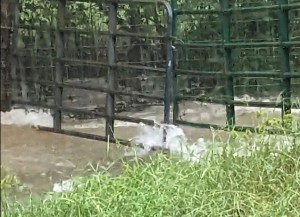
  • The nearby horse rescue farm (Sunkissed Acres) north of us has experienced a lot of flooding. Their access to the barn has been cut off. The images on their Facebook page are sad and disturbing. A four-foot-high fence is completely underwater. Today’s volunteers have been turned away for their own safety. If you’re not already using the “Smile” feature on Amazon to send donations to a charity for each book you purchase, Sunkissed Acres can use your help.
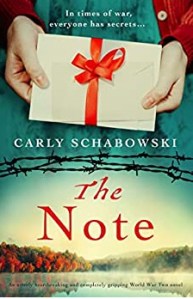
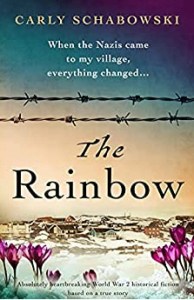
  • This is a good weekend for that cauldron of chili I made yesterday and a stack of cool books to read. Carly Schabowski, the author of the bittersweet novel The Rainbow, which I just finished, has an interesting new WWII novel out, The Note. I’m tempted to put it on my reading list. The publisher’s description starts out this way: “Auschwitz, 1942. Adeline and Jozef cling to each other as they are directed off the train and pulled apart by Nazi guards at the gates of Auschwitz. Stripped of their belongings, their arms are inked with prison numbers. In the death camp, their days are numbered––will they ever see each other again?”
  • As for the current war, Oliver Bullough, in “Beyond the fog of war: books to help us understand the invasion of Ukraine,” (The Guardian) has a few ideas “from Ukrainian history to Putin’s kleptocracy and Gogol’s stories.” He writes, “with Russian forces pushing deep into Ukraine, bombarding Kharkiv, Kyiv and other cities, and an unprecedented wave of western sanctions pushing the rouble down to an all-time low, it is hard for any of us to tear our eyes away from the news. But the currents of history that led up to this crisis are deep and complex, and understood in profoundly different ways in Moscow and Kyiv.”
  • If it’s dry where you live, I hope you have a great Labor Day weekend experiencing high-quality outdoor activities that don’t include soggy picnics or lightning-charred steaks on the grill. If it’s not dry, have fun reading and watching old movies on TV. (Yesterday, my wife and I stumbled into a “Starwars” marathon somewhere out there on DISH and now don’t know what planet we’re living on–if it’s Tatooine, things ought to be dryer outside than they are.)

Malcolm

‘The Rainbow’ by Carly Schabowski

The Rainbow (2021) brings readers one of the many “smaller” and more personal stories of bravery and loss and old secrets behind the larger headlines from Germany’s World War II invasion and brutal occupation of Poland. In the process, we learn some history we never knew and are all the better for it.

From the Publisher:

Nazi-occupied Poland, 1940. When soldiers drag Tomasz back to his family’s farm, they put a gun to his head and tell him he must join the German army, or see his loved ones forced into the camps. Staring into the wide blue eyes of his childhood sweetheart Zofia, Tomasz does the only thing he can. Over the course of the war, he will risk his life, love and the respect of his own people, to secretly fight for good against evil. All the while, he longs to be reunited with Zofia… but will his brave choices tear them apart forever?

“London, present day. Isla has grown up wearing her grandfather’s rainbow scarf, a beloved memento from the Second World War, and hearing his stories about his time as a young soldier bravely fighting the Germans to protect his people. But as she is collecting photos for his 95th birthday celebration, she finds an old photograph of two men standing in Nazi uniforms, next to a folded piece of paper… a newspaper article, written in German. She knows that name.

“Her grandfather is too weak to answer questions, so Isla begins her hunt for the truth.

“There is so much she doesn’t know. And what she learns about a love story and a secret from seventy years ago will change her own life forever.”

From the Author:

“The inspiration for The Rainbow was one born from my own familial history – it portrays a little-known historical wartime experience of Polish men and boys who were forcibly conscripted into the Wehrmacht. Little has been written about the fate of Polish soldiers in the Wehrmacht, either in historical fiction, or in German or Polish academic works or biographies, while in the UK, the part played by Poland in the war more generally has often been side-lined. Whether through trauma or shame, it is not known why their stories were not recounted.

“As a child, my grandfather would tell me the story of his journey to England from his home country of Poland; his memory, to me, seemed sharp and yet the facts were bland – he was a soldier in the Second World War and he came to England and trained with the Polish army in exile. When the war ended, he stayed and married my grandmother.

“It was only years later that my grandmother revealed he had first been a soldier for the Wehrmacht, and only subsequently joined the Polish army upon arriving in the UK.”

While a little slow in places, Isla’s quest to uncover the secrets of her grandfather’s life during the war years is a strong story about strong people faced with decisions they did not want to make. Words well worth reading, I believe. Afterwards, those words will haunt you for a while, perhaps longer.

Malcolm

Malcolm R. Campbell is the author of the Vietnam War novel At Sea.

Sunday’s medley (or possibly hash)

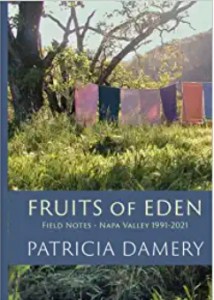
  • I’m happy to see that one of my favorite authors, Patricia Damery (Snakes, Goatsong) has a new book out, Fruits of Eden, about her ranch in Napa Valley and her fight against overdevelopment and bad stewardship of land and water. This richly illustrated book comes with color photographs, but it is also available in a money-saving black and white version here.
  • My wife and I have discovered an important truth about health. (You might want to write this down.) When two people live in a house, the sick one will start getting well at the same moment the well one starts getting sick. This provides a time when both people are out of it.
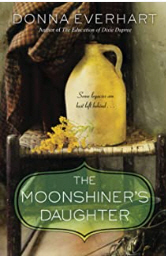
  • Since I enjoyed Donna Everhart’s The Saints of Swallow Hill, I’m trying another of her novels The Moonshiner’s Daughter. Plenty of grit in this one, too. It’s a little like “Thunder Road” without Robert Mitchum. (Don’t write that down.)
  • As a writer, I often wonder how other writers kill people–er, in their novels. Sometimes a busload of nuns blows up and if any of them have names at all in the narrative it’s unusual since they are often presented to readers as a group and mourned together. It’s more difficult when a major character dies. I finally know how it’s going to happen in the work in progress, but I’m avoiding writing the words. Until I write down what happens, it hasn’t happened.
  • Well, now that he was attacked by a coward, Salman Rushie’s name is showing up in op-ed pieces about getting a Nobel Prize. I think it should have happened already. One writer said Rushdie deserves the prize because he’s been a long-time proponent of our freedom to write. I applaud his stance–and his involvement with PEN America–but believe the prize should be based on the quality of his books, especially when his work is looked at over time.
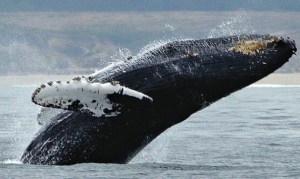
  • I like this story in the Christian Science Monitor: “Speaking whale? Scientists are working on it.” Our lack of better communication with other animals always makes me sad because I think we are missing out on a rich body of knowledge and the opportunity for more loving and productive interactions. I think it’s probable that the voices of the creatures of the deep are saying more than “So long and thanks for all the fish.”

Malcolm

Review: ‘The Saints of Swallow Hill,’ by Donna Everhart

This novel turned out to be an excellent medication for a person who spent the past week with the flu and probably would also make for good reading for anyone else who likes a gritty story set in a depression-era turpentine camp in Georgia. The characters, some of whom are broken, some who are mean, some with mistakes on their résumés, some who take risks to help others, and some who would be nice to have as neighbors grow and become multidimensional as the story proceeds.

The story brings readers a realistic view of a turpentine camp as many of us know it from coming of age in a world of longleaf pines and many cat-faced trees and many stories about the harsh realities of the naval stores business at its most basic level. The story is one of those where readers are likely to fear for the characters and whether or not they will make it to the end of the book.

From the Publisher

Where the Crawdads Sing meets The Four Winds as award-winning author Donna Everhart’s latest novel immerses readers in its unique setting—the turpentine camps and pine forests of the American South during the Great Depression. This captivating story of friendship, survival and three vagabonds’ intersecting lives will stay with readers long after turning the final page.

It takes courage to save yourself…

In the dense pine forests of North Carolina, turpentiners labor, hacking into tree trunks to draw out the sticky sap that gives the Tar Heel State its nickname, and hauling the resin to stills to be refined. Among them is Rae Lynn Cobb and her husband, Warren, who run a small turpentine farm together.

Though the work is hard and often dangerous, Rae Lynn, who spent her childhood in an orphanage, is thankful for it–and for her kind if careless husband. When Warren falls victim to his own negligence, Rae Lynn undertakes a desperate act of mercy. To keep herself from jail, she disguises herself as a man named “Ray” and heads to the only place she can think of that might offer anonymity–a turpentine camp in Georgia named Swallow Hill.

Swallow Hill is no easy haven. The camp is isolated and squalid, and commissary owner Otis Riddle takes out his frustrations on his browbeaten wife, Cornelia. Although Rae Lynn works tirelessly, she becomes a target for Crow, the ever-watchful woods rider who checks each laborer’s tally. Delwood Reese, who’s come to Swallow Hill hoping for his own redemption, offers “Ray” a small measure of protection and is determined to improve their conditions. As Rae Lynn forges a deeper friendship with both Del and Cornelia, she begins to envision a path out of the camp. But she will have to come to terms with her past, with all its pain and beauty, before she can open herself to a new life and seize the chance to begin again.

For those who didn’t grow up in longleaf pine country, the author’s note provides a few helpful details about the workings of the turpentine camps.

This is a captivating, well-written story.

–Malcolm