 In working my way through Kathy Reichs’ forensic thrillers, I’ve reached Fatal Voyage with only a few more pages to read. Her books are well-written, educational, and almost always place the main character, Tempe Brennan, in dangerous situations.
I especially liked this novel because it was set in and around Bryson City, NC, an area I’ve been visiting since the 1950s. It’s fun to see how an author views an area I know well, from Mt. Mitchell to Clingman’s Dome, to New Found Gap. I’ve hiked through a lot of the area and driven through all of it. Reichs uses the towns and mountains well, adding a lot of local color (real and fictional). One of my brothers used to own several tracts of land near Dillsboro. I once tried to buy an old restaurant in Dillsboro but the plan got vetoed by somebody I won’t name here.
From the publisher
“Buckle up and take this voyage,” says People. The journey begins with Temperance Brennan hearing shocking news on her car radio. An Air TransSouth flight has gone down in the mountains of western North Carolina, taking with it eighty-eight passengers and crew. As a forensic anthropologist and a member of the regional DMORT team, Tempe rushes to the scene to assist in body recovery and identification.
“As bomb theories abound, Tempe soon discovers a jarring piece of evidence that raises dangerous questions—and gets her thrown from the DMORT team. Relentless in her pursuit of its significance, Tempe uncovers a shocking, multilayered tale of deceit and depravity as she probes her way into frightening territory—where someone wants her stopped in her tracks.”
She doesn’t mention all the moonshine stills in the area, one of which was on or near my brother’s property. A free jar of shine would have ensured our silence if we’d ever found one of the stills. Of course, we might have ended up dead, something that happens a lot in Fatal Voyage.
–Malcolm
 Malcolm R. Campbell is the author of magical realism, paranormal, and contemporary fantasy novels and short stories. This Kindle “boxed set” includes all four novels of the Florida Folk Magic Series a savings over buying them separately. You can, of course, can also buy them in hardcover, paperback, and audiobook editions.
 But, whatever draws you here, thanks for showing up.
 Rainy and wet today here in Northwest Georgia. Robbie, our indoor/outdoor kitty is inside. He must know that heavier rain is coming. All in all, a good day to stay inside and work on the next novel in my Florida Folk Magic Series set in Tallahassee and a fictional town near the Apalachicola River. Perhaps there’ll even be something fun to watch on TV tonight like, hmm, another episode of “Swamp People” on the History Channel.
 The Guardian story about the police murder in Memphis is headlined: “Tyre Nichols’s death after police encounter was ‘failing of basic humanity’, says Memphis chief.” The newspaper notes that there were 1,176 “police-involved” killings in 2022. The daily news routinely includes a police atrocity like this or a mass shooting by some thug from the community. Many newspapers and commentators say that inflation or possibly problems at the U.S./Mexico border are the country’s top news stories. They’re wrong, I think. Violence ought to be at the top of the list.
 No, I don’t plan to watch the upcoming Super Bowl Game. I haven’t cared for years, though if the Atlanta Falcons were playing, I might watch. I tend to watch college football, especially if the Florida State University Seminoles are playing. They had a decent season, though not as good as the University of Georgia’s Dawgs, a team I only root for when they’re playing the University of Florida Gators.
 “Fort Caroline was an attempted French colonial settlement in Florida, located on the banks of the St. Johns River in present-day Duval County. It was established under the leadership of René Goulaine de Laudonnière on 22 June 1564, following King Charles IX’s enlisting of Jean Ribault and his Huguenot settlers to stake a claim in French Florida ahead of Spain. The French colony came into conflict with the Spanish, who established St. Augustine in September 1565, and Fort Caroline was sacked by Spanish troops under Pedro Menéndez de Avilés on 20 September. The Spanish continued to occupy the site as San Mateo until 1569.” –
 other nations. Within the United States, you may freely copy and distribute this work, as no entity (individual or corporate) has a copyright on the body of the work. As a reproduction of a historical artifact, this work may contain missing or blurred pages, poor pictures, errant marks, etc. Scholars believe, and we concur, that this work is important enough to be preserved, reproduced, and made generally available to the public. We appreciate your support of the preservation process, and thank you for being an important part of keeping this knowledge alive and relevant.”
 You can track shootings by type and location at the
  If I were to write more words, my writing career would be compromised. Why? I wouldn’t be pacing myself. I’d be like an old Chevy racing at Daytona and that would mean the engine would soon be toast. Well, not actual toast, but you know what I mean. A blown engine in a Chevy is a bad thing. A worse thing is a blown engine in oneself that happens if you work harder than you should. I’m very superstitious and so I won’t tempt fate by writing 101 words.
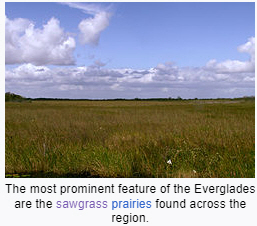 “A particular place in the land is never, for an oral culture, just a passive or inert setting for the human events that occur there. It is an active participant in those occurrences. Indeed, by virtue of its underlying and enveloping presence, the place may even be felt to be the source, the primary power that expresses itself through the various events that unfold there.” – David Abram
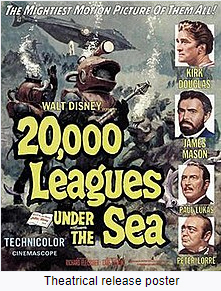
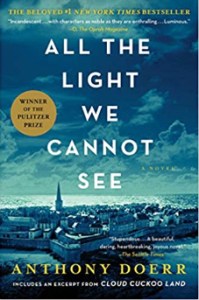
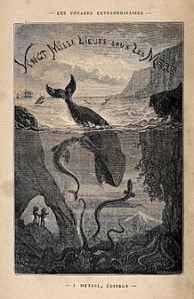 In All the Light We Cannot See, the blind French girl Marie-Laure Leblanc is reading the novel in braille, sometimes alone, sometimes to her uncle, and sometimes into the microphone of an old short-wave radio transmitter. Captain Nemo and his submarine Nautilus become an important motif in the book. For me, the inclusion of Jules Verne’s story was a bit haunting since the novel, and even the Disney movie adaptation released in 1954, was one of my favorite novels. In fact, I think I ended up reading most of Jules Verne’s work.
 I loved the accuracy of short-wave radio scenes in All the Light We Cannot See because I was once a ham radio operator. I built my own transmitter and used a 1940s-era short-wave receiver. It was always fun late at night, talking to people around the world as well as listening to commercial broadcasts originating thousands of miles away. In those days, DXing was popular and we prided ourselves in identifying commercial broadcasts, telling the stations what we heard, and getting a postcard by mail that verified we had heard the station on the date and time we said we did. I finally gave away that old SuperPro short-wave receiver a few years ago to a ham radio operator who was likely to repair it and get it working again.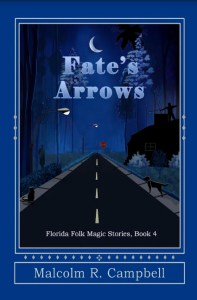


 Malcolm's Round Table