 Years ago, we all said everything is now. Oh, and a few memories about how each of us perceived that “now” at one intersection of time, space, and mind or another.
So, when somebody wants a stack of money from me to show me how to predict the so-called future, I don’t quite know how to respond to that other than “I think not.”
Typically, we assume time works like the drawing shown here. That means that the astrologer, psychic, tarot card reader, or snake oil salesperson wants to give me a peak into that cone at the top of the drawing.
Their deals always leave something out of the magic answer: me. To put it simply, when a person tells me s/he will give me insight into the future, they’re telling me what I’m going to do tomorrow and next week. Like I don’t know that already. I have a calendar on my desk with stuff written on it for the upcoming days, weeks, and months. If somebody breaks into my house, looks at that calendar, and sends me notes about what they see, they believe they’re providing me with a valuable service. At a premium rate.
The “I’ll Show You The Future” spam plays on people’s fear that the so-called future is already set up by forces unknown and we’re at its mercy. If we’re at anyone’s mercy, it’s ourselves because everything that shows up in that cone at the top of the drawing is what we put there.
–Malcolm
 Malcolm R. Campbell is the author of magical realism and contemporary fantasy novels and short stories.

 Feature:
  skewering of ‘Dilbert’ comic creator Scott Adams, who went on a racist rant last month that spurred dozens of newspapers to drop his long-running syndicated cartoon strip.” Variety See also
  pacing—a slow roll of dread and horror, especially in the first half—is exceptional. Bartz hits all the gothic highlights, but, far from feeling stale, they work
 commanding as the sociopath musical megastar whose life is crumbling around her but it is the steely menace in Todd Field’s film that is simply delicious. The great crack-up of Lydia Tár, the Berlin Philharmonic’s entirely fictitious but docudramatically real-seeming chief conductor, has given the cinema its greatest spectacle, its greatest provocation and its greatest pleasure. If there is any justice, it will be producer-director Todd Field, with fellow producers Alexandra Milchan and Scott Lambert, who will be invited up on stage at the end of the evening to receive the climactic best picture statuette.” Guardian
 News:
News: 

 Lately, there have been several e-mails a day with the word CONFIRMATION in the header. Most of these come from companies I’ve never heard of. Sometimes the title even says what the sender wants me to confirm, like: “CONFIRMATION: Brothels of the World Tour.” I never open any of these.
 No worries, smoked paprika provides (obviously) a smoky taste but is not hot.
 Release “Classic” Version of Controversial Kids’ Books
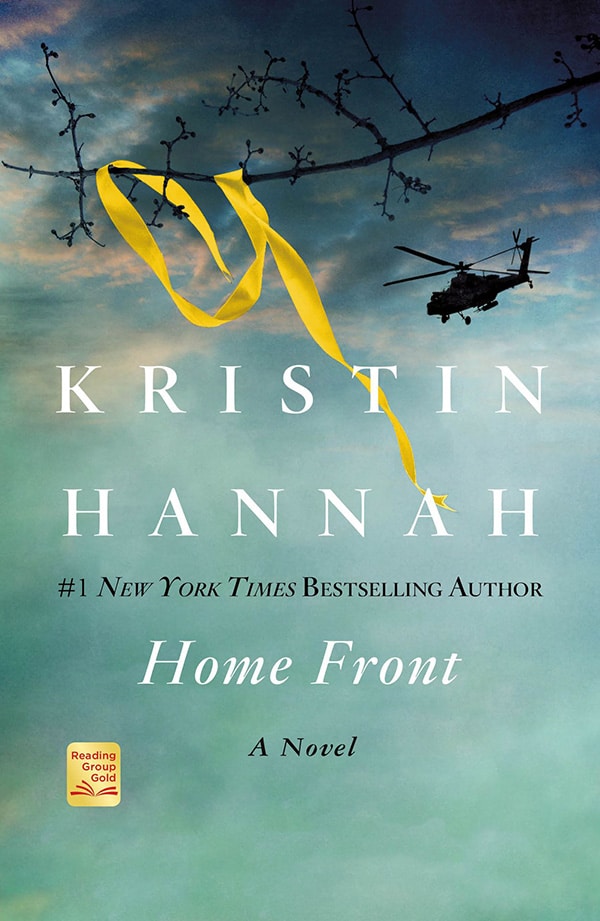 Finally got around to reading Kirstin Hannah’s Home Front. She not only did a good job with the issue of women soldiers leaving their families when their guard units are deployed but called attention to the fact that PTSD has an impact on both the soldier and his/her family. I agree with the lawyer and psychiatrist in the book when they say that the county, including the legal system, still has a ways to go in seeing PTSD as a real disorder rather than jargon about veterans “having a hard time.”
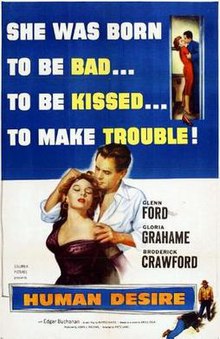 Last night’s movie from Noir Alley on TCM was “Human Desire.” I always enjoy the ambiance of a movie directed by Fritz Lang. I’m also a fan of Gloria Grahame. Glenn Ford appeared in a lot of movies, but I agree with reviewers who said his performance in this one was rather flat. Broderick Crawford was very believable as the jealous husband. As a connoisseur of railroads, this film had plenty of train footage–too much, some reviewers said. Personally, I don’t think it’s possible to have too much railroading footage in a feature film.
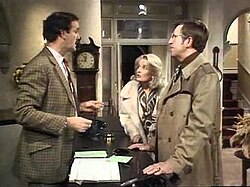 My wife has been making Waldorf salads recently. Neither of us can talk about them or enjoy them without thinking about the “Fawlty Towers” episode about the salad. According to Wikipedia, “The episode has been described as being ‘massively popular’ and a great success commercially internationally in the 1980s and 1990s. Its source of amusement derives from the cultural differences between the Americans and the British and the perceived differences in manners. The American is very rude in expecting food that is not on the menu and complaining about the service in contrast to the English guests who are very guarded when it comes to complaining. The book Great, Grand & Famous Hotels remarked that ‘Fawlty Towers is real to everybody who has ever worked in a hotel, anybody who has ever stayed in one, or anyone who has ever tried, unsuccessfully, to order a Waldorf salad.'”
 Now, with so much hatred in our world, I wonder if those jokes can still be told. I think we should still be able to tell them, but worry that they might be taken as an offensive attack rather than a lighthearted jest aimed at the foibles of our own or our friends’ beliefs.
 Keeping the story in mind during times when I’m not facing the pressure of a blank screen seems to bring ideas to mind that I hadn’t thought of before. Quite often, they’re about something a character should do or say in the scene I’m about to write.
 So, you can see how easy it is to burn books or–as we often see in the movies–incriminating notes in an ashtray.

 Malcolm's Round Table