 Timothy Egan’s new book A Fever in the Heartland, which came out in April, is chilling because of the vile group it describes, the fact that most people associate the KKK with the South, and the recent upsurge of hate groups. From the publisher’s description: “The Ku Klux Klan’s Plot to Take Over America, and the Woman Who Stopped ThemThe Roaring Twenties–the Jazz Age–has been characterized as a time of Gatsby frivolity. But it was also the height of the uniquely American hate group, the Ku Klux Klan. Their domain was not the old Confederacy, but the Heartland and the West. They hated Blacks, Jews, Catholics and immigrants in equal measure, and took radical steps to keep these people from the American promise. And the man who set in motion their takeover of great swaths of America was a charismatic charlatan named D.C. Stephenson.”
While nobody I know has ever had a median nerve in his/her arm knicked by a needle during a standard blood draw for a doctor’s test, this happened to my wife a month ago and now it appears she will be stuck with the cost of seeing a neurologist and with the weekly physical therapy visits. Her right hand is pretty much out of service, causing–you might guess–hardship when trying to handwrite, type something, or pick up just about anything. There’s a lot of information online about this; from that, “the best” I can see is that her PT will go on forever. I will get all of my blood draws done in my left arm from now on out!
 I’m finally reading Anthony Doerr’s 3033 novel Cloud Cuckoo Land. At 93 pages in, I can see that the story is just as crazy as the title suggests. It has a 4.3 rating on Amazon, so others figured out how to soldier through the chaos. The New York Times review is headlined, “From Anthony Doerr, an Ode to Storytelling That Shows How It’s Done.” The review includes this comment: “Cloud Cuckoo Land,” a follow-up to Doerr’s best-selling novel “All the Light We Cannot See,” is, among other things, a paean to the nameless people who have played a role in the transmission of ancient texts and preserved the tales they tell. But it’s also about the consolations of stories and the balm they have provided for millenniums. It’s a wildly inventive novel that teems with life, straddles an enormous range of experience and learning, and embodies the storytelling gifts that it celebrates.
  My guilty TV fun includes watching “Swamp People: Serpent Invasion.” Supposing this has any reality to it, the show follows men and women catching Burmese pythons (and sometimes gators in the Everglades. I love the Everglades, a park that has survived almost every human attempt to destroy it. I saw an article somewhere that said we may never get rid of the pythons.
–Malcolm
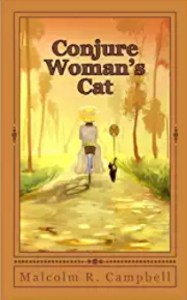 Malcolm R. Campbell does not include any pythons in his Florida Folk Magic Series because, at the time it is set, there were no known pythons in the Florida Panhandle. We had panthers then, however.
The four-book series begins with Conjure Woman’s Cat.

 If I believed in omens, I would see it as a good sign that my riding mower started on the first try when I mowed the yard earlier this week. Now I have to get the older car started after it sat idle all winter. I don’t want the newer car smelling like gasoline after I refill the gas cans for the next lawn mowing adventure–coming soon to a blog post near you.
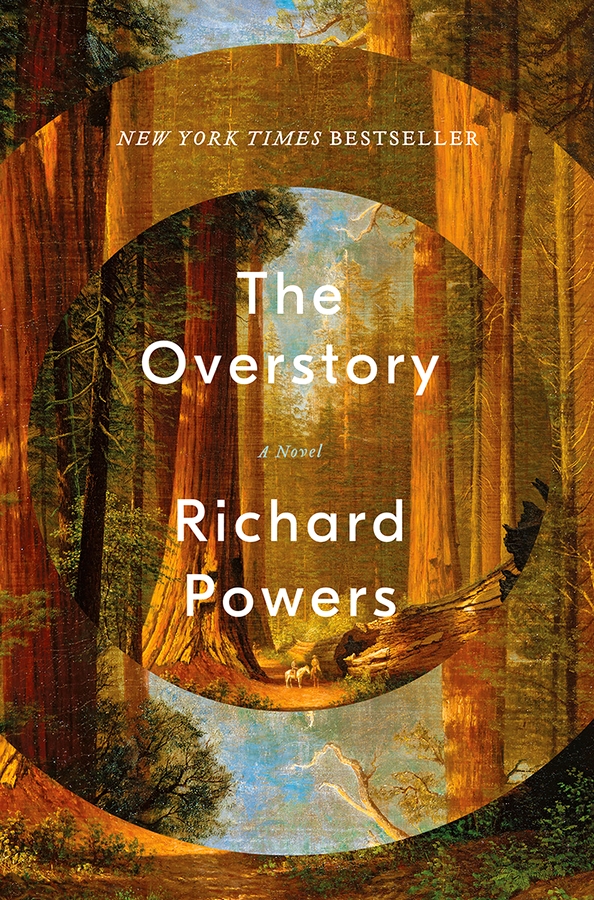 As I finally finished re-reading Richard Powers’ The Overstory, my favorite quote is: “You and the tree in your backyard come from a common ancestor. A billion and a half years ago, the two of you parted ways. But even now, after an immense journey in separate directions, that tree and you still share a quarter of your genes. . . .” I also liked: “This is not our world with trees in it. It’s a world of trees, where humans have just arrived.”
 In her post,
  I often use my Facebook headers for pictures of the locations of my books. This one shows a scene very typical of Florida Panhandle where I’ve set
  When I used the name chow chow in my novel in progress, I wondered how many people–even in the South–know anything about this traditional Southern relish made from the last vegetables (except hot peppers) in the garden. Years ago, everyone here knew what it was and put up a lot of veggies by making it. In “real life” the relish looks just like Sally Vargas’ photo. If you want to experiment, you can find a good recipe
 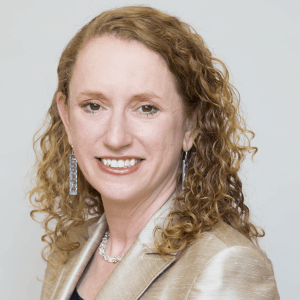 “Students often lack awareness of the First Amendment or the precepts of academic freedom, sometimes believing that the best answer to noxious ideas is to drown them out, or to call on university authorities to shut them down,” Nossel said in her opening statement. “At PEN America we argue that the essential drive to render American campuses more diverse, equitable, and inclusive need not – and must not – come at the expense of robust, uncompromising protections for free speech and academic freedom.”

 It’s an affront to those of us who like Goulash (photo) to see that Americans are still messing it up by throwing pasta into it and (sometimes) calling it slumgullion. If you know where I live, don’t bring any of that swill to my house when I’m already under the weather. Also, please don’t bring over anything made with the weird ingredients that routinely appear on the “Chopped” television show. If you do, you’ll be chopped. My 2¢.
 I’m enjoying re-reading The Overstory by Richard Powers. The Pulitzer-prize-winning novel is described as a “sweeping, impassioned work of activism and resistance that is also a stunning evocation of—and paean to—the natural world.” Next on my list (finally) is Cloud Cuckoo Land which is, according to the New York Times, “wildly inventive, a humane and uplifting book for adults that’s infused with the magic of childhood reading experiences” The book came out several years ago and it’s taken me this long to get around to it.
 What a Sunday morning mess in LaGrange Georgia, struck by a strong tornado this morning. Unfortunately, there’s a chance for more severe weather tonight and early tomorrow at this community 67 miles southwest of Atlanta. According to CNN, “No fatalities were immediately reported, but at least three people were injured in the storm.” We’ve had heavy rain here in NW Georgia but are out of the danger area.

 Malcolm R. Campbell
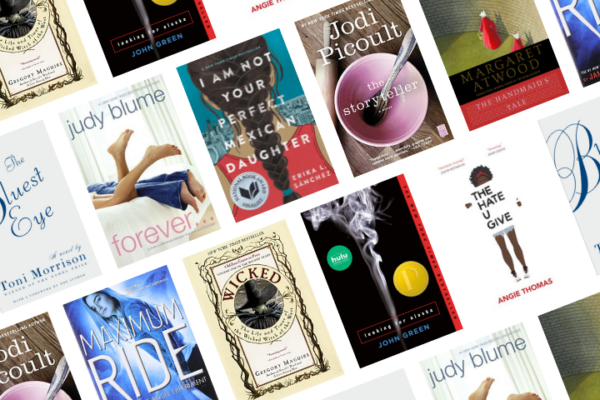 According to PEN America, “Books are under profound attack in the United States. They are disappearing from library shelves, being challenged in droves, being decreed off limits by school boards, legislators, and prison authorities. And everywhere, it is the books that have long fought for a place on the shelf that are being targeted. Books by authors of color, by LGBTQ+ authors, by women. Books about racism, sexuality, gender, history. PEN America pushes back against the banning of books and the intolerance, exclusion, and censorship that undergird it.” Learn more from
 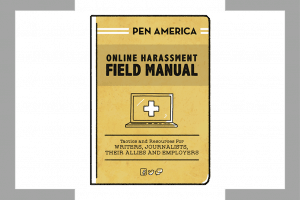 “Whether you’re experiencing or witnessing online abuse, this Field Manual offers concrete strategies for how to defend yourself and others. We wrote this guidance with and for those disproportionately impacted by online abuse: writers, journalists, artists, and activists who identify as women, BIPOC, and/or LGBTQIA+. Whatever your identity or vocation, anyone active online will find useful tools and resources here for navigating online abuse and tightening digital safety.” – PEN America
 I just finished another book by an author I like whose main character kept calling an expert about cults in an attempt to learn which ones are harmless and which ones aren’t. I don’t really think the extended information advanced the story. The information did relate to the plot, but it didn’t need to be in the book.
 Malcolm's Round Table