Looking back to decisions not made and roads not taken

When I was younger and reading about the Knights of the Round Table, Merlin, and Arthur, I tried to figure out how Merlin lived his life backward. Was he born at 100 years of age and then each year became a year younger? Possibly, though when interacting with Arthur, Merlin knew the past, a time he couldn’t have experienced yet. I finally let the matter sit on a dusty shelf and enjoyed the stories without worrying about Merlin’s claim except to believe him when he spoke to Arthur about the future.

When people get older that dirt–I don’t think I’m there yet–they’re often asked if they could go back in time and change one mistake, would they do it. I suppose the question is easier to answer if somebody committed a crime and is now serving a life sentence.  Undo the crime and you’re no longer doing the time. That sounds like a no-brainer.

But what about the rest of us? Sometimes I feel sad about doing ABC instead of XYZ. But then I think about how different my life would have been if I’d made the opposite decision. I get tangled up in the complexity of it all because changing one decision would ripple throughout my life and a thousand things I’m happy about would probably be wiped out of existence. I wouldn’t have “been there” for those things to happen. I wouldn’t be married to my soul mate or had a great daughter and granddaughters.

What might have been always feels bittersweet when considered in a vacuum. But when the totality of a lifetime–without Merlin’s knowledge of the purported future–is considered, the consequences of changing even the smallest thing loom very large. So when people ask me that question, my answer is always that I wouldn’t change a thing. I wouldn’t dare.

Inasmuch as I created the life I have lived, I think it’s best to keep living it because in spite of the things I could have done, where I have ended up is just what the “doctor” ordered.

The cat in my Florida Folk Magic series says past, present, and future happen simultaneously. Who am I to disagree?

–Malcolm

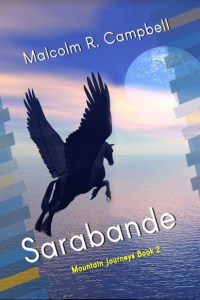
Book three of the Florida Folk Magic Series.

When Police Chief Alton Gravely and Officer Carothers escalate the feud between “Torreya’s finest” and conjure woman Eulalie Jenkins by running her off the road into a north Florida swamp, the borrowed pickup truck is salvaged but Eulalie is missing and presumed dead. Her cat Lena survives. Lena could provide an accurate account of the crime, but the county sheriff is unlikely to interview a pet.

Lena doesn’t think Eulalie is dead, but the conjure woman’s family and friends don’t believe her. Eulalie’s daughter Adelaide wants to stir things up, and the church deacon wants everyone to stay out of sight. There’s talk of an eyewitness, but either Adelaide made that up to worry the police, or the witness is too scared to come forward.

When the feared Black Robes of the Klan attack the first responder who believes the wreck might have been staged, Lena is the only one who can help him try to fight them off. After that, all hope seems lost, because if Eulalie is alive and finds her way back to Torreya, there are plenty of people waiting to kill her and make sure she stays dead.

Interview with special investigative reporter, Jock Stewart

Round Table: You’re known as a special investigative reporter. What are your areas of expertise?

Stewart: Politicians and hookers.

Round Table: Interesting combination.

Stewart: Most people can’t tell them apart. If you study history–and I doubt you do–you’ll find that government is indistinguishable from a whore house. Of course, CNN and FOX don’t see it that way.

Round Table:  How so?

Stewart

Stewart: CNN thinks Republicans are evil and FOX thinks Democrats are evil.

Round Table: I see.

Stewart: Only on a clear day. Otherwise, most folks are too preoccupied with their online image to look into the promises being made on both sides of the aisle.

Round Table: You’ve been around long enough to know better.

Stewart: You got that right. Basically, my premise when I start working on a news story is, “Don’t trust anybody.” That was especially true during the Nixon administration. The thing is, people think that when Nixon quit, everything was pure as the driven snow. So, they’ve gotten lazy and listen to or watch only one news source and think they’re all-knowing when they’re dumb as a post.

Round Table: Those people are easily led.

Stewart: That’s right as rain. Of course, they don’t know they’re being led. The irony is, they think people like them are the leaders when, in fact, they’re the lemmings at the front of the stampede to the cliff.

Round Table: So how do you get to the truth?

Stewart: I find it best to get in bed with the worst people on the planet–figuratively speaking. Once you’re in bed with them, they tell you everything.  That’s how an investigative reporter works. It’s not much different than the CIA’s approach to the truth and who’s telling it.

Round Table: I don’t trust the CIA.

Stewart: You’re not supposed to. If we thought they were choir boys, they couldn’t do what they do.

Round Table:  Do you alienate people on purpose?

Stewart: I try to.  When people are angry, they say things they wouldn’t normally say. Nothing beats an angry news source for providing true facts.

Round Table: I’ve found that drunks are the same.

Stewart: They are, but buying them drinks costs a lot more than pissing them off.

Round Table: Thanks for stopping by for this interview,

Stewart: Yeah, right.

–Malcolm

Malcolm R. Campbell is the author of the satirical novel Special Investigative Reporter.

Sunday’s mixed bag for May 21

  • Sunday’s headline about the ongoing Alberta forest fires: Rainy forecast offers hope to subdue Alberta wildfires. I hope the rain helps firefighters get on top of one dangerous mess. I’ve visited Alberta many times, usually flying in and out of Calgary, and hate to see this kind of destruction. According to the story, “thick wildfire smoke has settled over much of Alberta, prompting a special air quality statement across most of the province that advises people to avoid being outside due to the health risks of the smoke. On Saturday afternoon, Environment and Climate Change Canada’s Air Quality Health Index (AQHI) listed Edmonton’s air quality at a 10+, or very high risk.”
  • While I like the premise–the impact of the observer on reality–I’m disappointed in the pace of the Robert Lanza and Nancy Kress novel The Observer. It starts off at a notoriously slow pace with the main character basically trying to decide whether she wants to be the main character. I’ll probably see it through to the end, but at this point, I cannot recommend the novel at all. I think I would have been happier reading Lanza’s nonfiction than this thin approximation of a novel.
  • Ah, a sunny day for once. Maybe I’ll be able to cut the grass that will soon be high enough to tower above the riding mower. The rain has alternated with brief periods of sunshine, ensuring that the grass is always wet and/or getting wetter.
  • If you’re a writer and not already a regular who surfs the Poets and Writers website, you may be interested in the organization’s series of helpful PDFs ($4.95 each) about the publishing process. These definitely have a mainstream focus, i.e., large publishers, agents, and MFA programs. However, even if you are self-publishing or focussing on small, traditional publishers, you may find one or more of these guides to be helpful. I used to be a member of Poets and Writers and, among other things, enjoyed their slick magazine. However, the membership was one of the things that fell by the wayside as part of my cost-cutting plan.
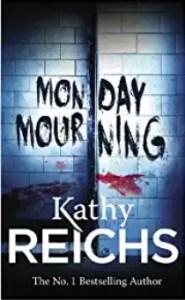
  • After re-reading one of James Patterson’s Alex Cross novels, which I like, I cheated on my cost-cutting plan to continue my journey through the well-written Kathy Reichs’ series of Temperance Brennan novels. I was a fan of the TV series “Bones,” based on her books and the author’s scientific expertise, I’m finding the books very compelling though–like the TV show–not for the squeamish. Actually, the show was a lot more gory than the books, delighting in the worst possible ways to find dead bodies. I like the fact that the science used in this book is real inasmuch as the author is a forensic anthropologist. There are currently 21 novels in the series.
  • Political note: I grew up in Florida but am thankful I got out before Ron DeSantis was elected governor and started fighting “the mouse that roared.”

–Malcolm

Malcolm R. Campbell is the author of contemporary fantasy and magical realism novels and short stories. This is a contemporary fantasy set in Glacier National Park.

‘Sea Change: An Atlas of Islands in a Rising Ocean,’ by Christina Gerhardt

I cannot help but think of the title of Rachel Carson’s 1951 masterpiece The Sea Around Us as I write here about Christina Gerhardt’s University of California Press book that will be released May 23. If you live on an island, the sea has always been around you, but with climate change, the sea may soon be above you. The book, which New Scientist calls One of the Best Science Books of 2023, is available for pre-0rder on Amazon and elsewhere.
From the Publisher

“This immersive portal to islands around the world highlights the impacts of sea level rise and shimmers with hopeful solutions to combat it.

“Atlases are being redrawn as islands are disappearing. What does an island see when the sea rises? “Sea Change: An Atlas of Islands in a Rising Ocean” weaves together essays, maps, art, and poetry to show us—and make us see—island nations in a warming world.

“Low-lying islands are least responsible for global warming, but they are suffering the brunt of it. This transportive atlas reorients our vantage point to place islands at the center of the story, highlighting Indigenous and Black voices and the work of communities taking action for local and global climate justice. At once serious and playful, well-researched and lavishly designed, Sea Change is a stunning exploration of the climate and our world’s coastlines. Full of immersive storytelling, scientific expertise, and rallying cries from island populations that shout with hope—’We are not drowning! We are fighting!’—this atlas will galvanize readers in the fight against climate change and the choices we all face.”

From the Booklist Review

“How often does an atlas command immediate attention, warranting a page-by-page perusal? This offering from Gerhardt and mapmaker Molly Roy is much more than a geological survey of the many islands around the world being affected by rising sea levels caused by climate change. There are compelling maps that indicate current coastlines and what the coastlines consist of (volcanic rock, ice shelves, mangrove forests) and project what coastlines will look like in 2050 and 2100. Lengthy essays introduce the inhabitants of these often-remote places, detailing their unique languages, histories, and ways of life.” See the full review here. 

Christina Gerhardt is Associate Professor at the University of Hawai’i at Mānoa, Senior Fellow at the University of California, Berkeley, and former Barron Professor of Environment and the Humanities at Princeton University. Her environmental journalism has been published by Grist.orgThe NationThe Progressive, and the Washington Monthly.

As a university press book, Sea Change is priced slightly higher than a similar large traditional publisher’s price. However, it’s well worth it even for people who live in Kansas and think they’re immune to sea changes.

-Malcolm

Destined to get in trouble when religion comes up

In “real life,” I seldom talk about religion because I learned early on at the church where I grew up, that asking questions got me into trouble–usually with Sunday school teachers who ratted me out to my parents.

I did not agree with the concept of missionaries because I saw the approach as arrogant, especially when the missionaries’ targets were marginalized people including Indigenous Americans where the Christian religion was one of the methods used to “civilize” the tribes. “Civilizing” the “native people” has often been a strong component of the ruling classes’ approach that includes teaching the Gospel. The rationale: “We want them to be more like us.”

I think Indigenous peoples are fine the way they are, though I do support helping them improve health conditions, education levels, &c. Our Protestant church supported missionaries who came to visit from time to time and talked about their work. Their dedication could not be questioned. When asked if the Sunday school class had questions, I asked what was wrong with the religion the indigenous people already had. The answers were about what you might expect, the gist of which “those people” were worshipping fake gods.

So, we think our god is better, I said. Well, obviously, otherwise we wouldn’t believe what we believe. I maintained that what one believes is a personal thing and that it shouldn’t be the role of organized churches in concert with the government to “force” people to accept our beliefs and/or to feel discounted for the gods and rituals that have been important to them.

I got into similar arguments about the slander and repression of witches and others following a natural way because it was the church’s invention that they were worshipping Satan (a Christian concept and not a part of witchcraft).

So there it is: getting into trouble not about the focus of the faith but the rules about the faith that were codified by the hierarchy of the church whether Catholic or Protestant.

I have never subscribed to the idea that believers need pastors, priests, bishops, and others standing between them and their God. All those people impose rules and regulations which come from them and not from the unknowable creator we worship.

But questioning such things in a southern town in the 1950s was considered, I guess, the work of the so-called devil. So, I learned to keep quiet. Keeping quiet was safer, less of a hassle, and a way to keep from being an outcast. Now, the only thing I’ll speak out about is those who try to codify their beliefs into law. I have no tolerance for them and wonder what it is in their belief systems that makes them want to force their ideas on others.

I prefer to leave people alone and let them believe as they wish without the censure of government or the organized churches.

Malcolm

CPJ calls on NYPD to drop any charges against photojournalist Stephanie Keith

Washington, D.C., May 9, 2023—In response to news reports that freelance photojournalist Stephanie Keith was arrested while covering a protest in New York City on the evening of Monday, May 8, and authorities accused her of interfering with arrests, the Committee to Protect Journalists issued the following statement:  “We strongly condemn the arrest of freelance photojournalist Stephanie Keith, who was doing her job and trying to document matters of public importance,” said Katherine Jacobsen, CPJ’s U.S. and Canada program coordinator. “New York authorities should drop any charges against Keith relating to yesterday’s arrest and show restraint in their crowd control tactics. Arresting reporters is a crude form of censorship and limits the public’s ability to access information about current events.”

Source: CPJ calls on NYPD to drop any charges against photojournalist Stephanie Keith – Committee to Protect Journalists

This action represents an abuse of press freedoms by law enforcement. Reporters should not have to put themselves in harm’s way from their own government to bring us the news. Keith’s arrest is the kind of thing I expect from Russia, China, and dictatorships like North Korea. I don’t expect it in the U.S.

One wonders where the police are getting their candidates for the police academy. I’m guessing it’s one drug cartel or another.

–Malcolm

Those wonderful Tarot aces

Tarot aces are powerful cards. Even so, I often think of them as similar to unborn children that, until birth and the unfolding of their lives are, pure potential as yet unknowable and unmanifest. In the Qabalistic Tree of Life, they are associated with Kether at the top of the tree which is also unknowable and unmanifest.

The aces represent the classic elements, Fire (Wands), Water (Cups), Air (Swords), and Earth (Disks). So, when one appears in a reading, as something unmanifest of course, you know that Fire elements are generally seen as creative and imaginative, Water as emotion and feeling, Air as intellectual and logical, and Earth as material and the body.

So, what we see at first glance is that the ace of a suit represents possibilities within the realm of its classic element that unimpeded end up as the princess of that suit. (As DuQuette says in his Thoth tarot book, we worship the ace and adore the princess.) Inasmuch as the aces are usually considered the roots/seeds of the powers of Fire, Water, Air, and Earth, the numbered–as yet to manifest cards–are contained within their aces rather than below them in some hierarchy.
As the initial potential on the Tree of Life exists within Kether (the crown or point) and is not manifest until the sephira Chokmah, the potential with an ace is not manifest prior to the two of the suit. The progression through the numbered cards is the same as the progression through the sephira of the Tree of Life. Suffice it to say, understanding the energy of each sephira as well as the paths between them, helps us understand the cards.

I agree with those who say that reading cards is primarily intended to help one develop his/her psychic abilities rather than predicting the future. Either way, I think a lot of readers have trouble with the aces because dealing with potentialities seems foggier than working with where that potential first arrived in the world we can see, hear, taste, and touch.  That is, we see potential as uncertainty rather than a direction.

I identify strongly with the classic element of Air, most especially the knight (king in most decks), and appreciate the possible futures associated with the Swords suit. Each of us, I think, has a suit of preference. We know it intuitively. The challenge for the reader is applying the intuition that comes so easily for one ace to the aces of the other three suits.

–Malcolm

You create your own reality: that idea is a hard sell

Some people say we–as individuals and groups–create our own reality. And by this, I mean the literal reality we experience rather than the more limited (but true) idea that we control how we view and react to reality.

The belief that we create the future we’re stepping into is a hard sell because, in part, nobody wants to take responsibility for fabricating a “bad things happen to good people” world for themselves. My response to that is usually, then create a reality in which bad things don’t happen.

This subject has been on my mind for a lifetime and, quite likely, many lifetimes. Since it’s a belief and not an avocation, I don’t have (or want) the kinds of credentials or resume that leading proponents of this belief such as Robert Lanza can bring to a debate. I don’t even remember when I first stumbled across the concept, though I think it was in high school. But it’s always made sense to me even though it’s never good to tell others that such things make sense to me.

I don’t want to go through life fielding questions like: “So Malcolm, what you’re saying is that if a person is killed in a terrible car accident, they created that accident?”

Yes, I am.

The idea that something like that could be true is senseless if one believes life is what it appears to be: you’re born,  you do various things, you die, and that’s all she wrote. This belief seems so flawed to me, I don’t know where to begin. But it’s the consensus, I think, even for those who devoutly believe in an afterlife.

But I think life is more complex than the idea that we only have one life so we best make the most of it.

Yes, we should make the most of it, though I think we’ll be back. And part of making the most of it is learning how to cope with the realities we create. I have no need to convince you of this, though I do think it’s worth pondering.

Malcolm

Mother’s Day Thoughts

My mother’s life was, I hope and believe, a happy one, most especially her rich and enduring marriage, though truth be told, I was a volatile child and she might well have thought on multiple occasions that I was the fly in the ointment. To her credit, she supported my hobbies, projects, and writing, so  I suspect she had a forgiving heart, and though she never knew it, she was the primary reason I chose not to emigrate to Sweden where I would be safe from the draft and the Vietnam War and potentially never see my parents or brothers again.
I’ve always liked this picture, though I have no idea when or where it was taken. She was a farmer’s daughter. Perhaps that’s why the picture resonates with me from the family archives where it sits with others from the decade in which I was born.

Mother was born and died during times of family hardship.

Her mother died the year she was born: typhoid from contaminated water from the family’s well. Her father remarried and subsequently mother had a younger sister who was born with spina bifida and lived only six years. Mother would have been twelve, I think, when Betty Jane died. The family home was destroyed by fire when Mother was eight.

Mother died of a heart attack when she was seventy-two, a condition she hid from my brothers and me while she was looking after our bedridden eighty-three-year-old father. She wanted to keep him in the house they knew, and while this was wonderful support borne of that giving heart, it strained finances and probably shortened her life.

Among the other slings and arrows of family life with a husband and three boys who were pratical jokesters, mother learned to laugh and (I hope) take pleasure from our shennanigans. She had a habit, for example, during Sunday dinner or saving the last piece of meat on her plate for the  last bite. Since we ate this meal in the dining room, she came and went from the kitchen multiple times bringing more iced tea or Parker House rolls. While she was gone from the table, I tended to hide that last piece of meat. When she couldn’t find it, there was first confusion because she remembered leaving it there, and then a smile when she realized that some low-life person had hidden it (usually me).

Every year she placed a manger scene on the mantle, and every year, something unusual appeared in it, usually a tiger or some other critter that didn’t belong there. Her loud exclamation of surprise was they moment we were waiting for. Suffice it to say, the missing piece of meat and the tiger in the manger scene did not represent the totality of weird moments that happened around the house. She took them all in stride and that fact, above all others, is what I remember the most today thirty seven years after she left this world for a better place even though our home was usually filled with laughter.

–Malcolm

If we stick our heads in the sand, maybe the oceans won’t rise enough to drown us

“One of the penalties of an ecological education is that one lives alone in a world of wounds. Much of the damage inflicted on land is quite invisible to laymen. An ecologist must either harden his shell and make believe that the consequences of science are none of his business, or he must be the doctor who sees the marks of death in a community that believes itself well and does not want to be told otherwise.”
― Aldo Leopold, A Sand County Almanac

As for climate change, what do you think? Is it an excuse for more goverwent overreach, dire predictions from environmental groups who want your donations, or the reality we all face?

Let’s suppose NASA developed a shuttle system to transport people to a distant planet that is more or less exactly like Earth was before we screwed it up. I wonder how many people would leave.

Would you?

I don’t think I would, but I suppose there would be a long line of people looking for a cheap and easy fix. That is, to leave the sinking ship.

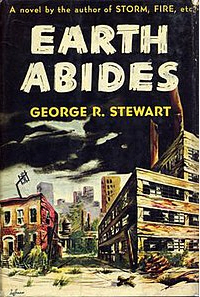
I remember the title of a long-ago novel called Earth Abides. Personally, I think the earth will last, though most of us may not be here to see it. It’s just easier to keep doing what we’re doing. That’s my  guess. As George Stewart wrote, “Men go and come, but earth abides.”

Let’s suppose we believe Earth is bigger than the problems we have wrought, does that justify continuing to destroy it? Or, is it easier to keep destroying it and let the end come when it will?

We should be smarter than that, allowing the world to go down hill into chaos, but I wonder if we are.

What do you think?

–Malcolm