“John Dee (13 July 1527 – 1608 or 1609) was an English mathematician,  astronomer, astrologer, teacher, occultist, and alchemist. He was the court astronomer for, and advisor to, Elizabeth I, and spent much of his time on alchemy, divination, and Hermetic philosophy. As an antiquarian, he had one of the largest libraries in England at the time. As a political advisor, he advocated the foundation of English colonies in the New World to form a ‘British Empire’, a term he is credited with coining. . . His goal was to help bring forth a unified world religion through the healing of the breach of the Roman Catholic and Protestant churches and the recapture of the pure theology of the ancients.” – Wikipedia
If you read about the hermetic philosophy and its impact on religion in non-fiction and fiction, or the Reign of Queen Elizabeth I, you will sooner or later come across John Dee. His influene extended into multiple areas, one being his belief in the value of communicating with angels. Louv’s book is a well-written exploration of Dee’s life.
From the Publisher
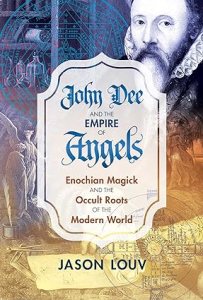 “A comprehensive look at the life and continuing influence of 16th-century scientific genius and occultist Dr. John Dee
“• Presents an overview of Dee’s scientific achievements, intelligence and spy work, imperial strategizing, and his work developing methods to communicate with angels
“• Pieces together Dee’s fragmentary Spirit Diaries and examines Enochian in precise detail and the angels’ plan to establish a New World Order
“• Explores Dee’s influence on Sir Francis Bacon, modern science, Rosicrucianism, and 20th-century occultists such as Jack Parsons, Aleister Crowley, and Anton LaVey
“Dr. John Dee (1527-1608), Queen Elizabeth I’s court advisor and astrologer, was the foremost scientific genius of the 16th century. Laying the foundation for modern science, he actively promoted mathematics and astronomy as well as made advances in navigation and optics that helped elevate England to the foremost imperial power in the world. Centuries ahead of his time, his theoretical work included the concept of light speed and prototypes for telescopes and solar panels. Dee, the original “007” (his crown-given moniker), even invented the idea of a “British Empire,” envisioning fledgling America as the new Atlantis, himself as Merlin, and Elizabeth as Arthur.
“But, as Jason Louv explains, Dee was suppressed from mainstream history because he spent the second half of his career developing a method for contacting angels. After a brilliant ascent from star student at Cambridge to scientific advisor to the Queen, Dee, with the help of a disreputable, criminal psychic named Edward Kelley, devoted ten years to communing with the angels and archangels of God. These spirit communications gave him the keys to Enochian, the language that mankind spoke before the fall from Eden. Piecing together Dee’s fragmentary Spirit Diaries and scrying sessions, the author examines Enochian in precise detail and explains how the angels used Dee and Kelley as agents to establish a New World Order that they hoped would unify all monotheistic religions and eventually dominate the entire globe.
“Presenting a comprehensive overview of Dee’s life and work, Louv examines his scientific achievements, intelligence and spy work, imperial strategizing, and Enochian magick, establishing a psychohistory of John Dee as a singular force and fundamental driver of Western history. Exploring Dee’s influence on Sir Francis Bacon, the development of modern science, 17th-century Rosicrucianism, the 19th-century occult revival, and 20th-century occultists such as Jack Parsons, Aleister Crowley, and Anton LaVey, Louv shows how John Dee continues to impact science and the occult to this day.”
Publishers Weekly Review
 “Louv (Hyperworlds, Underworlds) delivers an overwhelming amount of information in this sweeping attempt to reconcile two schools of thought about Elizabethan scientist John Dee (1527–1608). Historians concerned with Dee generally fall into two camps, writes Louv: the political historians embarrassed by Dee’s late-in-life angelic obsessions, and the occultists indifferent to Dee’s involvement in the development of British intellectualism and politics. By elucidating the “direct intersection between the forces of magic and the machinery of empire,” Louv, with moderate success, argues for the importance of Dee’s ideas throughout the last 500 years of Western history. ” (Click on PW logo for complete review.)
—Malcolm
 Malcolm R. Campbell is the author of magical realism novels set in the Florida Panhandle.
 B. B. Griffith was born and raised in Denver, Colorado and he still wanders Denver to this day. He’s the author of many best-sellers across several series, each unique, but with a common theme of modern magic and mystery. He’s been called an author of contemporary fantasy, an author of modern westerns, and an author of metaphysical thrillers. Sometimes all three at once. His novels have been called “rare and imaginative,” “full of lovable, memorable characters,” and his personal favorite: “A literary breath of fresh air.”
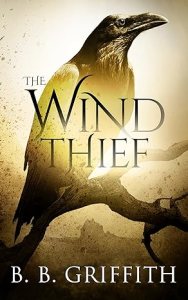 “A dark wind gathers on Chaco Navajo reservation, deep in the heart of New Mexico. Grant Romer, the Keeper of the secret bell, can feel it pulling at his soul. Caroline and Owen work as hard as they can to treat the Navajo, but the dark wind brings a desperation to their clinic that is beyond western medicine.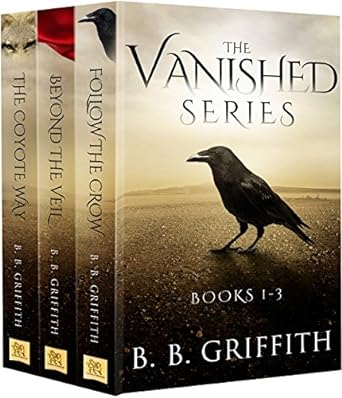
 “The 1996 Mount Everest disaster occurred on 10–11 May 1996 when eight climbers caught in a blizzard died on Mount Everest while attempting to descend from the summit. Over the entire season, 12 people died trying to reach the summit, making it the deadliest season on Mount Everest at the time and the third deadliest after the 22 fatalities resulting from avalanches caused by the April 2015 Nepal earthquake and the 16 fatalities of the 2014 Mount Everest avalanche. The 1996 disaster received widespread publicity and raised questions about the commercialization of Everest.” Wikipedia
 In 2023, 17 climbers died on Mt. Everest, eleven died in 2019, and eight died in 1996. Jon Krakauer wrote the book about the 1996 season, his first time on the mountain as a successful climber and a reporter.
 “A special 50
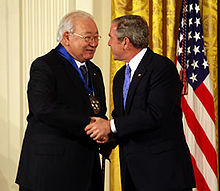 “Beautifully rendered and deeply affecting, House Made of Dawn has moved and inspired readers and writers for the last fifty years. It remains, in the words of The Paris Review, both a masterpiece about the universal human condition and a masterpiece of Native American literature.” Birchbark Books. Momaday receiving the National Medal of Arts from George W. Bush in 2007
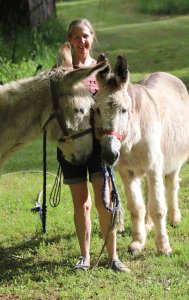 Bonnie Jo Campbell is an American Writer living with her husband and donkeys in rural Michigan.
 (WASHINGTON)— PEN America applauds passage in the U.S. House of a bill that will protect a fundamental press freedom and would be the first of its kind at the federal level.
 PEN America stands at the intersection of literature and human rights to protect open expression in the United States and worldwide. We champion the freedom to write, recognizing the power of the word to transform the world. Our mission is to unite writers and their allies to celebrate creative expression and defend the liberties that make it possible.
 What I got, is Irritable Bowel Syndrome (IBS). Everyone seems to agree that the bowels are irritated one way or another, but opinions are mixed about what causes it and what (if anything) gets rid of it.
 “Low FODMAP is a three-step elimination diet:


 My wife hates “High Noon” and the theme song it rode in on. John Wayne didn’t like it either. I think it’s the perfect movie, not necessarily my favorite but perfect in the way it was put together: the music, the ticking block, the fact it was shot in real-time, and the fact (which the Duke hated) that normal citizens wouldn’t help a marshal fight off a gang of bad guys that would function like a SEAL team compared to people who mainly used guns for hunting.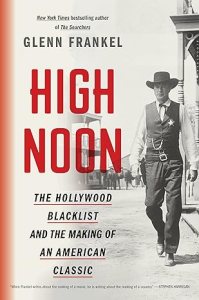
 Malcolm's Round Table