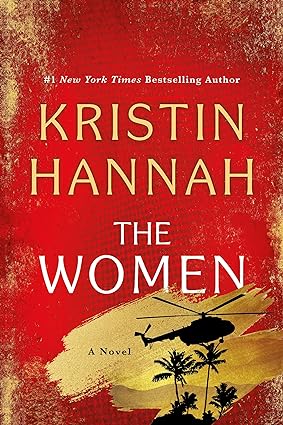
 The Women was released this month by Kristin Hannah. That’s good news for those of us who love her work. According to Publishers Weekly, “Hannah’s emotionally charged page-turner (after The Four Winds) centers on a young nurse whose life is changed by the Vietnam War. Before Frankie McGrath begins basic training for the Army in 1966, her older brother Finley is killed in action. Frankie excels as a surgical nurse in Vietnam and becomes close with fellow nurses Ethel and Barb. After Ethel’s tour ends, Frankie and Barb gets assigned to the base at Pleiku, near the Cambodian border, where some of the heaviest fighting occurs. There, she reunites with Navy officer Rye Walsh, Finley’s best friend, and they become lovers. When Frankie returns to the U.S., she’s met with indifference for her service from her parents, who are still grieving her brother’s death, and disdain from people who oppose the war. She leans on alcohol and drugs while struggling to acclimate to civilian life. Though the situations and dialogue can feel contrived (Rye, after announcing he’s re-upping, says to Frankie at the close of a chapter, “I’m not leaving my girl”), Hannah’s depictions of Frankie tending to wounded soldiers are urgent and eye-opening, and a reunion of the three nurses for Frankie’s benefit is poignantly told. Fans of women’s historicals will enjoy this magnetic wartime story.”
From the Publisher
“Women can be heroes. When twenty-year-old nursing student Frances “Frankie” McGrath hears these words, it is a revelation. Raised in the sun-drenched, idyllic world of Southern California and sheltered by her conservative parents, she has always prided herself on doing the right thing. But in 1965, the world is changing, and she suddenly dares to imagine a different future for herself. When her brother ships out to serve in Vietnam, she joins the Army Nurse Corps and follows his path.
“As green and inexperienced as the men sent to Vietnam to fight, Frankie is over-whelmed by the chaos and destruction of war. Each day is a gamble of life and death, hope and betrayal; friendships run deep and can be shattered in an instant. In war, she meets―and becomes one of―the lucky, the brave, the broken, and the lost.
“But war is just the beginning for Frankie and her veteran friends. The real battle lies in coming home to a changed and divided America, to angry protesters, and to a country that wants to forget Vietnam.
“The Women is the story of one woman gone to war, but it shines a light on all women who put themselves in harm’s way and whose sacrifice and commitment to their country has too often been forgotten. A novel about deep friendships and bold patriotism, The Women is a richly drawn story with a memorable heroine whose idealism and courage under fire will come to define an era.”
From the Author’s Website
 “From master storyteller Kristin Hannah, #1 New York Times bestselling author of The Nightingale and The Four Winds, comes the story of a turbulent, transformative era in America: the 1960s. The Women is that rarest of novels―at once an intimate portrait of a woman coming of age in a dangerous time and an epic tale of a nation divided by war and broken by politics, of a generation both fueled by dreams and lost on the battlefield.”
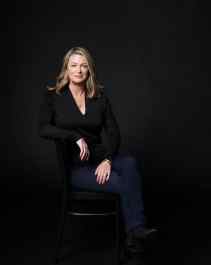
“A former attorney, Kristin lives in the Pacific Northwest.”
–Malcolm
 Yesterday’s post about hellhounds represents the kind of research a writer does when s/he plans to use a legendary monster, magical helper, or mythical place in a story. First, determine what is known about the place creature and how the beliefs about it change from place to place. In my case, I want to know what makes a hellhound a hellhound and whether or not it’s different in the American South.
 “A hellhound is a mythological hound that embodies a guardian or a servant of hell, the devil, or the underworld. Hellhounds occur in mythologies around the world, with the best-known examples being Cerberus from Greek mythology, Garmr from Norse mythology, the black dogs of English folklore, and the fairy hounds of Celtic mythology. Physical characteristics vary, but they are commonly black, anomalously overgrown, supernaturally strong, and often have red eyes or are accompanied by flames.” – Wikipedia
 In Greek mythology, Cerberus guards the gates of hell and is called the hound of Hades. Typically, the hound is portrayed with three heads as is the dog guarding the depths of Hogwarts as shown in the Harry Potter film. The hound guards Hades’s gate to keep people from getting out.
 Wolves, and their supernatural cousins, the hellhounds, are a universal theme in myths, legends, and ghost stories. “The Omen,” a supernatural horror film released in 1976 to both mixed reviews and commercial success focuses on the nasty big dog. It’s fair to say that the hound of the Baskervilles fits neatly into the hellhound category.
 “Tanacetum parthenium, known as feverfew, is a
 “NCIS” paid tribute to longtime cast member
  Like many NCIS viewers, I started watching McCallum in 1964’s “
 “Gary Zukav
 The Man from Snowy River”. The film had a cast including Kirk Douglas in a dual role as the brothers Harrison (a character who appeared frequently in Paterson’s poems) and Spur, Jack Thompson as Clancy, Tom Burlinson as Jim Craig, Sigrid Thornton as Harrison’s daughter Jessica, Terence Donovan as Jim’s father Henry Craig, and Chris Haywood as Curly. Both Burlinson and Thornton later reprised their roles in the 1988 sequel, The Man from Snowy River II (the film’s original Australian title). The 1988 sequel film was later released in the United States by Walt Disney Pictures under the title Return to Snowy River and in the United Kingdom under the title The Untamed.” – Wikipedia
 One thing I liked about the film was its popularization of the work of “Waltzing Matila” poet Banjo Patterson who was not a one-shot wonder with that poem. He lived from 1864 to 1941 and was known as an Australian
  He began as an attorney and then started writing under the pseudonym of “The Banjo,” his favorite horse. Patterson’s image appears on the $10 note and on a 1981 postage stamp.
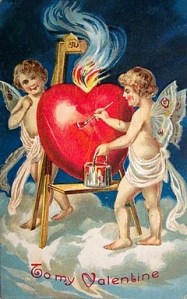 Valentine’s Day, also called Saint Valentine’s Day or the Feast of Saint Valentine, is celebrated annually on February 14. It originated as a Christian feast day honoring a martyr named Valentine, and through later folk traditions it has also become a significant cultural, religious and commercial celebration of romance and love in many regions of the world.
 are thumbing. This week the 22-year-old model Kaia Gerber launched her own book club,
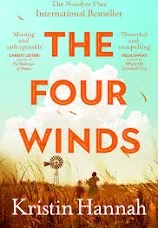 “The Bestselling Hardcover Novel of the Year.–Publishers Weekly
 “When The Four Winds picks up again in 1934, we’re deep in the Great Depression, and Hannah lets her story bake under the cloudless sky. A conspiracy of bad weather, bad agriculture and bad government gradually desiccates the entire area, bringing one farm after another to ruin.
 “
“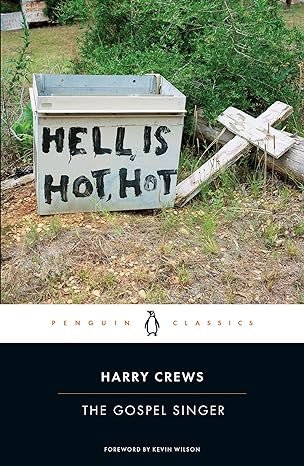 “Golden-haired, with the voice of an angel and a reputation as a healer, the Gospel Singer appeared on the cover of LIFE and brought thousands to their knees in Carnegie Hall. But for all his fame, he is a man in mortal torment that drives him back to his obscure and wretched hometown of Enigma, Georgia. But by the time his Cadillac pulls into Enigma, he discovers an old friend is being held at tenuous bay from a lynch mob. As Harry Crews’s first novel unfolds, the Gospel Singer is forced to give way to his torment, and in doing so he reveals to the believers who have gathered at his feet just how little he is God’s man, and how much he has contributed to the corruption of each of them.”
 “Decades after trespassing children spotted the desiccated corpse wedged in the treetop, no one knows the answer.
 Malcolm's Round Table