Parks Group Applauds Landmark Collaborative Tribal Management Plan to Protect Bears Ears National Monument

NPCA News Release

March 13, 2024

Washington DC – The Biden administration in collaboration with five Native American Tribes released a historic draft management plan for Bears Ears National Monument in Utah. Through this plan, the lands and resources of Bears Ears will be managed in collaboration with Tribes, utilizing Indigenous knowledge and Tribal input, as was intended in President Obama’s proclamation that established the monument and President Biden’s proclamation that restored the monument.

This management plan was the result of a two-year collaboration among five Tribes of the Bears Ears Commission – Ute Indian Tribe, Ute Mountain Ute Tribe, Zuni Tribe, Hopi Tribe and the Navajo Nation – along with federal partners at the Bureau of Land Management and the U.S. Forest Service. Once finalized the plan will inform resource policies and procedures for the protection of Bears Ears National Monument, connecting one of America’s most diverse national park landscapes, for years to come.

Statement by Theresa Pierno, President and CEO for the National Parks Conservation Association (NPCA):

“This landmark management plan is proof that through collaboration and elevation of voices traditionally underrepresented in public lands management, our country can preserve culturally important places and ecosystems while also balancing recreational opportunities. It’s clear the Biden administration understands that true Tribal consultation in the management of our public lands benefit all of us, as well as the future of our national parks and public lands.

“Bears Ears connects and protects one of America’s most iconic national park landscapes. It is a sacred place that provides healing and sustains life for so many. This historic collaborative management plan safeguards those values. It commits to long-term Tribal consultation and ensures that the management of this landscape honors traditional Indigenous knowledge and cultural wisdom. Once realized, this plan will create a future where visitors learn about the full history of Bears Ears and the people who have understood and cared for these lands for thousands of years.

“For years, NPCA worked alongside Tribal Nations, local communities and businesses, and countless people across the country to protect the Bears Ears landscape. But this plan would not have become a reality without the leadership of Ute Indian, Ute Mountain Ute, Zuni, and Hopi Tribes and the Navajo Nation. We are proud to stand with them, together as partners, in the fight to protect Bears Ears, and all our national monuments, for generations to come.”

***

‘The Quest: a Montanan’s Photographic Journey’ by Richard S. Buswell

After it acquired Buswell’s complete works, the Montana Historical Society partnered with the University of Montana Press to bring those photographs out in The Quest.

From the Publisher

Richard S. Buswell has created images of some of Montana’s most haunting relics of the settler period. Ghost towns can have an eerie allure or architectural charm, but Buswell’s technique captures more than decrepit buildings and historic trash. To date, Buswell’s work has hung in exhibits worldwide, is held in over two hundred museum collections, nationally and internationally, and has been the focus of six books.

“The Quest” showcases seventy-one arresting photographs, a powerful collection that carries readers into an evocative and contemplative space where images of a deteriorating past are captured to bring out their hidden beauty. The abandoned material things of everyday life take on new energy through his camera lens, strange and wonderful. This is a journey between a receding past and the magical present.

About the Author

“The 78-year-old Buswell is retracing footsteps of his childhood, when he would go ghost-towning with his parents.

“In the past half-century, he’s carried a 42-pound backpack of camera equipment on his mostly lone sojourns on weekends.

“’Hiking alone has attuned me to sights and sounds that I would otherwise miss. The sound of quiet causes me to lose my hurry.’”

“During this photo career he’s taken a total of 534 photos. One year, “’I only took one photo,’” he said during an interview at his kitchen table in his Helena home with his wife Sue, who assisted with details of the book.

“Yale University and the Montana Historical Society are the only ones to buy his entire collection of photos; 232 other museums have partial collections.

“He also acknowledged he would never have been able to pursue this passion over the decades without Sue’s support.
“Working as a doctor during the week, he would hike to far-flung ghost towns in the mountains many weekends, while she took care of their three children and household.” – from The Independent Record.

–Malcolm

Good Plants: American Water Plantain

USDA Photo

“A tall, spindly, many-branched aquatic with small white (rarely pink) flowers in whorls. In this typical emergent aquatic, the lower part is often submerged, while the upper part is exposed. Leaves formed underwater are ribbon-like and soon rot; they are seldom seen on adult plants. The bulb-like base of several species of Alisma was dried and eaten by Native Americans.

“Members of the Water-Plantain Family grow in water, in swamps, on muddy banks, or occasionally in wet sand. Each plant has long-petioled leaves in a clump with a flowering stem rising among them. The flowers have 3 green sepals, 3 white or pink-tinged petals, 6 or more stamens, and several pistils. Stamens and pistils may be in separate flowers.” – Lady Bird Johnson Wild Flower Center

According to the Missouri Department of Conservation, “With their whorl of oval leaves with thick, ridged stems, water plantains look like gigantic versions of the plantains that commonly appear unwanted in yards. Water plantains are water-edge plants that bear large, elaborately branching stalks of tiny, white, three-petaled flowers.”

Edible Wild Food drawing

The plant, which grows fron one to thee feet,  can be found from Minnesota to Massachusetts and from there, south to Florida and Texas in ponds, seeps, marshes and other slow-moving water in full sunlight. Its broad leaves float on the water’s surface but are also found submerged; are more like ribbon when they form under water. The leaves and peitoles are toxic raw, but are considered edible after boiling. (Do not eat them or use as medicine without consuling a doctor or herbalist first.)

The Lost Book of Herbal Remedies says water plantains have been used as a diuretic, help with bladder infections, applied directly to wounds to control bleeding and as a food helps lower cholesterol. Note: causes skin  and/or digestive tract irritation in some people.

Eat healthy after you’re sure of a plant.

–Malcolm

News sites seem to have an abnormal fascination with solstices and equinoxes

Every year it’s the same. Everyone and his and/or her brother writes a feature story about these times of the year as though we’ve never heard of them. That seems as unnecessary as writing an essay about why the sun rises and sets. Didn’t we learn about day and night and the seasons in grade school?

EarthySky headlines its 2024 vernal equinox page with: “March equinox 2024: All you need to know”

When it comes down to it, most of us don’t need to know anything unless we synchronize our planting with moon phases and the seasons. Otherwise, the day will come and go without notice, alien landings, frogs falling from the sky, or a higher than usual number of wild boar attacks in shopping malls.

USA TODAY headlines:

What to know about the 2024 vernal equinox that brings on a new season

The Associated Press says:

The spring equinox is here. What does that mean?

Does it embarrass you as a human being to be spoon-fed this kind of information every year? It should. If you didn’t learn it al in elementary school, weren’t you barraged with the whole story last year and the year before?
It’s hard to escape the news coverage.

–Malcolm

Old Books Provide Novelists With an Area’s Local Color

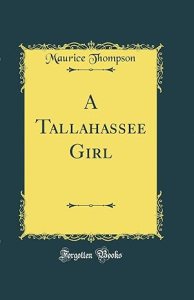
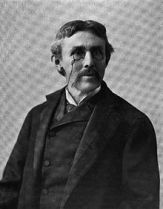
A Tallahassee Girl, published in 1882 by Maurice Thompson (September 9, 1844 – February 15, 1901) is listed on Amazon as fiction. It reads more like non-fiction, and perhaps that has the author’s intent. Thompson was a busy naturalist who turned to writing books. You can read the story for free by checking this information page.  The original cover is shown here (right) and the current cover displayed on Amazon is shown on the left.
I did not buy the book at  Amazon’s $30 price, choosing to go to one of the free sites. As fiction, I found the story to be a plodding experience. Yet, if I were writing novels that touched on the early days of Florida’s capital city, I might find value in one of the free versions where I could take notes like a student in a history class. For a dash of local color, you can say in your story that a visitor to a friend’s house saw this book on the shelf potentially with others by Thompson.

You can find an overview of Thompson’s work in The Library of Southen Literature where the author likes his poetry best. Wikipedia’s entry begins: “James Maurice Thompson  was an American novelist, poet, essayist, archer, and naturalist.” He was quite prolific and is probably best known for two books about archery and for his bestseller Civil War novel Alice of Old  Vincennes.

Looking for local color takes a novelist on interesting journeys. I learned about this author while reading about the “so-called” Florida Volcano!

Malcolm

The Cassadaga, Florida Devil’s Chair

“The term devil’s chair (or haunted chair) in folklore is frequently attached to a class of funerary or memorial sculpture common in the United States during the nineteenth century and often associated with legend tripping. Nineteenth-century graveyards sometimes included carved chairs for the comfort of visitors. In this function, the object was known as a “mourning chair,” and cemeteries have since provided benches for similar purposes, most often movable units of the type used in parks, but also specimens in the tradition of the carved chairs.

“Some carved chairs were probably not intended for use as anything but monuments, while the “monubench” is still commercially available. Once the original purpose of these chairs fell out of fashion, superstitions developed in association with the act of sitting in them. In a typical example, local young people dare one another to visit the site, most often after dark, at midnight, or on some specified night such as Halloween or New Year’s Eve. Variously, the stories suggest the person brave enough to sit in the chair at such a time may be punished for impudence or rewarded for courage.” — Wikipedia

Florida’s  Creepy Urban Legends reports that “Cassadaga is known for being Florida’s spiritual center where thousands of psychics and clairvoyants gather year round to exercise their talents. As you might imagine, this spiritual haven is a hotbed of spiritual activity, though one particular site is known to send chills down your spine. Known as the Devil’s Chair of Cassadaga, many people in the community believe that if you sit in this chair late at night while no one is around the Devil will visit you. Better have a cold beer on hand because legend also has it that the Devil will be expecting one.”

According to the Serpent’s Pen, these stone chairs were originally called “Mourning Charis” and were placed near loved one’s graves use by family and friends who stopped by to pay their respects. The spooky legends began when these chairs or benches fell out of fashion and became objects of superstition.

One of the more notorious cemeteries has been Greenwood in Decatur, Illinois where my grandparents lived (in the town not the graveyard). In addition to numerous devil’s chairs,  the place was filled with ghostly lights and other weird stuff that we didn’t want to see at night.

Only in Your State says that Greenwood (shown here) is one of the most haunted sites in the country. “One of the most evil parts of the graveyard is the Civil War Memorial. It is said that a prison train carrying Confederate prisoners to camps went through this area and that many died from Yellow Fever while on board.”

I didn’t even like driving past Greenwood in the daytime. The same is true of the graveyard in Cassadaga. Some places are best left alone.  These Devil’s Chairs at Greenwood are such a place: they’re just asking for trouble. Or worse!

Malcolm

‘In and Out the Window’ by Jane Yolen

The release of today’s new middle grade  book by celebrated and prolific (400 books) author Jane Yolen is, as we said in the 1960s, a happening. But In and Out the Window is the big kahuna of happenings since, as her publisher Philomel Books notes, it’s “the largest single anthology of Jane Yolen’s poetry, containing more than one hundred poems for all occasions—with fun black-and-white art throughout.”

From the Amazon Book Listing

“Our Kitchen
Smells of mornings,
blueberry muffins,
hot chocolate, tea.
It smells of bacon
and of eggs.
It smells of family.

“For the first time, legendary author Jane Yolen gathers the largest single anthology of her poetry celebrating childhood. At home or at school, playing sports or practicing music, enjoying the holidays, or delighting in each season, Jane Yolen’s masterful collection shows just how lively it is to be a kid. With whimsical artwork by Cathrin Peterslund, this collection of more than one hundred poems is a classic that children are sure to return to again and again.”

About the Author

website photo

From Wikipedia:  “Jane Hyatt Yolen (born February 11, 1939) is an American writer of fantasy, science fiction, and children’s books. She is the author or editor of more than 350 books, of which the best known is The Devil’s Arithmetic, a Holocaust novella. Her other works include the Nebula Award−winning short story “Sister Emily’s Lightship”, the novelette “Lost Girls”, Owl MoonThe Emperor and the Kite, and the Commander Toad series. She has collaborated on works with all three of her children, most extensively with Adam Stemple.

“Yolen delivered the inaugural Alice G. Smith Lecture at the University of South Florida in 1989. In 2012 she became the first woman to give the Andrew Lang lecture. Yolen published her 400th book in early 2021, Bear Outside.”

From Kirkus Reviews

“A heaping helping of characteristically readable verse from a veteran writer and storyteller.”

Malcolm

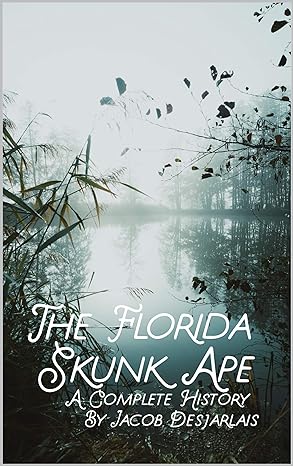
‘The Florida Skunk Ape’ by Jacob Desjarlais

“The skunk ape is a large and hairy human-like mythical creature purported to inhabit the forests and swamps in the southeastern United States, most notably in Florida. It is often compared to, synonymous with, or called the “cousin” of Bigfoot, a prominent subject within North American popular culture.

Many dubious articles have been presented in an attempt to prove the skunk ape’s existence, including anecdotal sightings, disputed photographs, audio and video recordings, and casts of large footprints. The majority of mainstream scientists have historically discounted the existence of the skunk ape, considering it to be the result of a combination of folklore, misidentification, and hoax, rather than a living animal. The skunk ape has permeated into the popular culture of the southern United States, especially in Florida” – Wikipedia.

Books about Florida’s folklore often reference the Skunk Ape. Among those is a short Kindle book released in 2020 by Jacob Desjarlais that bills itself as “A Compete History” all in 26 pages.

From the Publisher

“Jacob Desjarlais grew up on the edges of the swamp less than 50 miles from where the original Skunk Ape sightings started popping up. The Skunk Ape, the stinky cousin of the Pacific Northwest’s Bigfoot, was the original Florida Man, known for bursting out of bushes and attacking cars. Desjarlais examines Skunk Ape sightings that pre-date Florida statehood as well as the history of the beast’s name. With a look at how breeding populations would work with the sustainability of the cryptid, fossil evidence, and even social media’s impact, Desjarlais leaves no fern unturned in his search for the possible realities behind the Skunk Ape myth. Through his investigation, he outlines who has been involved in furthering the myth and who could be profiting from it along the way.

“The Florida Skunk Ape: A Complete History is Book One in a series of Conspiracy Chapbooks written by Jacob Desjarlais that explore controversial subjects and outlines the history and ramifications of them. From who believes to who profits, Desjarlais investigates topics ranging from Skunk Apes and Ticks to the Panama Papers and Phantom Time.”

You can also find information about the critter at Shealys Skunk Ape Headquarters in Ochopee, FL.

–Malcolm

Good Plants: Black-Eyed Susan

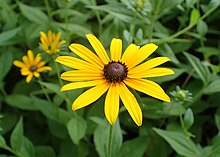
Black-eyed Susan is a member of the Aster/Sunflower Family and is found throughout eastern and central North America. It is also called brown-eyed Susan, hairy coneflower, gloriosa daisy brown Betty, yellow ox-eye daisy coneflower, poor-land daisy, and golden Jerusalem. The prefers full sun and moist to moderately dry soil.” –The Lost Book Of Herbal Remedies

Both an annual  (usually) and  a perennial the plant is 3-foot tall by 1.5 foot wide with alternate, coarse-haired leaves, branching stems off a single tap root, reproduces by seeds, and displays flowers in the fall with a brown/black center and yellow petals. It is toxic to cats, and probably some farm animals (cattle, sheep, pigs). The seeds are poisonous.

Wikipedia classifies the plant as follows:

Kingdom: Plantae
Clade: Tracheophytes
Clade: Angiosperms
Clade: Eudicots
Clade: Asterids
Order: Asterales
Family: Asteraceae
Genus: Rudbeckia
Species:
R. hirta

Its primary use is in parks and home gardens.

It has medical uses–taken under a doctor’s consultation, including, (according to Practical Self Reliance) “snakebites, earaches, and get rid of parasitic worms. It has a long history of treating colds and the flu, but fewer people turn to this popular wildflower for anything other than filling a glass vase over the last century.”

Poison Control warns that “it should not be eaten. It can cause allergic skin reactions and asthma attacks in people sensitive to the plant.” Consult a doctor or herbalist before experimenting with slack-eyed susans. This information is provided for historical usage.

–Malcolm

PEN AMERICA CONDEMNS UC BERKELEY PROTESTS THAT TURNED VIOLENT, WITH REPORTED ANTISEMITIC BIGOTRY

Even with Deep Disagreements, No Student Should Have their Physical Safety at Risk, Nor Subjected to Taunts and Slurs

FOR IMMEDIATE RELEASE

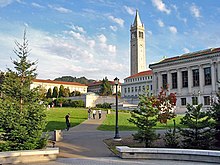
NEW YORK – PEN America today condemned protests at the University of California-Berkeley  earlier this week that turned violent, included antisemitic slurs and gestures, and led to the cancellation of a planned lecture with Ran Bar-Yoshafat, deputy director of the Kohelet Policy Forum, an Israeli think tank.

“The violent protests and reports of antisemitic bigotry that led to the event cancellation are abhorrent,” said Jonathan Friedman, director of free expression and education programs at PEN America. “No student should have their physical safety jeopardized for attending a public event on campus. While protest of any speaker is within students’ rights, violence, threats, and harassment are never appropriate. These protesters crossed the line — violating the rights of other students who organized the event and came to listen.”

The lecture had been organized by multiple Jewish student organizations. Despite efforts by the University to safeguard the event, even moving it to a second location, it was ultimately canceled for safety reasons, in response to escalating violence. According to reports, about 200 protesters gathered outside the event venue on campus, before forcing their entry inside, smashing two windows and a door. Students who had come to attend the lecture have reported being physically assaulted, spit at, and injured, and that some protesters taunted them with antisemitic slurs. In response, the university has opened a formal criminal investigation and has initiated its student code-of-conduct process. An official statement from the University Chancellor and Provost said the attack on the event and the building constituted “an attack on the fundamental values of the university.”

“University campuses must be a place for dialogue, even when there are deep disagreements,” Friedman continued. “This is a heckler’s veto taken to the extreme. We applaud Berkeley’s efforts to try to have the event go forward despite the planned disruption, to reach out to the affected students, and to investigate and enforce their policies in the aftermath. They should pursue appropriate accountability for those found responsible for the violence, threats, antisemitic slurs, and damaged property, as part of the investigation underway. While campuses must ensure that the fullest breadth of protected political speech can be heard, they must be able to take assertive steps so that events like this can be held safely.”