“Southern Gothic is an artistic subgenre of fiction, country music, film, and television that are heavily influenced by Gothic elements and the American South. Common themes of Southern Gothic include storytelling of deeply flawed, disturbing, or eccentric characters who may be involved in hoodoo, decayed or derelict settings, grotesque situations, and other sinister events relating to or stemming from poverty, alienation, crime, or violence.” – Wikipedia
Characteristics of Southern Gothic literature include isolation and marginalization, violence, and crime, sense of place. Southern Gothic has a lot in common with film noir because it has a skewed view of the world in which reality is bent into a general feeling of hopelessness and the smallness of the individual. I like both these genres a lot.
River Jorden
THE MIRACLE OF MERCY LAND
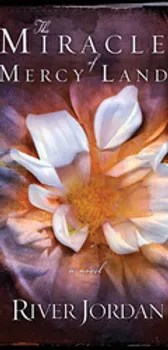 “Two journalists in a small Alabama town discover a mysterious book that makes them confront the past.
“If you had the power to amend choices you made in the past, would you—even if it changed everything?
“Mercy Land has made some unexpected choices for a young woman in the 1930s. The sheltered daughter of a traveling preacher, she chooses to leave her rural community to move to nearby Bay City on the warm, gulf-waters of southern Alabama. There she finds a job at the local paper and spends seven years making herself indispensable to old Doc Philips, the publisher and editor. Then she gets a frantic call at dawn—it’s the biggest news story of her life, and she can’t print a word of it.
“Doc has come into possession of a curious book that maps the lives of everyone in Bay City—decisions they’ve made in the past, and how those choices affect the future. Mercy and Doc are consumed by the mystery locked between the pages—Doc because he hopes to right a very old wrong, and Mercy because she wants to fulfill the book’s strange purpose. But when a mystery from Mercy’s past arrives by train, she begins to understand that she will have to make choices that will deeply affect everyone she loves—forever.
“A tremendously well-written tale. River Jordan is a truly gifted author. Highly recommended.” – Davis Bunn, best-selling author”
Harry Crews
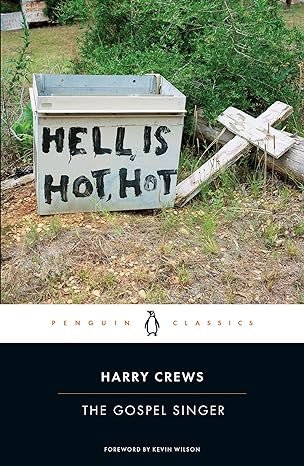 “Golden-haired, with the voice of an angel and a reputation as a healer, the Gospel Singer appeared on the cover of LIFE and brought thousands to their knees in Carnegie Hall. But for all his fame, he is a man in mortal torment that drives him back to his obscure and wretched hometown of Enigma, Georgia. But by the time his Cadillac pulls into Enigma, he discovers an old friend is being held at tenuous bay from a lynch mob. As Harry Crews’s first novel unfolds, the Gospel Singer is forced to give way to his torment, and in doing so he reveals to the believers who have gathered at his feet just how little he is God’s man, and how much he has contributed to the corruption of each of them.”
Cherie Priest
“Who put Ellen in the blackgum tree?
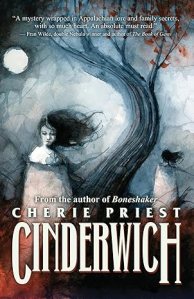 “Decades after trespassing children spotted the desiccated corpse wedged in the treetop, no one knows the answer.
“Kate Thrush and her former college professor, Dr. Judith Kane, travel to Cinderwich, Tennessee in hopes that maybe it was their Ellen: Katie’s lost aunt, Judith’s long-gone lover. But they’re not the only ones to have come here looking for closure. The people of Cinderwich, a town hardly more than a skeleton itself, are staunchly resistant to the outsiders’ questions about Ellen and her killer. And the deeper the two women dig, the more rot they unearth … the closer they come to exhuming the evil that lies, hungering, at the roots of Cinderwich.”
Other Southern Gothic Authors of Note
- V. C. Andrews (1923–1986)
- Dorothy Allison (b. 1949)
- Ambrose Bierce (1842–1914)
- Poppy Z. Brite (b. 1967)
- Larry Brown (1951–2004)
- Erskine Caldwell (1903–1987)
- Truman Capote (1924–1984, early works)
- Fred Chappell (b. 1936)
–Malcolm
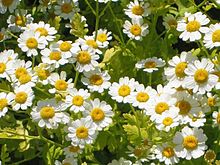 “Tanacetum parthenium, known as feverfew, is a flowering plant in the daisy family, Asteraceae. It may be grown as an ornament, and may be identified by its synonyms, Chrysanthemum parthenium and Pyrethrum parthenium.” – Wikipedia
 In medicine, it’s been used to fight headaches, including migraines, as well as other inflamations. Studies are following research into feverfew and cancer and depression. In addition to the capsules, feverfew can be taken in tea and as a tincture. Drugs.com notes” An optimal dose of feverfew has not been established. For prevention of migraine, dried leaf preparation dosages ranging from 50 to 150 mg/day for various treatment durations have been evaluated in clinical trials.”
 “Gary Zukav
 The Man from Snowy River”. The film had a cast including Kirk Douglas in a dual role as the brothers Harrison (a character who appeared frequently in Paterson’s poems) and Spur, Jack Thompson as Clancy, Tom Burlinson as Jim Craig, Sigrid Thornton as Harrison’s daughter Jessica, Terence Donovan as Jim’s father Henry Craig, and Chris Haywood as Curly. Both Burlinson and Thornton later reprised their roles in the 1988 sequel, The Man from Snowy River II (the film’s original Australian title). The 1988 sequel film was later released in the United States by Walt Disney Pictures under the title Return to Snowy River and in the United Kingdom under the title The Untamed.” – Wikipedia
 One thing I liked about the film was its popularization of the work of “Waltzing Matila” poet Banjo Patterson who was not a one-shot wonder with that poem. He lived from 1864 to 1941 and was known as an Australian
 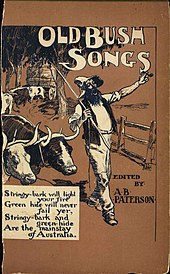 He began as an attorney and then started writing under the pseudonym of “The Banjo,” his favorite horse. Patterson’s image appears on the $10 note and on a 1981 postage stamp.
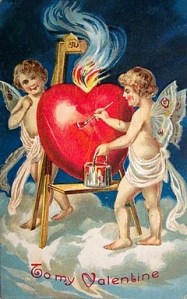 Valentine’s Day, also called Saint Valentine’s Day or the Feast of Saint Valentine, is celebrated annually on February 14. It originated as a Christian feast day honoring a martyr named Valentine, and through later folk traditions it has also become a significant cultural, religious and commercial celebration of romance and love in many regions of the world.
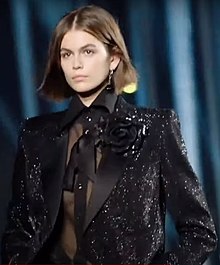 are thumbing. This week the 22-year-old model Kaia Gerber launched her own book club,
 “The 1996 Mount Everest disaster occurred on 10–11 May 1996 when eight climbers caught in a blizzard died on Mount Everest while attempting to descend from the summit. Over the entire season, 12 people died trying to reach the summit, making it the deadliest season on Mount Everest at the time and the third deadliest after the 22 fatalities resulting from avalanches caused by the April 2015 Nepal earthquake and the 16 fatalities of the 2014 Mount Everest avalanche. The 1996 disaster received widespread publicity and raised questions about the commercialization of Everest.” Wikipedia
 In 2023, 17 climbers died on Mt. Everest, eleven died in 2019, and eight died in 1996. Jon Krakauer wrote the book about the 1996 season, his first time on the mountain as a successful climber and a reporter.
 “A special 50
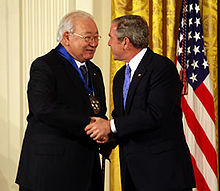 “Beautifully rendered and deeply affecting, House Made of Dawn has moved and inspired readers and writers for the last fifty years. It remains, in the words of The Paris Review, both a masterpiece about the universal human condition and a masterpiece of Native American literature.” Birchbark Books. Momaday receiving the National Medal of Arts from George W. Bush in 2007
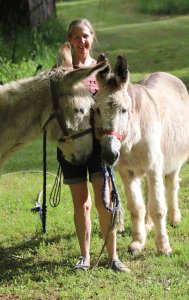 Bonnie Jo Campbell is an American Writer living with her husband and donkeys in rural Michigan.
 (WASHINGTON)— PEN America applauds passage in the U.S. House of a bill that will protect a fundamental press freedom and would be the first of its kind at the federal level.
 PEN America stands at the intersection of literature and human rights to protect open expression in the United States and worldwide. We champion the freedom to write, recognizing the power of the word to transform the world. Our mission is to unite writers and their allies to celebrate creative expression and defend the liberties that make it possible.
 Malcolm's Round Table