After it acquired Buswell’s complete works, the Montana Historical Society partnered with the University of Montana Press to bring those photographs out in The Quest.
From the Publisher
 Richard S. Buswell has created images of some of Montana’s most haunting relics of the settler period. Ghost towns can have an eerie allure or architectural charm, but Buswell’s technique captures more than decrepit buildings and historic trash. To date, Buswell’s work has hung in exhibits worldwide, is held in over two hundred museum collections, nationally and internationally, and has been the focus of six books.
“The Quest” showcases seventy-one arresting photographs, a powerful collection that carries readers into an evocative and contemplative space where images of a deteriorating past are captured to bring out their hidden beauty. The abandoned material things of everyday life take on new energy through his camera lens, strange and wonderful. This is a journey between a receding past and the magical present.
About the Author
 “The 78-year-old Buswell is retracing footsteps of his childhood, when he would go ghost-towning with his parents.
“In the past half-century, he’s carried a 42-pound backpack of camera equipment on his mostly lone sojourns on weekends.
“’Hiking alone has attuned me to sights and sounds that I would otherwise miss. The sound of quiet causes me to lose my hurry.’”
“During this photo career he’s taken a total of 534 photos. One year, “’I only took one photo,’” he said during an interview at his kitchen table in his Helena home with his wife Sue, who assisted with details of the book.
“Yale University and the Montana Historical Society are the only ones to buy his entire collection of photos; 232 other museums have partial collections.
–Malcolm


 Does it embarrass you as a human being to be spoon-fed this kind of information every year? It should. If you didn’t learn it al in elementary school, weren’t you barraged with the whole story last year and the year before?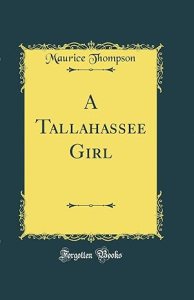
 eptember 9, 1844 – February 15, 1901) is listed on Amazon as fiction. It reads more like non-fiction, and perhaps that has the author’s intent. Thompson was a busy naturalist who turned to writing books. You can read the story for free by checking this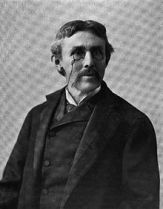
 You can find an overview of Thompson’s work in
  Florida’s Creepy Urban Legends
 One of the more notorious cemeteries has been Greenwood in Decatur, Illinois where my grandparents lived (in the town not the graveyard). In addition to numerous devil’s chairs, the place was filled with ghostly lights and other weird stuff that we didn’t want to see at night.
 I didn’t even like driving past Greenwood in the daytime. The same is true of the graveyard in Cassadaga. Some places are best left alone. These Devil’s Chairs at Greenwood are such a place: they’re just asking for trouble. Or worse!


 “From master storyteller Kristin Hannah, #1 New York Times bestselling author of The Nightingale and The Four Winds, comes the story of a turbulent, transformative era in America: the 1960s. The Women is that rarest of novels―at once an intimate portrait of a woman coming of age in a dangerous time and an epic tale of a nation divided by war and broken by politics, of a generation both fueled by dreams and lost on the battlefield.”
 Yesterday’s post about hellhounds represents the kind of research a writer does when s/he plans to use a legendary monster, magical helper, or mythical place in a story. First, determine what is known about the place creature and how the beliefs about it change from place to place. In my case, I want to know what makes a hellhound a hellhound and whether or not it’s different in the American South.
 “A hellhound is a mythological hound that embodies a guardian or a servant of hell, the devil, or the underworld. Hellhounds occur in mythologies around the world, with the best-known examples being Cerberus from Greek mythology, Garmr from Norse mythology, the black dogs of English folklore, and the fairy hounds of Celtic mythology. Physical characteristics vary, but they are commonly black, anomalously overgrown, supernaturally strong, and often have red eyes or are accompanied by flames.” – Wikipedia
 In Greek mythology, Cerberus guards the gates of hell and is called the hound of Hades. Typically, the hound is portrayed with three heads as is the dog guarding the depths of Hogwarts as shown in the Harry Potter film. The hound guards Hades’s gate to keep people from getting out.
 Wolves, and their supernatural cousins, the hellhounds, are a universal theme in myths, legends, and ghost stories. “The Omen,” a supernatural horror film released in 1976 to both mixed reviews and commercial success focuses on the nasty big dog. It’s fair to say that the hound of the Baskervilles fits neatly into the hellhound category.
 Malcolm's Round Table