“My main rule for writing is to follow the poem. You always start with the poem you want to write, but that’s not always the poem. The poem is usually smarter than you and it wants to go someplace that most likely will surprise you. If you give in and give up to the idea of following rather than forcing, the threads are easier to pull, and the poem allows you inside of it. It’s one of my favorite things about writing; I never know what’s going to happen.” – Ada Limón
When you don’t know exactly what’s going to happen when you begin a new poem, short story, or novel, anything can happen. Once you try to force it, rather than follow it, you limit the possibilities of the work.
Following the work doesn’t mean opening it up to chaos or something so experimental, few people will read it–unless that’s what you like to do. When you follow, you are turning your imagination and curiosity up on high and just writing. You are just letting the characters say and do what seems the most natural thing for them to say and do.
You can polish things a bit as you go or you can wait until the work is done. I tend to polish as I go whenever a character says or does something other than what they intended; or when I have stepped in out of nowhere and forced something to happen.
Like Limón, I like not knowing what’s going to happen. I like being surprised when I begin to see where the plot is heading. I usually have an idea when I begin whether I’m writing realism or magical realism, but things can change. I also tend to have a sense whether the story lends itself to a rather unemotional, straightforward approach or an exuberant and lyrical style. Yes, that might change, too, but it seldom does.
When authors try this approach for the first time, they’re not only surprised about the wild and wonderful things that happen, but that at the end of the first draft, the story or poem is more cohesive than they thought it would be.
I also hear authors saying that even if they really prefer outlines and storyboards, writing several stories this way helps free up their writing. Its scope increases as the writer takes more risks. Relax, I want to say. These risks aren’t life-threatening. The worst that can happen is having a story turn into a writing exercise. If you end up with something you don’t like, toss it in a drawer and start something new.
When writing is an adventure, you will never get bored or stuck. Writing is always hard work, but following the story also provides you with a sense of play.
–Malcolm
 Malcolm R. Campbell is the author of magical realism stories and novels, including the new collection of short stories, “Widely Scattered Ghosts.”
 In this week’s
  I subscribe to several writers’ magazines. I enjoy the articles and interviews. My eyes glaze over when I see ads for writer’s retreats. Many of these–some you pay for and some you compete for–feature cabins in the woods for writers who want to get away from it all and do nothing but write.
 But the concept was similar, somewhat like following winds, currents, and tides in a boat: giving up control and enjoying the ride. More often than not, whether it was by horse or car or sailboat, such rides took me where I needed to go even though I didn’t consciously know it. What I saw changed me. Where I ended up the was a person I needed to meet or something I needed to witness.
 Most of us buy books for a compelling story. I read a fair number of black ops books. Right now, I’m reading Agent in Place by Mark Greaney. I picked it up at a CVS and thought it looked interesting. I wasn’t attracted to it because I’m a student of guns, spies, conspiracies, or anything else related to the plot of the thriller. I think a lot of readers are like me in this respect.
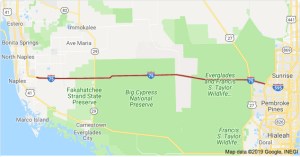 I used to tell people I was raised by alligators near the town of Immokalee, Florida and that my dad, Papa Gator, was the inspiration for the section of road through the Everglades called Alligator Alley.
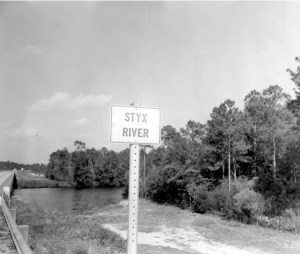 I didn’t like staying inside the house. So, during an evening when I said I was swinging by the library–which was the gospel truth of the matter–my 1954 Chevy and I were likely to be a hundred of miles away from home, usually following sandy roads through national forest lands and visiting places with multiple meanings in their names like the River Styx, Tate’s Hell Swamp, and Florida Garden of Eden.


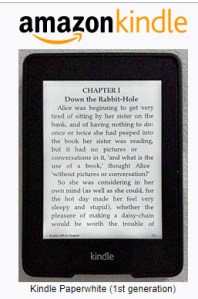 As 2018 ended, I tallied up the number of copies sold for Conjure Woman’s Cat, Eulalie and Washerwoman, and Lena. (Actually, my publisher did this.) Anyhow, what continues to surprise me is that for all of these books, the paperback editions represent a very small percentage of total sales.
 If Amazon were to crash and burn, which might not be a bad thing, all of my physical books would still be on the shelves in my office the next day. I have no clue where all my Kindle copies would be. I suspect the answer is “nowhere.”
 Malcolm's Round Table