Missouri Review Seeking Contest Entries

Deadline: October 1

$5,000 Fiction | $5,000 Nonfiction | $5,000 Poetry

Winners receive a cash prize, publication in the Spring 2025 issue of the Missouri Review, and promotion across our social media channels.

Guidelines

  • Submit one piece of fiction or nonfiction up to 8,500 words or any number of poems between 6 to 12 pages. Please double-space fiction and nonfiction entries.
  • Multiple submissions and simultaneous submissions are welcome, but you must pay a separate fee for each entry and withdraw the piece immediately if accepted elsewhere.
  • Entries must be previously unpublished.
  • Standard Entry fee: $25. Each entrant receives a one-year subscription to the Missouri Review in digital format (normal price $24) and a digital copy of the latest title in our imprint, Missouri Review Books, a short story anthology by former contributors (normal price $7.95).
  • “All Access” Entry fee: $30. In addition to the one-year digital subscription to the Missouri Review and TMR Books e-book, Life Support: Stories of Health & Medicine, entry fee grants access to the last 10 years of digital issues and the audio recordings of each digital issue.

Submit online or by mail.

Read prize-winning stories by Melissa YancyRachel Yoder, and Thomas Dodson, essays by Peter Selgin and Dave Zoby, and a selection from poetry winners Katie BickhamKai Carlson-Wee, and Alexandra Teague.

Remembering Marge Piercy’s ‘Gone to Soldiers’

At 88, Marge Piercy, author of 17 volumes of poetry and fifteen novels, just sent a new manuscript to her agent. Time spent on the book had to be juggled with work spent on her prolific vegetable garden and the vicissitudes of life for people in the eighth decade of life.

When I think of Piercy’s work, I’m always drawn back to Gone to Soldiers, the long, multi-character novel released in 1987. Its impact on me is still large and hunting.

Erin Madison, writing in “Off the Shelf” 2016, said that Gone to Soldiers” is the most complete, complex, and stunning piece of World War II literature I’ve ever encountered.” I have the same viewpoint. The book has nine major characters, and Piercy supplies each with a distinctive voice while weaving their stories through a powerful story.

As we remember 9/11 today, the trials of earlier conflicts are specially poignant.

From the Publisher

The New York Times bestselling novel of humans in conflict with inhuman events, Gone to Soldiers is “a landmark piece of literary prose…the most thorough and most captivating, most engrossing novel ever written about World War II” (Los Angeles Times).

In this “sweeping epic” (The Philadelphia Inquirer) of World War II, Marge Piercy moves from the United States to Europe, from the North African campaign to New Zealand, from Japan to Palestine, brilliantly recreating the atmosphere of the wartime capitals: the sexual abandon, the luxury and deprivation, the terror and excitement.

Gone to Soldiers interweaves the stories of ten remarkable characters: The New York divorcee and writer of romances-turned-war correspondent… her ex-husband, involved in intelligence for the OSS… Daniel Balaban, whose mission is to crack the Japanese codes… Bernice Coates, who escapes life to fly fighters as a Woman’s Airforce Service Pilot… a painter who parachutes into Nazi-occupied France to fight with the Resistance… Zachary Barrington Taylor, for whom war is the most exciting game… Jacqueline Levy-Monot, who leads Jewish children over the Pyrenees to safety… her sister, Naomi, a troubled adolescent… their cousin, Ruthie Siegal, a touching young woman who tries to keep alive her love for her boyfriend, while working on an assembly line in Detroit… These characters wage memorable and passionate public and private battles, as war casts them into their ultimate dreams and nightmares, daring them to act out their brightest and darkest fantasies.

Written with unmatched authority about the cataclysmic events and passions of war, Gone to Soldiers “is a literary triumph for Marge Piercy and a landmark volume in the literature of war” (USA TODAY).

Here’s an apt blurb from the Boston Globe on Piercy’s website that sums up the author’s work well: “Marge Piercy is not just an author, she’s a cultural touchstone. Few writers in modern memory have sustained her passion, and skill, for creating stories of consequence.”

–Malcolm
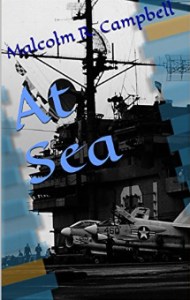
Malcolm R. Campbell is the author of the anti-war Vietnam novel, “At Sea.”


Reporters’ two-finger typing style

Typing with two to three fingers and the thumbs–derogatorily called “hunt and peck–was (and perhaps still is) used by reporters who (naturally) didn’t go to secretarial school to learn touch typing. This style was prevalent 75 or so years ago when reporters hammered out the words as best they could. Like my father before me, I grew up using this style and, for years, could type faster than many touch typists due to long practice.
I didn’t like the term “hunt and peck” because it conjured up a vision of a person trying to type who had never seen a typewriter before.

Even people in my generation were taught how to set type in journalism school because letterpress was still the prevalent printing method. We saw type differently than a touch typist who often learned the ten-finger method in secretarial schools and high school programs focused (in those days) on women who would ultimately work in offices as secretaries.

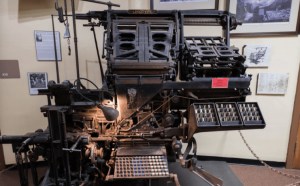
Linotype

My parents enrolled me in a touch-typing class during a summer session. I went kicking and screaming through the course because it was entirely unnatural and much slower than the two-finger method. I was employed by computer companies years later before shifting to touch typing keyboards that required a lighter touch than manual typewriters and linotype machines (that set type in metal “slugs.”)

Most veteran journalists typed very fast using two to three fingers and in most cases had no reason to change over to a style they saw as being for secretaries. In a hand-set/letterpress world, we saw letters as physical objects rather than impressions on a page.

Times change.

Malcolm

Malcolm R. Campbell worked for Navy newspapers, a regional magazine, and computer companies before shifting to fiction.

Jodi Picoult: ‘By Any Other Name’

Many real and imagined authors have been suggested as the true geniuses behind Shakespeare’s plays. I have always believed they were written by Francis Bacon. Nonetheless, it’s exciting to see Picoult’s proposal.

From the Publisher

From the New York Times bestselling co-author of Mad Honey comes an ‘inspiring’ (Elle) novel about two women, centuries apart—one of whom is the real author of Shakespeare’s plays—who are both forced to hide behind another name.

“’You’ll fall in love with Emilia Bassano, the unforgettable heroine based on a real woman that Picoult brings vividly to life in her brilliantly researched new novel.’—Kristin Hannah, author of The Women

“Young playwright Melina Green has just written a new work inspired by the life of her Elizabethan ancestor Emilia Bassano. But seeing it performed is unlikely, in a theater world where the playing field isn’t level for women. As Melina wonders if she dares risk failure again, her best friend takes the decision out of her hands and submits the play to a festival under a male pseudonym.

“In 1581, young Emilia Bassano is a ward of English aristocrats. Her lessons on languages, history, and writing have endowed her with a sharp wit and a gift for storytelling, but like most women of her day, she is allowed no voice of her own. Forced to become a mistress to the Lord Chamberlain, who oversees all theatre productions in England, Emilia sees firsthand how the words of playwrights can move an audience. She begins to form a plan to secretly bring a play of her own to the stage—by paying an actor named William Shakespeare to front her work.

“Told in intertwining timelines, By Any Other Namea sweeping tale of ambition, courage, and desire centers two women who are determined to create something beautiful despite the prejudices they face. Should a writer do whatever it takes to see her story live on . . . no matter the cost? This remarkable novel, rooted in primary historical sources, ensures the name Emilia Bassano will no longer be forgotten.”

From Christian Since Monitor

“A question underlying “By Any Other Name” is whether it’s more important for your work or your name to endure. Picoult argues in this substantive novel that, while a rose by any other name would smell just as sweet, even sweeter is being recognized for your achievements.” (See Review)

Malcolm

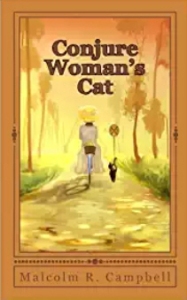
Malcolm R. Campbell is the author of magical realism and contemporary fantasy novels and stories, including “Conjure Woman’s Cat.”

Opening lines of Poe’s ‘To Helen

Ever since I first read Poe’s “To Helen” in high school, I’ve loved the poem’s opening lines–partly because I’m a fan of well-wrought alliteration:

Helen, thy beauty is to me
Like those Nicéan barks of yore,
That gently, o’er a perfumed sea,
The weary, way-worn wanderer bore
To his own native shore.

He was a teenager when he wrote the poem, dedicating it to Jane Stanard, mother of a childhood friend. The poem is about Helen of Troy who, many said, was the most beautiful woman in the world. It first appeared in a 1931 collection, went through various revisions, and then the version we read now appeared in The Raven and Other Poems in 1845.

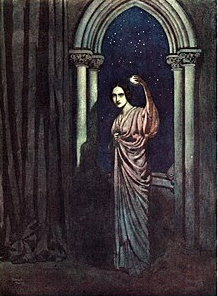
Psyche – Illustration by Edmund Dulac, 1912.

As Wikipedia notes, “Poe also refers to Helen as Psyche, a beautiful princess who became the lover of Cupid. Psyche represented the soul to ancient Greeks, and Poe is comparing Helen to the very soul of “regions which are Holy Land” meaning the soul of Greece from which so much of our ideals of beauty, democracy and learning sprang forth. In ancient Greek, the name Helen literally means “sunlight; bright as the dawn”. Her “agate lamp” may refer to the moment when Psyche discovered the true identity of Cupid by shining a lamp on him at night; it also refers to the enlightened knowledge of the ancient world, which still influences Western culture today.”

While my favorite poem is “Fern Hill” (“Now as I was young and easy under the apple boughs about the lilting house and happy as the grass was green”), by Dylan Thomas, the lines in “To Helen” are the ones that haunt me.

Malcolm

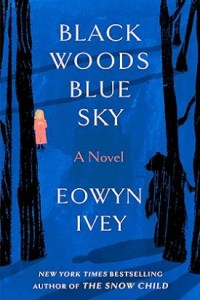
New Alaska novel from Pulitzer author Eowyn Ivey: ‘Black Woods, Blue Sky’ due out in 2025 

New York Times bestselling author Eowyn Ivey returns to the mythical Alaskan landscape of her Pulitzer Prize finalist The Snow Child with an unforgettable reimagining of Beauty and the Beast that asks the question: Can love save us from ourselves?

“Birdie’s keeping it together; of course she is. So she’s a little hungover, sometimes, and she has to bring her daughter, Emaleen, to her job waiting tables at an Alaskan roadside lodge. It’s a tough place to be a single mother, but at least Emaleen never goes hungry. Still, Birdie can remember happier times from her youth, when she was free in the wilds of nature.

“Arthur Neilsen, a soft-spoken and scarred recluse who appears in town only at the change of seasons, brings Emaleen back to safety when she gets lost in the woods. Most people avoid him, but to Birdie, he represents everything she’s ever longed for. She finds herself falling for Arthur and the land he knows so well. 

“Against the warnings of those who care about them, Birdie and Emaleen move to his isolated cabin in the mountains, on the far side of the Wolverine River.

“It’s just the three of them in a vast wilderness, hundreds of miles from roads, telephones, electricity, and outside contact, but Birdie believes she has come prepared. At first, it’s idyllic: Together they catch salmon, pick berries, and swim in sunlit waters. But soon Birdie realizes that she is not at all ready for the dark secret that Arthur is harboring in the Alaskan wilderness that is as mysterious and dangerous as it is beautiful.

“Black Woods, Blue Sky is a novel with life-and-death stakes, about the love between a mother and daughter, and the allure of a wild life—about what we gain and what it might cost us.”

–Malcolm

PEN AMERICA CONDEMNS SENTENCING OF ALSU KURMASHEVA TO 6.5 YEARS IN PRISON

FOR IMMEDIATE RELEASE

(NEW YORK, NY) — PEN America strongly condemns the sentencing by a Russian court of Alsu Kurmasheva to 6.5 years in prison. A Prague-based book editor and a journalist with Radio Free Europe/Radio Liberty (RFE/RL), Kurmasheva was convicted of “spreading false information” about the Russian military.

“We condemn the sentencing of Alsu Kurmasheva for the basic act of exercising her right to free speech which is rapidly becoming criminalized in Putin’s Russia,” said Polina Sadovskaya, advocacy and Eurasia director at PEN America. “Kurmasheva was targeted for her courageous and honest coverage of Russia’s war on Ukraine. Her sentencing, following a speedy and closed-door trial, is just the latest of Russia’s ongoing assaults against free expression, which clearly poses a great threat to Putin’s authoritarianism. We call on the U.S. government to do everything in its power to facilitate the immediate release of Kurmasheva so that she can return home to her children and family.”
In October 2023, Kurmasheva was wrongfully detained in Russia for failing to register as a “foreign agent.” Established in 2012, Russia’s foreign agents law initially targeted non-governmental organizations involved in “political activities” and receiving foreign funds. It has since been expanded several times, including shortly after Russia’s full-scale invasion of Ukraine when it was extended to include anyone working “under foreign influence.” Kurmasheva’s detention was continually extended to June 2024, and she was repeatedly denied pretrial measures.

Kurmasheva’s work represented a counter-narrative to the “United Russia” promoted by the Putin regime. Her reporting on the problems of national minorities in Tatarstan and Bashkortostan, and her dedication to preserving the Tatar language and culture, attracted negative attention from the Russian authorities. According to her husband Pavel Butorin, Kurmasheva’s role as editor of the book, “No to War,” a collection of stories by forty Russian opponents of the country’s invasion of Ukraine, was a primary reason for her arrest. Kurmasheva’s dual Russian – U.S. citizenship may also have factored in her arrest.

Kurmasheva’s sentence was announced on the same day that Wall Street Journal reporter Evan Gershkovich, who has been held since March 2023, received a 16-years sentence in a penal colony on charges of “espionage.” Following last week’s in-absentia sentencing of Masha Gessen, it is the third harsh sentence issued by Russia against writers and journalists. It is believed that as a result of her dual citizenship, Kurmasheva may eventually be part of a prisoner swap that could also include Gershkovich.

The Committee to Protect Journalists recorded 22 journalists jailed in Russia at the end of 2023. According to PEN America’s 2023 Freedom to Write Index, Russia ranks as the world’s sixth-largest jailer of writers (tied with Belarus), with 16 writers behind bars. In 2023, Russia appeared for the first time in the Index’s top ten jailers, highlighting the rising impact of war and conflict on free expression. Eleven out of the 16 writers imprisoned in Russia last year were targeted for their anti-war expressions, including Kurmasheva.

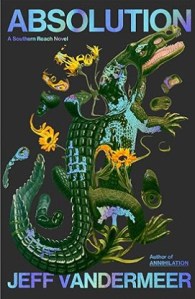
Coming in Oct: ‘Absolution’ by Jeff Vandermeer

The surprise fourth volume in Jeff VanderMeer’s Southern Reach series―and the final word on one of the most provocative and popular speculative fiction series of our time.

“When the Southern Reach trilogy was first published a decade ago, it was an instant sensation, celebrated in a front-page New York Times story before publication, hailed by Stephen King and many others. Each volume climbed the bestseller list; awards were won; the books made the rare transition from paperback original to hardcover; the movie adaptation became a cult classic. All told, the trilogy has sold more than a million copies and has secured its place in the pantheon of twenty-first-century literature.

“And yet for all this, for Jeff VanderMeer there was never full closure to the story of Area X. There were a few mysteries that had gone unsolved, some key points of view never aired. There were stories left to tell. There remained questions about who had been complicit in creating the conditions for Area X to take hold; the story of the first mission into the Forgotten Coast―before Area X was called Area X―had never been fully told; and what if someone had foreseen the world after Acceptance? How crazy would they seem?

“Structured in three parts, each recounting a new expedition, Absolution is a brilliant, beautiful, and ever-terrifying plunge into unique and fertile literary territory. There are some long-awaited answers here, to be sure, but also more questions, and profound new surprises. It is the final word on one of the most provocative and popular speculative fiction series of our time.”

From Publishers Weekly

“Drawing heavily on bioresearch and scientific extrapolations, this foray into the human cost of bureaucratic paranoia and the abandonment of logic to “hope, prayers, and blessings” provokes, mystifies, and challenges readers in turn. VanderMeer’s horrifying declaration of the impossibility of knowing the other is a knockout.”

Vandermeer lives in Tallahassee, Florida.

Malcolm

The AR-15 – my view

In general, it’s a mistake to use the 2nd Amendment to justify the purchase of military weapons by civilians.

  • If you believe you need one for self-protection, you have a big ego, are the member of a cartel or gang, or belong in the witness protection program.
  • If you think you need it for hunting, you are no sportsman any more than a fisherman using hand grenades too “catch” fish is a sportsman.
  • Your excitement at shooting such weapons at a firing range does not trump the danger of such weapons out in society where they can easily be the weapon of choice for a crime.

In my view, such weapons should be banned.

–Malcolm

Back pain: who knew something was broken?

Several weeks ago, my wife was out on the riding mower, and it got stuck in a ditch. That happens a lot since our yard is a former farm with lots of ruts in it. After we pulled it out, she had a sore back, an often-times occurrence after we cut the grass at our age.

But this time it wouldn’t go away. When it got to the point where she couldn’t move due to the pain, we called an ambulance. The ER was the usual disorganized chaos. It the end they found a small fracture in a vertebra. They kept her five days. The reason is that her BP was sky-high. We kept telling them they were causing the blood pressure spike by taking her off all the meds she’d been taking up to then.

Finally, they believed us after apparently thinking we were nuts. The BP came down and they discharged her with a back brace, saying this was better than surgery. A friend lent us a walker. Now we have physical therapists stopping by and helping her.

I doubt she’ll be out on that riding mower again soon.

Malcolm