“When I start I am in a total limbo. I don’t have any idea where the story is going or what is going to happen or why I am writing it. I only know that—in a way that I can’t even understand at the time—I am connected to the story. I have chosen that story because it was important to me in the past or it will be in the future.” – Isabel Allende
 I am re-reading The House of the Spirits for the first time since it came out in English in 1985, most likely from the copy I read then. Allende is one of my favorite writers (perhaps above all others) because the stories she tells resonate with me as does the fact she begins each of her books–and I’ve read most of them–without knowing where the story is going. The House of the Spirits didn’t disappoint me in the mid-1980s, and yet, I was afraid to go back to it for fear the most perfect novel would have become imperfect over time like a first lover you don’t dare meet again after both of you have grown up.
I can’t imagine knowing where a story is going when I start writing it and fear that if I did, I wouldn’t be able to write it, or that if I wrote it anyway it would be less true. As I re-read this magical realism novel, I’m not disappointed the second time out and I feel inspired now as I did over thirty years ago; I see again that the story unfolded as it had to unfold because it was (and is) all of a piece that existed in and of itself before Allende wrote the first line: “Barrabus came to us by sea.”
“I think that the stories choose me,” she has said.
When I chanced across author Mark David Gerson’s book The Voice of the Muse in 2008, I was surprised to find a book for writers that acknowledged the truth that stories exist untold until we find them and/or until they find us. As I wrote in my Amazon review of his book, “Gerson believes stories pre-exist, waiting hidden away in dreams to come alive. But while I’ve worked more or less as a blacksmith hammering them into this world, he provides ways to tune into the ‘muse stream’ whereupon life flows onto the page like a warm sweet river.”
I suspect Allende knows this to be true. Otherwise, she couldn’t have written this:
He could hardly guess that the solemn, cubic, dense, pompous house, which sat like a hat amidst its green and geometric surroundings, would end up full of protuberances and incrustations, of twisted staircases that led to empty spaces, of turrets, or small windows and could not be opened, doors hanging in midair, crooked hallways, and portholes that linked the living quarters so that people could communicate during the siesta, all of which were Clara’s inspiration.
I’m relieved to discover that I’m still in love with this novel and that life might have been better if I hadn’t stayed away from it for so many years.
 My stories come upon me out of nowhere and that’s for the best.
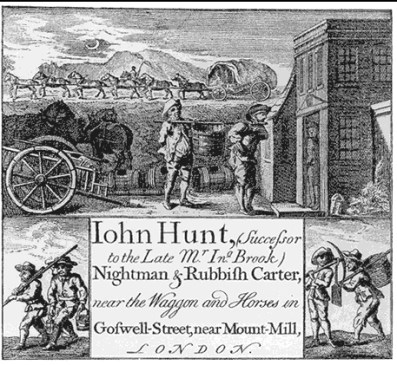 The Soylent Green Company truck stopped by the house today and pumped out the septic tank. The first house on this lot had a privy. A year before we built our house on the land where my wife’s grandparents had their house (long gone), the county changed its rules about septic tanks. Previously, a simple perc test was all it took to get approved for a septic tank. But then progress came along and septic tank systems had to meet stricter requirements and that cost a lot more money.


 While our drip coffee makers last about 12-18 months, our microwave has lasted at least ten years. Now it’s shutting itself off whenever we cook something on high for 10-15 minutes. So, we ordered a new Hamilton Beach and have it ready to go as soon as our trusty Sharp bites the dust. The appliances my parents bought during, or just after, WWII lasted longer than my parents. I wish today’s products were just as durable.

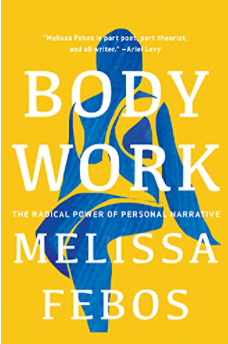 Among other things, Febos thinks sex scenes should advance the plot. Writers tend to forget that everything in their novels and stories is supposed to advance the plot directly or indirectly. If they haven’t forgotten this, they forget it when they try to write a sex scene.

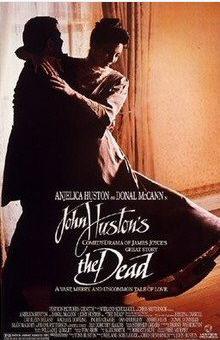 One way to add depth to a scene setting opening is through a reference to a scene in a novel, short story, or film. In my case, my opening lines were inspired by the closing lines of the James Joyce novella-length short story “The Dead” which appeared in his 1914 Dubliners collection that focussed on middle class life. I didn’t mention the link in my story, because mentioning it didn’t really fit, and because what I was thinking about was Joyce’s use of a snow metaphore in a story about the dead (which is how my character saw the existence of forgotten people in mental instutions). Here’s Joyce’s closing to “The Dead”: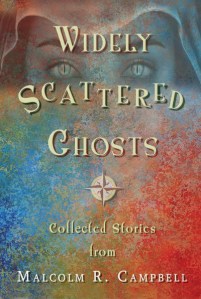

 According to the all-knowing and quasi divine Internet, that phrase was first heard during the “Irish Rebellion of 1798 when a group of Irish rebels staged an uprising to protest British rule.” It didn’t work out. Nonetheless, as you know, I’ll always side with anyone trying to break free of British rule, so I can be counted on to raise a glass or two of Knappogue Castle 12 Year Single Malt to celebrate the man who converted the Irish to Christrianity. Seriously, why did he do that? Their old-time Celtic beliefs were just fine.
 Ми погано спимо. Образи з щоденних новин про смерть і руйнування в Україні переслідують наші мрії. Деякі з нас мріють, що ми бачимо жах на власні очі, тому що саме так ми повинні бачити його – а не на телебаченні, як ніби ваша боротьба – це фільм.
 Malcolm's Round Table