I’m reading Alice Hoffman’s novel The Book of Magic, unfortunately, the last in a four-book series that began in 1995. As I read, everything I know from studying magic comes to mind rather like hearing an old song brings to mind where you were and the people you were with when you first heard it.

I have no idea whether thoughts of magic are stirred up in the minds of most readers or just those who’ve studied magic. Maybe this happens with people who study other subjects. If you studied kings and queens in college courses, does reading novels about kings and queens remind you of what you learned in college and/or what you saw when you visited historic locations? Or is it just magic?
In Man in Search of Himself,” physicist Jean E. Charon wrote that works of art communicate via an innate knowledge shared by artist and viewer in a language that “awakens unconscious resonances in each of us.” At a deep level, I think, we recognize connections between what we know, think, and feel and the material we’re seeing on the page of a novel or nonfiction book.
If an author is writing the truth, the reader intuits that truth even in fiction and that awakens many memories. In a 2021 interview in The Writer, Hoffman said, “I don’t purposely pursue magic – it’s just part of the prose that I write. I grew up reading fairy tales and myths. For me, magic has always been a part of literature as a reader and as a writer. Magic doesn’t have so much to do with plot as it does with voice. For instance, you can tell a story in a realistic way, and if you’re Hemingway, it’s great, and it works. For me, magic is about the way the story is told rather than the story itself. It’s not a hocus-pocus influence in the plot. It’s more the tone of the story, the way the story tries to draw you in and create a fictional world. I’d like to add that I think the most important thing for beginning writers is to find their own voice.”
I agree with that. Since I do, Hoffman’s work resonates with me more than a novel that sets out with an overt plot involving magic rather than a story in which magic is one part of the characters’ lives. Those of us who write magical realism see magic as a normal part of life, a life that might otherwise be just as logical and rational as most of the people we meet.
For me, the shared knowledge with an author, as Charon sees it is strong when the subject is magic and less strong–to nonexistent–when the subject is black ops and police procedurals.
Like influences like, people say. They may be right.
 Malcolm R. Campbell is the author of the Florida Folk Magic Series that begins with “Conjure Woman’s Cat.” The audiobook, narrated by Wanda J. Dixon, received an Earphones Award from AudioFile Magazine.

 Writing professors and other gurus have for years sounded like a broken record on the “write daily” mandate because (supposedly) if you don’t, you’ll lose your talent and skills, be treating writing as an occasional hobby rather than a job or avocation, heading for the gutter, turning to drink, and other horrid outcomes. I think that’s nonsense.
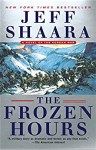 You can learn about this battle online on more sites than Wikipedia, and they give a decent overview of the battle. Yet I feel it’s through the lens of somebody watching it from outer space. I can’t afford to buy books about the war just to fill in background information about my characters. Fortunately, I have most of Jeff Shaara’s historical novels including The Frozen Hours about Korea. The novel brings me a close-in view of what it was like to be fighting a superior-in-size Chinese force in sub-zero temperatures where weapons malfunctioned and frostbite was a killer.
 “You can’t go back home to your family, back home to your childhood … back home to a young man’s dreams of glory and of fame … back home to places in the country, back home to the old forms and systems of things which once seemed everlasting, but which are changing all the time – back home to the escapes of Time and Memory.” – Thomas Wolfe in You Can’t Go Home Again
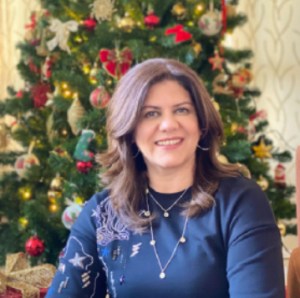 “PEN America


 We’re having pork barbecue tonight made in the crockpot. What surprises me is the fact that the recipes came in a booklet supplied by Rival when we bought our first crockpot years ago. They took some care putting the recipe book together. That surprised us! Naturally, when we make this barbecue for somebody else, we don’t tell them we got the recipe from a crockpot company handout.
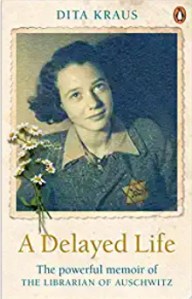 I found the autobiography by Dita Kraus, A Delayed Life to be a nice supplement to the novel version of her story in The Librarian of Auschwitz. She led a very interesting life, though I think this book probably works better for those who’ve read The Librarian of Auschwitz. Interestingly enough, she says very little about the books in her account of concentration camp life.
 What doesn’t make my day is the hourly influx of articles (many on Yahoo “news”) about the Kardashians. I don’t think I really know who they are or why they’re anybody. For weeks, I thought they were part of that gang of bad guys from Star Trek’s Alpha Quadrant, the Cardassians. As you can see from this photograph, it’s really hard to tell them apart. I guess some people are famous for being famous while others are more or less fictional.
 Malcolm's Round Table