If you have an e-mail account, chances are weird stuff shows up in your in-basket unless you paid somebody $10000000 to install blockers from multiple companies to make sure weird stuff doesn’t get delivered.
- One scam is an e-mail from somebody you’ve never heard that has the word “confirmation” in the header. I never open these because I know it’s somebody trolling for customers by making me think I already ordered something from them.
- Then there’s the header that says “Did we do something wrong?” These come from companies I may or may not have ordered from, but haven’t bought anything recently. Half of them come from people I’ve never heard of. These also go in the trash.
- Then there are the astrologers and Tarot readers who send me messages like, “I’ve been thinking about you lately because the universe has a message for you. See my free reading to see what it is.” I click on some of these things out of curiosity. The readings generally tell me I’m all-powerful, have high energy levels, and am destined to do great things. All I have to do is pay $29 a month to learn how to unlock my potential. Occasionally, I respond by asking, “If I’m all-powerful, wouldn’t my power show me what to do?” They say that most people just need a little help like jump-starting a car. Ah, so that’s how it works. It’s time to select the “unsubscribe” option.
- Malcolm, we heard from girls on the street that the little blue pill is no longer doing its job to fix your ED problem. I don’t respond to these because I don’t consort with “girls on the street” and I I did, I’d have to get my wife’s permission. That’s not happening. If I did respond, I’d say, “Sister Fortune already sold me I’m all-powerful, so that means that I don’t have an ED problem.”
 Malcolm, according to our records you’re trying to make a go of it by being a writer. If what doesn’t work, we’d like to enroll you in our fast-track grave digger’s course. Lots of people are kicking the bucket these days, and you can earn good money getting rid of the bodies. Free shovels to the first 100 people who ask about our program. I respond, “The object in the picture is not a shovel. If you think it is, you can’t help me.” I don’t hear back from them after that.
- Dear Mr. Campbell, did you write the article entitled “Telling the Difference Between a Spade and a Shovel”? Seriously, I get a lot of inquiries like this because I’m a writer. Most of these are legit, but not as much fun as those e-mails that are scams.
–Malcolm
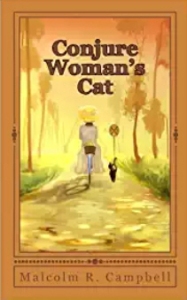 Malcolm R. Campbell is the author of satire, magical realism, paranormal, and contemporary fantasy novels and short stories.
 Of all her work, I most liked Glenda Jackson’s (9 May 1936 – 15 June 2023) portrayal of Queen Elizabeth I in the 1971 BBC TV docudrama more than any of the others in that role. Helen Mirren is a favorite of mine, and she did a good job, but I like Jackson’s work better. Jackson is probably best remembered for “Women in Love” and “A Touch of Class.” We can only guess what else she might have done as an actress had she not been gone almost three decades during her political career.
 “Elizabeth R” was the catalyst for multiple debates between my wife and me. She took English history in college and was very knowledgeable about the monarchs and issues. She could never quite understand my dislike of Elizabeth I for being as strong as it is, almost as though Elizabeth I were still on the throne causing more problems in Scotland, Ireland, and elsewhere. Few historically controversial people stir up stronger emotions in me than English monarchs, especially those constantly fighting Scotland.
 Since reading is personal and visceral and very subjective, I cannot say what drew me to Cormac McCarthy’s novels year after year. I liked his plots, his mix of minimalism and lyrical passages, the closeness of the land in his work, his ear for authentic dialogue, and a writing approach that dragged readers kicking and screaming into some of the most beautiful and the most violent tales they ever experienced.
 (NEW YORK) – PEN America, the Foundation for Individual Rights and Expression (FIRE), the National Coalition Against Censorship (NCAC), and the Student Press Law Center (SPLC) on Monday jointly filed an
  William Blake (28 November 1757 – 12 August 1827) was scarcely known during his lifetime, was considered mad by those who were aware of him, sold very few copies of his work, and was buried in a mass grave with borrowed money. Now that he can no longer profit from his works, he’s considered favorably as a poet and engraver.
 Of course, I read it. After all, there was a war on, I was addicted to Southern Gothic by running with a bad crowd and was working for an employer who tapped my phone (not because I read the book, though I’m not sure about that).
 As I read Demon Copperhead by Barbara Kingsolver, I’m happy to say this novel is a dream. And yet, it’s hard for me not to think of Holden Caufield with quotes like these: “The wonder is that you could start life with nothing, end with nothing, and lose so much in between.” “People love to believe in danger, as long as it’s you in harm’s way, and them saying bless your heart.”“Sunday school stories are just another type of superhero comic. Counting on Jesus to save the day is no more real than sending up the Batman signal.”
  As I work on my novel-in-progress, I notice once again that finding a year-by-year timeline for whatever you want to know seems impossible. I can find overviews. I can find out how things work today. But finding out what happened exactly in any given year is a hell of a lot of trouble. Right now, I’m wondering what the standard morphine dosage was in 1955. I guess I’m going to just throw a dart at the morphine history and hope for the best when it comes to oral usage or injection. It’s been around for a long time.
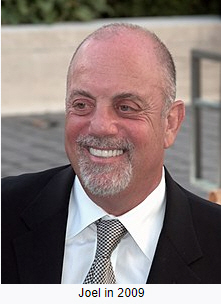 My wife and I have most of Billy Joel’s recordings. However, since I don’t live in or near New York City, I didn’t realize how long Joel has been at Madison Square Garden. I read in today’s Guardian that, “Billy Joel will conclude his monthly residency at Madison Square Garden in July 2024, with his 150th-lifetime performance at the venue. ‘It’s hard to believe we’ve been able to do this for 10 years,’ Joel said at a news conference on Thursday. ‘I’m now 74. I’ll be 75 next year. It seems like a nice number.'” Heck, I’m older than Joel. Maybe I should start cutting back on all my books and blogs.
 For the home viewer, we want the writers’ strike to end so that we can keep watching the stuff we watch. According to Variety, “The Directors Guild of America
 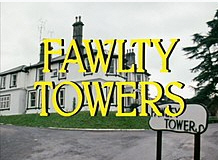 Every time I make Waldorf salad, I think of the Fawlty Towers episode in which Basil is asked by a guest for Waldorf Salad but has no clue what it is. I grew up in a family that had this quite often, so I never understood why Basil didn’t know–other than the fact he’s English and those folks aren’t known for edible cooking.
 If you’re still watching “Survivor,” then perhaps you’ll understand that since I did not grok Yam Yam that meant, according to my experience with this show, he would end up winning. And now we read that the next season will feature 90-minute episodes instead of one-hour episodes. I’m not sure I can cope with that much “reality.”
 However, I want to quickly point out that we do watch quality programs like the three-day documentary about FDR. The producers and directors did, I think, a great job capturing many hours of a man’s Presidency and the years leading up to it. We learned about him many years ago in school, but documentaries with actors playing the lead roles clarify those dusty memories from history class.
 Upcoming is another Ken Burns film. I think we’ve seen all of them because we enjoy the superb storytelling and great cinematography. The “American Buffalo” will air on October 16 and 17. According to Burns’ website, “This film will be the biography of the continent’s most magnificent species, an improbable, shaggy beast that nonetheless has found itself at the center of many of our nation’s most thrilling, mythic, and sometimes heartbreaking tales. It is a quintessentially American story, filled with a diverse cast of fascinating characters. But it is also a morality tale encompassing two important and historically significant lessons that resonate today.”
 “Our biggest crisis regarding the climate emergency is humanity’s massive state of denial that it exists on the scale it does. Yet a willingness to recognize the depth of the problem is a prerequisite to our solving it. It is a psychological and moral challenge to face the horror of what stands before us over the next ten years should we not act; yet there – in our standing raw before the truth that it confronts us with – lies our only hope for surviving it.
 Malcolm's Round Table