National Parks Conservation Association
News Release – September 1, 2023
Washington, D.C. – Blackfeet leaders and conservationists celebrated today that they, along with the federal government, have reached a negotiated agreement with Solenex, LLC to permanently retire the last remaining federal oil and gas lease in the 130,000-acre Badger-Two Medicine area of the Helena-Lewis and Clark National Forest.

The settlement agreement marks the culmination of a 40-year effort by tribal leaders, conservationists, hunters and anglers, and other Montanans to prevent oil and gas drilling in the Badger-Two Medicine. Located adjacent to Glacier National Park and the Blackfeet Indian Reservation, the area is considered sacred ground by the Blackfeet Nation due to its deep cultural and historical significance to Blackfeet people as well as vital habit and a migration corridor for some of Montana’s most treasured wildlife species including elk, wolverines, grizzly bears, and westslope cutthroat trout.
 The 6,247-acre lease held by Solenex was one of 47 oil and gas leases originally issued by the Reagan Administration in the Badger-Two Medicine in the early 1980s. With today’s settlement agreement, all of these leases in the area have now been permanently eliminated without any development having occurred, ending the threat of drilling in this wild, roadless area once and for all. Read more here.
–
The existence of these leases was bad in multiple ways, two of them being that they threatened Blackfeet land and Glacier National Park as well the Bob Marshall Wilderness and Great Bear Wilderness.
Some years ago, when I was part of a group fighting a mine in British Columbia that released polluted water into the Flathead River on Glacier’s western boundary, we successfully used the US/Canada Boundary Waters Treaty to argue that the outflow from this mine would negatively impact lands and waters within the U.S. It took a while, but we got the mine closed.
 The lesson of this is that activities outside protected lands can bring pollution and other negative impacts to the flora and fauna inside those protected lands. Like the mine, the Solenex leases had that potential. Water and air pollution can be ubiquitous in that protected land boundaries don’t magically stop the inflow of pollution. At the time, I pushed an idea forward that would place concentric “circles” around protected areas in which nothing “dangerous” could be constructed. Naturally, this wasn’t passed. Development, such as that impacting Manassas National Battlefield Park aren’t always mines and oil pipes lines, but are commercial and neighborhood encroachments that that not only spoil views from with a park, but bring dust, traffic, and noise to areas that aren’t equipped to handle them.
 The proposed Everglades Jetport was another example of this: development near a protected area that negatively impacts a protected area. It’s hard to protect that which we want to protect when nearby construction, commercial and residential projects, and superhighways threaten what we have set aside as “sacred.”
When we protect land, we think, “there, that’s taken care of” as we move on to other issues. No, it’s never taken care of. Developers are always on the porch trying to get a foot in the door.
–Malcolm
 Before reading Kathy Reichs’ novel Fatal Voyage, I had never heard the term “DMORT” even though teams from this agency help investigate airline crashes with a focus on passengers; remains. The acronym stands for Disaster Mortuary Operational Response Teams, and I suppose they don’t make the news because (a) the public doesn’t want to hear about the dead, and (b) news organizations tend to focus on why a plane crashed. According to the
 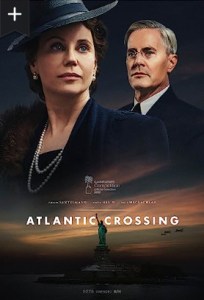 We have finally gotten around to watching the PBS series “Atlantic Crossing” which first ran in 2021 on PBS. The focus here is the plight of Norway in World War II. PBS says that “A European princess steals the heart of the U.S. president in an epic drama inspired by the real World War II relationship between Franklin Roosevelt and Norwegian Crown Princess Martha.” Norway had expected to be spared a German invasion due to its neutrality, but the Germans invaded anyway, forcing the monarchy to flee to England where it established a government in exile. We have enjoyed the series, especially since it covers a portion of World War II that is often neglected in overviews of the war.
 I often print news releases on this blog that come from
 According to
  The U.N. says “Reporters getting killed while chasing a story. Online attacks against women journalists, including death and rape threats. Targeted electronic surveillance to intimidate and silence investigative journalism. This is the dangerous reality for many journalists around the world as media freedom and safety have diminished in the digital age with a grave impact on human rights, democracy, and development.”
 According to the PEN report, “Hyperbolic and misleading rhetoric about ‘porn in schools’ and ‘sexually explicit,’ “harmful,’ and ‘age inappropriate’ materials led to the removal of thousands of books covering a range of topics and themes for young audiences. Overwhelmingly, book bans target books on race or racism or featuring characters of color, as well as books with LGBTQ+ characters. This year, banned books also include books on physical abuse, health and well-being, and themes of grief and death. Notably, most instances of book bans affect young adult books, middle-grade books, chapter books, or picture books—books specifically written and selected for younger audiences.”

 The woman was caught because she got an injection at the pharmacy which created a record of her visit along with her name and address. It didn’t take the police long to find her. She confessed to taking the wallet, saying that she kept the cash and tossed the wallet out the car window. All this happened before I even left the store.
 As I read Isabel Allende’s The Wind Knows My Name which begins when Samuel Adler’s father who disappears during Kristallnacht, I think that the plight of the Jews at the hands of the Germans and others is the primary event in recent history that defines the state of the world. There are, perhaps, some 70,000 books about the war. As for those directly related to Geman, Russian, and other countries’ crimes against the Jewish people, I cannot determine.
 against this evil by looking at the
 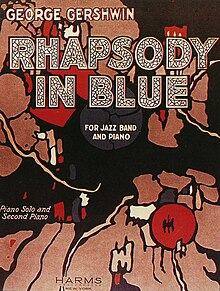 While I especially like the blues when sung with a piano or guitar accompaniment, I fully appreciate George Gershwin’s 1924 instrumental approach for piano and jazz band, “Rapsody in Blue,” that I first heard on my father’s 78 rpm records. The composition was controversial from the beginning because it mixed classical music and jazz.
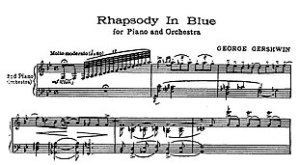 As a clarinet player in high school and college bands, that opening glissando caught my attention and never let it go. First, it was a perfect beginning to the piece. Second, I couldn’t play that 17-note gliding upward cry on my clarinet for love or money. (Not that anyone offered either.) You can hear a YouTube performance
  Theodora Goss is one of my favourite authors, so I find a lot to ponder when she steps away from her fantasy fiction and poetry and writes an essay or blog post.
 I hear about people who run five miles before going to work. They feel better for running and love the kind of tired it brings. Getting up early enough to run and then take a shower before arriving at work on time makes me feel tired. That is, making it happen is a lot of tedious trouble.
 My stomach infection is about four months old because the GP decided to refer me to a specialist whose first available appointment was two months away. When I complained, the GP did a test, found an infection, and gave me antibiotics. They seemed to be working but the infection came back after they ran their course. I didn’t tell him because by now, I was at the specialist’s practice. She ran an upper GI which came back normal, then sent me back to the lab for the same test the GP ran many weeks ago. I like the specialist, but think the infection would be gone for good if the GP had handled the whole process. I love modern medicine. <g>
 I guess I’m watching “Yellowstone” because all my regular shows are still off for the summer and/or stalemated by the actors’ and writers’ strikes. The series is gritty and well-written but seems to be composed of all the possible cliches about life in Montana, including large ranchers being evil, the rez being a bad place, and all levels of state and tribal government being corrupt. I hate to say that I’ve become addicted.
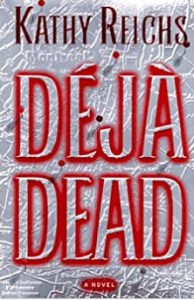 Well, it seems that most of the books I want to read haven’t come down in price yet. So, I’m re-reading many of my Kathy Reichs (Bones) thrillers, including her 1997 novel Déjà Dead. These are well-written and compelling even if you’ve read them before because there’s no way one can remember all the plots and subplots. Since her novels stem from her profession, one learns a lot about dead people and morgues. Like the TV series, the Temperance Brenan in the books likes skipping out of the lab and investigating what the police seem slow to focus on. Déjà Dead is her first novel. If you read enough of these, you’ll become well-versed in Quebecois profanity that you don’t hear in France such as “Tabernac.”
 Malcolm's Round Table