Goodness knows, he left enough on the front porch. He must have slacked off when we didn’t bring them into the house and fry them up with sawmill gravy. I swept them off into the yard hoping they’d serve as warnings to new rats moving into the area.
Apparently not.
So as time went by, the rats that did not heed the dead in the yard and set up housekeeping in the crawl space and caused $2,500 worth of damage.
I guess we should have crawled around down there more often. Or at least once. But there was no appeal to that, so we didn’t. The exterminators are under the house now. Better them than me. It’s almost worth $2,500 to never go in there.
The exterminator protects the house against termites. So how the guys stumbled across the rat infestation, I don’t know. Fortunately, no rats got into the main part of the house. And maybe as part of our crawl space investment, they (the exterminators) will post “warning signs” to keep new uninvited guests out of the place.
My tip to you–part of my lifelong learning experience–is if you have a crawl space, crawl inside from time to time. Make it a hobby.
–Malcolm
When Malcolm isn’t writing magical realism or posts about rats, he’s writing satire.
“Stretching 380,000 acres from the Beaverhead Valley through the Blacktail Range and into the Centennial Valley, the Matador is teeming with wildlife, cold trout streams, and healthy soil and grasslands. A working ranch, caring for 12,000 head of cattle outside of Dillon, Montana, Matador Ranch and Cattle is a fusion of the former Beaverhead and Selkirk Ranches, Matador Ranch and Cattle is honored to uphold and enhance the high standards in agricultural and environmental practices while advancing new and innovative projects on the ground.” – Matador Ranch website
From the Publisher
“A Montana Cowboy. A Large Corporation. A Clash of Values.
“When Ray was hired on to the Matador cowboy crew in 1974, his youthful dreams came true. Montana’s sprawling Matador Cattle Company ranch had genuine cow camps, horses galore, and thousands of cattle. The 240,000-acre ranch, owned since 1951 by Koch Industries Inc., was known internally as the Beaverhead Ranch.
“Beyond his dreams, Ray would manage the productive ranch for twenty-one years as it expanded to over 530 square miles of prime Montana ranch land and open space. As ranch manager, Ray led Montana’s Matador to new heights of environmental and economic excellence. What happened in 2011, as he approached the finish line of a stellar career is staggering.
“Woven throughout this memoir of family, faith, and work are nuggets of wisdom and valuable secrets for students planning a corporate career in ranching or corporate management. This true story will appeal to lovers of the American West, history fans, ranchers, and anyone who ever wanted to be a cowboy.”
This 352-page book was published in August 2022 by Raymond Marxer
About the Author
Marxer
“Ray Marxer, a 4th-generation Montana agricultural producer, worked 37 years for Koch Industries, Inc. on the massive Matador Cattle Company ranch in southwest Montana. As Ranch Manager for 21 of those years, Ray’s innovative approach to business guided the ranch to consistent annual profit and a record 11-year tenure average for employees.
“Environmental achievements led to numerous stewardship awards. Six national-level awards included the National Cattleman’s Beef Association Environmental Stewardship Award and the International Association of Fish and Wildlife Agencies Private Lands Stewardship Award.
“Ray served on several Governor-appointed boards for wildlife, land use, and animal health, as well as many organizational committees and boards. He runs a few cows in his retirement, in addition to his consulting and artificial insemination business, Ranch Services West.
“Ray’s passion, superseded only by his faith and family, is for the heritage of the American West, as well as providing help and encouragement to aspiring ranch producers.”
Montana Standard Review
The reader soon realizes the author is a rancher to his core. Clues include observations that horses are one of God’s greatest gifts to mankind and that carefully crossbred cows possess beautiful udders.
The reader recognizes that the author has managed a massive cattle ranch for a distant corporation when he writes about the often unwelcome dictates passed down by dudes in suits from Koch Industries in Kansas.
Ray Marxer’s recently self-published book, “Cowboy in a Corporate World,” corrals a diverse herd of ranching anecdotes, facts, triumphs and struggles, along with testimonies about religious faith and more into 246 pages.
The book is clearly written, easy to follow and features photos from Susan Marxer, the author’s wife.
Back in the old days, kids walked from house to house when they went trick or treating. Parents often accompanied the younger kids and that was okay. The last neighborhood I lived in before moving to the country was a subdivision. Kids–up to ages long past their treat-or-treating years came by car. The cars went from subdivision to subdivision. Naturally, that was a greedy expediency many of us didn’t like and accounted for the fact we didn’t know most of the people who rang the doorbell.
There’s nobody out here on my rural road to ring the doorbell on Hallowe’en, but I keep my porch light off to indicate we’re not playing the game.
In addition to the caravans of cars bringing kids from the far side of town, Hallowe’en lost its lustre when kids expected a handful of full-sized candy bars: like I can afford 4-5 bars per person for a hundred people. Greed took the fun out of it. And the tricks got worse, too–actual vandalism instead of the more lame TP in the trees and soaped windows.
Greenwich Village Parade
I still spell “Hallowe’en” with an apostrophe because, after all, the word is a contraction for Hallowed Evening. Most people don’t know that and more’s the pity. It’s okay, I think, to honor the dead, though I don’t believe in this nonsense that the so-called veil between worlds is thin on this holiday allowing more interaction between spirits and people. But, like the otherwise logical people who hang horseshoes over their doors “just in case,” you won’t find me anywhere near a cemetery on Hallowe’en.
Meanwhile, if you happen to walk down my road Tuesday night on All Hallows Eve without waking up ten thousand snarling dogs, I won’t be leaving a porch light on for you.
–Malcolm
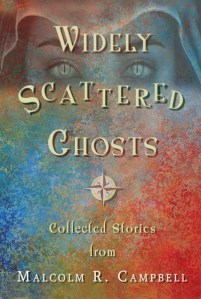
Malcolm R. Campbell is the author of the short story collection “Widely Scattered Ghosts.”
“This film will be the biography of the continent’s most magnificent species, an improbable, shaggy beast that nonetheless has found itself at the center of many of our nation’s most thrilling, mythic, and sometimes heartbreaking tales. It is a quintessentially American story, filled with a diverse cast of fascinating characters. But it is also a morality tale encompassing two important and historically significant lessons that resonate today.” – Ken Burns Website. I’m looking forward to this October 16 and 17.
It upsets me to read that “progressive” university students support the terrorist organization Hamas which is backed by Qatar and Iran under the pretense that it’s the real government of Palestine. The reports of Hamas’ attack against Israel read as war crimes, not legitimate protests against Palestinian problems. I stand by Israel against these barbaric terrorist organizations that won’t leave it alone.
I continue to enjoy the Kathy Reichs “Temperance Brennan” series of novels, having just ordered the 12th book in the series 206 Bones. I started reading these novels to learn more about the inspiration behind the “Bones” TV series and have not been disappointed. They read well, often put Temperance in danger when she goes into the field on her own recognizance, and have plenty of humor.
Temperatures are falling in the South and I very much approve of that since I don’t like the summer heat. As a Leo, I know I should like sunshine, but I much prefer falling leaves and snow storms. I must admit, though, that as I grow older, cold weather bothers me more.
As I fight against the stomach infection I got in June from unknown sources, I see that even after two rounds of antibiotics (along with green tea), the old medication Tagament that cured my stomach when this first happened years ago may prove to be the most effective. When I first had it, it was a prescription drug. Now it’s OTC. I’m feeling better.
It’s been interesting noting the difference between “Chicago Fire” and the older series “Emergency.” The fire trucks on “Emergency” hit the burning structure with water immediately while “Chicago Fire” sends firefighters into the burning building first to search for those trapped and/or injured without charging up a hose. The “Chicago Fire” approach makes for good drama but intuitively looks like a wrong-headed way to fight fires. My own experience comes from a hands-on Navy fire fighting school. And yes, we learned that water will put out an oil fire.
I’m happy to see that Hope Clark, a long-time force behind the site Funds for Writers, is maintaining a high-impact novelist career with her books, The Carolina Slade Mysteries, The Edisto Island Mysteries, and The Craven County Mysteries. The books are compelling and well-written, If you haven’t found them yet, you have gems awaiting you. I enjoy these books that are set in the South where Hope lives with her husband who was in law enforcement. Each of the series has believable characters fighting against real problems.
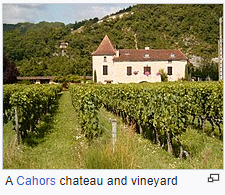
A recent headline in Forbes said, “France Has So Much Extra Wine, It’s Paying Farmers $215 Million To Destroy It.” That’s just sad. Not because I drink French wine, but because wine is a magical drink that does wonderful things for the world.
France should sell all that wine to the countless Facebook users who claim to drink wine like there’s no tomorrow. There are countless memes, including, “I cook with wine. Sometimes I put it in the food.”
Facebook has 2.9 billion active users. France produces eight million bottles of wine a year. France’s wine surplus might, perhaps, be raken care of if Facebook bought France rather like Musk buying Twitter. However, there a culture clash here since French wines are intended to be paired with food and Facebook consumption of wine is paired with everything else.
Biltmore Winery
When I visit the Biltmore estate in Asheville, NC, I do pair my wine with food inasmuch as their restaurants serve wine from the estate’s winnery. These are some of my favorite meals because the wine and the food are superior. Elsewhere, I usually drink the most inexpensive wine on restaurant menus (not founting the stuff sold in 55-gallon drums).
In “Fruit of the vine, our spiritual drink,” Stacy Woods writes that, “Instead, let’s talk about wine in religious settings. For many Christians and Jews alike, the fruit of the vine is holier than any other and plays a significant role in the celebration of faith. A spiritual drink is used to sanctify daily prayers, on holy days, and at weddings, births and deaths. It can be red, white, pink, dry or sweet wine, or even simply grape juice.” This view is, I think, important to many people’s consumption of wine.
Unlike people who drink beer by the six-pack, wine drinkers don’t normally plan to get drunk. They intend to enlarge and, perhaps, santify, their experiences on the journey of life. Wine can be paired with anything meaningful.
I am thinking of wine today because I’m having my first glass in many weeks inasmuch as the antibiotic I was taking could not be paired with alcohol. I don’t know yet if the antibiotics did what they were suposed to do, but I do know that several glasses of Yellowtail Shiraz have paired wll with my mood.
“America’s best-ever political cartoonist is renowned for creating the Republican Elephant and popularizing the Democratic Donkey. He also created the modern images of Santa Claus and Uncle Sam, influenced five victorious Presidential elections, and satirically commented on seven administrations.” – John Adler’s website (This website is a treasure trove of Nast’s political cartoons and other drawings, including the iconic image of Santa shown here.)
“Thomas Nast, September 26, 1840 – December 7, 1902) was a German-born American caricaturist and editorial cartoonist often considered to be the “Father of the American Cartoon.'” – Wikipedia.
From the Publisher
“Summary review by 19th Century cartoon historian and author Richard Samuel West:
“‘After more than 100 years of having to rely on Albert Bigelow Paine’s entertaining but hagiographic and error-filled Thomas Nast His Period and His Pictures (1904), we finally have a biography of America’s greatest political cartoonist worthy of replacing it. John Adler has created a meticulous, comprehensive, fair, and accurate biography of the father of American cartooning. With more than two decades devoted to studying Nast’s entire massive output behind him, Adler is the perfect guide for 21st century readers interested in understanding Nast’s cartoons, learning about the politics that prompted them, and discerning the impact they had. At the end of journeying through this massive tome, we are left with an appreciation of Nast and his extraordinary achievement like never before.'”
“The power and influence of Nast’s cartoons largely emanated from their repetition over weeks or months as his stories unfolded and he banged his points home in Harper’s Weekly, whose financial strength, reach and dominance made it the country’s leading illustrated newspaper. This 830-page biography contains 1,000 Nast cartoons, illustrations, sketches, and paintings — 800 from Harper’s Weekly and the balance from Frank Leslie’s Illustrated Newspaper (25), New-York Illustrated News (47) and other publications, plus 100 cartoons on Nast-related topics by 20 other artists like Joseph Keppler of Puck — each with its principal characters identified and its content and context explained. The manually-created Index, predicated solely on Nast’s work — provides a unique, encyclopedic reference resource. Visualize the downfall of corrupt Boss (William M.) Tweed and his Ring of Thieves, the Civil War, Reconstruction, six Presidential campaigns, and Nast’s legacy: the Republican Elephant, modern images of Santa Claus and Uncle Sam (all created by him) and the Democratic Donkey (popularized by him).”
We studied Nast’s work in journalism school as well as American history classes. I’m pleased to see this definitive biography published last year and hope that it brings is work to a wider adience.
“The Urantia Book (sometimes called The Urantia Papers or The Fifth Epochal Revelation) is a spiritual, philosophical, and religious book that originated in Chicago, Illinois, United States sometime between 1924 and 1955. The authorship remains a matter of debate. It has received various degrees of interest ranging from praise to criticism for its religious and science-related content, its unusual length, and the unusual names and origins of the authors named within the book.” Wikipedia
I read this 2000-page book thirty or forty years ago. For an individual reared in a Presbyterian household, I found it strange but fascinating, and when I reached the end I had no doubt that I would never subscribe to its point of view.
While the book is available from Amazon, it’s in the public domain, and with a little searching around, one can find free copies. If your curiosity exceeds the scope of the publisher’s description, you can find more information on the website of the Urantia Foundation. The Wikipedia article, quoted above, includes some of the book’s criticisms including the charge that some portions were taken without attribution from other works.
From the Publisher
“You have just discovered the literary masterpiece that answers your questions about God, life in the inhabited universe, the history and future of this world, and the life of Jesus. The Urantia Book harmonizes history, science, and religion into a philosophy of living that brings new meaning and hope into your life. If you are searching for answers, read The Urantia Book!
“The world needs new spiritual truth that provides modern men and women with an intellectual pathway into a personal relationship with God. Building on the world’s religious heritage, The Urantia Book describes an endless destiny for humankind, teaching that living faith is the key to personal spiritual progress and eternal survival. These teachings provide new truths powerful enough to uplift and advance human thinking and believing for the next 1000 years.
“A third of The Urantia Book is the inspiring story of Jesus’ entire life and a revelation of his original teachings. This panoramic narrative includes his birth, childhood, teenage years, adult travels and adventures, public ministry, crucifixion, and 19 resurrection appearances. This inspiring story recasts Jesus from the leading figure of Christianity into the guide for seekers of all faiths and all walks of life.”
Nobel Committee recognizes the immense courage and dedication of PEN America Honoree Narges Mohammadi and all the writers and cultural workers like her in Iran
FOR IMMEDIATE RELEASE
October 6, 2023
(NEW YORK)— The Nobel Peace Prize awarded today to imprisoned Iranian writer, human rights activist, and 2023 PEN/Barbey Freedom to Write Award honoree Narges Mohammadi recognizes her singular courage in standing against government repression of women, writers, activists, intellectuals, and cultural figures who face unspeakable consequences for daring to speak out or write, PEN America said.
Narges Mohammadi
Commenting on the award, PEN America CEO Suzanne Nossel said, “The awarding of the Nobel Peace Prize to Iranian writer and activist Narges Mohammadi is a tribute to her courage and that of countless women and girls who have poured out into the streets of Iran and faced down one of the world’s most brutal and stubborn regimes, risking their lives to demand their rights. For those of us at PEN America, Narges is an inspiration and also a personal friend, a woman whose story of unyielding defiance at crushing personal costs awakens the righteous indignation within each of us. We applaud the Nobel Committee for putting the weight of its Prize behind the struggle of Narges and all Iranian women for their freedom to dress, behave, think, and write as they wish.”
“Narges’ indefatigable will to be heard, even from the darkest, coldest, and most isolated corners of an Iranian prison, is astounding. She championed change in Iran from her jail cell with a passion and bravery that can truly be described as heroic. As a witness to decades of atrocities, she has used her voice as a catalyst to awaken a new generation to understand that their words are one of humanity’s greatest tools. PEN America enthusiastically congratulates Narges Mohammadi and calls for her immediate release.”
PEN America honored Narges Mohammadi with the 2023 PEN/Barbey Freedom to Write Award, which her husband, Taghi Rahmani, accepted on her behalf at the PEN America Literary Gala in New York City in May. Conferred annually, the PEN/Barbey Freedom to Write Award recognizes writers who have been jailed for their expression. PEN America galvanized celebrities including John Mullaney, Colin Jost, Candice Bergen, Diane Sawyer, Alec Baldwin, Chimamanda Ngozi Adichie and others to rally to Mohammadi’s cause, drawing international media coverage and global recognition of her plight. Of the 53 jailed writers who have been honored with the PEN America Freedom to Write Award since its establishment in 1987, 46 have been released from prison within an average of about 18 months due in part to the global attention and pressure generated by PEN America’s recognition. This is not the first time PEN America’s Award has led directly to the conferral of a Nobel Peace Prize. PEN’s 2009 Freedom to Write honoree Liu Xiaobo, the President of the Independent Chinese PEN Center, was awarded the Nobel Peace Prize in 2010, the culmination of a campaign set in motion by PEN America.
Narges Mohammadi has been forced to make unimaginable sacrifices for her work, including currently serving multiple sentences totaling more than 10 years in Iran’s notorious Evin Prison, where she has been threatened, beaten, and kept in periods of solitary confinement, a practice she has termed ‘white torture’ in her books and writings. Additionally, it has been almost nine years since Mohammadi last saw her husband and two children, who are now in exile in France. And yet, despite these arduous circumstances, Mohammadi continues to defend human rights and speak out against authoritarianism from within prison, drawing attention both to ongoing political events and to abuses against her fellow prisoners. “They will put me in jail again,” she wrote in her book, White Torture. “But I will not stop campaigning until human rights and justice prevail in my country.”
Mohammadi’s case is among dozens of cases of writers and activists who have faced political repression in Iran in the last year alone. Starting in September 2022, the country was swept by a widespread protest movement in favor of democracy and women’s rights following the state’s killing of Mahsa (Jina) Amini. In response, the Iranian regime further cracked down on free speech and arrested thousands for their participation in, or support of, the demonstrations. Iran’s literary and creative communities continue to use writing, art, and music as vehicles to express political dissent, even in the face of the brutal government crackdown.
“Green tea is a type of tea that is made from Camellia sinensis leaves and buds that have not undergone the same withering and oxidation process which is used to make oolong teas and black teas. Green tea originated in China, and since then its production and manufacture has spread to other countries in East Asia.” – Wikipedia
If you were around in 1969 (you probably weren’t) “we” (lots of people) jumped in the Celestial Seasonings band wagon swilling down “Sleepy Time,” “Red Zinger,” and others. After all, there was a war on.
Years went by and, due to bad spirits, my stomach started rebelling against tea, even Earl Grey. But now those spirits have gone away, due to high-quality conjuring work on my part, and now I’m drinking green tea and honey to settle my stomach.
Wikipedia photo
Even sites like WebMD say that there are numerous health benefits to drinking green tea: “As a drink or supplement, green tea is sometimes used for high cholesterol, high blood pressure, to prevent heart disease, and to prevent ovarian cancer. It is also used for many other conditions, but there is no good scientific evidence to support most of these uses.”
Jeanine at Love & Lemons–a great food site–writes, “Regular green tea is already touted as an antioxidant powerhouse, but Matcha has even more benefits. Here’s why: when you make other forms of green tea, you steep the leaves in hot water and then discard them. When you make Matcha, you whisk the powder into hot water or milk. As a result, you actually consume the entire tea leaf when you drink it! The antioxidants it contains may lower blood pressure, reduce your risk of heart disease, and even boost your metabolism.”
I started drinking this brew as a medicine. Now I’ve come to like it.
When he’s not Dumbledore he is (was) 82-year-old Michael Gambon. Natural causes, was it? Maybe that’s the cover story to obscure Snape’s role in the matter. After all, if you’ve seen the Harry Potter movies, you know that Snape has done it before. But Snape is twice dead. Once in the series and purportedly once in “real life” as Alan Rickman in 2016.
There’s a long list of denizens we can look at: Bellatrix Lestrange, Draco Malfoy, Lord Voldemort, Dolores Jane Umbridge, Lucius Malfoy, &c., &c. Like Snape, any of these characters could have escaped the “fiction” of the series and manifested in “real life.” That’s probably why Richard Harris (the first actor to play Dumbledore) died after the first two movies in the series in 2002 of Hodgkin’s lymphoma–according to the cover story.
I’m biased in favor of Harris’ portrayal because I saw him once on the stage as well as in many movies and was used to his style (and his off-camera hijinks). He played a more ethereal Dumbledore than Gambon. Both were Irish and both were good in the role.
According to Variety, “While it is easier for a character actor, often working in supporting roles, to rack up a large number of credits than it is for lead actors, Gambon was enormously prolific, with over 150 TV or film credits in an era when half that number would be impressive and unusual — and this for a man whose body of stage work was also prodigious.”
Most readers and viewers don’t know that there’s a fine line between the fiction of novels and feature films and life as we think we know it. People tend to think they’re “safe” when the movie ends and when they reach the last page of the novel. Ha! I think not.
 Goodness knows, he left enough on the front porch. He must have slacked off when we didn’t bring them into the house and fry them up with sawmill gravy. I swept them off into the yard hoping they’d serve as warnings to new rats moving into the area.
 When Malcolm isn’t writing magical realism or posts about rats, he’s writing satire.

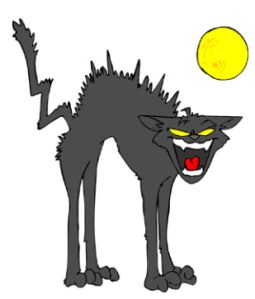 Back in the old days, kids walked from house to house when they went trick or treating. Parents often accompanied the younger kids and that was okay. The last neighborhood I lived in before moving to the country was a subdivision. Kids–up to ages long past their treat-or-treating years came by car. The cars went from subdivision to subdivision. Naturally, that was a greedy expediency many of us didn’t like and accounted for the fact we didn’t know most of the people who rang the doorbell.
 “This film will be the biography of the continent’s most magnificent species, an improbable, shaggy beast that nonetheless has found itself at the center of many of our nation’s most thrilling, mythic, and sometimes heartbreaking tales. It is a quintessentially American story, filled with a diverse cast of fascinating characters. But it is also a morality tale encompassing two important and historically significant lessons that resonate today.” – Ken Burns Website. I’m looking forward to this October 16 and 17.
 It upsets me to read that “progressive” university students support the terrorist organization Hamas which is backed by Qatar and Iran under the pretense that it’s the real government of Palestine. The reports of Hamas’ attack against Israel read as war crimes, not legitimate protests against Palestinian problems. I stand by Israel against these barbaric terrorist organizations that won’t leave it alone.
 I continue to enjoy the Kathy Reichs “Temperance Brennan” series of novels, having just ordered the 12th book in the series 206 Bones. I started reading these novels to learn more about the inspiration behind the “Bones” TV series and have not been disappointed. They read well, often put Temperance in danger when she goes into the field on her own recognizance, and have plenty of humor.
 As I fight against the stomach infection I got in June from unknown sources, I see that even after two rounds of antibiotics (along with green tea), the old medication Tagament that cured my stomach when this first happened years ago may prove to be the most effective. When I first had it, it was a prescription drug. Now it’s OTC. I’m feeling better.
 It’s been interesting noting the difference between “Chicago Fire” and the older series “Emergency.” The fire trucks on “Emergency” hit the burning structure with water immediately while “Chicago Fire” sends firefighters into the burning building first to search for those trapped and/or injured without charging up a hose. The “Chicago Fire” approach makes for good drama but intuitively looks like a wrong-headed way to fight fires. My own experience comes from a hands-on Navy fire fighting school. And yes, we learned that water will put out an oil fire.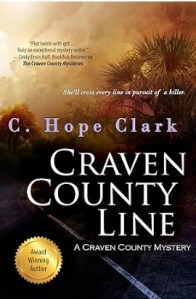
 France should sell all that wine to the countless Facebook users who claim to drink wine like there’s no tomorrow. There are countless memes, including, “I cook with wine. Sometimes I put it in the food.”
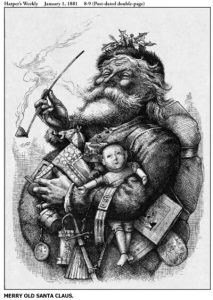 “America’s best-ever political cartoonist is renowned for creating the Republican Elephant and popularizing the Democratic Donkey. He also created the modern images of Santa Claus and Uncle Sam, influenced five victorious Presidential elections, and satirically commented on seven administrations.” –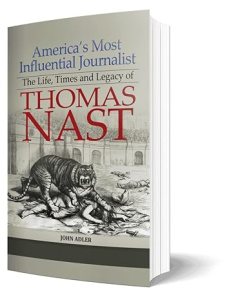


 “Green tea is a type of

 I’m biased in favor of Harris’ portrayal because I saw him once on the stage as well as in many movies and was used to his style (and his off-camera hijinks). He played a more ethereal Dumbledore than Gambon. Both were Irish and both were good in the role.
 Malcolm's Round Table