Review: ‘Hotel on the Corner of Bitter and Sweet’

Minidoka Relocation Center, Idaho

“A Pearl Harbor attack intensified hostility towards Japanese Americans. As wartime hysteria mounted, President Roosevelt signed Executive Order 9066 making over 120,000 West Coast persons of Japanese ancestry (Nikkei) leave their homes, jobs, and lives behind and move to one of ten Relocation Centers. This single largest forced relocation in U.S. history is Minidoka’s story.” — National Park Service, Minidoka National Historic Site

“Now, therefore, by virtue of the authority vested in me as President of the   United States, and Commander in Chief of the Army and Navy, I hereby authorize   and direct the Secretary of War, and the Military Commanders whom he may from   time to time designate, whenever he or any designated Commander deems such action necessary or desirable, to prescribe military areas in such places and of such   extent as he or the appropriate Military Commander may determine, from which any or all persons may be excluded, and with respect to which, the right of   any person to enter, remain in, or leave shall be subject to whatever restrictions the Secretary of War or appropriate Military Commander may impose in his  discretion. ” — Franklin D. Roosevelt, in Excutive Order 9066, February 19, 1942, resulting in the relocation into camps of 122,ooo Japanese, many of whom were born in the U.S. and were American citizens.

“The internment of individuals of Japanese ancestry was carried out without any documented acts of espionage or sabotage, or other acts of disloyalty by any citizens or permanent resident aliens of Japanese ancestry on the west coast;  there was no military or security reason for the internment; the internment of the individuals of Japanese ancestry was caused by racial prejudice, war hysteria, and a failure of political leadership.” — Commission on Wartime Relocation and Internment of Civilians, April 15, 1988.

Hotel on the Corner of Bitter and Sweet by Jamie Ford

Had I written this powerful novel, my black sense of humor would have tempted me to weaken the story of Chinese American Henry Lee and Japanese American Keiko Okabe by including Franklin D. Roosevelt’s name in the book’s acknowledgements. Without his failure of leadership, there would be no bittersweet story to tell.

Ford knew better than that. Lee and Okabe are fictional characters living out their story between 1942 and 1986 against a backdrop of historical fact. Seattle existed in 1942 with Japanese and Chinese enclaves. Many of the residents in both sections of town were property owners, merchants, wives, school children and American Citizens. The Japanese residents of Seattle were removed and taken to Idaho where they were placed within the Minidoka Relocation Center until the end of World War II. Ford lets these facts speak for themselves.

In the author’s note he writes, “My intent was not to create a morality play, with my voice being the loudest on the stage, but rather to defer to the reader’s sense of justice, of right and wrong, and let the facts speak plainly.”

Hotel on the Corner of Bitter and Sweet is a universal love story. School children from diverse backgrounds meet and become friends. Their friendship isn’t supported by the prevailing social customs, the political realities of the day, or their families. In 1942, Henry Lee was sent to a white school in Seattle because his father thought it was in his son’s best interests. Born in China, Lee’s father dispises the Japanese because they have invaded his homeland. China is an ally of the United States. Since he doesn’t want young Henry to be mistaken for the enemy, he makes him wear a button that proclaims “I am Chinese.”

The other students at the white school see “Chinks” and “Japs” as subhuman and other and too alien to tolerate or befriend. While Henry grew up speaking Cantonese, his father has forbidden him from using it. Becoming a full American means speaking Enlish. When Henry meets Keiko at the school, he is surprised to discover that she’s never spoken any language other than English. Born in the U. S., she’s a full-fledged American even though the students who taunt Henry see her only as his “Jap girlfriend.”

We know before the novel begins that Keiko will be taken away. What we don’t know—actually, what we can’t know unless we have experienced it—is how Henry and Keiko will cope with the daily threats from whites, the ever-present fear of soldiers and FBI agents, the forced removal of people from the “Japantown” enclave in Seattle, or the forced separation that looms large and infinite in a person’s life. In part, the power of this story comes not only from the fact Ford lets the historical facts speak for themselves, but the thoughts and actions of his fictional characters as well. His understatement is finely tuned and carries the story well across its alternating time periods.

In 1942, Henry lives through the days of fear and friendships lost. In 1986, when the old Panama Hotel—a real Seattle Landmark—makes the news because its basement holds the stored-away belongings of many of the “evacuated Japense families,” Henry relives the old days, and wonders if he can come to terms with them and all that he lost and how he lost it. Even “now,” in the 1986 “present day” of the story, he is still wondering and still searching—for exactly what, he’s not sure—but he will know it when he finds  it.

Ford has written a terrifying and poignant love story that’s as haunting as the ever-present jazz music Henry and Keiko love and as filled with hope as two young people in any time period of culture or circumstance who promise they will wait for each other forever.

Malcolm

Coming September 6: Knock It Off, a guest post by Author Smoky Trudeau Zeidel

Fantasy with a sharp edge

Review: ‘Six Weeks to Yehidah’

Six Weeks to YehidahSix Weeks to Yehidah by Melissa Studdard

My rating: 5 of 5 stars

Melissa Studdard’s joyfully written “Six Weeks to Yehidah” takes us into ten-year-old Annalise’s magical dreamscape where thoughts become things and light manifests in sparkling colors that live and breathe and speak.

An inquisitive child by nature, Annalise prefers the woods and fields to staying indoors. So when she finds herself on a grand adventure with sheep that learn how to talk, she is more than ready to explore each new wonder than to worry overly much about the strange and happy world that rises up around her as she skips from cloud to cloud.

While the book is categorized as “young adult,” it might be more suitably labeled as “children’s literature” based on its dialogue and plot. Even so, the book is filled with deeply spiritual symbolism and tongue-in-cheek hero’s journey references that adults will enjoy while reading this well-crafted story to their children.

Like the classics that have come before it, “Six Weeks to Yehidah” will delight readers of all ages, each finding something new in it every time they rediscover Annalise’s story.

Malcolm

Fantasy with a sharp edge

Review: ‘Telling the Difference’ by Paul Watsky

Telling the DifferenceTelling the Difference by Paul Watsky

My rating: 5 of 5 stars

During the 1960s, high school English teachers carefully served from the literary canon a poesy stew of skylarks, nightingales and albatrosses with a few leaves of grass for seasoning. Contemporary poems howling through the streets in their underwear were adjudged unsafe in the classroom. We were left to discover the likes of Ginsberg and Ferlinghetti after school—at which point, our imaginations became enlightened.

Paul Watky’s collected poems in Telling the Difference (il piccolo editions from Fisher King Press, 2010) are an explosion waiting to happen that today’s students will only discover in a state of reality where lesson plans and outlines are prohibited even though Watsky prohibits nothing.

When yin and yang, sacred and profane, and laughter and tears are encouraged by the poet to sit side by side—perhaps even hold hands—in his work, the result is poetry that’s unsafe at any meter. In the book’s acknowledgements, Watsky notes that he is grateful to his wife and sons “for putting up with what poetry puts people through.”

Let this acknowledgement serve as a warning to the reader that Telling the Difference has the power to unleash the imagination at the borderline of chaos and enlightenment. Bound together, uneasy laughter and joyful pain have great power whether they are borne by a pet crayfish named Cumbersome “all tarted up with dust bunnies,” diver ants who’ll chew up “the fortuitous drunk passed out in the wrong place, Granny when she falls and can’t get up,” or a girl tied to “the nearly-wiggled-out pin of a fragmentation grenade.”

Watsky’s has organized Telling the Difference into four sections, “”Temple of Kali,” “The Closest,” “What People Learn,” and Piglet Mind,” bookended neatly in between a prologue called “All Good Things” and an epilogue called “Twins Discuss Heaven.” When the prologue suggests that saying “all good things must come to an end” is mere consolation like the “dummy nipples proffered between feeds,” the book’s stage is set for multiple associations between the transitory and the infinite. In the epilogue, George says “I believe in outer space. There isn’t room for heaven” and Simon explains that if heaven were real, we “would see Grandpa Seymour flying around in his coffin.” What else is there to say?

In reality, Watsky says a lot within the illusory confines of this 81-page collection. He speaks volumes about Bluejay’s warning in “Toad Fever,” a man who smashes walnuts with his manhood in “The Magnificent Goldstein” and the danger of words in “Language Fallen into the Wrong Hands.”

Telling the Difference is a wondrous, no-boundaries delight. However, if your hands are the wrong hands for a volatile serving of unsafe words, please remember that you’ve been warned that Watsky will put you through heavens, hells and hoops you didn’t know existed.
View all my reviews

Malcolm

Review: ‘The Witch of Babylon’

The Witch Of BabylonThe Witch Of Babylon by D.J. McIntosh

My rating: 5 of 5 stars

D. J. McIntosh begins her planned Mesopotamian Trilogy with the page-turner “The Witch of Babylon” about a prospective royal treasure trove that may have been hidden away when the city of Nineveh fell in 612 B.C. Written in the ancient-secrets-modern-adventures style of fiction pioneered by Katherine Neville in “The Eight,” McIntosh’s story focuses on New York antiquities dealer John Madison’s sudden involvement in a ruthless treasure hunt for gold and gems in war-torn Iraq in 2003.

John’s late brother Stephen, a specialist in Assyrian archeology, may have been holding an engraving saved from looters at Iraq’s National Museum. After Hal Vanderlin purportedly steals the engraving, Hal dies of mysterious causes, giving opposing groups of treasure hunters the impression that John either has the artifact or knows how to find it.

Like other novels in this genre by Neville, Dan Brown and Raymond Khoury, “The Witch of Babylon’s” plot only makes sense to readers as a series of experts throughout the story continuously discuss (and sometimes lecture about) the relevant myths, history and arcane wisdom. This trademark of the genre can, at times, make readers wonder if they’re reading ancient history or modern fiction. In spite this back-story information, McIntosh keeps her plot moving. John Madison, who has had no time to come to terms with his brother’s death in an automobile accident, is always in danger; he can never be quite sure which of the other players in this deadly game are the good, the bad, or the ugly.

“The Witch of Babylon” features interlocking plots within plots from ancient Nineveh to Baghdad to New York City. The ancient history, which involves one of the Bible’s minor prophets, is just as compelling as the modern tragedy of antiquities looting in war-torn countries. Like his late brother, John believes the engraving belongs in a museum. Most of the other characters only see dollar signs and will kill anyone who gets in their way.

You can learn more about the novel, the history and the problem of antiquities looting on the book’s website.

Malcolm

Malcolm R. Campbell is the author of “Garden of Heaven: an Odyssey,” “The Sun Singer” and “Jock Stewart and the Missing Sea of Fire.”  His new novel “Sarabande” will be released this fall.

Review: ‘The Butterfly’s Kingdom’

The Butterfly's KingdomThe Butterfly’s Kingdom by Gwendolyn Geer Field

My rating: 4 of 5 stars

Gwendolyn Greer Field has woven together the lives of the career-oriented Elizabeth Bishop and her old friend Annie into a compelling and complex psychological and spiritual coming of age story. Bishop, who plans to leave her increasingly empty high-profile New York City job visits Annie in a small town because Annie’s life is falling apart and she needs help.

Annie’s husband Arthur committed suicide a year earlier, plunging what had appeared to be a perfect home into a world of secrets and doubt. Annie’s fourteen-year-old daughter, Betsy—who was Arthur’s favorite—blames Annie for the family’s ills. Her eight-year-old brother, Sam, who was ignored by Arthur, is less overt about his feelings.

Without realizing it, Elizabeth steps into a minefield of doubts, secrets and mysterious undercurrents, many of which cannot seem to be openly discussed. The cast of characters also includes Arthur’s former best friend Jackson, whom Annie despises for reasons she will not say, and Luke, Elizabeth’s high-school boyfriend whom she hasn’t seen or heard from in years.

“The Butterfly’s Kingdom” focuses primarily on the multiple conversations between these characters as they try to understand each other and their complicated relationships. Elizabeth, who went to Annie’s side as a rescuer not only has to come to terms with who her old friend has become, but with the fact that she herself also needs to be rescued from whatever sent her away to New York in the first place.

Field allows her characters the time and space to get to know each other and discover where their lacks of trust begin and end. While the conversations are therapeutic and demonstrate that all of those involved need to confide and trust each other more than they do, they also show that a temporal solution isn’t going to fix all the discordant lives.

“The Butterfly’s Kingdom” is also about spiritual journeys. While the spirituality has a clear Christian focus, it should resonate well with readers from many faiths.

This beautifully imagined book has a pervasive editorial flaw. The characters’ conversations all follow the same pattern: When one character makes a pithy and revealing statement about another, the statement is followed by “you’re not mad at me for saying this, are you?” or by “do you know what I mean?” This device for transitioning from the pronouncement back into give-and-take dialogue is overused throughout the book and tends to blur the characters’ personalities because they all do the same thing.

Nonetheless, this book of mysteries and secrets provides a thoughtful plot, issues that many readers may be experiencing in their own lives, and beautiful spiritual images and analogies en route to a satisfying conclusion.

Upcoming Reviews :

The Witch of Babylon by D. J. McIntosh

Telling the Difference by Paul Watsky

Soul Stories by Elizabeth Clark-Stern

Malcolm

Review: ‘When the de la Cruz Family Danced’

When the de la Cruz Family DancedWhen the de la Cruz Family Danced by Donna Miscolta

My rating: 5 of 5 stars

The slice-of-life scenes in Donna Miscolta’s tightly written “When the de la Cruz Family Danced” create an elegant portrait of a Southern California family suspended between its first and second generation Filipino origins, its “Little Manila” neighborhood and the outside world, and between familial cohesiveness and individual freedom. As the novel begins, the family is mired in a stasis that has crept uninvited into its home through the dynamics of time, illness, aging and lack of attention.

Also uninvited, a young man named Winston comes into their home because he believes he might be Johnny de la Cruz’s unacknowledged—and perhaps, unknown—son. Nineteen years earlier, Johnny made his only return trip to the Philippines to visit his family. While there, he had an unplanned sexual encounter with an old flame. Since they never spoke again, Johnny didn’t know Bunny Piña subsequently separated from her husband and moved to California with her son Winston. Winston didn’t know about the de la Cruz family until he found an un-mailed letter to Johnny hidden among his mother’s mementos when she died.

Lost after his mother’s death, Winston wants to know more about Johnny even though he cannot articulate exactly why. He wonders whether Bunny meant to mail the letter and simply forgot it or whether she chose to remain silent. The sentiments include “since you so gallantly made your escape from my couch that afternoon” and “we each had our reasons for what happened.” Does this suggest that Johnny is Winston’s biological father? While Winston isn’t sure, he wants to get to the heart of the secret Bunny never shared.

When he finds Johnny dying of cancer and the rest of the family suspicious of his motives for appearing on its doorstep, Winston simply says he’s Bunny’s son. He says he didn’t know if Johnny heard that Bunny moved to the U.S. or that she had recently died. At this point, readers might expect Winston to leave after suffering through a few days of the de la Cruz family’s polite but disinterested company or that he will produce the letter and ask, “Johnny, are you my father?”

Instead, Miscolta carefully inserts Johnny into the family’s life. None of them are quite sure why he’s still there, but he’s nice enough. He helps Tessie look after Johnny, partly by keeping him company. While the slice-of-life details about family life, shown from the viewpoints of each of the family members, do slow down the development of the plot, they paradoxically add great depth to the novel and to the reader’s understanding of the family itself.

Miscolta has created poignant story about a family (with secrets) that very much needs to find itself within the multicultural world of Southern California. The story revolves around one dual question: will Winston come and go and soon be forgotten or will he be the catalyst for something more long term and meaningful? All of the characters step close and then step away from that question like awkward beginners at a club who haven’t yet learned how to dance.

“When the de la Cruz Family Danced” is a highly recommended waltz of well-crafted prose and endearing characters.

Malcolm

Malcolm R. Campbell is the author of “The Sun Singer,” “Garden of Heaven: an Odyssey” and “Jock Stewart and the Missing Sea of Fire.”

Coming this Fall

Book Review: ‘Adagio & Lamentation’

Adagio & LamentationAdagio & Lamentation by Naomi Ruth Lowinsky

My rating: 5 of 5 stars

A delicate writing desk stands ready for use in a sunny room on the cover of Naomi Ruth Lowinsky’s collection of poems, Adagio & Lamentation. The room is filled with light from the world outside the high arched window. The watercolor painting by the poet’s grandmother Emma Hoffman (“Oma”) displays a room Lowinsky saw many times as a teenager when she visited Oma’s house.

One can imagine Lowinsky working in such a room with a pen so sharp that it tears the paper, cutting through the desk’s polished veneer to carry ink and light deep into the primary wood. “I wish you could stop being dead,” Lowinsky writes to Oma in the opening poem, “so I could talk to you about the light.”

The nib on Lowinsky’s pen shreds the curtain of time that conceals her ancestors and allows them to speak. “The spirit of my dead grandmother came to us as we lay after love in the renovated Old Milano on the northern California coast.” The spirit’s words in “ghost gtory” cut deep. In “Adagio and Lamentation,” the poet hears her father playing the piano while “our dead came in and sat around us a ghostly variation/and my grandmother sang lieder of long ago.”

Lowinsky’s collection of poems is organized into four sections, “before the beginning and after the end,” “what broke?,” “great lake of my mother” and “what flesh does to flesh.” With strength, certainty and intuition, the poems live and breathe on their pages, and when experienced together, comprise an ever-new song about long-ago wars, colors, shadows, moments and people.

Joy and sorrow dance slowly in the light throughout Adagio & Lamentation. From the opening invocation to Oma to the closing “almost summer,” Lowinsky’s words—written with “a flicker of serpent’s tongue in her ear”—tear through the paper-thin present and drive their way deep into the underworld of the unconscious where the inspirations of her muse are fiery, erotic, earthy, transcendent and whole.
View all my reviews

–Malcolm R. Campbell is the author of “The Sun Singer,” “Garden of Heaven: an Odyssey” and “Jock Stewart and the Missing Sea of Fire.”

Book Review: ‘In a Flash’

Mark Twain once wrote that “thunder is good, thunder is impressive; but it is lightning that does the work.”

Smoky Trudeau Zeidel’s “In a Flash” describes the kind of work lightning does when the “lightning rod” it selects is the umbrella in a young woman’s hand.

The woman died. That was to be expected. But not for long.

Lightning struck Smoky Trudeau Zeidel twenty two years ago on an overcast day in a Chicago suburb. Life since then has not been easy: the number of trips to the hospital, the number of surgeries and the number of days and nights in pain are sufficient evidence of that.

This is a well-told story about courage, strength and the work lightning does. Surprisingly, it’s also a story about counting one’s blessings. One can only read it and weep, and then experience a lingering euphoria for the challenges a person can endure.

You May Also Like

Other short stories recently released on Kindle by Vanilla Heart Publishing include:

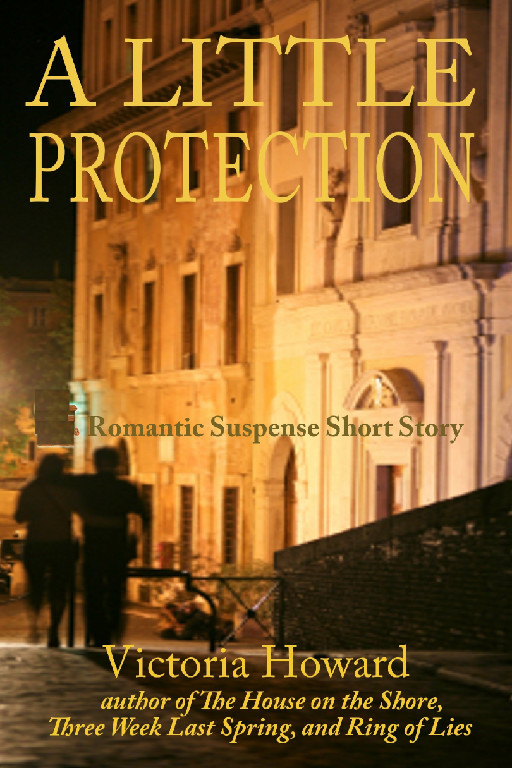
A Little Protection by Victoria Howard – Handsome Matt Hemmings meets scientist Alexa McAllistair at a conference on nuclear energy in Rome…and against his professional judgment, he is smitten. The vulnerable – and beautiful – scientist arouses his protective instincts, and the desire to kiss her senseless. And it’s more than evident that she feels the same way about him.

Paco’s Visions by Robert Hays – Paco has visions, and his most recent vision helps him believe in the power of love. For a twelve year old boy, it is a big revelation. He and his sister, Rosa, live with Mama Jan, in a rich man’s mansion on Sanibel Island. Will his vision become their reality?

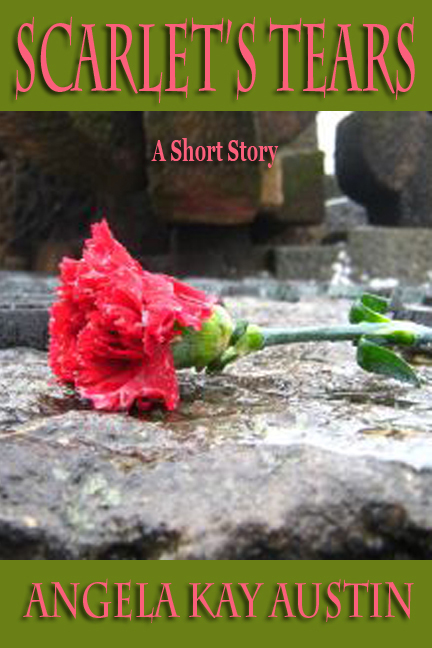
Scarlet’s Tears by Angela Kay Austin – When you lose everything you love, how are you supposed to believe it won’t happen again? The knife at her throat didn’t frighten Scarlet Anderson.  In fact, it was a relief.  Finally, she didn’t have to worry any longer about living another empty day.  She’d be reunited with the ones she loved. Joshua Davis had faced a lot of challenges in his life, his faith and the love of his family had seen him through his latest battles.  But, no person could help him, now.  How had he managed to fall in love with someone who’d stopped loving herself?  And what was he supposed to do?

Kindle Edition

Review: ‘The Swan Thieves’

The Swan ThievesThe Swan Thieves by Elizabeth Kostova
My rating: 4 of 5 stars

Elizabeth Kostova has written a mysterious novel with finely-drawn characters, excellent descriptions of artists and the process of making art, and an engaging storyline. While “The Swan Thieves” is basically a modern-day story about a psychiatrist treating a troubled artist, the story unfolds via multiple points of view in multiple time periods.

Artist Robert Oliver attacks a painting of a swan at the National Gallery of Art and is subsequently committed to a psychiatric hospital under the care of Andrew Marlow. It becomes clear that Oliver is obsessed with an unknown woman who appears in many of his sketches and paintings. Is this obsession connected to the attack on the painting? Neither the reader nor the psychiatrist can easily answer this question because Oliver refuses to speak. Marlow bends the rules and provides Oliver with paints and canvases, allowing Oliver to “speak” in a sense through the art he creates in his hospital room. But otherwise, he is mute.

Multiple Characters and Viewpoints

The mute and enigmatic artist is the axis on which the world of “The Swan Thieves” turns. This device enhances the mystery and gives Kostova and her psychiatrist the rationale for bringing a lot of other characters and their viewpoints into a plot that otherwise might unfold in half the time. To learn more about Oliver, Marlow visits the painter’s former wife Kate and former lover Mary and their relationships with Oliver are told as smaller stories within the book. Marlow also visits art experts and museums in multiple cities to find learn more about the real or imaginary woman Oliver paints over and over.

For the book to “work,” the reader must accept the fiction that a psychiatrist at a facility with many patients would go to such lengths—even to the point of becoming obsessed with Oliver’s obsession himself. Some of Kostova’s best writing in the book focuses on the techniques exhibited in the relevant paintings as well as the thoughts, viewpoints and brush strokes of artists at work. A cynical reviewer might suggest that the author was an artist and/or had a great love of impressionism and needed an excuse to spend a considerable amount of space writing about her avocation.

The World of Artists

As the device behind the plot structure is Oliver’s refusal to speak, the device behind the massive amount of detail about artists and their work is the fact that almost every character in the book, including psychiatrist Andrew Marlow, is a professional or highly skilled amateur painter. True, the matter of artists and their work is part of the “evidence” Marlow considers as he searches for Oliver’s demons. Yet, I cannot help but think that the “artists and their work” theme is a bit over done even though it has been done very well.

A Young Impressionist Painter from Another Time

The primary plot of “The Swan Thieves” is interrupted first by the presentation of the text of a series of letters between a promising artist, Beatrice, in the 1870s and her uncle (and artist) Olivier. Written in French, the letters are translated for Marlow over a period of some weeks, so they appear out of nowhere in between the other chapters. Subsequently, the letters chapters morph into chapters devoted to Beatrice and her life almost a century and a half ago.

The storylines finally come together, and by the time they do, the haunting puzzle with all its characters, paintings, artists, museums, easels, palettes and brushstrokes becomes a clear picture of obsession and its impact on others. “The Swan Thieves” has great depth in spite of its somewhat tortuous route to its conclusion.

View all my reviews

Coming May 5th: A visit from Chelle Cordero, author of the new novel “Hyphema.”

My One School, an organization I support in the Orlando area, has entered the Pepsi Challenge to help raise money for local libraries. If you like the sound of this, you can vote here.

Malcolm R. Campbell is the author of “The Sun Singer,” “Garden of Heaven: an Odyssey,” and “Jock Stewart and the Missing Sea of Fire.”

Review: ‘After the Jug Was Broken’

After the Jug Was BrokenAfter the Jug Was Broken by Leah Shelleda
My rating: 5 of 5 stars

Students of the ancient texts tell us that when the infinite flowed into the original vessels of the finite, the vessels shattered. Their shards, each with a spark of light, comprise all we know in a world of apparent opposites.

In the title poem in After the Jug Was Broken, Leah Shelleda writes that if the vessels were too fragile to contain the light, “Then I will be a gatherer of shards.” Shelleda organizes her shards in this luminous collection of sparks into Myth, Experience, Place and Spirit.

Some of the shards are transcendent. In Myth, her “Invocation” asks the Lamias of old to “Send sudden gusts of wild song” and Mary Magdalene asks again the old riddle, “How may a woman also enter?”

Some of the shards are sharp. In Experience, “The Memory of Light” cuts deep when it says “How rare when joy enters history/like fireworks and lasting/about as long” and “Extinct Birds” draws blood when it says “The Great Auk the Madagascar hawk/ the last ones died of indifference.”

Some of the shards are kaleidoscopic, reflecting the visions of multiple places. In Place, Shelleda writes in “Behind the Sacred Heart” that she doesn’t want to write about the Sacred Heart, preferring to tell us about a dream “of an openhearted wise man/who arrives four times a year/once in each season/but that comes later/in a language/that is not yet spoken.”

None of the shards are like the shards of broken pottery displayed dead under glass in museums. They shine with their apportioned photons of light. They live and breathe and if we take them into ourselves with our apportioned share of the infinite breath, we will be changed in ways we should not try to predict. In Spirit, the final poem “Heenayni,” whispers “I am here/here in this world as it is.”

“Heenayni,” from the Hebrew for “I am here” is, according to the students of the ancient texts, the moment where categories, worlds, photons and shards come together and the poet and the reader of the poems experience the whole as divine and as one.

View all my reviews

Coming April 29: Author Pat Bertram contributes a guest post about the light behind her new novel Light Bringer.

Malcolm