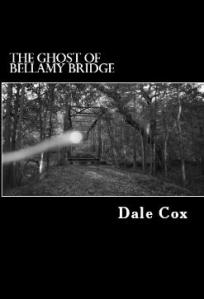
Briefly Noted: ‘The Ghost of Bellamy Bridge,’ by Dale Cox

BellamyCover-247x363The Florida Panhandle is often called “the other Florida” or the “forgotten coast” since it’s far away from the attractions and other developments in the peninsula. This is a land of piney woods, Karst region sink holes and limestone caves, spring-fed rivers, deep swamps, and ghost stories.

Growing up in Tallahassee, I heard many of these, but seldom went out to investigate—except for a brief side trip over one of the state’s oldest bridges over the Chipola River north of Marianna. I last saw the bridge in 1962; it was ancient then. (I didn’t see the ghost!) The bridge was abandoned soon after that when a new road and a new bridge were built. While the bridge still stands, it has only been visible via paddle trips since the road leading to it was closed and reverted to private ownership.

Historian and author Dale Cox recently presented a plan to Jackson County for a heritage trail to the bridge via public lands to the west of the river. That project was approved and the trail is now open for use. You can learn more about the project on its Facebook page.

Cox has just released The Ghost of Bellamy Bridge to help support the trail project. The legend about this haunted bridge has been around for about 150 years, and is among Florida’s oldest ghost stories. In this new book, Cox tells the story as the old timers always heard it, Then he tells the story behind the story.

From the publisherCox opens his investigation with the much loved legend of young Elizabeth Jane Bellamy, the 18-year-old bride of a wealthy doctor. She supposedly died in a wedding night tragedy and now haunts the environs of a nearly century old bridge that spans the Chipola River north of Marianna, Florida.

For dedicated ghost hunters, Cox also features nine other stories, including “The Two Egg Stump Jumper” and “The Wild Man of Ocheesee Pond.”

–Malcolm

Malcolm R. Campbell is the author of contemporary fantasy novels, including “The Sun Singer” and “Sarabande,” and the paranormal Kindle short story “Moonlight and Ghosts”

Review: ‘The Raven Boys’ by Maggie Stiefvater

The Raven Boys (Raven Cycle, #1)The Raven Boys by Maggie Stiefvater

My rating: 3 of 5 stars

“The Raven Boys” has a compelling premise” and a very interesting set of characters in a contemporary fantasy playing off “locals” (including a family of psychics) against the ultra rich male studens at a local upscale school.

The life of protagonist Blue Sargent, who is the adolescent member of that psychic family of readers, intersects with several of the young men from Aglionby Academy when she learns that one of them is about to die–and he might be the one she’ll fall in love with.

I enjoyed the premise and the characters, but didn’t like the ending or the pacing. Inasmuch as this book is the beginning of the series, the ending seemed abrupt, skewed off on a secondary character, and more designed to prepare readers for the next installment than to properly wrap of Blue’s involvement. The pacing dragged because the rich students had a heavy, but essential, backstory about a search for ley lines and (possibly) to keep the book from straying too far into the territory reserved for the next book.

This is a young adult book that also works for adult readers.

Malcolm

Malcolm R. Campbell is the author of two contemporary fantasies, “Sarabande” and “The Sun Singer,” both of which are available in paperback, Kindle, Nook, and multiple e-book formats at Smashwords.

Got book lovers? Here are three Christmas ideas

If you still have some holiday shopping to do, here are a few of my favorites this year that might make for some very nice gifts:

goatsong “Goatsong” by Patricia Damery, il piccolo editions Fisher King Press (November 1, 2012), ISBN-13: 978-1926715766 – A wise view of the world through the eyes of a child, homeless women, a goats.

  • From my review: When you read Goatsong, you are breathing in fresh air off the Pacific ocean, smelling the sweet scent of the bay laurel, and cooling your tired feet in sacred streams flowing through old redwoods in the company of wise women who, without agenda, may well change you as they changed the ten-year-old Sophie in those old family stories about the town of Huckleberry on the Russian River.

sunlightshadow“In Sunlight and Shadow” by Mark Helprin, Houghton Mifflin Harcourt (October 2, 2012), 978-0547819235 – A combat veteran whose business is threatened by the mob falls in love with a young woman from a rich and influential family. Readers will discover a poetic view of New York  City played off  against the Mafia’s protection racket and the protagonist’s combat experiences as a behind-enemy-lines pathfinder.

  • From my review: Mark Helprin recalls post World War II New York City throughout In Sunlight and in Shadow with the accuracy and atmosphere of A Winter’s Tale (1983) and his protagonist’s combat experiences with the chilling combat detail of A Soldier of the Great War (1991).

vacancy“The Casual Vacancy” by J. K. Rowling, Little, Brown and Company (September 27, 2012), ISBN-13: 9780316228534 – Rowling steps away from teenagers and contemporary fantasy with a story about the people and politics of a small English town.

  • From my review: Winesburg, Spoon River, Grover’s Corners and Peyton Place reside so powerfully in the consciousness of readers as accurately rendered representations of small town life that their people, town squares, relationships and secrets are forever in our memory almost crossing the boundary from fiction into reality. The English village of Pagford in J. K. Rowling’s The Casual Vacancy belongs on this list.

Malcolm

Malcolm R. Campbell is the author of contemporary fantasy novels, including “Sarabande.”

Contemporary fantasy for your Kindle.

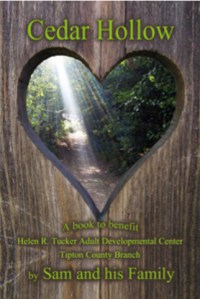
Briefly Noted: ‘Cedar Hollow,’ by Sam Franklin’s family

“Cedar Hollow,” by  Patty Hayner Franklin, Bill Franklin, Eric Thomas Johnson, Melinda Clayton, Samuel Joseph Franklin, Frankie Johnson, W. Michael Franklin and Tracy R. Franklin, Vanilla Heart Publishing (October 2012), 150 pp, paperback and e-book

While Cedar Hollow is the fictional town in Melinda Clayton’s novels (“Appalachian Justice,” “Return to Crutcher Mountain” “Entangled Thorns”), the Franklin Family is lovingly real as are the flavor, ambiance and wonders in this book.

All author and publisher proceeds from this anthology, created by Sam Franklin’s family, will go to the “Helen R. Tucker Adult Developmental Center, Tipton County Branch [in Tennessee] where Sam currently spends many of his days interacting, learning, growing, and experiencing life. With great honor, Vanilla Heart Publishing is pleased to support this center and the people who make it possible.”

Pushcart Prize Nominee Short Story Erma Puckett’s Moment of Indiscretion by Melinda Clayton is included, along with stories, poems, lyrics and music score, recipes, and more from Sam and his Family, including his father, mother, sisters, and both his eldest brother and his brother-in-law.

Excerpt about Sam from his sister, Melinda Clayton

My brother is funny and sweet. He likes basketball, dancing, and singing. He loves old reruns of shows he watched as a child. He likes to play the keyboard and the drums. He loves foods that aren’t healthy for him, but always follows the doctor’s orders. Most of all, he loves his family.

And, by the way, he has Down Syndrome.

Just one little sentence in the whole of who he is.

There’s a lot of prose and poetry to look forward to in this anthology. Even so, I’m also tempted by the recipes for Darryl Lane’s trout, Peggy Mitchell’s burgers, Kay Lanley’s key lime pie, and Beryl Dickson’s holiday cookies.

Malcolm

P.S. Vanilla Heart is also my publisher, Melinda Clayton is my friend and I was once a unit manager in a developmental center where some residents had Down Syndrome. You might say I am fully biased in favor of this book in every possible way.

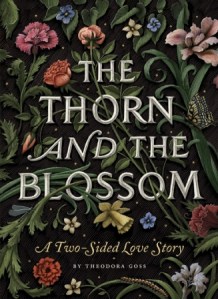
Briefly Noted: ‘The Thorn and the Blossom’ by Theodora Goss

When Theodora Goss’ novella The Thorn and the Blossom: A Two-Sided Love Story was released last year, the book’s imagery, dual stories and unique construction created a bit of a stir. In the story, Evelyn Morgan and Brendan Thorne meet by chance and become lovers after he hands her a copy of a medieval romance.

In her Bookslut review, Colleen Mondor said: “Slipcovered and with an accordion-fold binding, “The Thorn and the Blossom” is designed so it can be flipped and readers may thus enjoy Brendan and Evelyn’s separate perspectives of the same tale. While the publisher’s work is impressive, it is Goss’s handling of the story itself that really blew me away. You do not have to read these perspectives in any particular order; you can start with Brendan or Evelyn and either way you will not ruin critical moments or spoil the ending.”

Publishers Weekly said: “The fantasy elements are light, revolving mostly around Gawan’s story and Evelyn’s visions of fairies and trolls. Overall this makes the tale align more with old-fashioned romance than pure speculative fiction, but Goss’ appealing characters and modern magic atmosphere will continue to attract a following.”

Some reviewers on Amazon liked the unique look of the book, but found the accordion-style presentation difficult to read because the pages easily fell away in long folds. Other authors with two stories to tell in one book have solved this problem by formatting the stories from alternate ends of the book but with standard binding. Needless to say, the issue becomes a non-issue for those reading the e-book version.

Nonetheless, showing the same story from two points of view is an age-old technique that’s been handled in multiple ways, and whenever it appears it adds both drama and depth to the material. Readers naturally feel some stress when they are told it doesn’t matter which account to read first and also when they see that there will be no resolution to the contrasting viewpoints. The depth, aided in part in this case by Goss’ evocative language, comes from understanding that people see events and relationships differently rather than via the single, linear viewpoint commonly used in most fiction. So, the dual stories show us what we often miss in fiction, though we experience it in our lives.

Available in hardcover and e-book, “The Thorn and the Blossom” is likely to enchant lovers of fantasy, romance, and well-told tales.

You May Also Like: The Value of Expecting Synchronicity

Malcolm

Malcolm R. Campbell is the author of contemporary fantasy, including the gritty, magical adventure “Sarabande.” His paranormal Kindle short story, “Moonlight and Ghosts” was released last month.

Review: ‘Alexander’s Lighthouse’ by Don Westenhaver

Author Don Westenhaver (Nero’s Concert) returns to the ancient world with a historical thriller set in Alexandria Egypt at a time when the Roman Empire’s rule was being challenged by a group known as “The Mob.” Set in 92 AD, Alexander’s Lighthouse is a smooth mix of fictional characters and events in a thoroughly researched historical setting.

Marco, a young Greek doctor arrives in Alexandria to study for a year at the city’s Museum and Library with something most visiting students do not have: a famous Gladiator father remembered fondly by the Empire. He secures a meeting with the Roman Prefect Titus Cornelius which leads to a position with a museum department tasked with the discovery of new weapons and other practical equipment. Marco’s access to the royal palace, his courtship of the prefect’s daughter, and his work on secret projects soon bring him to the attention of the mob.

The historical detail in this well-written novel provides readers with three-dimensional characters living, working and fighting within the scope of the long-ago politics and culture of Egypt in the city founded by Alexander the Great after it came under Roman rule. While Alexandria is an advanced, shining city with more than the usual amount of tolerance for its mix of Roman, Greek, Egyptian, Christian and Jewish citizens, there are conflict areas ready to be exploited by Free Egypt, the latest incarnation of the mob.

The inventive plot features a weapon under development by Marco and three colleagues in the museum’s special projects group that both the Roman rulers and the Free Egypt rebels desperately want to have. Spies are everywhere. It’s difficult to know whom to trust. And the friction between those who relish the laws and order of Roman rule and those who want the return of an independent Egypt lurks beneath the surface. The story builds through one intrigue after another toward the inevitable open rebellion. Marco, his co-workers, the prefect’s daughter, Paula, and a rich and alluring widow named Nebit are simultaneously players and pawns in a very deadly game.

While the novel’s historical detail intrudes at times, the story moves at a rapid and believable pace in Westenhaver’s re-created Alexandria with a powerful what-if premise: what-if the weapon in the book had been created at the famous museum? No, it isn’t historical. But as Westenhaver says in the Author’s Note, “My only defense is that the weapon should have been invented much earlier than it was.”  (It contained well-known and commonly used materials.)

Like Nero’s Concert (2009), Alexander’s Lighthouse has great depth along with the kind of action that keeps readers turning pages. The novel is available in trade paperback and on Kindle.

Malcolm

Malcolm R. Campbell is the author of four novels, including the contemporary fantasy “Sarabande.” His “Book Bits” writers’ links appear several times a week on his blog The Sun Singer’s Travels.

Contemporary fantasy for your Kindle.

Book Review: ‘Goatsong’ by Patricia Damery

Each chapter heading of Patricia Damery’s beautifully written novel Goatsong begins with the words “tell me about.” Sophie’s daughter Stacey is asking her mother to tell her the old and ever-changing family stories about the days she spent as a ten-year-old child with the three Goat Women on Huckleberry Mountain and was reborn into the fullness of the world.

Young Sophie’s single mother works as a waitress at an all-night diner and sleeps all day, sometimes alone and sometimes with the man she brings home: “Ma didn’t want me making noise during the day while she slept, so I left the house and did all kinds of things most kids would not have the opportunity to indulge in, you might say.”

That summer, Sophie meets Nelda, Dee and Ester on the mountain above the Russian River in northern California, and in the process of learning about herding goats, “logging in” garbage dumped alongside the roads, and dancing naked in the meadow, she discovers love and acceptance from her ad hoc surrogate family. Among other things, Sophie learns to see and acknowledge that which others often miss, roadside trash included.

Wise, practical and nurturing, Nelda knows the Goatsong. Strong, persistent and dependable, Dee takes exception to those who dump garbage on the mountain as well as those who won’t lift a hand to stop it. Forever taking notes as the women do their daily errands, the relatively silent Ester is a witness, logging in the garbage. She finds, for example:

“1 beer bottle, label torn and unreadable, green.
1 plastic freezer bag, Safeway, good condition.
1 16 oz. paper cup, 7-11, good condition.”

The three Goat Women, who know they are “undesirables” from the townspeople’s point of view, accept Sophie as one of their own during their daily adventures on a mountain that Damery describes with the prose of a poet. The novel is a hymn to nature and natural living as well as an eternal and memorable story. Original, unorthodox and wise, the Goat Women provide Sophie with an unfettered, practical and loving worldview that is absent at her home and school.

In their own way, the goats (Natalie, Boris and Hornsby) are also Sophie’s teachers. The author, who has run a biodynamic farm in the Napa Valley for the past twelve years with her husband, said on her blog this past summer that “Walking the goats is truly an art.” Damery brings her knowledge of that art into her novel, creating goat characters who are as three dimensional and essential to the story as the women.

In the introduction, Damery writes that “Goatsong is the mysterious combination of humility and that essential ability to climb above, like a goat, or a song. To know the Goatsong of tragedy, Nelda told me, is to be reborn.”

When you read Goatsong, you are breathing in fresh air off the Pacific ocean, smelling the sweet scent of the bay laurel, and cooling your tired feet in sacred streams flowing through old redwoods in the company of wise women who, without agenda, may well change you as they changed the ten-year-old Sophie in those old family stories about the town of Huckleberry on the Russian River.

Malcolm

a young woman’s difficult journey

Briefly Noted: ‘The Last Selchie Child’ by Jane Yolen

Jane Yolen’s collected poems in The Last Selchie Child, from A Midsummer Night’s Press, are a celebration of storytelling. Part I, Story explores the craft itself; Part II, Stories takes us to the sea and elsewhere into the distant past when the world’s once-upon-a-times were more intangible than they are today; and Part III, Telling the True, gets to the heart of the matter, the veracity of the tales a storyteller tells.

In “The Storyteller,” in Part I, Yolen writes about the fundamental essence of the art of a tale:

It is the oldest feat
of prestidigitation.
What you saw,
what you heard
was equal to a new creation.

The title poem “The  Last Selchie Child” begins Part II:

But I am the last selchie child,
my blood runs cold in my veins
like an onrushing tide.

In Part III, “Family Stories” reminds readers of the childhood stories they heard, but no longer recall:

My brother and I
are pieced together
like crazy quilts.
We keep warm
on winter evenings
with the weight
of all those tales.

Publisher’s Description:

Magical transformations, enchanted mirrors, talking animals, familiar tales in unfamiliar guises, all these and more are found in the pages of The Last Selchie Child.

Retellings of archetypal myths and fairy tales and the nature of storytelling itself are explored in this new collection of poems by Jane Yolen.

This tiny book of tales, published in a 6×4 format, grows larger and larger with each reading of its magical poems.

Malcolm

Book Review: ‘The Subversive Harry Potter’ by Vandana Saxena

Vandana Saxena has done a careful and credible job surveying themes of fantasy fiction and adolescence in The Subversive Harry Potter: Adolescent Rebellion and Containment in the J. K. Rowling Novels (McFarland, April 2012). Substantiated by the source materials, her approach views the years between childhood and adulthood as a time of testing, experimentation and rebellion that society allows and/or tolerates with the expectation that youth will ultimately enter “normal” adult society within the confines of generally accepted social and cultural values.

Saxena demonstrates that, paradoxically, young adult novels—such as the Potter series—not only facilitate the rebellious and experimental mindset of their expected readers (and protagonists), they also serve to contain it. J. K. Rowling, for example, leans heavily on the hero monomyth (hero’s journey) theme which, no matter how strange the journey, envisions the hero joining “normal society” once the quest is complete. Saxena correctly notes that the monomyth always arises on a foundation of the norms and beliefs of the culture or country where the story is set.

Rowling also draws heavily on the tradition of English Boarding School fiction that echoes what such schools were intended to do in society: mold raw, undisciplined youths into model citizens. Harry and the other students at Hogwarts are expected, by the powers that be at the Ministry of Magic, to play by the rules after they leave school in spite of their love of pranks and disobedience prior to graduation.

“The school story, as a narrative emerging from a specific cultural context and being situated in a socio-cultural institution like a school,” writes Saxena, “is doubly bound to the ideas and ideologies of its epoch.”

Hero, Schoolboy, Savior and Monsters

In addition to its focus on the literary and cultural traditions of hero and school themes, The Subversive Harry Potter explores Harry’s role as the savior of his magical world as well as that world’s marginalized monsters (giants, house-elves, werewolves) whom he and Hermione befriend out of their humanity and their defiance of societal norms.

Saxena points out that while Rowling’s books have often been criticized for their positive approach to magic and witchcraft, the series has two strong Christian themes. First, Harry becomes the savior who accepts death, not as a fearful end, but as a grace he receives while offering up his own life on behalf of his friends, fellow students and magical world. Second, love is called the strongest magic of all with a power so great that Lily Potter’s love for her son Harry lives on long after her sacrificial death on his behalf.

The hero, schoolboy and savior themes are not only skewed outside their normal linear evolution by the friendship and help of such outcasts as Hagrid, Dobby and Lupin, but by the presence of magic itself. Saxena’s study portrays adolescents—from the viewpoint adults—as “other,” that is to say, alien. However, within our consensual mainstream reality, magic, witchcraft and anything else regarded as supernatural, are much more alien.

The Subversive Harry Potter shows that, like Philip Pullman’s His Dark Materials trilogy, Rowling’s use of magic not only makes for exciting reading, but introduces elements that impact the protagonist’s expected evolution from adolescent/other to mainstream adult. It’s as though society is saying, “You can play with fantasy during your teenage years, but we expect you to grow out of it.” Yet, what if the supernatural is too strong and too compelling to leave behind? This is a “danger” society perceives in wildly popular fantasy literature as well as an interesting counterpoint to the hero, schoolboy and savior themes in the Potter series itself.

The Influence of “Queer Theory”

Saxena’s view of magic and fantasy within adolescent fiction is strongly influenced by her study’s reliance on “Queer Theory” as a means of exploring potentially discordant themes and values. As a post-structuralist critical theory that defines everything outside of society’s norms as “queer,” the theory would suggest that the hero/savior who exhibits a larger-than-life performance of his role is not exhibiting normal behaviors. The study suggests that magic further “queers” the functions of the monomyth, the boarding school theme, and the savior roles within the series.

While the words “queer” and “queer theory” in context within an academic study illustrate society’s view of everything different (including fantasy and magic), the tightly focused 1990s terminology is in my view unfortunate and out of date when extrapolated upon in 2012 for a wider research project.

“Queer analysis,” writes Saxena, “of the narrative of boyhood therefore reveals the essentially performative aspect of boy-to-man growth. The elements of fantasy and magic denaturalize this cultural project. The narrative of fantasy revolves around the power of magic, an illegitimate force whose presence in society has been characterized by simultaneous ubiquity and secrecy.”

The author’s role?

Unfortunately, the fantasy author’s role (if any) in either orchestrating or intuitively utilizing the hero, schoolboy, savior, monster and magical themes to facilitate/contain adolescent rebellion through instructional or inspirational storytelling was outside the parameters of the study. This leaves an open question about whether the themes explored in the study are overt elements of authorial intent or simply part and parcel of fantasy and hero’s journey fiction. Saxena shows that Rowling knew very well the traditions—within British society—of school fiction, the evolution of a hero, and of giant and elf folklore.  But she doesn’t explore whether Rowling intended for her fiction to impact adolescent needs within society in the manner viewed by theorists.

The Subversive Harry Potter grew out of a doctoral dissertation and, as such, is a formal academic study intended for literary theorists, psychologists, sociologists and other scholars. The retail price ($40 for a 218-page paperback) is within the realm of scholarly and professional publication pricing rather than that of general nonfiction.

For an academic audience, The Subversive Harry Potter meets its goals while providing fantasy authors and fans with some very interesting food for thought.

Malcolm

Malcolm R. Campbell is the author of magical realism and contemporary fantasy novels, including the hero”s journey “The Sun Singer” and the heroine’s journey “Sarabande.”
Briefly Noted: ‘The Armchair Birder Goes Coastal’

John Yow has followed up The Armchair Birder: Discovering the Secret Lives of Familiar Birds (Feb, 2012) with another handy bird book written in an anecdotal style called The Armchair Birder Goes Coastal: the Secret Lives of Birds of the Southeastern Shore (The University of North Carolina Press, May 1, 2012) which is a true wonder for birders, authors and others who want to know more about specific birds and their habits than the encyclopedic bird guidebooks present.

Yow writes with a lot of humor and insight. In the Anhinga entry, for example he starts off by saying, “Thought it’s seldom the most riveting aspect of bird study, I think in this case we better start with nomenclature. Nobody seems very happy with the name ‘anhinga.'”

He’s right about that. In Florida, we preferred calling them Snake Birds because they swam (or walked) under water with nothing but their long necks above the surface, looking like snakes with bills. Others called them Water Turkeys, though I have to agree with Yow in saying they look very little like turkeys.

In this book, we’re not talking mockingbirds and meadow larks. Think about what you saw on your last trip to a Southern beach or swamp: Black-Necked Stilts, Reddish Egrets, Wilson’s Plovers, Browm  Pelicans, Forster’s Terns and Black Skimmers. Illustrated with black and white drawings, this book is not for the vacationer with a short-term “what’s that” curiosity. The well-known photo-illustrated guidebooks will do for that. Yow writes for the reader who has time to sit a spell and watch and listen.

Author Janet Lembke is spot on when she writes,  “Infusing stories, observations, and musings, Yow makes it easy to learn about these fascinating birds. This book might well lead ‘armchair birders’ to become active birders, and eventually, conservationists.” There’s so much more to a bird than simply knowing what it is, and this book delivers the secrets that it usually takes a while to discover on your own.

Malcolm

contemporary fantasy for your Kindle