Book Review: ‘A Certain Kind of Freedom,’ edited by Beryl Belsky

A Certain Kind of Freedom: Stories and Poems from the Writer's DrawerA Certain Kind of Freedom: Stories and Poems from the Writer’s Drawer by Beryl Belsky

My rating: 4 of 5 stars

“My objective when choosing the pieces for the anthology was to ensure that they reflected not only literary merit but also the multicultural nature of the website [Writer’s Drawer], as well as universal themes with which we can all identify.” – Beryl Belsky, from the Preface

A Certain Kind of Freedom presents ten stories in Short Fiction, ten first-person essays in Stories from Life, eleven poems in Poetry, and three poems in East Asian Style Poetry. While the short stories comprise the most dynamic section of the book, the anthology as a whole successfully fulfills Belsky’s objectives in the preface.

The title story about two young people who go kayaking in a cove that may or may not be dangerous or cursed, superbly introduces feelings of dread and a finely wrought narrative tension that characterizes most of the stories in Short Fiction. Susan Rogers’ “A Certain Kind of Freedom” employs a technique favored by director Alfred Hitchcock: placing everyday people into an unusual and chilling situation.

Kate and Ryan, who are visiting the Mediterranean coast, are experienced kayakers. The day is beautiful and the seas are calm. Yet Kate is preoccupied with “pink sky in the morning, sailor’s forewarning,” World War II dogfights that occurred in the area, and the unknowns of deep water once they paddle outside the sheltering cove. Rogers builds the tension well, foreshadowing a harrowing conclusion that, while not unexpected, is both surprising and sad.

In “Abigail,” Elizabeth L. Abrey also places an everyday person in an usual situation. While exploring her new house, Ruby Jordan gets locked in the basement. Once she extricates herself, everything seems fine. But then it isn’t–just possibly, getting locked in the basement wasn’t an accident.

Especially poignant is Leandré Grobler’s “Cry of the Fish Eagle”about an elderly aboriginal couple living in a secluded valley far from civilization who discover they are being watched by outsiders whom they do not understand. The watchers are well-intended researchers. As the tension builds, the reader can only wait helplessly for the inevitable clash of cultures that will destroy everyone.

Fans of Beethoven will love Tyger Schonholzer’s “Immortal Beloved,” an exquisite fantasy that re-imagines the circumstances behind the master’s famous “Immortal Beloved” letter to an unknown woman. The letter was never mailed. The intended recipient was never identified by historians. Could Schonholzer’s version be true? The romantic amongst us will want to think so.

All of the stories succeed, though some better than others, because they are tightly written and build toward well-plotted and appropriately foreshadowed conclusions. The essays in Stories From Life are generally informal and, while they introduce interesting characters, themes and settings, have a slice of life quality about them that often lacks unity and direction.

Bryan Clark’s “The Smoke Bird,” about an aboriginal mystic, Carrie King’s “The Ticket,” about an expectant mother barred from boarding a ship, and D. K. Srivastava’s “The Decision That Changed Her Life” about a Hindu bride waiting for her arranged marriage to begin are standouts in this section.

The offerings in Poetry are generally free verse with several of the poems falling into the prose-formatted-into-broken lines category. However, the poets’ passions shine through in such words as these in Syed Asad Ali’s “I Have Been in Love Twice”: …with you and with the idea of you; and maybe the reality of love lingers in between both of these.

Paige Lederman’s, memorable poem called “Fear” shows how a ten year old felt when hurricane Sandy hit New York’s Rockaway Beach in 2012, Dev Pillai’s tautly written “Paradox” looks at a moment in the past that was “incomplete yet content,” and Jane Tarlo’s bittersweet “It” bring strength to this section.

The three poems by Leon Zeldis, Jane Tarlo and Yael Shalev in East Asian Style Poetry comprise the strong final section of A Certain Kind of Freedom. These works clearly demonstrate the style and tone expected in the form, perhaps most effectively in Zeldis’ “Seven Chinese Poems” that begin:

Then,
Before the leaves went wild wind lofted,
The sky darkened
And I sat down crying.

Belsky concludes the book’s preface with the hope that A Certain Kind of Freedom will become the first of a Writer’s Drawer Book Series. Belsky and her contributors have made a strong start with this collection. For authors of future books in the series, this volume sets the bar high; for readers, it offers enjoyable prose and poetry that deserve multiple readings to fully explore.

Malcolm

Malcolm R. Campbell is the author of the contemporary fantasy “The Seeker,” a story about a mountain vision quest, a flood, a girl, a swamp, and a summer romance on the rocks.

99seeker

Melinda Clayton views her latest protagonist as ‘wholly broken’

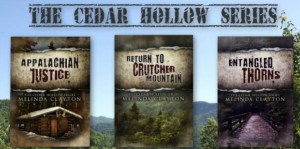
ClaytonphotoToday’s guest is author Melinda Clayton (“The Cedar Hollow Series”). Her new novel, a stunning tale about a family in the midst of self-destruction Blessed Are the Wholly Broken, was released October 16.  Clayton, who has published numerous articles and short stories in print and online magazines, is a licensed psychotherapist in the states of Florida and Colorado. She holds an Ed.D. in Special Education Administration. She recently founded Thomas-Jacob Publishing described as a “unique family-owned publishing company.”

Clayton previously visited Malcolm’s Round Table in July of 2012 when her novel Entangled Thorns was released as the third book in “The Cedar Hollow Series.”

Malcolm: Welcome back! In your new novel Blessed Are the Wholly Broken, you move away from the Appalachian Mountain families in “The Cedar Hollow Series” to Phillip and Anna Lewinsky, a modern-day urban couple, living in Memphis. As an author, how difficult was it to shift away from the prospective “comfort zone” of an on-going series with known characters and established settings to a new environment featuring students graduating from college who are ready for careers and family life?

cedarhollowcoverMelinda: Thanks for having me back, Malcolm. It was difficult, but I also felt it was time. There may be other Cedar Hollow stories, but the story of Phillip and Anna Lewinsky had been rattling around in my head for some time. I had also wanted to write a story set in the area of Tennessee in which I grew up, so that was fun. It was also fun to revisit the University of Memphis on Memphis’ rainiest day of 1989. I remember that day well. I was really tired of the rain, of being cold, and of getting soaked on my walks to both class and work.

Malcolm: At the beginning of the book, you quote a line from “In Place of a Curse,” a signature poem by John Ciardi: “They who are wholly broken, and they in whom mercy is understanding, I shall embrace at once and lead to pillows in heaven.” In addition to suggesting a unique title for your novel, how does this sentiment set the stage for the story to come?

Melinda: I think of Phillip as being “wholly broken.” This is a man who in his early twenties felt he had everything he needed to be happy. In his words, “I felt like the luckiest guy in the world. First job, first apartment, first girlfriend, best friend. What more could I have possibly wanted?” But by his mid-forties, when we first meet him in the Prologue, he feels he has nothing at all. “Life imprisonment or death; that is the question. And while the outcome matters immensely to the other players in this drama of my life, it matters not at all to me. I am dead either way.”

I wanted to explore that dynamic, the path one might travel that could lead from euphoria to despair, from hopeful to hopeless.

Malcolm: Asking a therapist why s/he writes about characters with deeply rooted psychological problems probably makes as much sense as asking a composer why s/he writes about characters who are struggling with a symphony. Yet, as I think about both “The Cedar Hollow Series” and Blessed Are the Wholly Broken, I can’t help but see the books’ characters as almost being—as we say in the South—“too broke to fix.” In addition to the page-turning read we all look for, do you think these novels will also help provide closure for readers who know people who seem wholly broken and/or who often feel they might be wholly broken?

BAWB 200 x 300Melinda: Wow, I might have to think about that for a minute! I think the “broken” characters in the Cedar Hollow Series have within them some spark of hope, enough, at least, to compel them to continue moving forward. One reviewer remarked that she loved it that those books all ended on a hopeful note, a type of new beginning for the characters. If there’s a message to those books, it might be something along the lines of each cloud having a silver lining, or there being a light at the end of the tunnel. Never give up; this too shall pass, etc.

I think Blessed Are the Wholly Broken is different in that within the first page, we know Phillip Lewinsky has been found guilty of the murder of his wife. One of the beta-readers called me midway through reading and said, “But he’s going to get out, right?” She found him to be a sympathetic, likable character and wanted a happy ending for him. I suppose a philosophical argument could be made that in a paradoxical sort of way, he was happy with the ending and he did find the closure he was looking for, but the writing of Wholly Broken was more about an examination of the unraveling of a life than it was about reaching closure.

Malcolm:  How do prospective wholly broken people/characters impact the therapist/novelist?

Melinda: In some ways, the impact is the same for both the therapist and the novelist, in that I’ve always been fascinated by trying to discover what makes us all tick. Behavioral theory would say we don’t engage in a behavior unless we’re getting something out of that behavior. Maybe we’re being positively reinforced in some way, or maybe we’re trying to avoid something uncomfortable. That’s overly simplistic, but I think for the most part, it’s true.

As a therapist, part of finding the solution lies in finding the why of the behavior. Once a person recognizes and understands the purpose behind their behavior, they can choose whether or not they want to change it.

As a novelist, it’s fun to work to tie together a character’s motivations, choices, and decisions with their ultimate outcome.

Malcolm: After readers learn on the first page of Blessed Are the Wholly Broken that a crime has been committed, the novel moves about quickly from one time to another and from one place to another rather like a “whodunit.” I felt like I was reading a detective story. How did you approach your research for this, especially that involving medical, police, prison and courtroom procedures?

The dorms at Memphis State University (now U of M) where Phillip and Anna meet.

Melinda: This novel, by far, required more research than all three of my previous novels put together. I spent time both talking with and emailing medical and legal experts as well as making several phone calls to the Lauderdale County Jail to make sure I accurately portrayed not only procedures, but physical components of the building.

I sent hardcopies of the chapters dealing with medical issues to an expert in the field of microbiology, and chapters dealing with legal and courtroom procedures to the founder of a law firm in New York.

I wanted the book to be as true to the regions as possible, so I also researched weather patterns in that area during that time to make sure if it was raining in the novel, it really had rained on that particular day. I pulled up calendars from that time to make sure if court was held on a specific day in the novel, it would have really been held on that day in Ripley, Tennessee.

I think I probably spent more time on research than I did on writing. Everyone was incredibly helpful; if there are mistakes, they’re completely my own.

Malcolm: While Blessed Are the Wholly Broken was still a work in progress, you formed your own publishing company. How did the becoming a publisher change your perspective about what it takes to prepare and format manuscripts, and to publish and market a book? How did it change your viewpoint as a writer? Did becoming a publisher change your writing habits or approach or were you able to keep your publisher’s hat in the closet until the manuscript was done?

TJpublishingMelinda: Becoming a publisher in the middle of the writing process taught me that publishing is a lot of work! In some ways it stifled me as a writer because as I typed, I couldn’t help thinking, “Ugh, once I get done with this manuscript, I have to reformat it three different ways….”  On the flip side, I loved having the ability to review and proof the finalized manuscripts before hitting “publish.” It was nice to have one last chance to check for any typos or formatting errors before going “live.”

Malcolm: Best of luck with Thomas-Jacob Publishing and Blessed Are the Wholly Broken. Where can prospective readers find you your novels on the Internet?

Melinda: Thanks, Malcolm!  And thanks for the wonderful interview.

All of my books can be found through major retailers such as Amazon and Barnes & Noble. They’re also available through Smashwords, Apple, Sony, and Kobo.

Book Review: ‘Mister Max’ by Cynthia Voigt

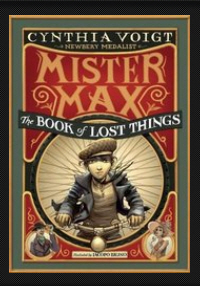
mistermaxNewbery medalist Cynthia Voigt (“Kingdom,” “Tillerman” and “Bad Girls” series) brings her considerable storytelling experience to an inventive adventure with a unique and resourceful protagonist. Intended for readers from 8-12, Mister Max: The Book of Lost Things is the first in a planned trilogy about the likeable and realistically drawn twelve-year-old Maximilian Starling.

Day to day, he’s just Max, a schoolboy who doesn’t quite fit in with his peers because his parents are larger-than-life and excessively flamboyant theater people who find drama in everything. Just Max is just “different.” Max’s has a nagging problem: his parents are lost. They’re lost as in missing, misplaced, misunderstood, potentially kidnapped, or enacting a drama without due regard to Max who’s been left behind in an empty house.

Fortunately, his grandmother lives nearby. Unfortunately she is, in Max’s opinion, inclined to be bossy. They agree, however, that it’s better for Max’s school to assume Max is on a trip with his parents. After all, that was the plan before William and Mary Starling of the Starling Theatrical Company disappeared. Grammie and Max also agree that the authorities, whoever they may be, need not know about Max’s mostly empty house.

Readers will identify with Max because, like any twelve-year-old with lost parents, Max is a bit overwhelmed by the questions and emotions racing through his head. However, he is determined to meet the challenges of independence head on. He needs money and that means he needs a job even though nobody seems to be hiring twelve-year-old applicants without experience.

Voigt has blessed her protagonist with a skill he doesn’t immediately see has having any value outside the walls of the Starling Theatrical Company: he knows about roles and costumes. While he doesn’t really want to call himself a private detective, the world of roles and costumes and his preoccupation with that which is lost make him adept at helping others–at a reasonable fee–find what they need to find.

The story is filled with memorable characters, humor and a series of lost and found adventures that will stir up the imaginations of young readers who might speculate about what they would do if their parents were lost. Voigt’s words, which (figuratively, of course) dance and sparkle on the page, are supported by Iacopo Bruno’s magical illustrations.

The illustrations and plot twists bring a heady 19th-century daring-do to a story that sweeps toward a suitably over-the-top cliffhanger ending that should satisfy readers while Voigt decides how Max is going to find his way out of his next dilemma. Young readers will find that Mister Max is filled with wonder, mystery and plenty of adventure.

Malcolm R. Campbell is the author of contemporary fantasy short stories and novels including “The Seeker” and “Emily’s Stories.”

Review: ‘Glacier Ghost Stories,’ by Karen Stevens

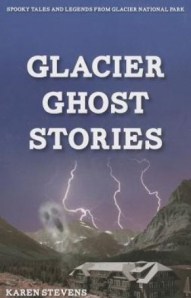
“Glacier Ghost Stories,” by Karen Stevens, Riverbend Publishing (May 7, 2013), 103 pages, trade paperback.

GlacierGhostStories2Karen Stevens (“Haunted Montana,” “More Haunted Montana”) has been collecting Montana ghost stories for thirty years and has been visiting Glacier National Park for forty years. Glacier Ghost Stories brings her passions together in a slim, but informative volume that follows her search for strange and inexplicable events at the park’s historic hotels.

Steven’s book is, in one sense, a reporter’s travelogue: she talks about her investigative trips, the weather, the accommodations, and her interviews with hotel personnel. In the process, she includes a fair amount of park history with details for each hotel: Apgar Village Inn, Belton Chalet, Glacier Park Lodge, Lake McDonald Lodge, Many Glacier Hotel, Prince of Wales Hotel and Sperry Chalet.

Glacier Park Lodge celebrated its 100th anniversary this summer. The other hotels are elders in the lodging business as well. The hotels are busy during their short summer seasons. They’re isolated from the world throughout the rest of the year. The schedule and the wild country are, it seems, the perfect recipe for legends, yarns and a long list of things that defy logical explanation.

While they don’t advertise ghosts in travel brochures, hotel managers and long-time employees had a lot to day about things that go bump in the night: people who suddenly disappear, objects that move when nobody’s looking, doors that lock by themselves, music and other sounds from unoccupied rooms, footsteps in the dark. Stevens includes the room numbers where things seem to happen. Take note of these before your next visit.

Glacier Ghost Stories includes legends about Marias Pass, Going-to-the-Sun Road, Two Medicine Valley and the Belly River. In the book’s postscript, Stevens writes that visitors to Glacier and Waterton parks “follow in the footsteps o those who came before us: Native Americans, trappers, hunters, explorers and others whose spirits even today may roam the land they loved so much in life.”

Stevens does not hear about or witness the over-the-top paranormal happenings we associate with Edgar Allan Poe and Stephen King. She did uncover enough to make us wonder and to look over our shoulders the next time we visit any of the park’s hotels. The book is an engaging portrait from a ghostly point of view.

Malcolm

Malcolm R. Campbell is the author of paranormal short stories and four contemporary fantasy novels partially set in Glacier National Park.

A Glacier Park Novel

Review: ‘Inferno’ by Dan Brown

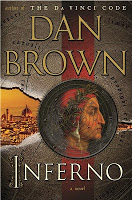
InfernoThree things are clear about Dan Brown’s novels: The reviews don’t matter because fans are more addicted to them than drugs. Years from now, his fiction will comprise the body of work most-often associated with the spate of globe-spanning puzzle novels linking historic events to  modern day criminal plots, even though the form was pioneered by Katherine Neville in The Eight. And, while his style continues to evolve, every book he writes will forever be chasing the sensation of The Da Vinci Code.

Inferno is another Robert Langdon thriller that mixes exotic locations (Florence and Venice) and ancient symbols and texts (Dante and The Divine Comedy) with a world shaking danger (the threat of a plague). Brown uses an interesting plot device here: Landgon wakes up in a Florence hospital with a head wound and retrograde amnesia. He has no idea why he’s in Florence and who may or may not be trying to kill him. (It becomes clear before he leaves the hospital room that somebody is.)

He must simultaneously solve the puzzle of symbols linking a prospective plague threat from a genetic engineer concerned about reducing the world’s population and the personal puzzle about his nightmarish dreams and how they’re connected to the story’s prospective heroes and villains. While solving the puzzle, Langdon and Dr. Sienna Brooks find numerous secret doorways and panels, life threatening moments and people who are determined to stop them for reasons as yet unknown.

In the past, Brown has been criticized by using endless historical and cultural monologues from Langdon and others to fill secondary characters in on the importance of historical events and their related symbolism. Obviously, this device was used as a way of telling the readers how centuries old stories and symbols played into the solution of an urgent problem of the present day.

Brown has toned down those monologues a great deal in Inferno and provided dialogue that more naturally fits into a story with one chase scene after another. You will no longer find five-hundred-word Langdon lectures being delivered while the bad guys are only seconds away. You will find a lot of Florence and Venice travelogue.

Brown describes the streets, museums, and ancient buildings in exhaustive detail. Imagine being chased across a town by the bad guys while having the luxury to notice every building, monument and street corner along the way, including those that don’t pertain to the story. The descriptions slow down the action but are easy to skip.

The descriptions also serve the plot because they tie into Dante and to the mad scientist who’s a Dante aficionado. The travelogues allow physical time to pass in the novel so that Langdon will have an opportunity to process the symbolism as well as the returning snippets of his fragmented memory.

Brown has done a good job stirring the characters into an ever-changing  mix of people who–at any given moment–might be trustworthy or untrustworthy. The characters’ motivations and allegiances aren’t engraved in stone. The novel’s over-arching themes are the dangers of overpopulation to humankind’s survival and whether or not one should use cutting-edge advances in genetic engineering to “fix” the problem before Mother Nature solves it by purging the planet of a lot of people.

Since the themes are real, they add a compelling dose of prospective reality to a story filled with symbols, iconography, Italian art and architecture, and the multiple meanings of Dante’s levels of hell. For Langdon and the other characters, a real or figurative hell may well be the story’s destination. Brown, I suspect, hopes readers will ponder whether hell is also Earth’s destiny.

Malcolm

Malcolm R. Campbell is the author of contemporary fantasy novels, including the recently release story of love and destiny, “The Seeker.”

seekerbanner

Review: ‘Butterfly Moon,’ by Anita Endrezze

butterflymoonThe fifteen stories in this finely honed and well-polished collection have the power to cut away assumptions and alter a reader’s focus and direction as only a storyteller’s magic can do. Borrowed and reshaped from older folktales out of Anita Endrezze’s heritage and imagination, these stories take on new life in their contemporary settings.

In her author’s note, Endrezze writes, “I hope Butterfly Moon will take you adrift in another world that challenges and transforms your perceptions, yet leads you back home to yourself.”

Reality, the oldest shapeshifter we know, dances lightly on the pages of Butterfly Moon and often gives way to enchantments, supernatural events, and the whims of gods and fate. As prospective blessings for the reader’s journey, these stories don’t necessarily fit the traditional narrative arc of a problem leading to a climax. Endrezze’s tales are often unresolved slice-of-life glimpses into her characters and settings that end with a dire occurrence, an acceptance of fate, a troubling paradox or the workings of karma.

The joy, anger, life, and death in Endrezze’s vision are not bound by time, nor are they distinctly separate from the active and sentient world in which they’re set. “On This Earth” begins with the words, The house was a forest remembering itself. The pine trees that held up the walls dreamed of stars dwelling in their needles. When Desetnica leaves home to roam the world in “The Dragonfly’s Daughter” because she is the tenth child, it’s clear that the forest is watching when The blackberry bushes parted their thickets as I waded through green knots of fruit. After I passed, still following the dragonfly, the vines knitted together again, so that I was lost to the other side of kinship and orphaned into the unnamed forest.

While tightly knit into the stories’ plots, myth and symbolism add depth without intruding into the author’s economy of words, understated approach and matter-of-fact reverence to the cultural origins of her material. Endrezze does not explain or editorialize, but her omniscient care is everywhere through this collection from the paradoxes of “Raven’s Moon” to the grim unfolding of “The Vampire and the Moth Woman” to the humor of “Jay (Devil-may-care!)”

For the lovers of myths, legends, and folktales, this collection is highly recommended and a unique delight.

Malcolm

Malcolm R. Campbell is the author of paranormal short stories and contemporary fantasy novels, including the recently released mix of love and fate called “The Seeker.”

Review: ‘The Best of Glacier National Park,’ by Alan Leftridge

The Best of Glacier National Park, by Alan Leftridge, Farcountry Press (April 30, 2013), 136 pages, photographs, maps, resources

BoGlacier cover flat r1.indd“We’re here! What should we do, what is there to see?” In the preface to his practical and well-illustrated Glacier National Park guidebook, Alan Leftridge writes that as a park ranger, he often heard those questions from excited visitors who “wanted to start making memories.”

Many of Glacier’s two million annual visitors travel a long way to reach northwestern Montana, and when they arrive, they are not only in awe of the scenery but of the scope of the prospective activities that await them in a 1,012,837-acre preserve with 762 lakes and 745.6 miles of trails. While Glacier is best experienced without hurry or stress, the economics of vacation travel make it necessary for visitors to maximize their time in the park.

The Best of Glacier National Park highlights, as Leftridge puts it, the park’s “iconic features.” The book begins with an overview of park facts, geology, and cultural history. This is followed by twenty-six “best of” chapters describing everything from scenic drives, picnic areas and nature trails to wild flowers, birds and photography opportunities.

Each chapter includes a map, color photographs and clearly marked headings and subheadings that make the information easy to find. This book is meant to be used as a quick and easy reference whether you are stopped at an overlook on the Going-to-the-Sun Road or standing in a subalpine fir forest on the Swiftcurrent Nature Trail. The hiking sections, which are broken down into nature trails, day hikes and backpack trips, include directions and special features you’ll want to see and photograph.

Glacier’s rangers, naturalists, boat crews and saddle tour operators are probably asked more questions about the park’s flora and fauna than anything else. The “Best Wildlife” chapter includes a mammal checklist and tells you where to find marmots, deer, elk, bighorn sheep, moose and bears. The book includes appropriate warnings about Grizzly bears, suggesting that they be observed at a distance. “Best Birds” highlights ospreys, eagles and ptarmigans, among others.

Naturally, “Best Wildflowers” begins with beargrass. Leftridge notes that “It is a myth that bears rely on this lily to satisfy their diet. If you see beargrass’ tall stalks with missing flower heads, know that other animals, including rodents, elk and bighorn sheep, nibbled here.”

According to the National Park Service, there are 1,400 plant species in Glacier. While “best” is a subjective term, this guidebook focuses on such popular and showy wildflowers as the Glacier Lily, Indian Paintbrush, Lupine and other visitor favorites.

Naturalist John Muir said Glacier National Park includes the “the best care-killing scenery on the continent” and suggested that visitors  “Give a month at least to this precious reserve. The time will not be taken from the sum of your life. Instead…it will make you truly immortal.”

Whether you have a month, a week or a only few days for the high country known as the Crown of the Continent, The Best of Glacier National Park is an excellent all-purpose, general guidebook for discovering everything to do and see when faced with thirty-seven named glaciers, 175 mountains, and 151 maintained trails of waiting memories.

Malcolm

TSScover2014A former Many Glacier Hotel summer employee, Malcolm R. Campbell is the author of nonfiction and fiction with a Glacier Park focus, including Bears; Where They Fought: Life in Glacier Park’s Swiftcurrent Valley and three contemporary fantasy novels set in the park, “Sarabande,” “The Seeker” and “The Sun Singer.”

Book Review: ‘Bitter Orange’ by Marshall Moore

Bitter Orange - Cover - 1600x2500 - 300dpiMarshall Moore follows his collection of enigmatic and delightfully twisted short stories, Infernal Republic, with an equally inventive novel about a character we can’t always see. Notice how protagonist Seth Harrington is already fading away on the book’s cover.

If Bitter Orange were a feature film showing at your local theater, a sign on the door would say: ABSOLUTELY NO ONE ADMITTED DURING THE LAST 15 MINUTES. The why of things doesn’t appear until the final pages and it’s well worth the wait.

The problem Seth Harrington thinks he has isn’t the worst problem he has. Personally impacted by 9/11, Harrington has allowed his days and nights to take on an out-of-focus aimless quality as though he isn’t engaged in his life. In spite of a fling with Elizabeth in Spain, he can’t connect with people, either because he isn’t sure of what, if anything, he wants or because others aren’t seeing him as he is.

Others not seeing him is the problem he thinks he has. By fits and starts, he is becoming invisible—literally. But unlike the daring-do characters out of comic books and high fantasy, Harrington not only can’t control his growing ability, he doesn’t seem inclined to use it to save the world or fight crime. In fact, he first uses it to steal a bottle of wine from a convenience store.

Other than his aimlessness, Harrington’s a likeable enough everyman trying to negotiate the world while getting past bitter memories and making sense of the seemingly random chaos of his daily life. In Spain, after telling Seth that Seville Oranges are bitter and bullfights are cruel, Elizabeth says, “So we came all this way for bitter oranges and cruelty to animals. And we meet here instead of back home in the States. What does that say about us?”

Back in San Francisco, Elizabeth—who becomes Seth’s tattoo artist of choice because she’s very good—wants to remain as important to him as she ever-so-briefly was in Spain. While Seth is, or potentially is, more attracted to his roommate Sang-hee (even Elizabeth begrudgingly sees it), he cannot seem to embrace the life he prefers. He speculates about just what that says about him.

As the invisibility problem becomes more complex, Seth travels to Portland and Las Vegas to try and find himself. He notes that the people in those towns can’t see him either. He feels bad taking advantage of that fact.

Marshall Moore tells an inventive story, one with prose as likeable as his protagonist, though some readers may want a  more highly focused plot. Moore keeps both the reader and his protagonist guessing about just how and why a man becomes invisible and whether the problem Harrington thinks he has is literal or figurative.

The solution to the problem provides a fitting climax to a well written, fanciful tale. Poor Seth: he didn’t see it coming.

Malcolm

Malcolm R. Campbell is the author of contemporary fantasy novels, including “The Seeker,” released this month by Vanilla Heart Publishing.

seekerbanner

Review: ‘Crescendo’ by Deborah J. Ledford

crescendoIn music, “crescendo” indicates a gradual increase in force or loudness. If Deborah J. Ledford’s three-book Steven Hawk/Inola Walela Thriller Series (Staccato, 2009, Snare, 2010, Crescendo, 2013) were a concerto, the audience would leave the concert hall at the end of the performance electrified by the force of the third movement and the virtuosity of soloist Inola Walela.

Crescendo (Second Wind Publishing, January 27) begins with great force when antagonists Preston Durand and private investigator Hondo Polk push Billy Carlton to tell them what he knows about the location of Durand’s son and ex-wife. The book’s volume increases when Inola’s partner is killed during a traffic stop by a bullet that might have come from her gun and a female passenger in the stopped car is struck and killed by another vehicle just after she says, “I got you the money.  Where is my son?”

Though she’s a decorated Bryson City, North Carolina police officer, Inola is put on administrative leave pending a departmental investigation into the deaths at the scene. She’s told to stay away from the investigation, including trying follow up on her gut feeling that the woman’s son has been kidnapped.

Inola’s fiancé Steven Hawk, now the county sheriff, wants to play everything by the book. He tells Inola that there’s no evidence of a kidnapping and the city police and county sheriff’s departments can’t take action until evidence and leads, if any, materialize—and she is to stay home.

Readers of the Steven Hawk/Inola Walela Series were introduced to Inola in Staccato when Hawk, who was a sheriff’s deputy then, first became aware of her: “Hawk had noticed Inola Walela, the only female cop on the Bryson City police force. She was captivating, beautiful, smart, tough, exactly what he hoped to find in a woman.”

Inola, who played a larger, but secondary, role in Snare, is Ledford’s on-the-hot-seat protagonist in Crescendo. She comes into her own in this tense novel as a three-dimensional, risk-taking police officer who needs to find the young woman’s son and who has kidnapped him even though she may be suspended or terminated regardless of what she learns.

This is a richly told psychological and physical thriller. Ledford, who knows her characters and her settings well, increases the volume of this story until the last shot is fired.

Malcolm

Malcolm R. Campbell is the author of contemporary fantasy novels, including “Sarabande’ and “The Sun Singer.”

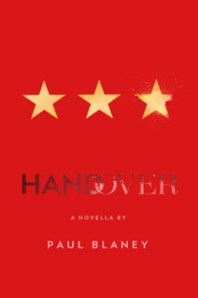
Book Review: ‘Handover’ by Paul Blaney

handoverOn July 1, 1997, the British Crown Colony of Hong Kong became the unique Hong Kong Special Administrative Region  of the People’s Republic of China, ending 156 years of colonial rule. Hong Kong, which translates to “Fragrant Harbor,” had for years been considered in financial, governmental and tourism circles, as a shining jewel.

The colony attracted many expatriates who were lured there for the heady “East-Meets-West” mix of people, the city’s dazzling cultural attractions and nightlife, the innovative high-density architecture and by the prospects of fortunes to be made and new lives to be started. Expats, however, always live within a curious limbo because they are never quite native and never quite who they were before they arrived. This limbo became more intense in Kong Kong as the date of the handover from British to Chinese rule approached.

Three interlocking stories comprise Paul Blaney’s novella Handover (Signal 8 Press, November 2012). His three expat Brits arrive in Hong Kong and find that the complexities of their own lives are somehow made more urgent and dear because of the changes and potential turbulence of the long-awaited handover.

Tess, whose aunt and uncle live in Kong Kong, graduates from college and then arrives and  finds work as a photo editor. Rob arrives with a head filled with memories of a former girlfriend who once lived there and begins to relive them while working as a bartender. Sally, a magazine editor, must confront on-the-job sexual harassment and the abandonment of her family when she defends herself and ends up in the colony’s criminal justice system.

The novella’s sections, each of which is—like Kong Kong—a compact and shining jewel, are bound together by the setting, minor characters and by the looming political and cultural manifestations of the handover. The stories are told in a non-linear style, giving them a kaleidoscopic organization and texture akin to that of Hong Kong itself. As such, the the novella depicts multiple slices of life rather than a traditional tale with a plot line leading through conflicts to an overt resolution.

Well-read readers may see the dark and gritty world of Blaney’s expats as a prospective new level of hell for Dante’s Divine Comedy: here in a heady world where everything wonderful is so close and so possible, doom is a likely result. Adventurous readers, those who love new things, new things with a hint of danger and intrigue, will discover that Paul Blaney’s Handover has many gritty delights to offer.

The novella is also a spot-on description of the the beauty and poverty of Kong Kong during a time in its history when nothing was certain.

Malcolm

The author of contemporary fantasy and paranormal short stories, Malcolm R. Campbell enjoyed his long-ago visit to Hong Kong and was happy when Signal 8 Press supplied a complimentary copy of a novel set in one of his favorite tourist destinations.