New National Monument Will Commemorate Dark Legacy of Native American Boarding Schools

NPCA News Release

December 10, 2024
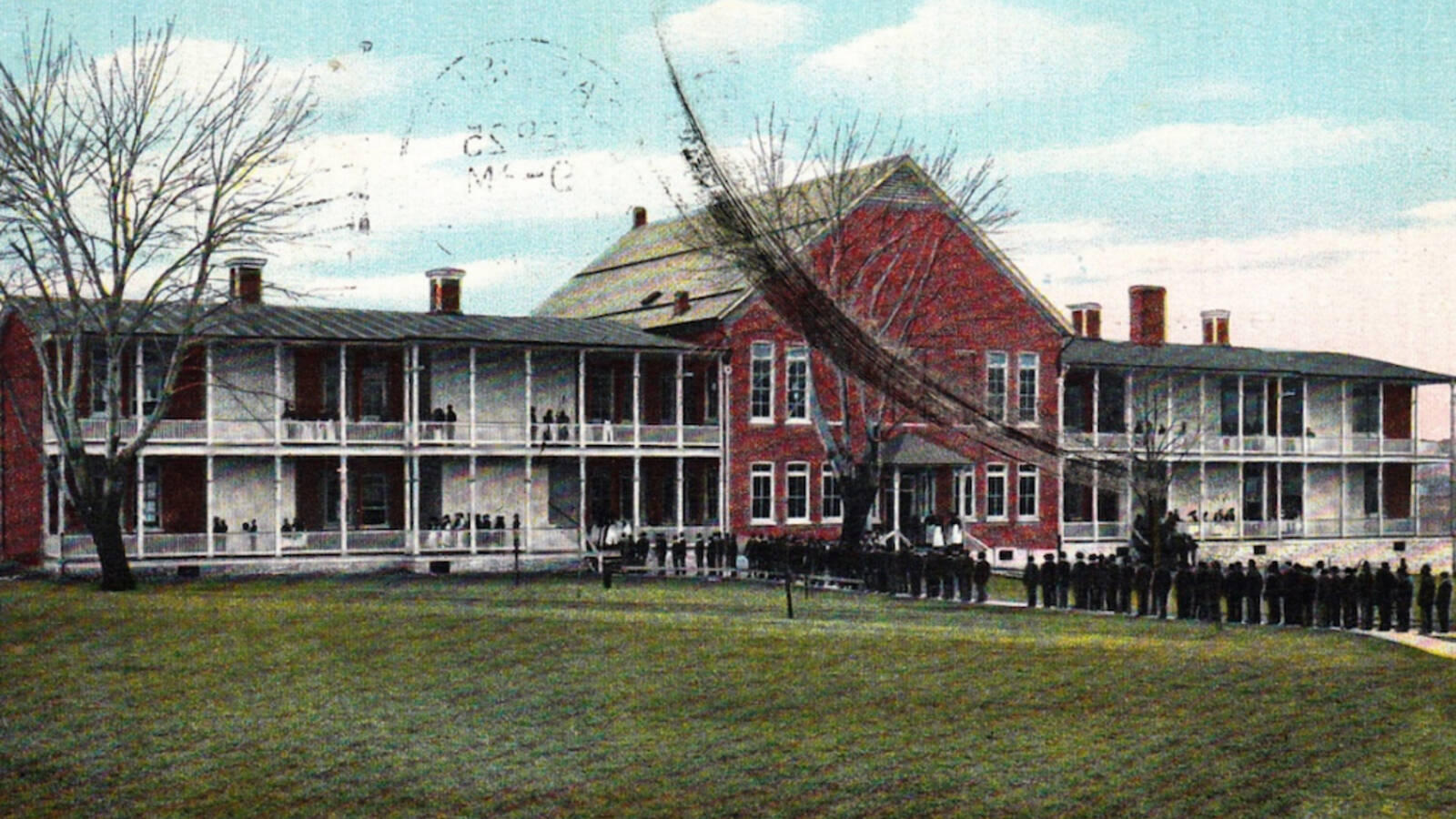
The Carlisle School

WASHINGTON – Yesterday, President Joe Biden designated the Carlisle Federal Indian Boarding School National Monument, a new national park site that tells the story of traumatic family separation and abuse at Native American boarding schools across the country.

President Biden’s proclamation states that this new national monument will be managed by the National Park Service in close consultation with Tribal Nations, so that Indian Country leaders will have the opportunity to shape planning processes, interpretation, and other critical factors in park management.

As the flagship Native American boarding school, the Carlisle School held thousands of Native children separated from their families, yet it represents just a small fraction of these stories.

The Biden administration’s hard work and careful collaboration with Tribal leaders on this sensitive issue recently culminated in a formal apology from the United States government regarding Native American boarding schools.

Statement of Theresa Pierno, National Parks Conservation Association President and CEO:

“Under the leadership of Secretary Deb Haaland, the Department of the Interior has made remarkable efforts to recognize the generational pain and trauma that Native American boarding schools inflicted on Indigenous people in the United States. Now, by designating the Carlisle Federal Indian Boarding School National Monument, the Biden administration is taking the next powerful step towards ensuring this painful history will never be erased from our collective memory. President Biden and Secretary Haaland are tasking the National Park Service with a new mission to commemorate this history and help generations to come learn from the mistakes of generations past. Crucially, NPS and Tribal communities will work in collaboration to ensure this monument will help heal these wounds.

“We are grateful for Secretary Haaland, whose sensitivity and grace in navigating the dark legacy of these schools has helped chart a path forward to properly acknowledge their toll. As a country, we are deeply indebted to the many Native people who came forward to share the heavy emotional burden of stories of their communities’ experiences at these boarding schools.

“To protect and tell these painful stories will not be easy. The Carlisle School and other Native American boarding schools are rife with trauma, broken promises, and stolen families from hundreds of Tribal Nations. To properly interpret these stories will require deference and respect to Indian Country, including boarding school descendants, who will deservedly play a primary role in managing and interpreting their history. Their leadership is deeply needed to ensure that the stories at this park are handled with sensitivity and care. We believe this national park site is an excellent opportunity for the federal government to honor Tribal self-determination.

“We know that the hardworking staff of the National Park Service have proven themselves capable of telling complex, heartbreaking history with the dignity it deserves. The National Park Service has a chance to work hand in hand with Native people impacted by the horrors of these boarding schools, creating a lasting monument of learning and remembrance for all of us.”

Wikipedia Note

The United States Indian Industrial School in Carlisle, Pennsylvania, generally known as Carlisle Indian Industrial School, was the flagship Indian boarding school in the United States from its founding in 1879 through 1918. It was based in the historic Carlisle Barracks, which was transferred to the Department of Interior from the War Department for the purpose of establishing the school. More than 7,800 children from 140 Indian tribes were separated from their communities and sent to the school.

–Malcolm
 

Saving Overcrowded National Parks

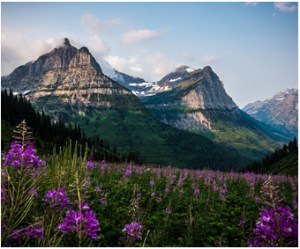
I just finished entering online comments into a Glacier National Park survey about how to do things better in managing the park. If you’ve visited Glacier recently, you know that all roads in the park are controlled by a reservation system that dictates when you can drive from one place to another. I can understand why the plan was tried, but I think it made everything worse.
I believe that the first duty of the National Park Service is to protect the land along with its flora and fauna. Overcrowded parks–such as Glacier–tell me that the NPS’ focus has gotten skewed to (1) providing unlimited access to everyone, (2) managing overcrowding rather than preventing it, and (3) Choosing recreation over the preservation of a pristine area.

I do not think the NPS should create chaos in overcrowded parks by instituting reservation systems about who can use which roads and when. This accentuates the overcrowding and ruins the visitors’ experience rather than improving it.

Since nothing else seems to work, I proposed banning private vehicles on park roads and using a shuttle service, raising prices on overcrowded parks and lowering them on underutilized parks, and not changing the roads/trails to accommodate the most invasive species (man) at the expense of the landforms and natural cycles of the area.

The first duty is protecting the land within the park. Allowing people into it is way down on the list of priorities.

–Malcolm

The nostalgia of Haynes Guides to Yellowstone

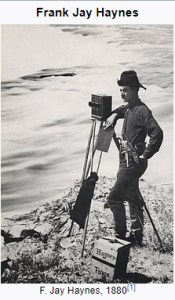
“Frank Jay Haynes (October 28, 1853 – March 10, 1921), known as F. Jay or the Professor to almost all who knew him, was a professional photographer, publisher, and entrepreneur from Minnesota who played a major role in documenting through photographs the settlement and early history of the great Northwest. He became both the official photographer of the Northern Pacific Railway and of Yellowstone National Park as well as operating early transportation concessions in the park. His photographs were widely published in articles, journals, books and turned into stereographs, and postcards in the late 19th and early 20th century.” – Wikipedia

According to Yellowstone Forever, “In 1884, Haynes opened a photography store and studio at Mammoth Hot Springs. This would be the first of numerous such photo shops to be erected throughout the park. Haynes was, for all intents and purposes, the official photographer of Yellowstone National Park for years to come. His dedication to the park and to photography was carried on by his son, Jack Ellis Haynes. Millions of photographs, postcards, guidebooks, and souvenirs later, the Haynes family came to have a great impact in bringing Yellowstone to the world.”

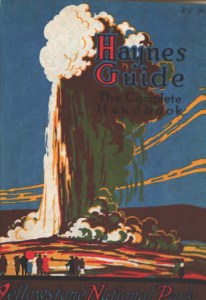
His prolific output included a yearly Haynes Guide to Yellowstone that, with the later management of his son Jack, was published up until 1966. The heavily illustrated guides included maps, points of interest, and park rules and regulations. You can find a downloadable PDF of the 1916 guide here. These guides come up for sale at online booksellers and eBay from time to time. Many of Haynes’ early popular color photographs were hand-tinted. He also found success with his stereo camera and the resulting stereographs as well as a bulky camera that produced images on 20″ x 24″ glass plate negatives that showed a great deal of detail.

The preface of the 1916 edition shows that Haynes had an extensive vision of what the guides should accomplish: “The purpose of this book is to guide the tourist on his tour of Yellowstone National Park and to make his visit pleasant and interesting. To this end, it names, describes, and pictures all the points of interest in the park and presents in concise and readable form the scientific and historical information necessary to a clear understanding of the various phenomena.”

Haynes served as the official photographer for Yellowstone National Park as well as the Northern Pacific Railway. The railroad, which served the park, had a fair amount of interest in promoting Yellowstone just as the Great Northern Railway was instrumental in the development and promotion of Montana’s Glacier National Park.
Because of his enthusiasm and enormous photographic output, Haynes was well-positioned to provide the stuff of which the park guides were based. Jeff Malcolmson, in “A Photographic Journey to Wonderland” (Montana The Magazine of Western History, Summer 2022) writes that Haynes’ “First journey into Yellowstone would define the trajectory of his career as perhaps the most prominent early photographer of the park.”

In his cutline for the portrait of Haynes, Malcomson says, “Note that he is armed with a revolver and a knife, ready to do battle with any wildlife” Personally, I don’t think either would be very effective against a charging grizzly. I’d rather have bear spray (not pepper spray).

When I was in Yellowstone in 1965, I wish I’d been aware of the guides. I would have purchased a copy of the penultimate edition even if it would be some years before I discovered what a treasure I had.

Malcolm

NPCA: 102 years old and still delivering much-needed support for the National Parks

The National Parks Conservation Association (NPCA) is the only independent, nonpartisan membership organization devoted exclusively to advocacy on behalf of the National Parks System. Its mission is “to protect and enhance America’s National Park System for present and future generations.” Founded in 1919 as the National Parks Association, the organization was designed to be a citizen’s watchdog for the National Park Service (NPS) created in 1916. Among the founders of NPA was Stephen Mather, the first director of the National Park Service — Wikipedia

I renewed my membership today as I have for more years than I can remember. No doubt there are a few gaps in my membership due to lean years, but I support the parks and the support groups that speak on the parks’ behalf. The parks are simultaneously underfunded and loved to death by massive numbers of visitors that are unsustainable.

I often wonder why more people aren’t members of NPCA. Glacier Park alone has more visitors every year and I think that if even half of those joined the NPCA, we might solve more of the problems facing the national park system.

The NPCA’s mission, as stated on its website, is “We’re protecting and enhancing America’s National Park System for present and future generations.” Since I’ve been following the problems of the parks since the 1960s, I’m rather cynical about park visitors, many of whom could probably care less about future generations as long as they got their visit checked off the bucket list before the system fell apart.

The organization has a lot on its plate. Here are the issues it tracks:

Air
Climate Change
Energy
History and Culture
Landscapes
Park Funding
Visitor Experience
Water
Wildlife

My feeling is that all of these are at risk and have been for years, long before climate change was included in NPCA’s concerns. On the NPCA’s advocacy page, there’s a simple message: “Learn about the challenges and opportunities facing national parks, then use your voice to advocate on their behalf.”

For the most part, we’re missing those voices.

Malcolm

“The Sun Singer” and “Sarabande” are set in Glacier National Park.

Bryson City, NC: First trip back in 20 years

We go to the Blue Ridge Mountains a lot and have tended to stay in and around Asheville. So it was nice to get away from it all for the last five days and return to the Smoky Mountains. Did a little hiking and sightseeing and looked at the view from our rental cabin.

Our nephew Taylor Campbell who, as usual, is concentrating on his cell phone.

My brother Barry and his wife Mary drove up from Orlando with Taylor. Long drive. Makes me feel guilty (but only slightly) for our mere three-hour trip to to Bryson City from the Georgia mountains.

When we were relaxing inside, we got out one of our typical puzzles that show patches, signs, labels, and logos:

The national parks theme seemed appropriate since we did a little hiking in the Smoky Mountains around Deep Creek.

Now we have to recover from our vacation.

Malcolm


National Parks Boast a $34 Billion Boom as Budget Cuts Loom

from the National Parks and Conservation Association

Record-visitation pumps billions into national, local economies in 2016

WASHINGTON – National park visitation generated $34.9 billion for the U.S. economy in 2016, a $2.9 billion increase from 2015, and supported 318,000 jobs, the U.S. Department of the Interior announced today. The number reflects the significant, positive economic impact national park visitors have on gateway communities, including sales, lodging and jobs, as well as the impact on the national economy as a whole.

Read the rest of the press release here.

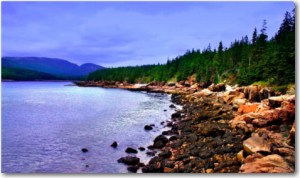
Acadia National Park in Maine. © Coleong/Dreamstime.

It’s widely known that our national parks are having infrastructure problems because funding has been so insufficient that keeping roads, bridges, structures, trails, and emergency and communications systems up to date is impossible.

Like infrastructure needs outside the park system, allocating money to roads and bridges isn’t sexy in spite of the fact that we see periodic reports about the number of bridges, dams, locks, levees and other vital transportation and safety structures and systems that are below par throughout the country.

Writing for SmartAsset in January 2016, Amelia Josephson said that, “According to the NPS, the nearly $3 billion appropriated for the NPS budget falls short of what’s needed. In May 2015 the park service said it had delayed $11.5 billion in necessary maintenance in 2014 due to budget shortfall. Although national parks charge fees, these fees are not nearly enough to fund the national park system, which is why the NPS depends so heavily on Congress’ budget appropriations.”

A small fraction of this money can be made up by friends of the parks organizations that raise money and fund discrete projects within the parks they’re associated with that would otherwise fall outside NPS’ spending. But this is like bailing a lake with a thimble. It does help, but the overall park’s system continues to fall behind.

Cheating the parks isn’t just about nature, protected areas, and outdoor recreation. It impacts the local economies as well–generally those within 60 miles of a park. As the NPCA press release notes, park visitation doesn’t simply bring money to the park, but also to gas stations, camp grounds, stores, restaurants and hotels in the surrounding area. Those who visit national parks tend to stray longer than random tourists who make brief stops at roadside attractions and less-well-known tourist destinations. Of course, park service employee salaries add to the “new money” brought into the regional economy from the park.

Cheating the parks and other public lands is cheating the future, and not just the environment on which we all depend even if we never go out and visit it. It reduces the value of the country in terms of assets and makes the ultimate loss of parks, or parts of parks, more and more likely in the future. We can pretend it isn’t happening just as many pretend there’s no such thing as global warming. That’s the head-in-the-sand approach. We can do better.

Malcolm


National Park Service Legacy Restoration Fund

The National Parks need your support, and your Representatives’ and Senators’ support of this bill before everything in the parks ends up broken, closed, offline, and dangerous due to lack of funding.

S. 751

To amend title 54, United States Code, to establish, fund, and provide for the use of amounts in a National Park Service Legacy Restoration Fund to address the maintenance backlog of the National Park Service, and for other purposes.


IN THE SENATE OF THE UNITED STATES
March 28, 2017

Mr. Warner (for himself, Mr. Portman, Mr. King, and Mr. Kaine) introduced the following bill; which was read twice and referred to the Committee on Energy and Natural Resources


A BILL

To amend title 54, United States Code, to establish, fund, and provide for the use of amounts in a National Park Service Legacy Restoration Fund to address the maintenance backlog of the National Park Service, and for other purposes.

Be it enacted by the Senate and House of Representatives of the United States of America in Congress assembled,

SECTION 1. SHORT TITLE.

This Act may be cited as the “National Park Service Legacy Act of 2017”.

SEC. 2. NATIONAL PARK SERVICE LEGACY RESTORATION FUND.

(a) In General.—Chapter 1049 of title 54, United States Code, is amended by adding at the end the following:

§ 104908. National Park Service Legacy Restoration Fund

“(a) In General.—There is established in the Treasury of the United States a fund, to be known as the ‘National Park Service Legacy Restoration Fund’ (referred to in this section as the ‘Fund’).

“(b) Deposits.—At the beginning of each applicable fiscal year, there shall be deposited in the Fund from mineral revenues due and payable to the United States that are not otherwise credited, covered, or deposited under Federal law—

“(1) $50,000,000 for each of fiscal years 2018, 2019, and 2020;

“(2) $150,000,000 for each of fiscal years 2021, 2022, and 2023;

“(3) $250,000,000 for each of fiscal years 2024, 2025, and 2026; and

“(4) $500,000,000 for each of fiscal years 2027 through 2047.

“(c) Availability Of Funds.—

“(1) IN GENERAL.—Except as provided in paragraph (2), amounts deposited in the Fund shall be available to the Service for expenditure without further appropriation.

“(2) UNOBLIGATED AMOUNTS.—Any amounts not obligated by the date that is 2 years after the date on which the amounts are first available shall be credited to miscellaneous receipts of the Treasury.

“(d) Use Of Funds.—Amounts in the Fund shall be used for the high-priority deferred maintenance needs of the Service, as determined by the Director, as follows:

“(1) 80 percent of amounts in the Fund shall be allocated for projects that are not eligible for the funding described in subparagraph (A) or (B) of paragraph (2) for the repair and rehabilitation of assets, including—

“(A) historic structures, facilities, and other historic assets;

“(B) nonhistoric assets that relate directly to visitor—

“(i) access, including making facilities accessible to visitors with disabilities;

“(ii) health and safety; and

“(iii) recreation; and

“(C) visitor facilities, water and utility systems, and employee housing.

“(2) 20 percent of amounts in the Fund shall be allocated to road, bridge, tunnel, or other transportation-related projects that may be eligible for funding made available to the Service through—

“(A) the transportation program under section 203 of title 23; or

“(B) any similar Federal land highway program administered by the Secretary of Transportation.

“(e) Prohibited Use Of Funds.—No amounts in the Fund shall be used—

“(1) for land acquisition; or

“(2) to supplant discretionary funding made available for the annually recurring facility operations and maintenance needs of the Service.

“(f) Submission Of Annual Proposal.—As part of the annual budget submission of the Service to the Committee on Appropriations of the House of Representatives and the Committee on Appropriations of the Senate (referred to in this section as the ‘Committees’), the Service shall submit a prioritized list of deferred maintenance projects proposed to be funded by amounts in the Fund during the fiscal year for which the budget submission is made.

“(g) Congressional Review.—After review of the list submitted under subsection (f), the Committees may provide for the allocation of amounts derived from the Fund.

“(h) Project Approval.—

“(1) IN GENERAL.—Except as provided in paragraph (2), if, before the beginning of a fiscal year, the Committees do not alter the allocation of funds proposed by the Service for that fiscal year, the list submitted under subsection (f) for that fiscal year shall be considered approved.

“(2) CONTINUING RESOLUTION.—If, before the beginning of a fiscal year, there is enacted a continuing resolution or resolutions for a period of—

“(A) less than or equal to 120 days, the Service shall not commit funds to any proposed high-priority deferred maintenance project until the date of enactment of a law making appropriations for the Service that is not a continuing resolution; or

“(B) more than 120 days, the list submitted under subsection (f) for that fiscal year shall be considered approved, unless otherwise provided in the continuing resolution or resolutions.

“(i) Public Donations.—To encourage public-private partnerships that will reduce the overall deferred maintenance costs to the Service, the Secretary and the Director may accept public cash or in-kind donations by including on each list submitted to Congress under subsection (f) after the date of enactment of this section each project, regardless of the priority ranking of the project, that costs—

“(1) less than $2,000,000, with at least a 33-percent non-Federal cost-share component; or

“(2) equal to or more than $2,000,000, with at least a 25-percent non-Federal cost-share component.”.

(b) Clerical Amendment.—The table of sections for chapter 1049 of title 54, United States Code, is amended by adding at the end the following:


“104908. National Park Service Legacy Restoration Fund.”.

Review: ‘Glacier Ghost Stories,’ by Karen Stevens

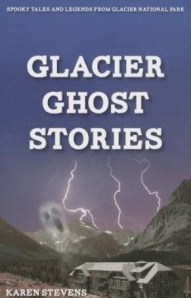
“Glacier Ghost Stories,” by Karen Stevens, Riverbend Publishing (May 7, 2013), 103 pages, trade paperback.

GlacierGhostStories2Karen Stevens (“Haunted Montana,” “More Haunted Montana”) has been collecting Montana ghost stories for thirty years and has been visiting Glacier National Park for forty years. Glacier Ghost Stories brings her passions together in a slim, but informative volume that follows her search for strange and inexplicable events at the park’s historic hotels.

Steven’s book is, in one sense, a reporter’s travelogue: she talks about her investigative trips, the weather, the accommodations, and her interviews with hotel personnel. In the process, she includes a fair amount of park history with details for each hotel: Apgar Village Inn, Belton Chalet, Glacier Park Lodge, Lake McDonald Lodge, Many Glacier Hotel, Prince of Wales Hotel and Sperry Chalet.

Glacier Park Lodge celebrated its 100th anniversary this summer. The other hotels are elders in the lodging business as well. The hotels are busy during their short summer seasons. They’re isolated from the world throughout the rest of the year. The schedule and the wild country are, it seems, the perfect recipe for legends, yarns and a long list of things that defy logical explanation.

While they don’t advertise ghosts in travel brochures, hotel managers and long-time employees had a lot to day about things that go bump in the night: people who suddenly disappear, objects that move when nobody’s looking, doors that lock by themselves, music and other sounds from unoccupied rooms, footsteps in the dark. Stevens includes the room numbers where things seem to happen. Take note of these before your next visit.

Glacier Ghost Stories includes legends about Marias Pass, Going-to-the-Sun Road, Two Medicine Valley and the Belly River. In the book’s postscript, Stevens writes that visitors to Glacier and Waterton parks “follow in the footsteps o those who came before us: Native Americans, trappers, hunters, explorers and others whose spirits even today may roam the land they loved so much in life.”

Stevens does not hear about or witness the over-the-top paranormal happenings we associate with Edgar Allan Poe and Stephen King. She did uncover enough to make us wonder and to look over our shoulders the next time we visit any of the park’s hotels. The book is an engaging portrait from a ghostly point of view.

Malcolm

Malcolm R. Campbell is the author of paranormal short stories and four contemporary fantasy novels partially set in Glacier National Park.

A Glacier Park Novel

Hotels in the National Parks – a sternly worded memo

Why we’re out there – NPS Photo

When many of today’s historic hotels in the National Parks first opened, America was a different kind of place, so people appreciated “rustic” and didn’t expect to have all the comforts of the city out in the woods because, well, if they preferred the comforts of the city they would stay in the city.

From time to time, I complain about the inconsiderate people who ruin camping experiences for everyone else by “serenading” the woods with loud music, loud TV sets, video game racket, and various other hobbies that have no place in a wilderness setting. Frankly, I’m there to get away from all that. Those who are addicted to racket can (a) wear earphones or (b) go away.

The same Internet that makes it possible for me to say a few kind words about old hotels gives others an opportunity to say nasty things about those hotels even though old buildings in a restricted environment can’t (and shouldn’t) compete with one’s favorite, modern resort. But, I can’t help but wonder why people complain about the very things they should have expected to find.

People, The Hotels are Really Old

I wonder why we can’t tolerate “rustic” these days as good sports rather than griping on line about things that are, quite frankly, to be expected in a hotel built 100 years ago in an environment that isn’t kind to structures and in a place that cannot be disturbed by the kinds of “improvements” we take for granted in big city hotels that operate year-around with full access to the best transportation, water, power, DSL and everything else anyone could possibly ask for in a hotel.

Old hotels are likely to have smaller rooms, older-style bathrooms, thinner walls, floors/ceilings that creak and groan, balcony doors and windows that might rattle in the wind, no television or hotel-wide WiFi or DSL. We used to call this kind of thing charming because going to a National Park was traditionally considered “roughing it” even if you didn’t sleep in a tent. Light sleepers can take white noise machines. WiFi addicts can: (a) find the designated WiFI areas (if any), (b) consider entering a 12-step program before staying in a historic hotel so that the lack of instant access to the world outside the park won’t be more important than enjoying what is there, (c) Go away.

When staying in a National Register listed hotel, it’s good to remember that preservation of historic structures always trumps restoration, much less renovation.  Buildings are updated to comply with codes. But updating them because people want modern bathrooms, TV sets in rooms with less insulation between rooms, and a five-star, New York City experience in a wilderness setting is not only destructive to the historic building, but down right lousy management. In the preservation business, we often talk about Paul Bunyan’s axe. If you keep using it, you have to tolerate its fragility and construction and chop accordingly; otherwise, when you replace the handle one year and replace the axe head another year, it might look like Paul Bunyan’s axe. But it isn’t. It’s now a replica and no longer a historical treasure.

You Don’t Expect Granny to Dance Like a Teenager

I don’t know, maybe fewer people are tolerating granny these days because she’s old and acts her age and cannot do this or that with the same efficiency and style as a much younger person. Yes, I know, science will probably figure out how to keep replacing granny’s parts so that one day granny will be a teenager again. Of course, she won’t be granny any more either.

Old buildings also act their age, especially when their age=history. We cannot have it both ways. If we want to stay in a historic hotel, then we need to love it for what it is rather than taking away all of its history by modernizing the original building away over time with “improvements.”

In many ways, the National Park Service is the ultimate steward of these properties, because NPS  controls what can be changed and what cannot, how the hotel must function within a pristine environment, and even how much you pay for a room. Suffice it to say, the hotels are old, expensive to maintain and difficult to operate.

We’re there for nature, not pampering; so it would be nice, I think, for some constructive reviews on sites like TripAdvisor rather than listing “faults” that really are the realities of rustic accommodations in century-old hotels.

Malcolm

For More Information

Summit Sets Course for Protecting America’s National Parks, Connecting to People

from the National Parks and Conservation Association

Historic gathering of leading national park champions shapes outline for supporting National Park Service’s mission for 2016 centennial and the century to follow

Recognizing a growing need to unite the advocates, partners and supporters of national parks in advance of the upcoming 2016 National Park Service (NPS) centennial and beyond, the most diverse group of national park leaders ever convened gathered last week in Washington, D.C. to attend America’s Summit on National Parks. The Summit was a first of its kind event established in coordination with the NPS through a partnership of the National Park Foundation (NPF), the National Parks Conservation Association (NPCA), and the National Park Hospitality Association (NPHA).

The two-day Summit, which took place January 24-26, was inspired by NPS’ recent Call to Action report [PDF download] and was designed to create unifying, clear objectives that will ensure the protection, enhancement, and support America’s iconic landmarks for centuries to come. The Summit inspired thought-provoking dialogue on some of the greatest challenges and opportunities facing national parks currently. The Summit produced a working document outlining the participants’ shared “Statement of Principles” and “Action Items” to ensure that the seeds of progress begun from the passionate and inspired conversations will take root, leading to growth, change, increased accessibility and ultimate strengthening of the national park system and national park programs. The Summit drew prominent members of Congress, Interior Secretary Ken Salazar, major political advisors and top conservation, tourism and communication leaders.

In a joint statement regarding the Summit, Tom Kiernan, president of NPCA; Neil Mulholland, president of NPF; and Derrick Crandall, counselor of NPHA said:

“Our parks need to evolve with us. The passionate leaders and advocates who attended this Summit are committed to a united vision for the national parks to thrive in the next century. We understand that appropriate funding, diverse outreach, natural resource protection and conservation, updated facilities, and adequate staff are necessary to make sure our national parks remain attractive, healthy places for people to visit and enjoy. And, though there are many challenges, we are confident that this newly unified focus, support and dedication by the park community will make these goals obtainable.”

Yosemite - Call to Action Report

Among the most notable directives coming out of the Summit were to increase outreach to youth and other diverse populations; to make units within the NPS system more representative of the diverse makeup of the nation; to use technology, such as social media, smart phone applications, video games and other electronic technologies to attract visitors and improve park experiences; to highlight healthy food and opportunities for safe, active fun during park visits; to increase public awareness of the 2016 centennial; to create an endowment to provide the NPS with secure funding for the future; to encourage supporters and lovers of national parks to become more engaged with their members of Congress and other decision makers, and to grow the base of support for national parks, particularly among the health, education and tourism communities.

Leading up to the 2016 centennial, the current stewards of our national parks will take up the gauntlet thrown by this Summit. Through their work, these original goals will be enhanced and the shared vision will become action.

For more information about the Call to Action, click here.

Malcolm

Malcolm R. Campbell is the author of three novels set in Glacier National Park, “Sarabande,” “Garden of Heaven: an Odyssey,” and “The Sun Singer.”