With all the usual hassles of moving, from building a new house on the family farm to selling the old house on the other side of the state, I had little time to think about how strange it is to be back in Rome, GA.
I lived in Rome between 1978 and 1980 while teaching journalism courses at Berry College. I met my wife in Rome, and when we left in 1980 to seek our fortune in Atlanta 86 miles to the south, we thought the Rome phase of our lives was over.
We came back to the area to visit my wife’s family as well as friends we met at Berry College. The town was slowly changing–a revitalized downtown, new malls, new streets, and more people.
So, now we’re back after living in Atlanta suburbs farther and farther out from the city itself. We ended up in a small town of less than 10,000 people 50+ miles northeast of Atlanta for eleven years before moving here.
We saw the move as economically beneficial as well as forward looking. The farm is a much better environment than our subdivision of look-alike houses ruled by a homeowners association.
Nonetheless, the move also feels sort of like going home, or maybe going back in time, or maybe as tourists visiting a place where all the people we once knew have moved on. The farm has stayed more or less the same during all these years, though sad to say, both of my wife’s parents have passed away.
The city is both alien and familiar. This will take some getting used to. So will the traffic–not out where we live–when we drive into town to bury groceries, get stuff from Home Depot, or buy gardening supplies from the nursery.
Ford Buildings at Berry College
Berry College has grown since I worked there, adding new buildings and new programs. I get lost driving around the campus. None of the faculty, staff and students whom I once knew are there any more. The faculty house I lived in on campus is gone, destroyed by a fallen tree several years ago during a tornado. I feel like a ghost from another century (literally and figuratively) whenever I go there.
I think we’re getting settled in to the new house. We’ve repaired one of the falling-down out-buildings, put in new trees and shrubs, set up two, raised-bed gardens–even the cats are used to the new house.
I’m not yet settled in to Rome, though. It’s a pretty nice town, but I keep seeing it as it was and wondering just what kind of destiny brought me back to a place I once said goodbye to.
If only I could write a short story or novel about all this, I might figure it out.
–Malcolm
Malcolm R. Campbell is the author of “Conjure Woman’s Cat” which can be purchased today and tomorrow for Kindle for only 99 cents.
That old smokehouse been fallin’ down, Yes, that old smokehouse’s fallin’ down, Seen wind and rain, babies born, babies grown, Seen cotton, corn, and okra sown, While roof and siding been fallin’ down.
When my wife and I had a house built on the site of her family’s original homestead, she became the 5th generation to live on property that’s been in the family since the 1880s. We moved here in January and found the site none the worse for wear for all the trucks, people, dumpster and piles of building materials that have been coming and going since last June.
We told the builder not to run over, back into, damage, knock down or even dent the old tractor garage, well house, and smokehouse. Along with the property’s one hundred year old trees, these remaining outbuildings represented the land’s history and the continuity of family over the years.
Several years ago, a tornado tore out one of the more ancient trees and, in the process, damaged the well house roof and the smokehouse. Now they have been repaired. We’re trying to stabilize everything old and restore a sense of “home” to this patch of ground, and that includes the two rose bushes we planted where my wife’s grandmother once had two rose bushes, and keeping watch over day lilies that bloomed this spring after spreading while people came and went.
Here are two BEFORE pictures:
Here are the two AFTER pictures showing the new door, two new corner posts, new siding and a new roof:
Moving to this place has been–and continues to be–an adventure. We need more trees and shrubs in the yard, some fencing, a closer look at the well to see if we can get water from it again, and we need to finish unpacking things inside the house.
But today, that old smokehouse no longer has the blues.
I’ve been going to FSU games since I was a kid. First, as a high school student selling peanuts and Cokes at the stadium and then as an FSU student. So, I’m happy to see the Seminoles are in the playoffs after winning 29 straight games through two consecutive seasons and winning their third ACC Championship in a row.
More of a baseball person, I seldom watch football unless there’s an FSU game on TV. And, as (apparently) an out-date-viewer, I dislike the idea of having a formal college playoff system. But, if we have to have playoffs, it’s good to be there.
As for Oregon, they had a heck of a year. Nice to see in the playoffs. My father taught at the University of Oregon for several years and I still have snowy wintertime memories of Eugene. Plus, one of my brothers lives in Oregon and the other one used to live there.
FSU doesn’t have the dominant team they had last year, so heaven only knows how the Oregon game will end up. We’re probably going in as the underdog in spite of our record. (Too many close calls this year.)
Nonetheless, my prediction is FSU 65, Oregon 56. You heard it here first and probably won’t hear it anywhere else.
UPDATE: Obviously, the game was a mess for those who follow FSU. Frankly, I would have put in the backup quarterback in the third quarter to show Oregon something different for a series of downs or so and to give Winston time to calm down.
If you’re a writer, you know this already: sometimes one has to stop writing and clean up the house.
This summer, my wife and I have been more ambitious than cleaning up, though goodness knows we let that slide for way too long.
The first word of the summer is downsizing. That means getting rid of stuff we’ve been saving for years and really don’t need. Some of the stuff never came out of the boxes from the day we moved into this house in 2002. I guess if we didn’t open it in 12 years, chances are we don’t need it.
And all those extra books. Fifteen boxes were donated to the library for their annual sale. I feel better about that than putting them in the trash.
When the House Settles, Get Out Your Spackle and Caulk
Spackle has gone up on cracks that showed up as the house settled. New molding has gone down where (more house settling) created a gap between the original molding and the linoleum. The carpets were washed last night with our spray-and-vac, and look much better this morning.
I can’t count how many tubes of caulk we’ve gone through, how many sponges, paper towels, and brushes that have been used up, or how many times the ladder has come in front the garage. (Don’t ask about the garage yet, though it’s gotten better.)
You can probably say, “been there, done that, got the tee shirt.” It’s amazing how little time it takes for a new house or a new car to lose that “new” look and get to the point where washing things as often as you did on the first day loses its appeal.
While cleaning and fixing, I’ve been thinking of the next ghost story. I wish I could say that some Disney Elves or friendly spirits had stopped by to help out. Now THAT would be a story!
Today my hands smell like bleach. Yesterday they smelled like Windex. Tomorrow, maybe my hands–along with the house–will smell clean and look neat.
I hope you’re having a productive weekend as well.
Our large calico cat named Katy is, in her estimation, queen of the household, ruling the other two cats.
She spends a lot of the day squeezed in behind me on my large swivel desk chair.
A week or so ago, my wife had a roller pan filled with blue paint for a hallway touch-up project. Katy participated in this project by jumping into the paint and then running throughout the house on the light-colored carpet.
Clean-up consisted of applying many cleaners, potions, traditional spot removers and elbow grease to the blue cat prints that adorned the hall and living room.
The noisier part of clean-up, that included my getting scratched up and listening to howling, consisted of scrubbing the blue paint off her feet in the sink before she licked it off and got sick.
Time went by until a night ago when she either had one heck of a hairball, was finally reacting to the paint she got too before we did, or somehow got into one of the other fix-up the house products such as the spackle. (She seemed more interested in the spackle than necessary.)
She is the hairball queen, but after a little too much throwing up and a refusal to east, we filled her mouth with the gooey anti-hairball product we call gat goop. Katy doesn’t like cat goop and resents people prying open her mouth and putting dollops in there in such a way that she can spit them back out.
The paint looked worse on the carpet than it does in this quick photo
She did in the dark afterwards behind a rocker after that, always a sign that a cat is either spooked or sick. She was still hiding the next day and turned up her nose at food. I kept checking on her until 3:30 a.m., after which my wife checked on her. A hairball is one thing, a blockage or something acting on her like a poison is another. Can’t ignore that and hope for the best for long.
Finally, yesterday, she at a little food again, became responsive instead of zoned out, and sat in my lap while we were watching “Master Chef.” (Anything to do with food or that can be turned into food gets her attention.) Today, she’s squeezed in behind me again in my desk chair.
It’s nice to see her back to her old self even though she’s also back to trying to hog food and tell the other two cats (as well as us) what to do.
–Malcolm
With three cats in the house, and many before them, I’ve had plenty of models for writing my novella in progress called “Conjure Woman’s Cat.”
“I set the date for the Singularity—representing a profound and disruptive transformation in human capability—as 2045. The nonbiological intelligence created in that year will be one billion times more powerful than all human intelligence today.” – Ray Kurzweil
“The future always comes too fast and in the wrong order.” Alvin Toffler, in “Future Shock”
Kurzweil (“The Age of Spiritual Machines”) says in his book “The Singularity is Near” that humans will will soon transcend the “limitations” (as he sees them) of our biology. One can imagine, perhaps, a star child like we saw in 2001: A Space Odyssey or, in a more mechanical sense, bionic men and women who surpass the skills of Lee Majors in The Six Million Dollar Man Lindsay Wagner in The Bionic Woman.
In his book Critical Path, Buckminster Fuller discussed the “Knowledge Doubling Curve” and, as we see, the more we know, the faster we know more. It was said that up to 1900, the total of human knowledge doubled every century and that by World War II it doubled every 25 years. Now, estimates depend on the field one’s talking about, but it appears that on average, our knowledge doubles every thirteen months.
Back in the early days of Star Trek, the crew of the Enterprise occasionally encountered beings who were so “advanced” that they were pure thought, often depicted as pulsating clouds of light. I wonder if this is what we will become.
People from various walks of life often say that today’s youth knows a lot less about science, geography, history, literature and culture than the youth of earlier generations. Some people blame our consumer culture (along with TV and the Internet) for pulling people away from the once-championed liberal arts education into a homogenized world of things–having the latest things that everyone else is having or trying to have.
Others blame video games as early suspects in pulling people away from anything requiring contemplation into short-attention span, high-energy moments. More and more people seem to have less and less patience for anything that takes time to read, to learn, to understand, or to acquire.
Or, perhaps we are not keeping up with the expansion of knowledge, so we find comfort in focusing our shattered attention spans of things of the moment. The thing breeds on itself: we not only have no memory of what happened 25 years ago (our brains won’t hold it or don’t care about it), but it becomes–in the eyes of our peers–a serious defect of character to know about such things.
Alvin Toffler wroter Future Shock in 1970. I want to ask: “Are we there yet?” Too much information too fast, he said, leaves people overwhelmed and with feelings of being disconnected. Perhaps this makes it easy to focus on the trivial of the now rather than on the long-term of either yesterday or tomorrow.
I am not a futurist, so I have no philosophy about where mankind is headed, for better or worse. What I see as I write stories set 15-25-50 years in the past, is seemingly a growing list of things people know less and less about. I’m not talking about the more-trivial things such as today’s youth not immediately knowing what a 45 rpm record was or kids asking their parents why the sound on a land-line phone is called a dial tone even though the phone has no dial on it.
As a novelist, I am more interested in the culture, religion, and prevailing points of view as they were during the times when my novels are set. I lived during those times, but I have a bad memory for details–I should have kept a journal, I suppose, but it hardly would have had the space to define everything that was common knowledge at the time.
According to David Russell Schilling, humankind’s total amount of knowledge will soon double every twelve hours. Depending on a person’s focus, they can be happy about many advancements that make life better and/or easier than it was X years ago. Change is a constant in the universe, as the I Ching tells us. If knowledge is a tidal wave, how–I wonder–does any individual keep up? Do we find niche areas and learn everything we can about them? Do we rely on our ability to find information (as needed) rather than on our ability to remember vast stores of facts? Or, do we resign ourselves to becoming like the BORG in Star Trek, a society in which individuals are basically mindless drones doing chores as part of an electronic or telepathically linked collective?
I have no answers for such questions. And, I’m not even sure that becoming pulsating clouds of thought is necessary bad. What I personally miss is the idea that we are, in many ways, like flowers being cut off from their roots and stems. If we are, so to speak, drone-like entities who are only interested in the moment, then we have lost our history, our culture, our rites of passage, our metaphysics and, from this writer’s point of view, almost every thing else that makes us human.
Perhaps all that is passe. Maybe all that binds to ancient concerns like a rope holding an ship to a pier. I don’t think so, but then–as I consider the speed of advancing knowledge and how impossible it appears to keep up–I have to say that I really don’t know enough to know what it’s bad for me to know. For now, though, I think the speed of advancing knowledge has the potential for decreasing the value of the individual and the value each individual places on the welfare of every other individual.
Such ponderings are, perhaps, one of the reasons I write fantasy. My writing allows me to focus on imaginary worlds that I (as the author) know everything about all the time.
When we see stories on the news, most recently including the disappearance of the Malaysian passenger plane, the Fort Hood Shooting, the landslide in Washington State, and the stabbings at the Murrysville, Pennsylvania school, our first reactions most likely include horror, shock and compassion.
Then we start asking “why?” Fixing blame on somebody or something is probably a natural human reaction; it’s certainly a part of criminal and civil law.
But the “why” goes further than that. Whether we’re logical in our thinking or inclined, as writers are, to ask “what if?” the “why” behind major news stories creates order out of chaos while solving the puzzles events present to us.
When I worked at a police training institute some years ago, a typical test question for those in accident investigation courses showed the placement of vehicles on a highway after an accident. We often included details about weather, time of day, damage to the vehicles, and the length of the skid marks (if any) and asked students what kind of accident would lead to the vehicles ending up where they are. Eye witness testimony being unreliable and drivers having reasons to skew their own comments, the police often have to use turn their skills into a time machine to figure out what really happened.
The Nature of News
Traditionally, reporters try to answer the standard who, what, when, why, where and how. While 24-hour news channels love gathering panels of experts together to speculate on what might have happened before we know what actually did happen, many of us–in our own ways–ponder events that (apparently) don’t make sense.
We ask why would anyone for any reason go into a school or a military base and start killing people? Or, why were people living in an area where there was a risk of a landslide? And how could a plane seemingly vanish without a trace?
Of course, conspiracy theories seem to excite people, so–as one might expect–those reporting on the search for the Boeing 777 that apparently crashed into the Indian Ocean without a trace have heard quite a list of theories. Maybe it’s part of our nature to say that when things aren’t what they seem, something really strange happened.
I must admit that, after hearing how only a skilled pilot could fly an aircraft the way Flight 370 appears to have been flown, I wondered what sense it makes to go to all that trouble to avoid detection only to ditch the plane in the ocean. What kind of mindset would cause somebody to do that. Initially, it made more sense ot me that the plane had been skillfully flown and had landed in a hostile country that would cover up the whole thing. Maybe the CIA did it or a disgruntled pilot. But carefully crashing into the ocean in a way that creates a mystery makes no sense to me.
Others focus on the Fort Hood shooting and ask what kind of person, whether unstable, discounted by others, or angry would see a “solution” to their problems in the killing of a large number of people?
Fiction
Even if you love the movie and the book, you don’t want to live it.
As writers, we ask “what if?” questions like this all the time because we’re looking for plots that keep people turning pages until the final scene. It’s our nature to provide multiple probable solutions and then work the story down to the only one that makes sense (and is possible) once everything becomes known.
In novels and short stories, we don’t want the reader to know “why” early on in the story because then s/he will stop reading. In “real life,” we want answers ASAP if not sooner. That which makes for good fiction often creates chaos, anguish and lack of closure when we’re living through it.
Ultimately, we want stuff to make sense. Until it does, we feel rather unsettled about it. What we crave in our reading, we deplore in our lives. Most of us don’t want to feel like we’re in our favorite novels when we’re watching the news or coping with accidents and other tragedies in our own neighborhoods.
As a journalist, I ask “why?” As a novelist, I ask “what if?” There are days when I feel like I’m wearing two hats.
Most of us don’t like hiking in the rain. Last September, my brother and I got caught in a very cold Glacier Park thunderstorm near Mt. Gould. Before we got back, we had also been pelted with hail. Without umbrellas, we were drenched.
Fortunately, we found a warm fire in the hotel fireplace after the hike
When my brother and I, along with our wives and a spirited nephew hiked in light rain at Tallulah Gorge in the Georgia mountains last week, we carried umbrellas. We weren’t as cold as we were in Glacier. And we weren’t hiking in a hurry because–unlike the Glacier hike–it was raining when we started.
Everything was fresh and the scents of wet rocks, wet earth and wet leaves were a far better than anything thing you can buy in an aerosol can at the grocery store. When we were kids, we walked and rode our bikes in the rain on purpose. Whether it was our feet or our wheels, we splashed through the biggest puddles we could find.
We avoided the puddles at Tallulah. Nonetheless, I enjoyed the freshly washed woods. It reminded me of childhood walks.
It reminded me of how much we miss by purposely setting up most of our hikes under sunny skies. Within moderation, there’s much to be said for night, wind, rain and snow.
So-called “bad weather” is a face of nature we miss by staying inside.
–Malcolm
Malcolm R. Campbell is the author of the of “Conjure Woman’s Cat,” available as an audiobook (shown here), paperback, and e-book.
This morning, I reached into one of the many boxes of old National Geographic Magazine’s storied in the garage and scooped out four issues at random, two from 1961 and one each from 1962 and 1964.
These will probably be thrown out as part of my getting rid of old stuff project. Looking online for the December 1961 issue, I see it for sale on Amazon at $4.00 and on eBay at $34.99. What a price range!
I doubt that neither copy will sell. I’ve never had much luck selling old magazines. Time was, they were seemingly more valuable if you cut them apart and sold the pages with the advertisements.
Funny how a Great Northern Railway ad would sell quickly on eBay but if the same ad (along with other vintage examples) were offered as part of a complete issue, it was a harder sell.
The only copies I’m saving are those that are especially historic—some early space exploration issues, a John F. Kennedy tribute issue, and the issues that came out during the birth months and years of people in the family. I’m also saving some ads, mostly those having to do with train travel. Or, a few that are simply “strange” by today’s standards.
The December 1961 issue includes articles about “Life in Walled-Off West Berlin,” “Canada, My Country,” and “Australia’s Amazing Bowerbirds.” The West Berlin article includes a map of the city, now from almost another time and another place ever since the Berlin Wall came down. But as Russia rushed to annex Crimea, I’m reminded of those cold war days. When I saw Berlin, there was a wall there. That shows how long it’s been since I was there.
A Look at London
You can tell at a glance that the June 1961 issue includes an article about London. When I originally read the article about the city’s “Storied Square Mile,” I didn’t know I would see it six years later. The article includes a fold out map along with photographs of people, places, pomp and pageantry.
When this issue came in the mail, you could also read about the FBI, Thailand, rose aphids and whaling.
There’s also a cute ad of a boy leaving his house with a red wagon filled with all his stuff for Bank of America Travelers Cheques. I used to carry these years ago, but in time I got fed up with explaining to stores and hotels with clerks who said “we don’t take checks” that these aren’t the same as the potentially bad checks torn out of a check book. You’d think people in resort towns would know that.
They probably still don’t know it.
The Holy Land and New Guinea
The December 1961 issue contains multiple articles about the Middle East. My father, who did some media consulting in the area in the mid-1950s probably liked the memories stirred up by this issue. If I had ever been there, I might be tempted to save this issue, though for what purpose, I’m not sure. I’m sure I still have this copy because my father saved it as part of his collection.
I haven’t been to New Guinea (or even the Canyon Lands of Utah), so the May 1962 issue isn’t tempting. It does have a space-aficionado article called “Telephone a Star: the Story of Communications Satellites.”
The article includes a picture of Telestar that would be launched that June. Teletar 2 would be launched the following year. At the time, this was BIG NEWS. Now, there are over a thousand operational satellites in orbit. The news media hardly even mention the launches any more.
They were still in orbit, though nonfunctional, as of last year. Big news at the time, there was even a hit song about it that reached number one on the Billboard Hot 100 list. It was a catchy song then, but I doubt it would get much play today–unless you’re walking (or flying) down memory lane.
Memory Lane or Ancient History?
If you were there, going through a stack of National Geographic Magazines that came out during your lifetime is a trip down memory lane. I remember the events, the products and the global issues. Otherwise, this is all “ancient” history. Most of the stuff that ended up in these magazines probably isn’t on the RADAR in a high school history class. Perhaps the Berlin Wall will flit by in a footnote to the paragraph about Cold War–assuming the Cold War is even in the course. In a college’s “Recent U.S.” history course, perhaps the Cold War itself will make it into the course for a one-hour lecture. When Russia marched into the Crimea, a lot of people who didn’t know what the Cold War was started doing a lot of Google searches about it.
I saved these magazines, along with copies of noteworthy issues of Life, Look, Newsweek and the Saturday Evening Post because I though they would be important as keepsakes, as windows on the world as it was, and possibly (like old books) as antiques that might be worth money some day. The memories are wonderful, but I can no longer afford the space all these boxes take up. Plus, they’re heavy to move around.
Perhaps they’ll have monetary value in another hundred years–like original photographs of the Civil War have now–but not being a rich person with a Downton Abbey sized house, I don’t have the space for that kind of collecting. And, I doubt my daughter wants to see a U-Haul truck arrive with a garage full of dusty old magazines arrive. She’s been to the Middle East, but I think she’ll always prefer her own pictures to those in the January 1964 issue of National Geographic.
Plus, I’m one of many millions of people who seem to have saved these magazines with the idea in mind that one day they would be rare.
Writers often bemoan that fact that their days are fractured like a puzzle just out of the box because they need (want, are addicted) to checking online news, Facebook, Twitter, LinkedIn, Pinterest, Goodle+ and a variety of apps, newsletters and news sites multiple times a day.
I’m not sure writers are unique. Some people are so addicted to the grid that they can’t sit and have a conversation on what (we hoped would be) a quiet evening over dinner without constantly checking e-mail and/or answering every incoming cell phone call. It (this “need” to stay plugged into the grid as though we’re part of the BORG on Star Trek) is part of today’s world.
The need isn’t new. Twenty years ago we were asking why people went camping or hiking and had to take their portable TV sets and boomboxes with them (“serenading”) everyone else in the campground. This past summer while hiking in Glacier National Park, I saw more than half the other hikers had their earphones in for music rather than giving themselves an hour or so for experiencing the natural sounds from wind to water falls to birds. No doubt, they would also miss the warning growl of a grizzly hear on the trail as well.
As a writer, I feel the need to keep up (in case Hollywood calls with a movie deal, I guess) and if I’m not careful, I feel over-informed and maxed out by the day’s constant flow of largely extraneous input.
Perhaps we need to devise our own 12-step programs for spending less time plugged into everything else. An hour here and an hour there might get us used to being comfortable with bird songs, silence and the usually drowned out voice of our inner selves. An Internet and cell phone diet, perhaps, for enjoying the writing we’re doing, the books left to be read, or the sound of the wind through the pines.
In time, perhaps we’ll be comfortable with ourselves again.
Malcolm R. Campbell is the author of novels and short stories that take both protagonists and readers away from it all, including “Emily’s Stories” and “The Seeker.”
 I lived in Rome between 1978 and 1980 while teaching journalism courses at Berry College. I met my wife in Rome, and when we left in 1980 to seek our fortune in Atlanta 86 miles to the south, we thought the Rome phase of our lives was over.
 Malcolm R. Campbell is the author of “Conjure Woman’s Cat” which can be purchased today and tomorrow for Kindle for only 99 cents.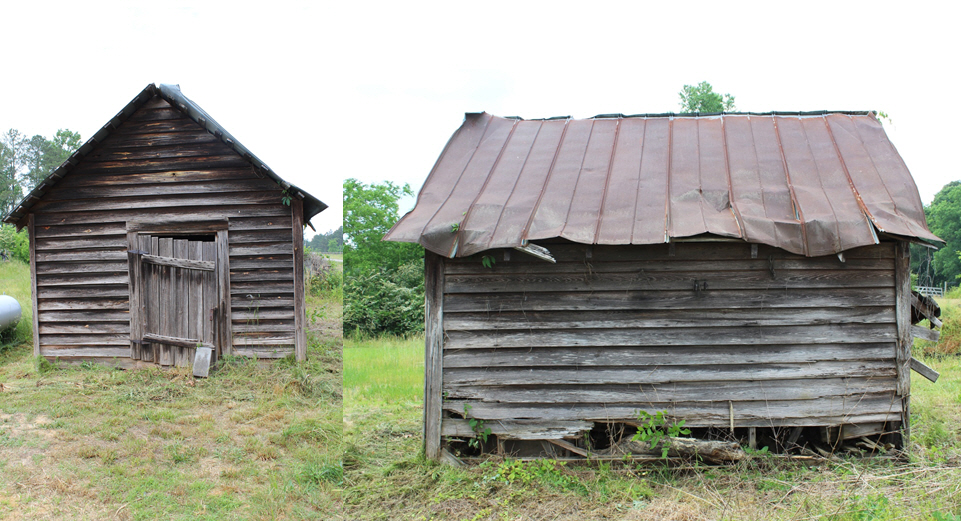




 Malcolm's Round Table