I look forward to my yearly calendars from the Montana Historical Society that come as part of my membership. They are filled with western scenes from the society’s photographic collection. Calendars are 8.5 x 11 inches and feature black and white photography.
The front of the 2012 calendar features a historic photo of Mt. Wilbur and Swiftcurrent Lake from Glacier National Park. If you love western history, you can join the MHS by calling 406-444-2918 or heading out to their website at www.montanahistoricalsociety.0rg. Memberships are $55 per year and include a subscription to the quarterly Montana The Magazine of Western History. Or, you can buy the calendar alone for $8.50, order from the museum store.
Maybe the 2012 calendar will inspire me to get started on my next novel set in Glacier National Park. Maybe it will inspire you to think of wild places in the Rocky Mountains.
–
Ledger Art by Curly, Crow - MHS
New Museum Exhibits: Two exhibits open tonight (December 1, 2011) from 6-8 p.m. at the Montana Historical Society’s museum at 225 North Roberts in Helena, The Art of Story Telling: Plains Indian Perspectives and Mapping Montana: Two Centuries of Cartography. Wish I could be there.
The drawing pictured here is an example of “ledger art,” a transitional approach to recording stories and events by plains Indian nations between 1860 and 1900 as artists switched from the traditional paints and hides to ledger paper with crayon, colored pencils and water colors. The new exhibit will include the Walter Bone Shirt ledger book, on loan to the society.
According to the Plains Indian Ledger art Project, “Changes in the content of pictographic art, the rapid adjustment of Plains artists to the relatively small size of a sheet of ledger paper, and the wealth of detail possible with new coloring materials, marks Plains ledger drawings as a new form of Native American art.” For more information about ledger art, click here.
I recently received a letter from the Montana Historical Society reminding me that my membership renewal date was coming up in June. I’ve been a member for over twenty years, and though I’ve never once set foot inside the Society’s museum and library at 225 N. Roberts Street in Helena, I was happy to renew.
By far, the best magazine that arrives in my mailbox four times a year is the Society’s award-winning, thoroughly researched Montana the Magazine of Western History. As it celebrates its 60th year, the magazine recently one another national award, the Westerners International Coke Wood Award for Monographs and Articles. The magazine has a free, searchable index on the Society’s web site.
In his renewal letter, Mike Cooney, the MHS interim director, noted that the society “provides free public access to over 50,000 books, 455,000 historical monographs, 8,000 maps, 2000 oral history reviews and more. Our education and outreach program has grown, reaching over 5,000 students from over 53 communities and thousands of adults throughout Montana.”
In addition to Montana the Magazine of Western History, MHS also helps members who live outside the state. Using my member’s research question benefit, I had historical questions tracked down and answered for my novels The Sun Singerand Garden of Heaven: an Odysseyand for my article “Bears, Where They Fought,” about Glacier National Park’s Swiftcurrent Valley that appears in Vanilla Heart Publishing’s Nature’s Gifts Anthology.
The Society’s professional, yet accessible approach, to Montana History was recently validated by its re-accreditation by the American Association of Museums (AAM). Re-accreditation is an intensive, two-year process that occurs every 15 years. According to the MHS newsletter Society Star, “There are an estimated 17,500 museums in the nation and only 777 are currently accredited by the AAM.” As a former museum manager and a museum grant writer, I know just how difficult and exacting the AAM standards are.
While AAM standards are designed to fit a wide variety of museums and collections, all museums must successfuly answer two core questions:
How well does the museum achieve its stated mission and goals?
How well does the museum’s performance meet standards and best practices, as they are generally understood in the field, appropriate to its circumstances?
The success of the MHS and its research, collections policy, artifacts conservatorship, programs, publications, historic properties and its National Register sign program are a dynamic testament to just how well the Society continues to answer those core questions.
As for me, I’ve saved every issue of the magazine since my membership began: for Montana, they are gospel.
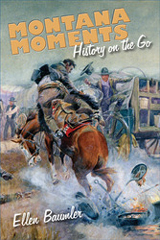
If you love Montana or simply enjoy humorous and shocking vignettes about the old west, Montana Historical Society historian Ellen Baumler has an easy-reading book for you.
Montana Moments: History on the Go, released last fall, is packed with the stuff of legend from strange epitaphs to bizarre happenings to comedic are-you-kidding-me yarns.
Harry Fritz of the University of Montana puts it this way: “The pages of ‘Montana Moments’ overflow with historical vignettes that cover nearly everything important that’s happened in Montana’s history. Newcomers will find an excellent introduction to what makes Montana tick, while Baumler’s careful research and entertaining writing style will delight old-timers.”
Do you know about the madams, villains and critters? Do you know who wrote the state song? Have you seen the monster lurking in Flathead Lake?
Click on the link above to buy the book from the Montana Historical Society in support of its work. Or, check out the book on Amazon.
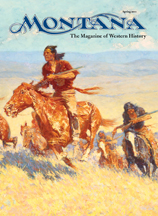
Readers, tourists, hikers, and climbers who are fans of Glacier National Park will enjoy the Summer 2010 centennial issue of Montana: The Magazine of Western History beginning with the John Fery painting on the cover.
The issue not only contains a great overview of the park, but includes dozens of photographs and paintings in support of the text. Read it for the information, then keep it as a collector’s item.
Here’s what you’ll find inside:
“Conceiving Nature: THE CREATION OF MONTANA’S GLACIER NATIONAL PARK” by Andrew C. Harper
“Where the Prairie Ends and the Sky Begins: MAYNARD DIXON IN MONTANA” by Donald J. Hagerty
“Glacier National Park: PEOPLE, A PLAYGROUND, AND A PARK” by
Jennifer Bottomly-O’ looney and Deirdre Shaw
“The Miraculous Survival of the Art of Glacier National Park” by Hipólito Rafael Chacón
Cover Art: “The iconic mountain goat on the front cover is a detail from a painting by John Fery, one of the park’s foremost painters. Fery made it the centerpiece of his untitled collage of Glacier views (n.d., oil on canvas, 65″ x 115″) commissioned by the Great Northern Railway.”
Congratulations to the editors, writers and photographers on a wonderful commemorative issue.
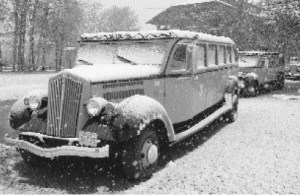
Glacier National Park’s fleet of 33 buses might just be the oldest working fleet of passenger vehicles in the world. Built by the White Motor Company between 1936 and 1938, each 15-passenger, convertible bus with a rollback canvas top has an estimated 600,000 miles on it. And each one has always been painted bright red, to match the berries of the Mountain Ash.
Sun Road - 1939 GNRR Brochure
The Cleveland, Ohio company that built them—once a leading maker of trucks and buses that began as a subsidiary of the White Sewing Machine Company—was purchased by Volvo in 1987. The similar White Motor Company buses that once ran in other national parks have long since been retired.
The noisy manual transmissions responsible for the bus drivers’ nickname “gear jammers” were replaced with automatic transmissions in 1989. The buses themselves were almost lost during the summer of 1999 when developing cracks in the chassis were discovered.
Author Ray Djuff wrote in a 1999 issue of the Glacier Park Foundation’s Inside Trail newsletter that “an expert on White Motor Company vehicles stated recently that, but for an unfortunate retrofitting project in 1989, Glacier’s reds might have run without major problems for another 60 years.” The power steering added when the transmissions were replaced created stresses on the vehicles’ frames.
Since repairing the fleet didn’t appear financially viable, the Glacier Park, Inc. transportation company, once a subsidiary of the Great Northern Railway, told the National Park Service that the buses should be retired. But the pubic saw it differently
After all, when “The Reds” were introduced, they became the most popular way to experience Sun Road or to travel the Chief Mountain Highway from Many Glacier Hotel on the east side of the park up to the Prince of Wales Hotel in Canada’s Waterton Lakes National Park. “Everyone rode them—including Clark Gable, Carol Lombard, William Randolph Hearst, and, more recently, then-Vice President George H. Bush, the Queen of the Netherlands, and Robin Williams,” wrote Amy B, Vanderbilt in On the Road Again: Glacier National Park’s Red Buses. “The Reds provided a memorable experience to every visitor and a reminder of when adventure.”
Designed by Count Alexis de Sakhoffsky, a famous industrial stylist and advocate of streamlining styles, the buses represented the park’s golden age when visitors arrived on the Great Northern Railway’s Empire Builder and Oriental Limited. The visitors were lured by western myths and a See-America-First advertising campaign that used some of the best writers and artists in the country. In 1999, the majority of the 7,000 comments received during the park’s General Management Plan review wanted the National Park Service to keep Glacier the way it was—including the historic buses.
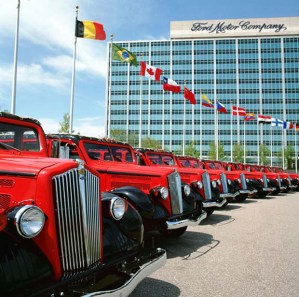
Refurbished Buses at FordAn endowment was created through the contributions of park concessionaire Glacier Park, Inc, the Glacier Park Foundation and the Ford Motor Company to inspect and evaluate the fleet for prospective restoration. Ford was seriously interested in the project. The rehabilitation solution included a lengthened Ford F450 chassis, a 5.4L V8 bi-fuel power-train, and upgraded flooring, insulation, doors, wiring and instrument panel.
According to Vanderbilt, “The Red Bus project took more than 2 years and a team of over 200 experts from over six different organizations to make the dream of returning the historic Red Buses a reality. Ford completely renovated the Red Buses using new technology and its extensive expertise in alternative fuels. While preserving the exterior of the buses along with their historic charm, Ford used alternative fuel technologies to change the engine and drive-train, making them cleaner and quieter than the originals.” The buses now run on either gasoline or propane.
In the world of restoration, one might say that the buses are rather like the standard example of “Paul Bunyan’s Axe.” The handle is replaced, then the head is replaced, then later another handle is needed. Are these Reds the same buses the White Motor Company built in the 1930s? Yes and no. Even without the old symphony of whirring and squalling gears, the essential ambiance of the riding experience remained in 2002.
Sure, the bus drivers no longer jammed the gears as they double-clutched their ancient horses up over Logan Pass. But they were the once again the knights of the mountain roads who spun tall tales along the backbone of the world with the mysterious daring-do deportment of all minstrels who know how to enchant and steal hearts.
When the buses came back from their rehabilitation at Ford in June, 2002, the mountain gods chased the celebration inside with a heavy snow storm. It was a good sign.
Snowy Celebration - NPS Photo
–
Copyright (c) 2010 by Malcolm R. Campbell, author of “The Sun Singer,” a mythic novel set in Glacier National Park
Here’s a sample Preservation Month proclamation shown on the web site for the National Trust of Historic Preservation. The hope is that cities, counties and states will sign this proclamation and use it as a basis for publicity based on the 2009 theme: THIS PLACE MATTERS.
Preservation Month Proclamation
Use the following proclamation template to announce National Preservation Month in your community.
WHEREAS, historic preservation is an effective tool for managing growth, revitalizing neighborhoods, fostering local pride and maintaining community character while enhancing livability; and
WHEREAS, historic preservation is relevant for communities across the nation, both urban and rural, and for Americans of all ages, all walks of life and all ethnic backgrounds; and
WHEREAS, it is important to celebrate the role of history in our lives and the contributions made by dedicated individuals in helping to preserve the tangible aspects of the heritage that has shaped us as a people; and
WHEREAS, “This Place Matters” is the theme for National Preservation Month 2009, cosponsored by [name of organization in your state or city] and the National Trust for Historic Preservation
NOW, THEREFORE, I, [governor of your state, mayor of your city], do proclaim May 2009 as National Preservation Month, and call upon the people of [your state or city] to join their fellow citizens across the United States in recognizing and participating in this special observance.
Check here sample programs and ideas for
celebrating the month in your city.
One popular idea is downloading a THIS PLACE MATTERS sign, taking a picture of yourself or your friends in front of a historic structure or area, and then e-mailing the photo to the National Trust. Photographs will be displayed and sites will be posted on a Google map.
Other ideas include tours of historic areas, historic area cleanup, galvanizing the community to save a threatened structure, holding preservation seminars with repair and maintenance ideas for the owners of old homes and businesses, conducting scavenger hunts of various kinds.
In my city last year, we took photographs of small sections of prominent architectural features on historic buildings and put these in a brochure. The object was to identify as many of the buildings as possible based on the snippets in the brochure. Those with the most answers right were eligible for a drawing, the winner to receive a free dinner. Projects like this help draw attention to a town’s older buildings and emphasize that saving is better than tearing town and building new.
 I look forward to my yearly calendars from the Montana Historical Society that come as part of my membership. They are filled with western scenes from the society’s photographic collection. Calendars are 8.5 x 11 inches and feature black and white photography.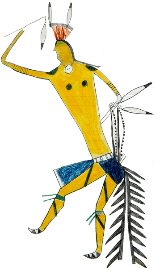





 Copyright (c) 2010 by Malcolm R. Campbell, author of
  Malcolm's Round Table