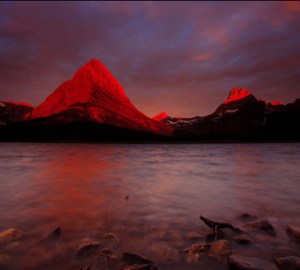
Glacier Park: Proposed Fish Passage Barrier

from NPS Glacier National Park:

akokalaWEST GLACIER, MONT. – Public comments are encouraged on a recently completed environmental assessment for a proposed fish passage barrier downstream of Akokala Lake in the North Fork District of Glacier National Park. Comments are due by July 7, 2014. The Akokala Creek Fish Passage Barrier Environmental Assessment is available at http://parkplanning.nps.gov/AkokalaFishBarrier. (Click on document list to read.)

Akokala Lake is one of the last bull trout supporting lakes on the west side of the park and is at risk of invasion by non-native lake trout, which are known to have severe detrimental effects on native fish populations. The drainage is also susceptible to invasion by rainbow trout and possibly brook trout. Monitoring and genetic testing show hybridization between westslope cutthroat and rainbow trout has already begun to occur in Akokala Creek. Brook trout can out-compete westslope cutthroat trout and hybridize with bull trout.

The environmental assessment analyzes two alternatives: 1) Alternative A-No Action, and 2) Alternative B-Construct a fish passage barrier on Akokala Creek. The preferred alternative is to construct a fish passage barrier (Alternative B). A fish passage barrier would prevent additional non-native fish from accessing Akokala Lake and the upper Akokala drainage, and reduce or eliminate further expansion of westslope cutthroat-rainbow trout hybridization. By protecting the drainage against non-native invasive fish, this project would also help safeguard important habitat refugia for native fish confronting the stressors of climate change.

The environmental assessment, as well as additional information is available at http://parkplanning.nps.gov/AkokalaFishBarrier. Public comments can be made directly through this website, or written comments may be mailed to Superintendent, Glacier National Park, Attn: Akokala Fish Barrier EA, PO Box 128, West Glacier, Montana 59936.

Personally, I support the fish barrier due to the risk to native specifies from non-native species.
Malcolm

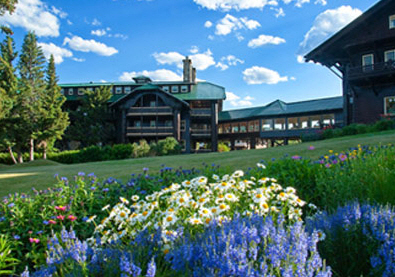
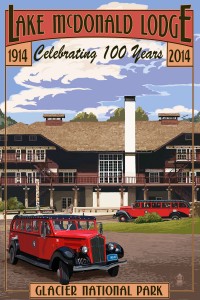
Lake McDonald Lodge Celebrates Centennial on June 14th

from the Glacier Park Conservancy:

Glacier National Park Conservancy and Glacier National Park Lodges

McDLake McDonald Lodge will celebrate its centennial on June 14th, 2014.

Get ready for complimentary red bus transportation from the Apgar Visitor Center to Lake McDonald Lodge, historic walking tours, ranger programs, and more! Festivities will begin at 1 pm and end at approximately 9:15 pm.

PROGRAM

12:30 pm-8:00 pm: Complimentary red bus tours will operate on a continuous loop between the Apgar Visitor Center and Lake McDonald Lodge. Visitors are encouraged to park at the Apgar Visitor Center as parking is limited at the lodge.

1:00-2:00 pm: Historic Walking Tours at Lake McDonald Lodge

2:00 – 4:00 pm: Silent Auction for Old Hickory Chair begins – Proceeds benefit Glacier National Park Conservancy

2:00 pm: Opening comments

2:30 pm: Glacier Park Foundation presentation

3:30 pm: Lake McDonald Lodge Dedication

4:00 pm: Old Hickory Chair Silent Auction Winner Announced

5:00-9:00 pm: Dine on your own at Lake McDonald Lodge with centennial themed specials

6:00-8:00 pm: Movies in the auditorium

8:30 pm: Ranger-led evening program on Lake McDonald history in the auditorium

I can’t make the trip from Georgia, but for those of you who live closer, this ought to be a great event.

Malcolm

Malcolm R. Campbell is a former Glacier National Park hotels seasonal employee and the author of several novels set in the park.

Were you a Many Glacier bellman in 1964?

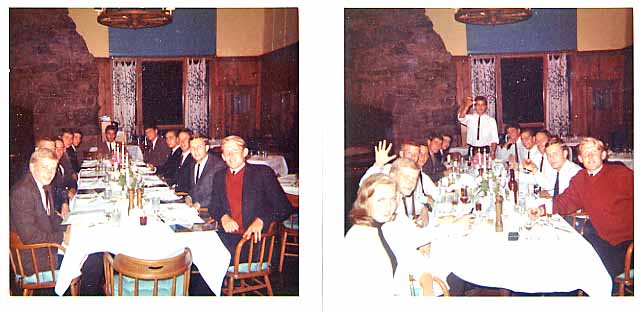
If so, can you find yourself in either of these snapshots of the bellmen banquet in August of 1964 in the Many Glacier Hotel dining room?

MGHbbellmen1964

I remember we all ordered the most expensive meals on the menu. A friend of the bellmen who owned a well-known Chicago restaurant at the time, ordered multiple bottles of wine and had them delivered to our table.

Maybe it was the wine, or the number of years that have gone by or the fact that we had two sets of twins in the bellmen group that year, but I cannot ID the people in these pictures any more. Oh, well, I do know that I’m the third person back on the left side of the table and that my room mate Marc Miller is the nearest person on the right side of the table.

Otherwise?????

Were you there?

Malcolm

Malcolm R. Campbell is the author of three novels partially set in Glacier National Park: “The Sun Singer,” “Sarabande,” and “Mountain Song.” Click on my name at the end of the post to see my Amazon author’s page.

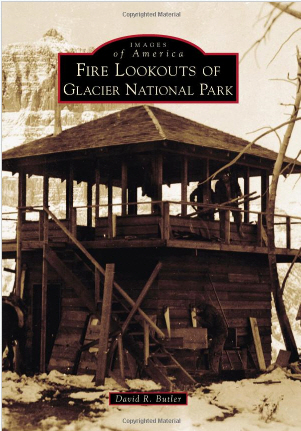
Briefly Noted: ‘Fire Lookouts of Glacier National Park’

Fire Lookouts of Glacier National Park (Images of America), by David R. Butler, Arcadia Publishing (June 9, 2014), 128pp, photographs.

I’m happy to see the release of David R. Butler’s new book about Glacier National Park’s fire lookouts. Several years ago, in Heavens Peak Fire Lookout Assessment Open For Comments, I mentioned the developing plans to refurbish the historic fire lookout on Heaven’s Peak. David told me that most of that work was completed in 2012 and that his book includes before and after pictures. This is good news.

firelookoutsFrom the Publisher: The first fire lookouts in the Glacier National Park region were simply high points atop mountain peaks with unimpeded views of the surrounding terrain. Widespread fires in the 1910s and 1920s led to the construction of more permanent lookouts, first as wooden pole structures and subsequently as a variety of one- and two-story cabin designs. Cooperating lookouts in Glacier Park, the Flathead National Forest, and the Blackfeet Indian Reservation provided coverage of forests throughout Glacier National Park. Beginning in the 1950s, many of the lookouts were decommissioned and eventually destroyed. This volume tells the story of the rise and fall of the extensive fire lookout network that protected Glacier National Park during times of high fire danger, including lookouts still operating today.

From the Book: “Fire lookouts are described by many writers as magical places, and are well-known as inspirational sites for writers and poets such as Jack Kerouac, Normal Maclean, and Gary Snyder, as well as environmental writers and naturalists such as Edward Abbey and Doug Peacock. They also serve as nostalgic, historical reminders of a simpler time before the Internet, wireless communication, and the widespread use of advanced technology for spotting and monitoring fire boundaries.”

A small percentage of hikers and climbers see the nine remaining lookouts (a few of which are still in use) in Glacier, sticking to the more well-known trails, saddle trips and launch trips. For those who have never seen the lookouts, the photographs in this book open new worlds. For those who know, or who would like to more, Butler brings us another chapter in Glacier’s colorful history.

Update: Arcadia is offering the book at 20% off through Father’s Day 2014. Here’s the link.

You may also like:  Researcher documents history of Glacier’s fire lookouts in the Great Falls Tribune.

Malcolm

BearsWhereTheyFoughtCoverMalcolm R. Campbell is the author of three contemporary fantasy novels (“The Seeker,” “The Sun Singer,” “Sarabande” set in Glacier National Park as well as his non-fiction “Bears; Where They Fought,” a historical look at Glacier’s Swiftcurrent Valley.

Erosion of the American Wilderness Idea

From the Crown of the Continent Research Learning Center:

“Brownbag” Lecture

Thursday, May 22, 2014
12 noon-1 PM
Glacier National Park Community Building

wolkeAuthor and wilderness lover, Howie Wolke will talk about the ongoing loss of wilderness, both in the big outdoors and within the human animal. He will relate the erosion of the wilderness idea to the spreading disease of Wilderness Amnesia.

Wolke is a ‘wild preservative,’ to borrow the term from the late Edward Abbey, advocating for the designation and protection of real wilderness in the United States. He is past president and current vice president of the national conservation group Wilderness Watch. He also cofounded Big Wild Advocates, Montanans for Gallatin Wilderness, the original Wyoming Wilderness Association and the original wilderness-focused Earth First. Following his passion, Wolke has made his living as a wilderness guide and outfitter for the last 36 years.

Click on the link above for upcoming brownbags.

Malcolm

Three of Malcolm R. Campbell’s contemporary fantasy novels are set in Glacier National Park.


Glacier Creates 172 Million in Economic Benefit

from NPS Glacier:

Graph from Report
Graph from Report

A new National Park Service report shows that approximately 2.2 million visitors to Glacier National Park in 2012 spent $172 million in communities near the park. That spending supported 2,754 jobs in the local area.

“We are honored and proud to welcome visitors from across the country and around the world to Glacier National Park,” said Park Superintendent Jeff Mow. “Glacier is a special place and many times visitors travel to Montana specifically to visit Glacier, and are introduced to the many other wonderful amenities that Montana, and Northwest Montana have to offer.”

National park tourism is a significant driver in the national economy – returning $10 for every $1 invested in the National Park Service. National park tourism is a large factor in the local economy as well. Mow said, “We are fortunate at Glacier National Park to be greatly supported by our partners, neighbors and local communities. We appreciate this partnership and support, and believe the presence of the park helps sustain local communities.”

The peer-reviewed visitor spending analysis was conducted by U.S. Geological Survey  economists Catherine Cullinane Thomas and Christopher Huber and Lynne Koontz for the  National Park Service. The report shows $14.7 billion of direct spending by 283 million park visitors in communities within 60 miles of a national park. This spending supported 243,000 jobs  nationally, with 201,000 jobs found in these gateway communities, and had a cumulative benefit to the United States’ economy of $26.75 billion.

According to the report, most visitor spending supports jobs in restaurants, grocery and  convenience stores (39 percent), hotels, motels and bed-and-breakfast locations (27 percent), and other amusement and recreation (20 percent).

To download the report, visit http://www.nature.nps.gov/socialscience/economics.cfm.  The report includes information for visitor spending at individual parks and by state.

To learn more about national parks in Montana and how the National Park Service works with  Montana communities to help preserve local history, conserve the environment, and provide
outdoor recreation, visit http://www.nps.gov/state/mt.

Artwork Contest for Annual Glacier Park Pass

from NPS Glacier National Park

This year's pass was submitted by Glacier High School Student Valarie Kittle
This year’s pass was submitted by Glacier High School Student Valarie Kittle

Glacier National Park and the Glacier National Park Conservancy are accepting art submissions from sixth through twelfth grade students for the annual park pass artwork contest. The winning art will be displayed on the 2015 Glacier National Park Annual Park Pass.

Students are encouraged to submit art that focuses on the natural resources protected and preserved in the park. Each entry must include original artwork. Entries will be judged on the use of color, and design and accuracy of a scene that depicts one or more natural resource of the park. The deadline to submit artwork is April 11. Visit the park’s webpage at http://www.nps.gov/glac/forkids/index.htm for more information and an application, or contact the park at 406-888-7800.

The purpose of the annual pass artwork contest is to get students engaged with Glacier National Park, while creating an awareness of stewardship and increase an understanding about resources protected in the park.

The pass featuring the winning artwork will be available in January 2015, and more than 14,000 passes will be issued during the year. The top three winners will receive a gift certificate from the Glacier National Park Conservancy.

Last year Glacier High School Student Valarie Kittle submitted the winning entry. Kittle’s image of the historic Lake McDonald Lodge is highlighted on this year’s annual park pass.

Since some 14,000 of these passes are sold to visitors each year, the winning artwork will have a great audience.

You May Also Like: Glacier National Park Conservancy Announces Grants to Fund Trail Work and More

Malcolm

SeekerCoverMalcolm R. Campbell is the author of fantasy adventure novels set partially in Glacier National Park, including “The Sun Singer,” “Sarabande” and “The Seeker.”

Stop by my Google+ profile

Glacier Park, Inc. Terminates 63-year Employee

Tippet worked in an office in the lower level of Glacier Park Lodge at East Glacier, MT.

Ian B. Tippet, an employee with Glacier Park, Inc. (GPI)–the Viad subsidiary that manages hotels at Glacier Park–was terminated by the company February 24th in spite of an understanding that would have allowed the former Many Glacier Hotel manager and GPI personnel director to work as a consultant with the company as long as he’s ready, willing and able.

After Tippet posted an update on his Facebook profile two days ago that his promised position for the upcoming summer season at Glacier Park Lodge would not be continued, hundreds of current and former GPI employees as well as National Park Service personnel began offering their support on his page, via phone and e-mail. At the same time, stunned comments of concern and outrage are being posted on GPI’s Facebook page in the “recent posts by others” listing.

KAJ18 in Kalispell, Montana covered the story in Six-decade Glacier NP employee let go, noting that the last time Tippet didn’t work for the company, Truman was the President of the United States.

“I’m very disappointed,” he told MTN in a lengthy phone conversation from Phoenix Tuesday. “As of today I don’t have a job at Glacier. All I have is the ability to go up to my cottage and twiddle my thumbs. What the hell am I going to do?”

When I spoke to him outside his office at Glacier Park Lodge in September, he was looking forward to coming back this coming summer. I hope GPI will reconsider its decision. If you are a long-time friend of Mr. Tippet or a friend and fan of the park and wish to express your concern about this matter, contact Dan Hansen GPI Marketing and Public Relations Manager in Whitefish, MT at 406-863-4703 or via e-mail at hansen@glacierparkinc.com

Or, you can protest directly to GPI’s top management at Viad Corporation:

Mr. J. K. Fassler, President
Glacier Park, Inc.
Viad Coorporation
1850 North Central Avenue
Phoenix, AZ 86004

Update March 1, 2014

Ian B. Tippet updated his Facebook profile a day ago, saying that while he will not be working or volunteering at Glacier Park Lodge this coming summer, he had a personal meeting with the GPI chairman. GPI will continue to provide a cottage as well as meals in the employee dining room, while Mr. Tippet works on his book about life and work in Glacier Park over the years. I’m pleased that GPI had the courtesy to meet with him and attempt to make things right after mishandling the situation at the outset.

Malcolm

Malcolm R. Campbell was hired by Tippet as a season employee at the park’s Many Glacier Hotel for two seasons many years ago.

Early Mountain Mornings and Alpine Glow

Alpine Glow at Many Glacier Hotel - photo by Jeff Pang
Alpine Glow at Many Glacier Hotel.  Notice that true alpine glow is being pushed out by the direct light. – photo by Jeff Pang

Lucky short-term tourists and almost all long-term visitors to Glacier National Park learn about the beauty of alpine glow (called alpenglow in many parts of the world). While some mistake sunlight on the mountains at sunrise and sunset as alpine glow, true alpine glow occurs only when the sun is below the horizon. It comes from light that’s reflected by snow, water or ice particles in the atmosphere. There is often a red or purple hue within the glow.

One of my three jobs at Many Glacier Hotel in the park’s Swiftcurrent Valley required me to be on duty by 5 a.m. several days a week. When I walked over the rise that separated the hotel from the dorm, I checked my watch to make sure I wasn’t late because the hotel manager, Ian B. Tippet was always there before dawn. Since he was there, he firmly believed everyone else should be there.

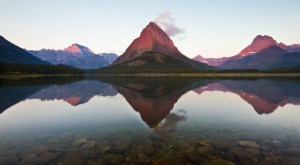
Grinnell Point and Heavy Shield Mountain across Swiftcurrent Lake from the hotel - photo by Joe Dsilva
Grinnell Point and Heavy Shield Mountain across Swiftcurrent Lake from the hotel – photo by Joe Dsilva

While the light in the manager’s office near the lobby attracted my attention first, those mornings when alpine glow bathed the peaks and turned glaciers and snow patches into shimmering light sources, my early hours job gave me a gift most employees and guests slept through.

When I saw Ian Tippet at the park this fall, we joked when he said, “we always began promptly at 5 a.m., a beautiful time to be awake.” I agreed, but didn’t mention that I looked at his office window before breathing in the sky.

I always wanted to see the alpine glow on Mt. Everest, or even in the Alps where the term originated. However, the mountains of Glacier made many early mornings worth losing sleep over.

Malcolm

Malcolm R. Campbell is the author of contemporary fantasy novels including “The Sun Singer” which is set at Many Glacier hotel.

Briefly Noted: ‘Chief Mountain: Home of the Thunderbird’

Chief Mountain: Home of the Thunderbird – Physical, Historical, and Spiritual Perspectives, by Dave Shea, Thomas Printing, 2010, Second Edition, 42pp, photographs, maps, charts

ChiefMountainThunderBirdBackcountry ranger, wildlife biologist and botanist Dave Shea worked in Glacier National Park for almost four decades, spending many years at the Belly River Ranger station in the shadow of Chief Mountain. Shea writes that those who have seen that shadow in the valley in March and September call it “the sacred shadow.”

This tightly written, encyclopedic book shows that Shea has come to understand the rock, natural forces, legends and people behind that shadow very well. Without a doubt, Chief Mountain (Nináistuko) is the one of the most distinctive, visible and photographed peaks in Montana.

While Glacier specialists and friends of the park will have seen most of the geological information in the first part of the volume elsewhere, the book is an able summary of Chief’s setting within the Rocky Mountain Front as well as its importance and current status as a sacred site to the Blackfeet Nation. In addition to the spectacular cover photo by B. Riley McClelland, the author’s photographs are a beautiful addition to the book.

From the Publisher

For 36 years, Dave Shea prowled Glacier Park’s wilds as a backcountry ranger, patrolling trails, managing wildlife, leading search and rescue efforts. And for 11 of those years, he and his wife, Genevieve, lived, quite literally, in the shadow of Montana’s most sacred mountain. And so it’s appropriate, perhaps, that when Dave Shea set out to put the peak on the page, he did so in what could be described, in terms of size, as a booklet, but in scope is most decidedly a full-blown book.

Reviewer’s  Comments

“It’s clear Chief has become a character in Shea’s life, a fully animated wonder complete with presence and with moods and with attitude,” writes Michael Jamison in the Missoulian. “In a cave, near the summit, lives Thunderbird and the Thunder-Maker Pipe. The Wind Spirit resides here, as does Old Man Napi. The Sacred Shadow reaches far into the backbone, and each spring and autumn darkens other peaks with the outline of the Chief.”

Shea, described by the Missolian as “one of Glacier Park’s last old-school patrol rangers – a man competent and comfortable and completely content in the backcountry,” is also the author of the NPS field checklists “Mammals of Glacier National Park” and “Birds of Glacier National Park.”

Malcolm

Malcolm R. Campbell, a seasonal employee at Many Glacier Hotel in the park in 1960s, is the author of contemporary fantasy novels including “The Seeker.” “The Seeker” is partially set in Glacier during the historic flood of 1964.

A Glacier Park novel on Kindle