Help Glacier Park track loons, goats and weeds

from NPS Glacier National Park
Crown of the Continent Research Learning Center Opportunities

The Crown of the Continent Research Learning Center at Glacier National Park will continue its Citizen Science Program this summer, offering free research and learning opportunities for the public.

The program trains individuals to identify, observe, and record information on mountain goats, bighorn sheep, pikas, aquatic insects, loons, and invasive plants in Glacier National Park. These species have been targeted because of their sensitivity to changes in habitat, human disturbances and, in the case of invasive plants, their threat to native biodiversity. Participants are asked to attend a one-day training session before collecting data for a project.

Common Loon Citizen Science

Gather information on the distribution and reproduction of common loons to understand more about population trends and nesting success. Glacier National Park is home to about 20% of Montana’s breeding Common Loons. Monitoring takes place May through September.  Training Date: May 22, June 18, June 26, or July 9

High Country Citizen Science

Observe mountain goats, bighorn sheep, pikas, and aquatic insects at selected sites to assist with population and distribution estimates. These species are habitat and temperature sensitive and may be affected by climate change. Monitoring takes place June through October.  Training Dates: June 12, June 19, or July 2

Invasive Plant Citizen Science
Learn to identify five targeted invasive plants and use GPS units to map their locations while hiking along trails in Glacier National Park. Monitoring takes place June through September. Interested invasive plant citizen science participants can be trained in one of two ways:
1. Complete online training session at http://www.crownscience.org/getinvolved/citizen-science/noxious-weeds.
2. Attend annual weed blitz on Tuesday, July 21. Participants will assist Glacier National Park by pulling targeted weeds.

Glacierloonhighweed

Additional training sessions for any of the programs may be scheduled based on interest.

Since 2005, the Glacier National Park Citizen Science Program has utilized trained citizen scientists to collect baseline population data on species of interest within the park. Training is provided to participants to inform them of threats to native plants and wildlife that may result from human disturbance, climate change, and invasive species. Perhaps most importantly, the Citizen Science Program helps create an informed group of visitors involved in active stewardship of Glacier National Park.

Please contact the Crown of the Continent Research Learning Center at 406-888-7986 to register for training or for more information, or visit http://www.crownscience.org/getinvolved/citizen-science.

This is an excellent opportunity to learn more about the park while providing a valued service. Since our parks our underfunded, help is always needed, and this program gives people a chance to get involved, get hands-on  experience and get the summer of a lifetime.

–Malcolm

SunSinger4coverMalcolm R. Campbell is the author of The Sun Singer, a contemporary fantasy adventure novel set in Glacier National Park.

Campbell is a former Many Glacier Hotel bellman.


Original and Historic Paintings Donated to Glacier Park

from NPS Glacier National Park

Heaven's Peak - NPS Photo
Heaven’s Peak – NPS Photo

Glacier National Park recently received a generous donation of 21 historic paintings from Glacier Park, Inc. The paintings, originally created for the hotels, motels and lodges in the park, include pieces by John Fery, Frank Stick, R.H. Palenske, Charles Defeo and Richmond.

The pieces were originally owned and/or commissioned by the Great Northern Railway, many depicting iconic scenes from in and around Glacier National Park. All of the paintings are estimated to have originated between 1909 and 1915, and have been on display at Lake McDonald Lodge, Many Glacier Hotel, Rising Sun Motor Inn and the Two Medicine Campstore in the park.

The majority of the pieces are oil on canvas paintings. They range in size from 2.5 feet x 1.5 feet, to almost 6 feet x 12 feet. Some are by unknown artists. A plaque commemorating the donation will be placed by each painting.

A condition of the donation was that the paintings remain in the hotels, motels and lodges for which they were created. “We greatly appreciate the willingness of the National Park Service to ensure that the original paintings be displayed in the lodges and properties within Glacier National Park, as they were intended when the Hill Family of the Great Northern Railway commissioned the paintings in the early 1900s. We are pleased that these beautiful images of the park’s history will continue to be enjoyed by many more generations,” said Glacier Park, Inc. Vice President and General Manager Ron Cadrette.

“We are thrilled to receive this wonderful gift from Glacier Park, Inc.,” said Glacier National Park Superintendent Jeff Mow. “These paintings help tell the story of the early tourist accommodations in the park and the connection the railroad had in promoting this area to the nation.”

Xanterra Parks & Resorts, Inc.- Glacier National Park Lodges, will be responsible for the care and maintenance of the paintings through their concessions contract with the park.

Glacier Park, Inc., also known as GPI and a subsidiary of Viad Corp, is currently the owner and operator of two properties within the park: Motel Lake McDonald and Apgar Village Lodge. They also own and operate five other lodging properties in the local vicinity of Glacier-Waterton International Peace Park. Glacier Park, Inc. operated many of the park lodges and hotels as the primary concessioner in the park until 2014.

Dear Big Sky Brewing Company

moosedroolA year ago, I walked into the Interlaken Lounge at Many Glacier Hotel and bought an ice cold mug of Moose Drool. With a name like that, I figured what could possibly go wrong.

It was darned good.

When people asked me what I was drinking, naturally I said “Moose Drool.”

Since most visitors to Glacier Park look for moose but never find them, folks wondered how I got close enough to get the drool into a mug.

“If you ring a bear bell by the light of the moon, a moose will appear,” I said. “Hand it some grass (not pot) to start the drooling process.”

Those who took a sip immediately left the bar and headed out into Swiftcurrent Valley to find their own moose. I left the hotel the next morning before any incident reports were filed with the park rangers.

The Problem

You brew Moose Drool in Montana but don’t distribute it in faraway Georgia. I see by your business plan, you’re concentrating on your neck of the woods and that makes sense. Meanwhile, I’m stuck sitting here drinking Schlitz. (Not really.)

brewingcompanySo, here’s an opportunity for the Big Sky Brewing Company to set up a wonderful promotion. Get a tractor trailer, put your logo all over it, and send it down into Georgia with some guy called Bandit serving as your escort.

Film the whole thing and put it on YouTube. It will go viral. Big Sky will haul in big bucks.

While it may not get me a continuous supply of beer here in northeast Georgia, I’m hoping for a couple of free bottles. Then, next time I’m in the Interlaken Lounge at Many Glacier Hotel, I’ll buy a round of Moose Drool for everyone.

Malcolm

LascauxAnthologyMalcolm R. Campbell is the author of contemporary fantasy novels and paranormal short stories including “Dream of Crows” which appears in the Lascaux Prize 2014 anthology.


Glacier September 19 Update: Access to Logan Pass Changes This Weekend

from NPS Glacier National Park


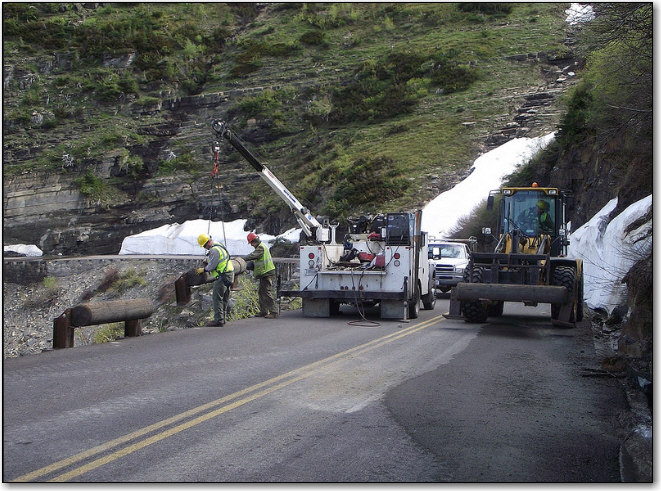
Guard rail replacement in June - NPS Photo on Flickr
Guard rail replacement in June – NPS Photo on Flickr

The last day to access Logan Pass by vehicle from the east side of Glacier National Park will be Sunday, September 21, allowing accelerated fall season rehabilitation on the Going-to-the-Sun Road. Vehicle traffic will be restricted on the east side near the St. Mary Campground beginning Monday, September 22. Vehicle access to Logan Pass will be available from the west side of the park through Sunday, October 19, weather permitting.

Fall access to east-side hiking trails between the St. Mary Campground and Logan Pass will be limited during road rehabilitation activity beginning Monday, September 22. Hikers wanting to hike any of the trails that are accessed, or may be an exit point, along the east side of the Going-to-the-Sun Road, are highly encouraged to contact the park at 406-888-7800 before departing. The trails that are affected include Siyeh Pass, Baring Basin, Piegan Pass, Otokomi, St. Mary Falls/Baring Falls/Virginia Falls, Gunsight and Sperry Trails. For more information on status of trails and access, please contact the park or visit http://www.nps.gov/glac/planyourvisit/trailstatusreports.htm.

Access to some backcountry campsites on the east side of the park will also be affected. All backcountry campers are required to have a permit from the park’s backcountry office for overnight stays. All backcountry permits must be obtained from the Apgar Permit Center at this time of the year. For more information on backcountry camping and trail access, please contact the park at 888-7800 or visit http://www.nps.gov/glac.

Times and locations for boat inspections for boats launching in Glacier National Park are changing. Inspections for the west side of the park will be conducted at the Apgar Backcountry Office, 8:00 a.m. to 4:00 p.m. daily through the end of October. Boat inspections for the east side of the park, Many Glacier and Two Medicine areas, are by appointment only. Appointments are available by contacting the park at 406-888-7800.

The Logan Pass Visitor Center will be open through this Sunday, September 21, 9:30 a.m. to 4:00 p.m. The Apgar Visitor Center and the St. Mary Visitor Center are open through October 5, 8:00 a.m. – 5:00 p.m. daily.

Many Glacier Bridge Replacement

Swiftcurrent Bridge, which provides access to Many Glacier Hotel, was losing its structural integrity, had a cracked deck, and could no longer handle high water.  - NPS photo from the park planning document
Swiftcurrent Bridge, which provides access to Many Glacier Hotel, was losing its structural integrity, had a cracked deck, and could no longer handle high water. – NPS photo from the park planning document

Visitors to the Many Glacier area of the park should be aware that the replacement of the Swiftcurrent Bridge will begin shortly after the Many Glacier Hotel closes for the season on Sunday, September 21.  Visitors can expect short delays beginning September 26. As of September 29 there will be no vehicle or pedestrian traffic as the bridge is replaced. It is anticipated that the work to replace the bridge will continue through mid-November.

Access to Cracker Lake and the Piegan Trail will be through the Grinnell Picnic Area, at the Grinnell Trailhead. The Swiftcurrent Bridge is located at the foot of Swiftcurrent Lake and provides vehicle and pedestrian access to the Many Glacier Hotel Historic District, and the Many Glacier Hotel.

Autumn visitors to Glacier National Park will find less crowds, cooler temperatures, and changing vegetation colors. Area residents and visitors are reminded that the park is open year-round and park recreational opportunities can be found during all seasons.

Nice to see infrastructure work going forward.

–Malcolm

Seeker for promo 1Malcolm R. Campbell is the author of three novels partially set in Glacier National Park, “The Sun Singer” (paperback) “Sarabande” (out of print) and “The Seeker” (on Amazon and Smashwords in paperback and e-book).

On Location: Glacier National Park

Lobby of Many Glacier Hotel, built in 1915.

Those who have followed this blog for years know that I worked as a hotel bellman at Glacier National Park’s Many Glacier Hotel while in college and that I’ve returned to the park when finances permit.

I suppose many people have a favorite beach, romantic city, mountain range or scenic highway they call my favorite place, and that for reasons they may not be able to explain, are drawn to it time and again.

Glacier is my favorite place, though it hasn’t been easy falling in love with it inasmuch as I live in the Southeast and travel to and from the park in northwestern Montana takes time and/or money. The historic hotels, many of which were constructed by the Great Northern Railway many years ago, are only open between June and September. This means the primary park season is short and room rates are high.

Most people reach the park by car via U. S. Highway 2 or by air via Kalispell which is near the west entrance to the park. Some people fly in via Calgary, Alberta and then visit Jasper, Banff, and Waterton parks in Alberta before driving south past Chief Mountain into Montana to tour Glacier. Glacier is named for its glacier-carved mountains with a geography featuring horn-shaped peaks, narrow aretes, cirque lakes and stair-step valleys. Existing glaciers add glacial flour (finely ground rock) to the water and that makes for turquoise colored lakes.

BoGlacier cover flat r1.inddDue to an ancient thrust-fault, there are places where you’ll see older rock on top of younger rock. Many rock strata are visible throughout the park. If you take a launch trip on Swiftcurrent Lake, Lake Josephine, St. Mary Lake, Lake McDonald or Two Medicine lake, the guides will point out the rock strata along with glaciers (slowly melting away), waterfalls (a lot, especially early in the summer), primary peaks, wildlife (including grizzly bears), and other points of interest.

If you like hiking, there are 700 miles of trails for you to choose from. My favorite is the Highline Trail which you can use to go from Logan pass on Sun Road to Granite Park Chalet to Many Glacier Hotel on the east side. Many trails remain closed due to snow throughout June, so check with the park service about trail closures if you go early in the summer.

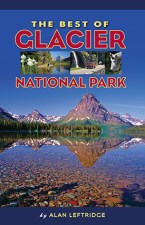
If you have time, take a red bus trip on Sun Road or up to Waterton. These 1936 restored tour buses are fun to ride in and, when the convertible tops are rolled back, give you a great view of the mountains. If your time in the park is short, consider including one bus tour, a launch trip, and scheduling in some time for short hikes around the hotel where you’re staying. Alan Leftridge’s book (shown here) lists the best places to see, grouped by category. It’s a valuable guide for people who only have a day or so for a quick trip.

TSScover2014If you have problems with stairs, you should know that while Many Glacier Hotel has an elevator in the main section, the four floors of rooms in the annex are accessible only by steep stairs. Glacier Park Lodge has no elevators, so try to get a room at ground level. I found the foods served in the main dining rooms of the hotels to be tasty, but overly rich. (Be sure to try at least one of the deserts, drinks or ice creams made with Huckleberries.) If you’re there for a few days, you can venture out to Swiftcurrent if you’re staying at Many Glacier, multiple private restaurants at East Glacier if you’re staying at Glacier Park Lodge, several restaurants at St. Mary if you’re staying at Rising Sun, and a variety of restaurants at Apgar and Kalispell if you’re staying at McDonald Lodge. Bison Creek Ranch a few miles for East Glacier is a favorite of mine for steaks and chicken.

If you’re a light sleeper, take a white noise machine. The walls of these old hotels are thin and the doorways are not tight fitting–you won’t want to hear people talking or snoring in adjoining rooms. WiFi in the hotels is only available in a few areas and is overloaded by multiple guests trying to log on. Cell phone reception is spotty or not available. Take multiple layers of clothes. You may need a jacket at night in August and the wind in the higher elevations can be chilly all through the summer. If you have a small umbrella or a fold-up poncho, take it: rain comes out of nowhere.

Yes, the 2014 season only has about a half a month left to go. Had you been at the park a few days ago, you would have seen a great display of the northern lights. The wind at Logan Pass and elsewhere will be getting noticeably colder. You may see some snow in the higher elevations. If you like to ski or hike with snow shoes, the park is open throughout the Winter.

Glacier is on my mind this month with the release of the new paperback* edition my contemporary fantasy adventure novel which is set in and around Many Glacier Hotel. The reality comes from faithfully including what I remember about the Swiftcurrent Valley, Lake Josephine and the Ptarmigan Tunnel. The fantasy comes from a look-alike universe reached via a portal (which you won’t see from the Lake Josephine Launch) hidden near a shelter lean-to used by hikers. If they only knew how close they were to a very dangerous world–as my young protagonist discovers. He’ll have to learn how to use magic if he wants to make it back to the world of Glacier National Park.

Malcolm

* Please be patient if you prefer to read e-books. While posted on bookseller sites, there are formatting issues yet to be resolved.

Glacier Conservancy’s Backpacker’s Ball Set for August 2

from the Glacier National Park Conservancy

Glacier Park…it’s why we live here…what we LOVE here…
“Celebrate it in style.”

backpackersballThe evening will be elegant…the setting – spectacular. But leave your heels at home and your hat on your head…THIS is a party for people who LOVE the outdoors! The Backpacker’s Ball is our one and only, most magnificent celebration of the year!

Join us at the historic Green Valley Ranch at the edge of Glacier National Park, where the beauty is borrowed from the land we live in – the real-life murals made by mountains in our own backyard.

Wear your dancing shoes, so you won’t be stuck in your chair when the Ashley Creek Ramblers take the stage. You’ll have to fight your feet NOT to dance to this toe-tapping, must-move music.

Come hungry…because you won’t soon find another feast like this. Locally harvested specialties are the menu’s mainstays as a nod to our nation’s heritage. Wonderful wines complement the array.

Get swept up in the excitement of our Live Auction, or quietly acquire some amazing items in our Silent Auction. You’ll find everything from one-of-a-kind artisan creations to once-in-a-lifetime adventures. This is just a small part of our evening, so the focus is on having fun!

The Backpacker’s Ball is our once-a-year rally to raise needed funds so that we can continue to share this precious place with nature lovers from around the world.

The Glacier National Park Conservancy assures the Glacier National Park experience by providing support for preservation, education, and research through philanthropy and outreach.

If I lived closer, I’d be there. Click on the graphic for the Conservancy’s page with additional information.

Malcolm


Brown Bag Presentation: Glacier’s Butterflies

from the Crown of the Continent Research Learning Center:

ChinnColor in Motion: A Look at Glacier’s Butterflies

 by Bob Chinn

Monday, July 14, 2014
12 noon-1 PM
Glacier National Park Community Building

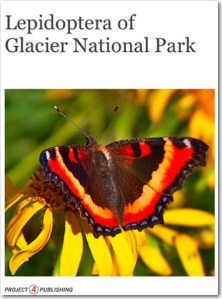
Over 100 species of butterflies and many more species of moths play an important role in Glacier National Park. For some they catch the eye as beautiful flowers on the move, while for others they bring special delight by landing on a finger. Through photographs and video clips, Bob Chinn will share his eBook and take guests on a virtual tour of Glacier’s Lepidoptera.

Click here for more information about the brown bag presentations.

Park visitors often miss the butterflies while looking at grand vistas and hoping to see mountain goats and bears. This presentation, and Bob Chinn’s soon-to-be-available e-book show you there’s a lot of small color in the park if you know where to look.

Malcolm

Public Invited to Glacier’s Noxious Weed Blitz

from NPS Glacier:

Garden1Glacier National Park’s Citizen Science Program announces two opportunities to help with early detection of invasive plants along park trails: Noxious Weed Blitz on July 15 and an online training course for the Invasive Plants Citizen Science program. Both opportunities are free of charge and open to the public.

The fifth annual Noxious Weed Blitz will take place on Tuesday, July 15 from 10:00 a.m. to 4:00 p.m., meeting at the park’s community building in West Glacier. Participants will be trained to assist the Invasive Plant Management Program by learning to identify, map, and pull invasive plants. A free lunch will be provided by the Glacier National Park Conservancy. Be prepared to spend the afternoon in the outdoors, pulling invasive plants. Please bring gloves for hand pulling, footwear for hiking, and drinking water. Please RSVP if you would like to attend.

An online training opportunity teaches participants how to identify five targeted invasive plants, conduct surveys, and map locations of invasive plants using GPS units. Once training has been completed, visitors may check-out GPS units from the Crown of the Continent Research Learning Center to detect invasive plants while in the park. The online training program can be accessed http://www.crownscience.org/getinvolved/citizen-science/noxious-weeds.

The Invasive Plant Management Program at Glacier manages non-native invasive plants that displace native flora, interrupt ecological processes, or degrade natural scenery. Most infestations of invasive plants in the park are closely correlated to disturbed areas such as roadsides, recreational areas, and construction sites. However, the 700 miles of backcountry trails also provide a corridor for invasive plants to spread and monitoring is often difficult.

In 2008, the Invasive Plant Management Program and Crown of the Continent Research Learning Center established a citizen science program to enlist the help of the public to map the spread of invasive species in the backcountry. The Citizen Science Program, now in its ninth year, is supported by the Glacier National Park Conservancy, fostering stewardship while providing critical baseline information on Common Loons, mountain goats, pikas, and invasive plants. For more information about the Crown of the Continent Research Learning Center visit http://www.crownscience.org.

Attending the Noxious Weed Blitz or completing online training enables participants to continue monitoring invasive plants during future hikes in the backcountry. To sign-up for the Noxious Weed Blitz or learn more about the event please contact the Crown of the Continent Research Learning Center at 406-888-7986 or glac_citizen_science@nps.gov.

This has been a successful program in past years. I hope there’s a good turn out for it this summer.

-Malcolm

Weather Conditions Impact Glacier Park

updated NPS information as of June 18:

Sperry Chalet - NPS photo
Sperry Chalet – NPS photo
  •  St. Mary Campground Closed due to standing and running water, and debris from Wild Creek and other run-off water. There were approximately 10 campers at the St. Mary Campground last night, and all left this morning on their own, prior to campground closure.
  • Access to the Kintla Lake area closed at the head of Big Prairie – 7 miles north of the Polebridge Entrance in the North Fork District of the park. Travel in the North Fork area of Glacier National Park is not advised at this time. There is standing water in several areas.
  • Red Eagle Lake Trailhead, near the 1913 Historic Ranger Station near St. Mary is closed.
  • Sand bags were deployed in the administrative area of St. Mary on the east side of Glacier National Park, responding to rising/flooding Divide Creek.
  • Pre-evacuation planning underway for the St. Mary area of National Park Service administrative and housing areas (approx. 30-40 people), and for the Many Glacier Hotel area. No evacuations have been initiated at this time!
  • No work is being conducted on plowing the Going-to-the-Sun Road at this time. Crews moved plowing equipment to lower locations yesterday as snow began to fall and more snow was predicted.
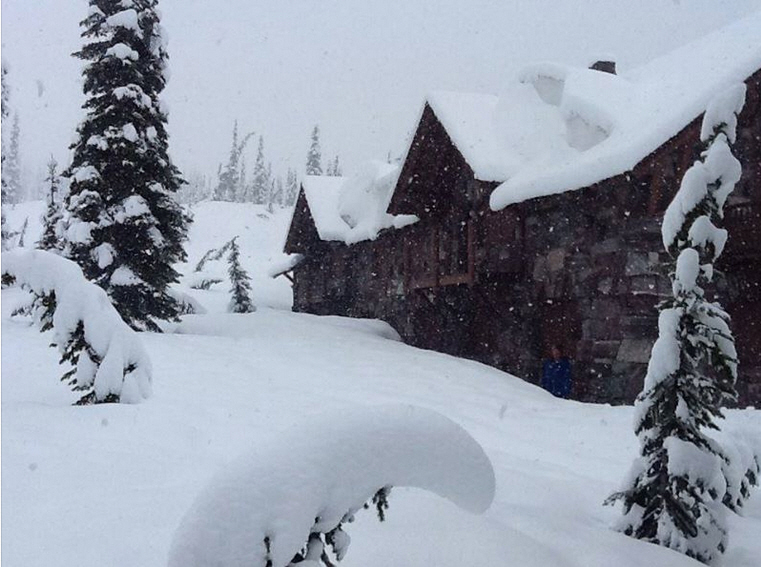
  • NPS employees are at Sperry Chalet conducting seasonal preparation activities and report 14-16 inches of snow since Tuesday morning. It was snowing again this morning at Sperry Chalet. Photos attached! Sperry Chalet is located on the west side of the park, near the Continental Divide.
  • Park personnel continue to monitor and access the situation across the park, making preparations in the event of any evacuations and staging equipment to respond as needed. Park personnel are in regular communication with the National Weather Service. All visitors are encouraged to use caution during this time of increased moisture.

from NPS Glacier National Park, as of June 16:

WEST GLACIER, MONT. – Snow conditions, cool weather, and debris from snow slides are challenging some spring opening operations for trails, facilities and roads in Glacier National Park. Snow accumulations in the park are above average this year and spring snowmelt has varied at different locations.

Numerous trails in Glacier National Park are still snow-covered. Park staff report damage to trails and backcountry campsites due to snow slides and large amounts of avalanche debris. The Ptarmigan Falls Bridge and Twin Falls Bridge have been removed due to winter damage and hazardous conditions. Temporary bridges are expected to be installed by early July. The Iceberg Lake Trail is closed to stock use until permanent repairs to the Ptarmigan Falls B ridge are complete. Permanent repair work on both bridges is anticipated to begin this fall.

Extensive avalanche debris has impacted the Trout Lake Trail. Hikers are not encouraged to use this trail, or it is recommended that hikers have route-finding skills to traverse the debris.

Trails may traverse steep and sometimes icy snowfields and hikers are strongly advised to have the appropriate equipment and skills to navigate such areas, or perhaps visit those areas once conditions improve. Please visit the park’s website for current trail status at http://www.nps.gov/glac/planyourvisit/trailstatusreports.htm. Please report any hazardous or unusual trail or backcounty conditions by calling the park at 406-888-7800.

Frozen and damaged sewer and water lines caused some delays in seasonal opening activities for utilities park-wide. Rising Sun and the Swiftcurrent cabin areas experienced damaged water lines. The Apgar and Lake McDonald areas experienced issues with frozen sewer lines, and some broken water lines. The Cutbank, Many Glacier and Two Medicine Campgrounds experienced delayed openings due to abundant snow accumulation and slow snow melt.

A snow slide in the Alps area of the Going-to-the-Sun Road, about five miles west of Logan Pass, wiped out about 20-30 feet of rock wall along the road.  Several new slide paths across the road have been encountered this spring, including the need for extensive snow and debris cleanup.

Snow removal operations on the Going-to-the-Sun Road continue with road crews working near the Big Drift and Lunch Creek areas east of Logan Pass. Above average snow accumulation and cool June temperatures have provided challenges for snow removal operations. The snow depth at the Big Drift is estimated to be about 80 feet, larger than recent years. Once the snow is removed, a thick layer of ice on the road is anticipated.

In addition to snow removal, road crews are working to install over 400 removable guard rails, sweep the road of rock debris, and clear snow from Logan Pass Visitor Center facilities including sidewalks and trails. Park road crew employees have begun working overtime in an effort to accomplish snow removal goals in a safe and timely manner, as well as other park employees assisting in the hand work to remove snow around facilities.

Snow removal and plowing progress, including images, can be found at http://home.nps.gov/applications/glac/gttsroadplow/gttsroadplowstatus.cfm.

Currently, visitors can drive about 16 miles from the West Entrance to Avalanche on the west side of the park, and one mile from the St. Mary Entrance to the foot of St. Mary Lake on the east side. It is anticipated that there will be vehicle access to the Jackson Glacier Overlook area on the east side of the Going-to-the-Sun Road by this weekend, but it is dependent on weather conditions. Vehicle access to Logan Pass, and beyond Avalanche on the west side of park, is unknown at this time.

Hiker-biker access is currently available from Avalanche to the Loop on the west side, and from St. Mary to Rising Sun on the east side. For current hiker-biker access and park road status, visit http://home.nps.gov/applications/glac/roadstatus/roadstatus.cfm. For additional questions about Glacier National Park, visit www.nps.gov/glac or call 406-888-7800.

See also the news story here.