Autumn Price List for My Kindle Books

Prices on the following books have been reduced in time for the vast amount of shopping you plan to do for the holidays.

  • Eulalie and Washerwoman (novel) – $2.99 – conjure, crime, and magic in Florida
  • The Sun Singer (novel) – $1.99 – contemporary fantasy in the Montana mountains
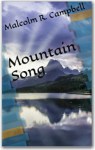
  • Mountain Song (novel) – $1.99 – realism with a splash of magic in the Montana mountains
  • At Sea (novel) $1.99 – realism with a splash of magic on an aircraft carrier in the Vietnam War
  • “Waking Plain” (short story) $0.99 a very fractured fairy tale

Happy shopping!

–Malcolm

To learn more about my books, please visit my website.

Memorial Day Excerpt from ‘At Sea’

Excerpt from At Sea

Jayee’s Lists (The Poor Sons of Bitches who Died) lay faded in a low kitchen drawer beneath batteries, broken pencils, expired dog food coupons, forgotten pink birthday candles, gum erasers, and other unsorted miscellany.

Superimposed over the small battlefield of the ranch where lambs and eagles met largely unrecorded deaths on a rangeland framed by fences and box elders and cottonwoods and a narrow creek carrying water off the backbone of the earth in years of drought and years of flood, the old man recorded soldiers’ names and souls.
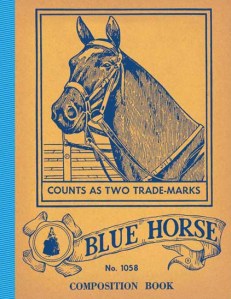
He read the news from Vietnam with morning coffee and evening spirits, and with a fine surveyor’s hand, he tallied the bare bones of body counts between narrowed-ruled lines in light-weight Bluehorse notebooks intended for the wisdom of school.

After dinner he walked his dessert out through the bluebunch wheat grass and settling sheep to his ancient Studebaker pickup truck. He carried a sharp yellow pencil and a pack of Chesterfields, tools for doing his sums, “calculating Montana” in a cloud of cigarette smoke from “vintage tobaccos grown mild, aged mild, blended mild.”

On the first page of the first book he wrote, “Here are the poor sons of bitches who died.” On the last page of the last book, he wrote, “The dead, dying and wounded came home frayed, faded, scuffed, stained, or broken.”

On the pages in between, he wrote the name of each Montana soldier who was killed or missing in recorded battles far away. Sipping bourbon, smoking like a lotus in a sea of fire, he ordered, numbered, and divided the names by service branch, by casualty year, by meaningful cross references, by statistically significant tables, by the moon’s phases and sun’s seasons, by the cycles of sheep.

Jayee remarked from year to year that the notebooks grew no heavier with use. He saw fit to include the names of the towns where the dead once lived, fathered children and bought cigarettes. These names he learnt were also lighter than the smoke.

The current of his words between the pale blue lines of each thing page arose in fat, upper case letters that scraped the edges of their narrow channels. They began as a mere trickle from 1961 to 1964 that grew in volume in 1965 before the first spring thaw, to become a cold deluge that crested in 1968, wreaking havoc across the frail floodplain of pastures and pages, carrying the dark angry names scrawled with blunting pencil, and broken letters, through irregular grey smudges, over erasures that undercut the page deep enough and wide enough to rip away the heart from multiple entries. There was little respite in 1969. After that the deaths receded and most of the physical blood dried up by 1973.

The pages were dog eared, marked with paperclips already turning to rust, and fading to pale dust behind the list of towns: RICHEY, WHITEFISH, HELENA, CHOTEAU, BOZEMAN, BUTTE, KALISPELL, THOMPSON FALLS, THREE FORKS, STEVENSVILLE, TROUT CREEK, BILLINGS, CHOTEAU HINSDALE, GREAT FALLS, HARDIN, SACO, SIDNEY, HAVRE, HELENA, GREAT FALLS, HELENA, BOZEMAN, BUTTE, DODSON, HELENA, ARLEE, REEDPOINT, HAVRE, BIG SANDY, MISSOULA, BILLINGS, WHITLASH, ROUNDUP, ROUNDUP, ST. IGNATIUS, HARLEM, BUTTE, BUTTE, WIBAUX, STEVENSVILLE, ABSAROKEE, LIBBY, WHITEFISH, GREAT FALLS, MISSOULA, HELENA, LIVINGSTON, CONRAD, GREAT FALLS, EUREKA, GREAT FALLS, HARDIN, HELENA, JOLIET, BUTTE, MISSOULA, BROCKTON, MISSOULA, LEWISTOWN,  LAME DEER, SCOBEY,  ROSEBUD, GLASGOW, BILLINGS, ANACONDA, FT. BENTON, MISSOULA, KALISPELL, GREAT FALLS, HARDIN, ST. IGNATIUS, DODSON, MISSOULA, SHELBY, MILES CITY, CUSTER, GLASGOW, LEWISTOWN, BILLINGS, BELT,  LARSLAN, MILES CITY, BUTTE, BUSBY, MISSOULA, MELROSE, BILLINGS, LIBBY, BILLINGS, BAINVILLE, HATHAWAY, BOZEMAN, BILLINGS, BILLINGS, BUTTE, MCALLISTER, WIBAUX, BROWNING, MISSOULA, THOMPSON FALLS, THOMPSON FALLS, LOGAN, AVON, MISSOULA, ST. IGNATIUS, KALISPELL, BILLINGS, ROSEBUD, DENTON, CHARLO, ST. XAVIER, HARLOWTON, SANDERS, LEWISTOWN, LIVINGSTON, MISSOULA, LIBBY, BUTTE, BILLINGS, SUNBURST, TROY, BUTTE, CHINOOK, JORDAN, DODSON, GREAT FALLS, LIBBY, HELENA, BUTTE, ROSS FORK, GREAT FALLS, INTAKE, BUTTE, BUTTE, GREAT FALLS, LIVINGSTON, BILLINGS, REDSTONE, MISSOULA, BILLINGS, MCLEOD, FORSYTH, BILLINGS, HELENA, BILLINGS, MISSOULA, BOZEMAN, BUTTE, MALTA, KALISPELL,  ANACONDA, GREAT FALLS, ST. IGNATIUS, INVERNESS, RONAN,  MISSOULA,  SCOBEY, ANTELOPE, BUTTE, MISSOULA, FORSYTH, BILLINGS, BUTTE,  BILLINGS, GREAT FALLS, DODSON, HELENA, GREAT FALLS, LAUREL, BUTTE, CUT BANK, WHITE SULPHUR SPRINGS, DEER LODGE, BUTTE,  HAMILTON, MILES CITY, KALISPELL, VALIER, SHELBY,  KILA, CHOTEAU, GREAT FALLS, MILES CITY, HAMILTON, GREAT FALLS, HAVRE,  LAME DEER, GREAT FALLS, TROUT CREEK, POLSON, PABLO, HELENA, BIG TIMBER, LAUREL, BILLINGS, GREAT FALLS, GREAT FALLS, BUTTE, MISSOULA, ANACONDA, GREAT FALLS, MISSOULA, BOZEMAN, GREAT  FALLS, GLEN, GREAT FALLS, ST. IGNATIUS, FROMBERG, MISSOULA, KALISPELL, CORAM, KALISPELL, BILLINGS, HAVRE, GREAT FALLS, COFFEE CREEK, LIBBY, FT. PECK, BOZEMAN, FORSYTH, POLSON, MISSOULA, WOLF POINT, KALISPELL, BUTTE, FAIRVIEW, MISSOULA, MILES CITY, ANACONDA, GREAT FALLS, BILLINGS, WIBAUX, BILLINGS, CUT BANK, TERRY, ANACONDA, BUTTE, MISSOULA, FLORENCE, HAVRE, SUNBURST, EUREKA, BILLINGS, THOMPSON FALLS, RONAN, WOLF POINT, FLAXVILLE, GREAT FALLS, HELENA, KALISPELL, MISSOULA, ANACONDA, ALDER, VALIER, TROY, RICHEY, LINCOLN, CHOTEAU, BUTTE, MISSOULA, BILLINGS, CLYDE PARK, MISSOULA, MISSOULA, HAVRE, and TROY.

Jayee’s tallies added up like this:

USA  – 169

USAF – 16

USMC – 59

USN  – 23

TOT  – 267


The old man made 267 trips around Montana between 1961 and 1972 that no surveying jobs could account for. He said little to the family about it and they didn’t often ask.

During Jayee’s second trip to Havre in 1966, Mavis, a waitress at the Beanery, noticed a stack of 44-inch white crosses sticking out from beneath a tarp in his truck.  On each cross there was a name. When she suggested that Jayee was stealing them from roadside accident scenes, he said he made them per spec to repay old debts.

Mavis asked Katoya if Jayee was all right and Katoya said “right enough.” He returned to the restaurant multiple times to prove he was right enough and was sitting there on August 31, 1967 when the 77-year-old Great Northern restaurant served its last bowl of Irish stew and closed its doors for good. When the building was torn down the following February, he pounded “an extra cross” into the rubble where the counter once stood and said it was the best he could do.

Months passed and additional stories surfaced about an old man crisscrossing the state searching for the families of the fallen, and of warm conversations lasting long into the dark hours. Jayee remained solitary and taciturn in the face of public or private praise or blame and traveled from town to town methodically, as though he was marking chaining stations along an endless open traverse.

After each individual’s name, he wrote XD (cross delivered), XR (cross refused), or CNF (could not find).

On October 18, 1974, Jayee died (surrounded by old relatives and the close perfume of vintage tobacco) with a freshly sharpened yellow pencil, with a half-smoked pack of Chesterfields, with lists and spirits close at hand, “waiting,” he always told those who asked about them.

Reverend Jones stood before the mourners in the small church and read the names of those who wished to remember and to be remembered, and one upon one, they created a great hymn that rose up over the banks of their consciousness and flowed down the rivers of their perception in a crowned deluge.

Copyright (c) 2010, 2016 by Malcolm R. Campbell
Mother’s Day Weekend Sale – three books are free

Three of my books are on sale on Kindle Sunday and Monday for $0.00. (May 14th and 15th).

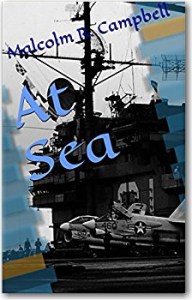
At Sea

Even though he wanted to dodge the draft in Canada or Sweden, David Ward joined the navy during the Vietnam War. He ended up on an aircraft carrier. Unlike the pilots, he couldn’t say he went in harm’s way unless he counted the baggage he carried with him. As it turned out, those back home were more dangerous than enemy fire.

This novel was inspired by my services aboard an aircraft carrier in the Gulf of Tonkin in the late 1960s.

Mountain Song

David Ward lives in the Montana mountains where his life was impacted by his medicine woman grandmother and his utilitarian grandfather. Anne Hill suffered through childhood abuse and ultimately moved in with her aunt on the edge of a Florida swamp. Their summer romance at a mountain resort hotel surprises both of them. But can they make it last after the initial passion wears off and they return to their college studies far apart from each other especially after an attack on a college street changes Anne forever?

This novel was inspired by my work as a seasonal employee in Glacier National Park.

Carrying Snakes Into Eden

The title story, “Carrying Snakes Into Eden,” is a whimsical 1960s-era tale about two students who skip church to meet some girls at the beach and end up picking up a hobo with a sack of snakes, and realize there may be long-term consequences.

“Hurricane in the Garden” is a folktale that explains why the snakes were swept out of Eden in the first place. The story features animal characters who made their debut in the three-story set called “Land Between the Rivers.”

These stories are inspired by a love of the Florida Panhandle where I grew up.

Happy Mother’s Day,

Malcolm

Review: ‘White Tears’ by Hari Kunzru

White Tears pays homage to the blues, the blues that grew out of pain and a mix of organic musical styles that was sung by down and out African American men and women in the 1800s and ultimately recorded by hundreds of performers on 78 records during the early 1900s–Ma Rainey, Blind Lemon Jefferson, Charley Patton, Robert Johnson and others whose names are long lost to most current day audiences even though the influences of the blues run through the heart of American music itself. It has been said that Robert Johnson achieved success as a singer by following an old conjure procedure of selling his soul to a black rider at the crossroads. Whether you believe the legend or not, the music known as the blues carried the souls of its performers as they cried out the cruel injustices of their lives.

Hari Kunzru tells the story of two white students in their twenties who love the blues, though that love may be more of an affectation or an obsession than anything true. Carter is rich. Seth is poor. The music draws them together and they create a music studio dedicated to analog sound and music out of the past. Seth, who’s a bit of a geek without firm boundaries about who he really is, records sounds and music off the streets, and one day he captures the voice of a bluesman he never sees singing a song that will define the two young men’s lives. They run the words through their sophisticated equipment and end up with a recording that sounds like an old 78 record that might have been rescued or stolen from a southern barn or back porch. They put the recording on the Internet and announce that it’s real rather than mocked up. They name the singer Charlie Shaw.

The sound is a sensation.  But then they hear from collectors and other aficionados that Charlie Shaw was a real person who really did record a song that began with the words “Believe I buy a graveyard of my own.” A collector says he heard it years ago. Another collector turns heaven and earth to find the original, and maybe he does. The boys are spooked, to say the least: how can their faked record of a modern-day street singer suddenly be a real song by a person whose name they made up? If Charlie Shaw is real, Carter and Seth have stolen his soul.

At this point, readers will have been experiencing an immersion in the blues, well told through Hunzru’s deep understanding of the music and his very well crafted prose. While the novel remains compelling, it becomes somewhat fractured after Carter is–for unknown reasons–beaten senseless in “the wrong part of town,” and as he evolves into a hospitalized man in a vegetative state, his rich family decides that Seth was just a follower who lived off Carter’s money and really didn’t contribute anything to their business partnership. Denied access to Carter and the studio, Seth drifts, begins to think maybe the past or the blues or the real Charlie Shaw is after him. The novel fractures from the atmospheric realism that was following a plot into some lengthy slice-of-life sequences in which past, present, future–and bluesy reality–meander aimlessly rather than directly serving to storyline.

Yet, new incidents occur (mostly bad and/or unfair to Seth), magical realism or real depending on the moods of the moment and the novel shifts into a thriller chasing down a ghost story. The protagonist for three quarters of the novel is primarily Seth.  But Kunzru changes the point of view throughout the last several chapters in a chilling way. These chapters are powerfully written but, on balance, the strong ending of White Tears seems based more on shifting genres in mid stream and word-smithing trickery rather than the natural unfolding of a story. The message–white boys appropriating black music and making it their own–is a strong theme throughout the book. It’s not a bad theme. The story suffers, however, because of the author’s need to preach a cultural appropriation sermon rather than let his message speak for itself through the characters words and actions.

Nonetheless, it’s impossible to discount the power of the book, the author’s technical mastery of his language, or the journey through the blues. Yes, this book is the blues, and those who love the music will probably read the book from beginning to end, seeing its flaws as little more than the scratchy static on an old 78 record.

–Malcolm

When you read a novel, do you identify with the protagonist?

I find it difficult to enjoy a novel if I don’t find some kind of connection or identification with the protagonist, even if that person has a dark side I don’t like or is otherwise very different than me.

If the protagonist is a man, I note ways we’re the same or that we’re faced similar questions or heartaches. If the protagonist is a woman, I note whether this is the kind of woman I would like to know, or have known, or perhaps simply respect.

How about you? Do you look for this connection? Do you feel a sense of admiration when the protagonist solves a problem, deals with an issue, gets past a bad habit, or discovers new meanings in life that are one way or the other similar to issues you’ve dealt with–or are still dealing with?

If so, I think we have a lot of company here, putting ourselves into the main characters’ shoes in one novel after another. Maybe we end up feeling inspired or less alone with the trials and tribulations that plague us. Maybe we feel better about ourselves when a main character makes the same kinds of mistake we’ve made or finds solutions to problems similar to those we’ve discovered.

As a writer, I hope to create characters that make readers feel this sense of identification. Partly, those feelings draw you into the story and keep you reading. And partly they might leave you with something more than a good read when you finish the book.

When I think of the novels that I’ve liked best over the years, I see there’s always something that drew me to the main character–for better or for worse. While reading, I was–in a sense–walking in his or her shoes.

Stories gives us many examples of others puzzling out the vicissitudes of life whether those people live in the distant past or the far-off future. The stories don’t become recipes so much as they become ideas, possibilities, or prospective ways to dealing with what we’re dealing with.

I love a novel than ends up seeming like it was sort of about my kinds of dreams and concerns. You might think of what you know about me and what you know about the main character in the novel I’m reading and see a night and day difference. But, as long as I keep reading, you can bet I’ve found some kind of a connection there.

–Malcolm


Inanna’s mythic heroine’s journey

from the archives

“The world’s first love story, two thousand years older than the Bible—tender, erotic, shocking, and compassionate—is more than a momentary entertainment. It is a sacred story that has the intention of bringing its audience to a new spiritual place. With Inanna, we enter the place of exploration: the place where not all energies have been tamed or ordered.” – Diane Volkstein in “Inanna, the Queen of Heaven and Earth: her Stories and Hymns from Sumer”

Inanna, as envisioned by nikkirtw123 on Photobucket is strikingly close to my vision of Sarabande as I wrote the novel.

As an author, I view my characters through a high-powered microscope and present the results of what I see as part of my stories. I will put you into the characters’ shoes if I can because—as Diana Volkstein writes—this is where the energies haven’t been tamed or ordered.

In an older novel, I described that place like this: “He knew him at the binary level where the line between matter and energy is barely discernible and often non-existent: Where urges pull at their chains, where drives push dumbly and drip sweat, where instincts race unchecked, where a horrifying sadness lies buried, where a raw pulse drums a cadence for the primitive rites of changing seasons, where white-hot impulses leap synapses in a shower of elemental fire.”

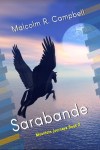
I wanted a similar, up-close focus in my heroine’s journey novel Sarabande. So, for the story of a woman seeking wisdom and wholeness, I could think of no better model than the myth of Inanna, a graphic dramatization of a woman’s inner journey to find herself outside the traps and trappings of a masculine world that has–as Sylvia Brinton Perera (“Descent to the Goddess”) wrote–forced the binary level of feminine power into dormancy for 5,000 years.

Or, as the late Adrienne Rich said, “The woman I needed to call my mother was silenced before I was born.”

Sarabande’s Heroine’s Journey

The journey in “real life”

In today’s terms, Sarabande was a tomboy. She was an expert with a knife, bow and arrow, a fishing pole, and everything she needed to know to survive in the wilderness. She learned all this from her father because her mother believed women should only learn to keep a good home and not question society’s norms for women. However, Sarabande will never truly become herself as long as she is a disciple of either her late warrior father or her misguided, preachy mother. She is being taunted by a ghost that she must approach face to face in the ghost’s world.

Early on in her quest to rid herself of the ghost of her dead sister Dryad, Sarabande learns to see the world at a binary level: The lake, surrounding mountains and the cloud-draped sky broke apart into millions of colored specks. Sarabande leaned against Sikimí, even though he was no longer solid, and saw that her own light-pink hand was not solid either. In spite of her sudden dizziness, she did not fall. In fact, when her fingertips touched Sikimí’s side, a swarm of pink specks flew, like bees, into the permeable yellow gold of the horse, and when they did, their color changed to match the specks in their new environment.


But she doesn’t know what it means. So it is, that her quest to find and confront her sister follows the pattern of Inanna’s Heroine’s journey to confront her sister Eriskigal, Goddess of the Underworld. The underworld, in this case, is not the world of mobs and crime or “hell” in the Christian view, but the more dangerous world of the unconscious. Like Inanna, Sarabande will be broken, shamed, and close to death before she learns who she is.

This is the heroine’s journey, to be buried in mother earth like a seed where she will be reborn with the spring into a new creation that finally has the freedom to follow the original injunctions of her destiny and her gender.

Malcolm

Malcolm R. Campbell’s heroine’s journey novel, “Sarabande,” is the sequel to his hero’s journey novel “The Sun Singer.”


Vietnam Navy Novel Free on Kindle for Three Days

My Vietnam War navy novel At Sea will be free on Kindle March 18-20, 2016.

AtSeaBookCoverDescriptionEven though he wanted to dodge the draft in Canada or Sweden, David Ward joined the navy during the Vietnam War. He ended up on an aircraft carrier. Unlike the pilots, he couldn’t say he went in harm’s way unless he counted the baggage he carried with him. As it turned out, those back home were more dangerous than enemy fire.

Here’s a short excerpt to tempt you out to Amazon. . .

David stood on the back porch on a spring evening listening to the slow sweet rising and falling howl of a wolf calling her pups while the wind stilled and the dark lavender lupine flowers disappeared into the gathering twilight. Behind him, the house was empty, his dinner long gone cold on the kitchen table along with the passionate Sparrow singing his chanson favorite “La Vie en Rose” again and again, and rather than stare at the letter in the silent company of canisters and chrome appliances, he brought the telephone and pinot noir outside where the world was less closed in on itself.

At the end of the long cord, he dialed her number, wondering—while the wolf pups yipped back at their mother—if her hello would still sound like her hello.

“Davey, how nice to hear your voice. I also hear wolves. Where are you?”

“On the porch looking down toward the box elders and the creek.”

“Don’t remind me. It hurts too much.”

“How are you?”

The book was inspired by my time on board the the USS Ranger.

“Fine. I knew you would call. While practicing my flute this morning, I found myself playing a song we once knew.”

“I’ve lost myself to the war,” he said. “The letter arrived today. I report in July.”

“Davey, no. What do your parents say?”

“Not to rock the boat.”

“I hoped you went to Sweden with Brita. Then I heard the wolves.”

“I could never come home from Sweden.”

“If you die in Vietnam, I’ll forget you. If you survive, you’ll forget yourself. Either way, the vine may kill the elm.”

“You’re cold,” he said, “and dragging out old symbolism of fruitful grapes smothering their supporting tree.”

“Then stand quiet with me again.”

The wolves were silent. He heard her breath and her heart. The first stars were out. When she was at the ranch four years ago, she said, “Night is liquid magic; we’re stirred together. You’ve taken me beyond myself, higher than the wolf trail stars, and what we have of each other, we own.”

In the great quiet, he wept for the parts of himself that were no longer his.

“David, the baby’s crying. I’ve got to go.”

“Unfair! But I love you, Anne.”

USS Ranger at sea in 1968 - US Navy Photo, cleared for publication
USS Ranger at sea in 1968 – US Navy Photo, cleared for publication

“No doubt,” she said, hanging up and extinguishing the moon’s pure light.

He carried the wine bottle up to the chokecherry tree, sat beneath white flowers and watched the night where he once watched it with her.

She knows I’m here, he thought, because she knows me well. She despises me, too, because she believes some places are sacred.

He got an axe and chopped down the tree. It was neither the best thing nor the worst thing he’d ever done, but it was close.

If you’re a Kindle Unlimited subscriber, you can always read the book for free through Amazon’s program. If you’re not a KU subscriber, now is a great time to download a novel about sailors and bar girls and mountain climbing and a young man wrestling with his conscience about military service.

I hope you enjoy the story.

–Malcolm


November 1 is an auspicious release date for ‘Sarabande’

Click on graphic to watch trailer

The new second edition of my contemporary fantasy Sarabande will be released by Thomas-Jacob Publishing on November 1. This is the perfect day to begin the life of a book with a ghost.

Traditionally, the fire festival of Samhain (pronounced SAH-win)–now commercialized into Hallowe’en)–sits within a period of the year of “no time or space” because it’s a boundary. Ancient traditions view boundaries and other threshholds as liminal in a magical sense because they take on some of the characteristics of both sides of the figurative doorway.

SarabandeCover2015Samhain is a boundary between the summer and winter, days of sun god and the moon goddess, and saying goodbye to the last harvest and hello to the dark days of winter. Perhaps you’ve heard it said that the veil between the world of the living and world of the dead is thin on Hallowe’en. It’s more an altered state of mind, really, at a time directly between the autumnal equinox and the winter solstice, half a year of way from the May celebration of Beltane.

In my novel, the protagonist Sarabande decides that the only way to stop her dead sister Dryad from haunting her is to travel to the place where Dryad resides. So it is that Sarabande’s  journey is tied to the cycles of the moon and very much on perceiving and confronting a denizen of the underworld.

When my publisher and I started talking about bringing Sarabande back into print, we didn’t have a November 1st release date in mind. That’s just how all the updating, editing, and formatting came out. That’s one way of looking at a story with a ghostly antagonist.

There’s also another way of looking at it. The threshold spirits have their own schedule, and they know that November 1st stands dead center in a magical time period. Night and the Goddess of Night are giving this edition a bit of a supernatural nudge and I appreciate it.

I hope you do, too.

–Malcolm

Sarabandetrailerlastframe


The black horse in my novels

The Black Horse is both death defying and death seeking. In other words it is symbolic of death and rebirth. It signifies the closing of one door and the opening of a new door. It can also signify the need for you to take a leap of faith and trust what you are being guided to do even if you can’t see the reason or the result. Go blindly forth and believe.

Spirit Animal Totems and their messages

A black horse in a dream could represent a part of the shadow self or a part of your personality that you usually prefer to keep hidden; instinctual urges operating in the dark recess of your mind; the unknown, what is mysterious.

Spirit Animals and Animal Totems

Lake Josephine and Mt. Gould where Sarabande first meets Sikimí. - NPS photo
Lake Josephine and Mt. Gould where Sarabande first meets Sikimí. – NPS photo

A huge black horse named Sikimí has appeared in five of my novels, including the upcoming new release of Sarabande. In all of these stories, he has been a totem animal associated with the mountains of Glacier National Park, Montana.

The word Sikimí means black horse in the Blackfeet language. The Blackfeet are the long-time residents of the eastern side of Glacier Park and the adjacent plains. They are the people the land knows and their language is the primary language the animals, trees, mountains and forces of nature respond to.

Appropriately, Sikimí appears in what might be called a “journey novel,” in this case, a “heroine’s journey.” Typically, heroines’ journeys are associated with night, the moon, the underworld, and the subconscious mind.

Journey novels often portray both physical travel and shamanistic or internal travel. Horse symbolism is well known whether we find the information in classic books such as Ted Andrews’ Animal Speak or David Abram’s Becoming Animal, online sites like the two quoted at the beginning of this post, or intuit them in our meditations and dreams.

This Wikpedia photo looks like my vision of Sikimí.

I felt immersed into Sarabande’s story as I wrote it because Sikimí, along with Maistó (Raven), is my totem animal. When I meditate–or dream–about travel to places I’m intentionally visualizing, I will be riding Sikimí. Sikimí is, by the way, a huge Friesian horse with the classic (as opposed to “sport”) size and conformation. So it is, that I find it easier and more intuitive using this horse in a novel about a young woman named Sarabande who is going on a journey, not only to another place but another realm.

Sikimí and I are old friends.

Ted Andrews’ associations of the horse with travel, power and freedom work perfectly as symbols throughout the novel. We know these symbols, subconsciously if not consciously. Sikimí is intended to help pull the reader into the story by attuning with the reader’s intuitive knowledge about horses. If the reader likes horses, rides horses, and most especially appreciates the original Gothic (light draft horse) Frieisians, so much the better.

Sarabande quickly bonds with the horse on their first meeting as  you see in this snippet:

SarabandeCover2015Sikimí nodded or seemed to nod, but within his breath she briefly glimpsed the soul of night, a soul as powerful as the broad-chested Friesian of its manifestation, and there were feral love and rage there that far exceeded the scope of her understanding. But within that scope, her heart told her that night in the shape of a horse would carry her to the cornfields of Illinois without trying to chart the destiny of the ride.

What would it be like to ride night in the shape of a horse? I hope readers will wonder about that as they follow Sarabande’s journey from mountains to prairie and back again. I think I know what it’s like, but readers may well have other ideas that will influence how they react to the novel.

Once the novel leaves my computer and a publisher releases on Amazon and other sites, the story is no longer completely mine. Everyone who reads it will, in a sense, be reading their own version of the novel depending, in part, on how the large black horse gets into their thoughts.

–Malcolm

Clear here to see the trailer for "Sarabande."
Clear here to see the trailer for “Sarabande.”

The Thomas-Jacob Publishing second edition of Sarabande will be released on November 1, 2015. The Kindle edition is available now on Amazon for pre-order.


Author of ‘Traitor Knight’ loves history when he gets to make it up

Willis
Willis

Today’s guest is Keith Willis, author of the new fantasy novel “Traitor Knight,” released by Champagne Books on September 7. You can learn more about the novel on its Facebook page.

Malcolm: Welcome to the Round Table, Keith. To keep things reasonably honest, I should confess that I was an English department instructor and you were a student some thirty years ago at Berry College. I wondered then what people did with a degree in English. You said on your website that when you graduated with a double major in English and French, you were best qualified for unemployment benefits. What were your expectations when you first entered college about your career? Somehow, I expected you’d be the editor of a literary magazine.

Keith: Thanks for having me on the Round Table, Malcolm. Where the heck did that 30 years go? Actually, in the interests of full disclosure, it’s closer to 40 years. But I won’t mention that if you won’t.

Malcolm: Keith, at our ages, it’s better to round numbers down rather than up.

This Berry College walkway is suitable for knights, real or imagined. - M. R. Campbell photo
This Berry College walkway is suitable for knights, real or imagined. – M. R. Campbell photo

Keith: I have to admit my career expectations on entering college were, not to put too fine a point on it, pretty non-existent. I would have loved to snag a job as editor of a literary magazine. Unfortunately supply far exceeds demand there, and the fact is the pay scale probably wouldn’t have cut it anyway. I had some vague ideas about becoming a teacher and even started the sequence for that in college—until the bottom dropped out of the teaching market.

I also had dreams of becoming an attorney, courtesy of way too many Perry Mason re-runs in my youth. But in the cold light of dawn, I knew that wasn’t realistic either, since I really hated public speaking. Thus, with a newly minted degree and a new wife I resorted, as do so many English majors, to “any port in a storm,” which in my case ended up being a career telling other people what to do (also known as Management). But at least the skills I learned at Berry allowed me to boss them around with clarity and conciseness.

Malcolm: A lot of new writers think everything that does into a novel involves sitting at a keyboard and typing. Not that we need a management spreadsheet here, but in terms of time and effort, how much of your work on Traitor Knight was writing vs. research, revising, editing, manuscript submission and planning a marketing strategy.

traitorcoverKeith: I actually got the initial concept for Traitor Knight in October 2008, so almost exactly seven years ago. Once I started writing, it took me roughly fifteen months to produce a first draft (I was working full time as well, and didn’t devote a ton of time for writing). While I didn’t necessarily follow the dictum of “Write drunk, edit sober,” I will say that I just wanted to get a first draft down, and worry about fixing it afterwards.

The book actually started off much more in the romance genre, with a pretty high heat level, but I soon realized that really wasn’t what the story was all about. After reading over what I’d managed to write, I spent the next five years revising and re-writing and actually making it into a story that flowed and made sense. I found that I had lots of great scenes, but they didn’t actually all go together to drive the story forward.

Once I’d done some revisions I started feeling that this was pretty good stuff, and began sending queries to literary agents and editors. As most new authors do, I sent the manuscript out much too soon. Initial responses ranged from a polite “no thank you” to a nervous “why did you send me this ticking bomb draped in deadly cobras—please take it back”. It was honestly pretty awful. But each time I took any bit of feedback I could get, sat down and did another revision, and another, ad nauseum, to try and make the story more readable and attention-grabbing. It took six years and over 80 rejections (I kept a spreadsheet of them) before I snagged a publisher. But you just keep re-writing and revising until you catch the interest of that one individual who’s going to knightsay “Yes!” instead of “Go away.” And as I’m sure you’ve noticed in your own work, no matter how many times you revise and edit and tweak, even after it’s published you still see something that you think “oh, I really should have done this differently”.

Malcolm: What led you to write a knight on a quest fantasy, and did you know early on that your protagonist Morgan McRobbie might have been considered a bit of a loose cannon by Arthur, Lancelot, Galahad and the rest of the Round Table bunch?

Keith: The fantasy genre has always been something that resonated with me. One of my first favorite books was TH. White’s The Once and Future King, and I’m sure this had a lasting influence, as did Tolkien, and the SFF humorist Christopher Stasheff, whose The Warlock in Spite of Himself , filled with romance, adventure, and marvelously awful puns, helped me to see that the genre didn’t have to be quite so serious. Also, I think part of the attraction is that you get to make up your own rules, history, etc.

Malcolm: White’s novel was also one of my favorites.

Keith: When I first came up with the idea for Traitor Knight, I knew I wanted to do something a bit out of the ordinary—to turn the old ‘knight vs dragon’ trope on its head. So I ended up with a dragon suffering from hiccups and a damsel-in-distress who’s fiercely suspicious of her rescuer. The story is really more a swashbuckler with a large dash of wit, and is intended as an homage to all those great old Saturday matinee movies. And I came to realize that, even though Traitor Knight is classified as fantasy, the story relies less on the fantastical elements than in the interplay between Morgan and Marissa. Their characters owe a great deal to a couple of classic British writers: PG Wodehouse and Agatha Christie, who both wrote characters thrown into situations beyond their control and who face their challenges with aplomb and a sense of humor. My two leads clash, but they also engage in banter and barbs and their struggle, together and separately to save the kingdom from an insidious traitor, is what really drives the story.

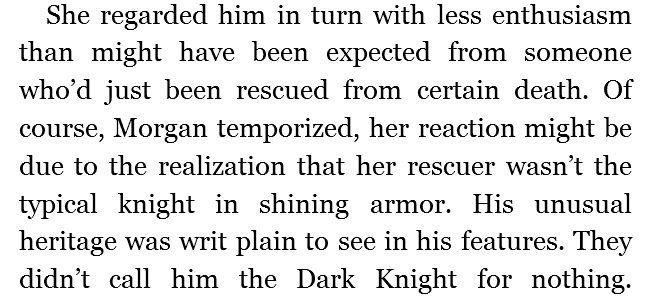
Malcolm: Looking at this passage, I think Marissa expected a different kind of rescuer:

knightexcerpt

Keith: Morgan might well have been considered a loose cannon—although in the world I’ve created, cannon haven’t yet been invented—but he’s doing what he must, even at the risk of his honor, his happiness, and likely his life, to safeguard what he holds sacred. Morgan’s motto, as emblazoned on the family crest, translates to “As Need Requires”, and this is a major theme of the book, in that Morgan will do whatever is necessary, by whatever means come to hand, to accomplish his mission.

Malcolm: What kinds of reference materials or web sites did you use to nail down all the knights’ weapons/clothing, foods, customs, structures, horses and tack, viewpoints and customs that were all part of the time period in which the novel is set?

Campaign Books
Champagne Books

Keith: The great thing about a story like mine is that you’re essentially starting with a blank slate. I tell people “I love history—especially when I get to make it all up”. I would have to say that most of my “research” was from reading heavily in the fantasy genre. I don’t go into a lot of descriptive details of armor, weaponry, etc. in the story. Instead I try to let the reader imagine what those things look like. I did have to come up with a system of magic, and figure out where the dragons came from—but as I mentioned earlier, I don’t really spend an inordinate amount of time going into the nitty gritty of this stuff. The story is really much more about the characters and their conflicts and desires. They just happen to live in a world where magic and dragons (and Dwarves, but we really don’t get to them until Vol. 2) exist.

Malcolm: So, your characters are campaigning for a sequel to Traitor Knight rather than allowing you to write with a different focus?

Keith: Rats! I guess I gave that answer away just now. There definitely is a sequel in the works., although Traitor Knight does actually stand alone. There’s no real cliffhanger that absolutely requires a second or third volume. My hope is more that readers will be engaged by the characters and want to read the next one just to see what they’re up to.
But I initially wrote books one and two as a single volume, then realized just how unwieldy that would be (somewhere in the neighborhood of 750 or so pages). I found a good stopping point for the first book and chopped ‘em in half. The second was pretty much done, but the editing and revisions I’ve ended up doing over the past couple of years have changed a lot of what happens in the sequel. My editor is urging me go get on with it and complete book two (tentatively titled Desperate Knights, and I am working trying to smooth out the rough edges and get all my dragons in a row.

Malcolm: If Hollywood calls you tomorrow to say they’re ramping up for a $100000000000 production of Traitor Knight, who would you pick to play Morgan McRobbie? Seriously, when you were writing, did you see the scenes in your mind’s eye the way they would look in “real life” or in a film?

A prospective Morgan McRobbie?

Keith: Morgan is actually bi-racial—his mother is from an island nation rather like Jamaica, where his father was dispatched on a diplomatic mission (they met while routing a band of particularly nasty pirates, but that’s another story—which I have, actually written). My choice to play Morgan would be Will Smith. I think he’s got the looks, the panache and the charisma to carry off the character. And yes, I did write the story not so much with a film in mind, but definitely from a cinematic perspective—I felt that if my writing evoked that type of visual sense, it would resonate more with readers.

Malcolm: Will Smith will work just fine. Thank you for stopping by the Round Table, Keith. Readers will find Traitor Knight on Kindle

You may also like: Briefly Noted: ‘Traitor Knight” by Keith Willis