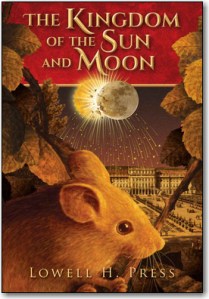
The Kingdom of the Sun and Moon, by Lowell H. Press, Parkers Mill Publishing (September 10, 2014), Ages 10 and up, 316 pages.
Starting with the cover, this is a beautifully crafted book.
Lowell H. Press has written an inventive novel about a hierarchy of mice living in the gardens and secret interior spaces of a castle inspired by the Schönbrunn Palace in Vienna, Austria.
The colony’s king cares little for his subjects and is mostly interested in taking the food they save throughout the year for his own use during the winter months.Two brothers, Sommer and Nesbit, discover that all is not what it seems, including the king’s purported fear of a pending invasion of the colony by a massive army of woodland mice.
Sommer, who is drafted by the king’s minions for a suicide mission on the colony’s behalf and Nesbit, who insults the king and flees into the dangerous forest, take different approaches to survival and justice. Sommer becomes a cadet commander, while Nesbit becomes known as either a worker of magic of an exceptionally lucky mouse.
Set in a 1700s world, The Kingdom of the Sun and Moon is a delightful story with well-drawn characters and an underlying culture and myth that will charm young readers while keeping their parents engaged whenever this derring-do yarn is shared around the dinner table or at at bedtime.
Press used his visit to the Schönbrunn Palace to great advantage in developing a setting for his story that is well suited to the mice colony’s culture and history as well as to the people and cats who appear throughout the tale for better or worse.
Sommer and Nesbit of the Long Meadow Colony are tiny, as mice go, but they make up for it in bravery and guile.
Those who have followed this blog for years know that I worked as a hotel bellman at Glacier National Park’s Many Glacier Hotel while in college and that I’ve returned to the park when finances permit.
I suppose many people have a favorite beach, romantic city, mountain range or scenic highway they call my favorite place, and that for reasons they may not be able to explain, are drawn to it time and again.
Glacier is my favorite place, though it hasn’t been easy falling in love with it inasmuch as I live in the Southeast and travel to and from the park in northwestern Montana takes time and/or money. The historic hotels, many of which were constructed by the Great Northern Railway many years ago, are only open between June and September. This means the primary park season is short and room rates are high.
Most people reach the park by car via U. S. Highway 2 or by air via Kalispell which is near the west entrance to the park. Some people fly in via Calgary, Alberta and then visit Jasper, Banff, and Waterton parks in Alberta before driving south past Chief Mountain into Montana to tour Glacier. Glacier is named for its glacier-carved mountains with a geography featuring horn-shaped peaks, narrow aretes, cirque lakes and stair-step valleys. Existing glaciers add glacial flour (finely ground rock) to the water and that makes for turquoise colored lakes.
Due to an ancient thrust-fault, there are places where you’ll see older rock on top of younger rock. Many rock strata are visible throughout the park. If you take a launch trip on Swiftcurrent Lake, Lake Josephine, St. Mary Lake, Lake McDonald or Two Medicine lake, the guides will point out the rock strata along with glaciers (slowly melting away), waterfalls (a lot, especially early in the summer), primary peaks, wildlife (including grizzly bears), and other points of interest.
If you like hiking, there are 700 miles of trails for you to choose from. My favorite is the Highline Trail which you can use to go from Logan pass on Sun Road to Granite Park Chalet to Many Glacier Hotel on the east side. Many trails remain closed due to snow throughout June, so check with the park service about trail closures if you go early in the summer.
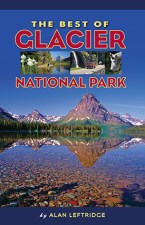
If you have time, take a red bus trip on Sun Road or up to Waterton. These 1936 restored tour buses are fun to ride in and, when the convertible tops are rolled back, give you a great view of the mountains. If your time in the park is short, consider including one bus tour, a launch trip, and scheduling in some time for short hikes around the hotel where you’re staying. Alan Leftridge’s book (shown here) lists the best places to see, grouped by category. It’s a valuable guide for people who only have a day or so for a quick trip.
If you have problems with stairs, you should know that while Many Glacier Hotel has an elevator in the main section, the four floors of rooms in the annex are accessible only by steep stairs. Glacier Park Lodge has no elevators, so try to get a room at ground level. I found the foods served in the main dining rooms of the hotels to be tasty, but overly rich. (Be sure to try at least one of the deserts, drinks or ice creams made with Huckleberries.) If you’re there for a few days, you can venture out to Swiftcurrent if you’re staying at Many Glacier, multiple private restaurants at East Glacier if you’re staying at Glacier Park Lodge, several restaurants at St. Mary if you’re staying at Rising Sun, and a variety of restaurants at Apgar and Kalispell if you’re staying at McDonald Lodge. Bison Creek Ranch a few miles for East Glacier is a favorite of mine for steaks and chicken.
If you’re a light sleeper, take a white noise machine. The walls of these old hotels are thin and the doorways are not tight fitting–you won’t want to hear people talking or snoring in adjoining rooms. WiFi in the hotels is only available in a few areas and is overloaded by multiple guests trying to log on. Cell phone reception is spotty or not available. Take multiple layers of clothes. You may need a jacket at night in August and the wind in the higher elevations can be chilly all through the summer. If you have a small umbrella or a fold-up poncho, take it: rain comes out of nowhere.
Yes, the 2014 season only has about a half a month left to go. Had you been at the park a few days ago, you would have seen a great display of the northern lights. The wind at Logan Pass and elsewhere will be getting noticeably colder. You may see some snow in the higher elevations. If you like to ski or hike with snow shoes, the park is open throughout the Winter.
Glacier is on my mind this month with the release of the new paperback* edition my contemporary fantasy adventure novel which is set in and around Many Glacier Hotel. The reality comes from faithfully including what I remember about the Swiftcurrent Valley, Lake Josephine and the Ptarmigan Tunnel. The fantasy comes from a look-alike universe reached via a portal (which you won’t see from the Lake Josephine Launch) hidden near a shelter lean-to used by hikers. If they only knew how close they were to a very dangerous world–as my young protagonist discovers. He’ll have to learn how to use magic if he wants to make it back to the world of Glacier National Park.
With all the high-energy buzz surrounding books like Donna Tartt’s The Goldfinch, Amy Tan’s The Valley of Amazement, and John Grisham’s Sycamore Row, I have to look a little harder to find new fantasy fiction, especially contemporary fantasy.
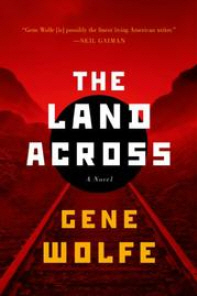
So, I’m happy to see that Gene Wolfe’s (“The Book of the New Sun” tetralogy) new release from Tor Books will appear a few days before Thanksgiving filled with corruption, supernatural powers and a Kafkaesque flavor. The Land Acrossunfolds in an imaginary Balkan country that’s difficult to visit and more difficult to leave–in part because of the secret police and in part because of a cult called the Unholy Way.
Teaser Excerpt from the Novel
Like most countries it is accessible by road or railroad, air or sea. Even though all those are possible, they are all tough. Visitors who try to drive get into a tangle of unmarked mountain roads, roads with zits and potholes and lots of landslides. Most drivers who make it through (I talked about it with two of them in New York and another one in London) get turned back at the border. There is something wrong with their passports, or their cars, or their luggage. They have not got visas, which everybody told them they would not need. Some are arrested and their cars impounded. A few of the ones who are arrested never get out. Or anyhow, that is how it seems.
Wolfe
Reviews
Kirkus Reviews says The Land Across “seamlessly blends mystery, travelogue, authoritarianism and the supernatural.”
Publishers Weekly says “Wolfe evokes Kafka, Bradbury, and The Twilight Zone in combining the implausible, creepy, and culturally alien to create a world where every action is motivated by its own internal logic, driving the story forward through the unexplored and incomprehensible.”
According to Library Journal’s starred review, “Wolfe, in masterful mood, builds his characters, explores the puzzles, links the elements together and contrives to render the backdrop both intriguingly attractive and creepily sinister. Sheer enjoyment.”
And Booklist writes, “Master fantasist Wolfe feeds into every tourist’s worst fears in this cleverly constructed travelogue though a country figuratively accessed through a looking glass. When an American travel writer, Grafton, sets out to document his experiences traversing a small, exceedingly obscure Eastern European country (the land across the mountains), he winds up in a nightmarish predicament from which there appears to be no escape.”
I like contemporary fantasy because, in blending magic into the real world, it brings us plots and characters that seem somewhat more plausible than swords and dragons on far-away planets. Almost everyone who has traveled has worried about being lost in an unfamiliar and unfriendly place. Wolfe’s protagonist is a travel writer who should know his way around the risks, but he’s nonetheless trapped in a place where mere unfriendliness would be a plus.
Malcolm R. Campbell is the author of contemporary fantasy novels, including “The Seeker,” “The Sailor and “The Betrayed.” Released this month, “The Betrayed” features a young English teacher at a small campus where lies and deceits take precedence over literature, history and science.
The Decatur I knew from many childhood vacations to visit my grandparents on West Wood Street no longer exists. My grandparents house, featured in novels The Sun Singer and Sarabande, has been torn down for reasons unknown.
The interurban trains and the streetcars are long gone and the old transfer house where people changed trains and buses in Lincoln Square is now an heirloom in a city park. Since I haven’t been to Decatur for years, I don’t know whether the pungent odors from the Staleys plant still blanket the city when the wind is blowing the wrong direction.
Fairview Park is still there–minus the passing interurbans–and I see from maps and park brochures that it has evolved over the years. It still sits a few blocks away from the place my grandparents’ house once stood. It was perfect for day trips and–a half century later–equally perfect as a location setting in my novels. As children, my brothers and I hiked in nearby Spitler Woods.
Greenwood
I’ve heard that the notorious Hell Hollow has been cleaned up, but that on certain evenings one can still see ghostly lights in Greenwood Cemetery. The Haunted Decatur website claims that the dead still walk and, quite frankly, that is something I would like to see. A few miles down the road, the trails of the widely known Allerton Park echo in my memory as well as in my novel The Sun Singer which was named after the famous statue in the park.
Childhood’s Magic Calls Me Back
As an author of contemporary fantasy–that is to say, fantasy mixed into real locations as in the Harry Potter series–I have variously used Glacier Park, Florida’s Tate’s Hell Swamp, Decatur and other locations as story settings. I have mixed the old and the new by tangling up personal memories and the histories of these locations in my work.
Robert Adams in The Sun Singer visits Allerton Park and has a psychic experience–as I once did–beneath the Sun Singer statue. In my upcoming short story “The Lady of the Blue Hour” for “Aoife’s Kiss Magazine,” I blend myths and history from the days when Illinois was a French Province with a young man who lives on West Wood Street next to my grandparents’ house. And, in my soon-to-be-released novel The Betrayed, I set much of the action at a fictional college and tangle that up with the streets and houses in Decatur’s West End Historic District (not too far from where the Transfer House once stood).
While I enjoy mixing contemporary fantasy, location setting history and personal memories together in my stories, I don’t necessarily advise other writers to do it. It makes it difficult at times to separate real memories from one’s fiction. The real location settings make fantasy more believable, I think. The real-life experiences–readers don’t know which events those are in the story–make fantasy more dear to the author during the writing process.
Sun Singer at Allerton Park in nearby Monticello
This quote from author P. L. Travers (author of the Mary Poppins books and a primary character in the new feature film Saving Mr. Banks) closely approximates my beliefs about the stories I set in Decatur: “We cannot have the extraordinary without the ordinary. Just as the supernatural is hidden in the natural. In order to fly, you need something solid to take off from. It’s not the sky that interests me but the ground. . . . When I was in Hollywood the [script] writers said, surely Mary Poppins symbolizes the magic that lies behind everyday life. I said no, of course not, she is everyday life, which is composed of the concrete and the magic.”
Naturally, my stories about ghosts, flying horses, magic avatars’ staffs and alternate realities and universes cannot be published under the banner of realism or mainstream fiction. So, while much of what I write about Decatur and Glacier Park and Florida Panhandle swamps is real, I’m officially a contemporary fantasy author. I don’t mind: I read a lot of fantasy.
And, when I read fantasy, I wonder how much of the magic is real and how much of it is truly fiction. However, since this is another of my “on location” posts, I assure you that Decatur, Illinois is real–or mostly real, depending on who you ask.
–Malcolm
Malcolm R. Campbell is the author of Conjure Woman’s Cat
People often say they need time to recuperate from their vacations before going back to work. Yeah, my knees and ankles hurt after walking miles and miles between airport gates in order to travel from Georgia to Montana and back. But really, it’s mental relaxation I’m needing. (My brain doesn’t have a automatic transmission, so I have to manually shift from vacation mode to work mode.)
Oh, so we can’t get meals delivered to our table without going to a grocery store first?
Oh, are you telling me there’s no yard crew keeping the flowers happy and the grass green and well-mowed like there was at Glacier Park Lodge?
But, without missing a beat, the credit card bill arrived a few moments after we got home. Naturally, there was nothing in the mail from Hollywood telling me they want to pay me 100 grand to make The Seeker into a blockbuster movie. But the credit card people didn’t waste any time telling me it’s time to fill their collection plate.
As a contemporary fantasy author, I try to keep reality to a minimum, but so far, I haven’t found the right magic formula for limiting the amount of reality in real life.
Oh, so those prescription meds don’t jump into the bottles automatically unless I call them in first and then drive down to the pharmacy and pick them up?
There’s a plus side to work mode reality. Even though work mode includes chores, it’s cheaper than vacation mode. And really, work mode food is gentler on our digestive systems.
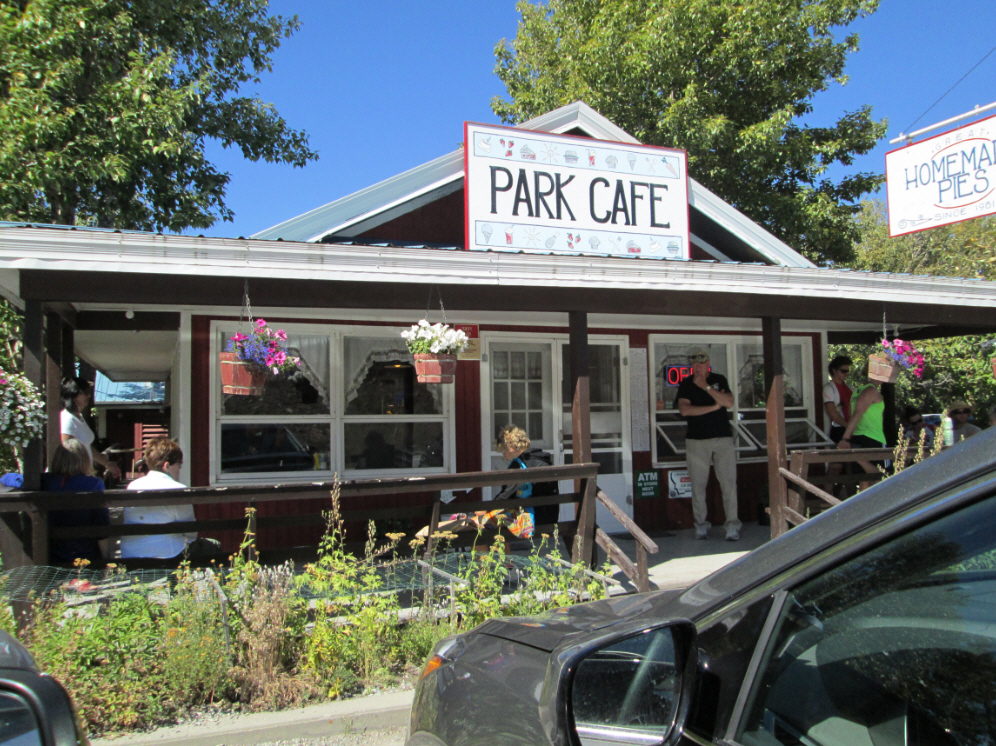
I’m glad we could catch a few Montana meals at the Park Cafe, Bison Creek Ranch, Luna’s, and the Whistle Stop cafe because the chefs at both Many Glacier Hotel and Glacier Park Lodge have a preoccupation with overly spicy food. Can’t you put a few plain dinners on the menu to give our stomachs a break?
Since I’m writing this post instead of working, you can tell I’m not completely out of vacation mode. Shifting gears is a work in progress.
I used Glacier National Park’s Iceberg Lake in “High Country Painter,” of the three short stories in my family-oriented e-book/audio book Emily’s Stories.
Where Is It?
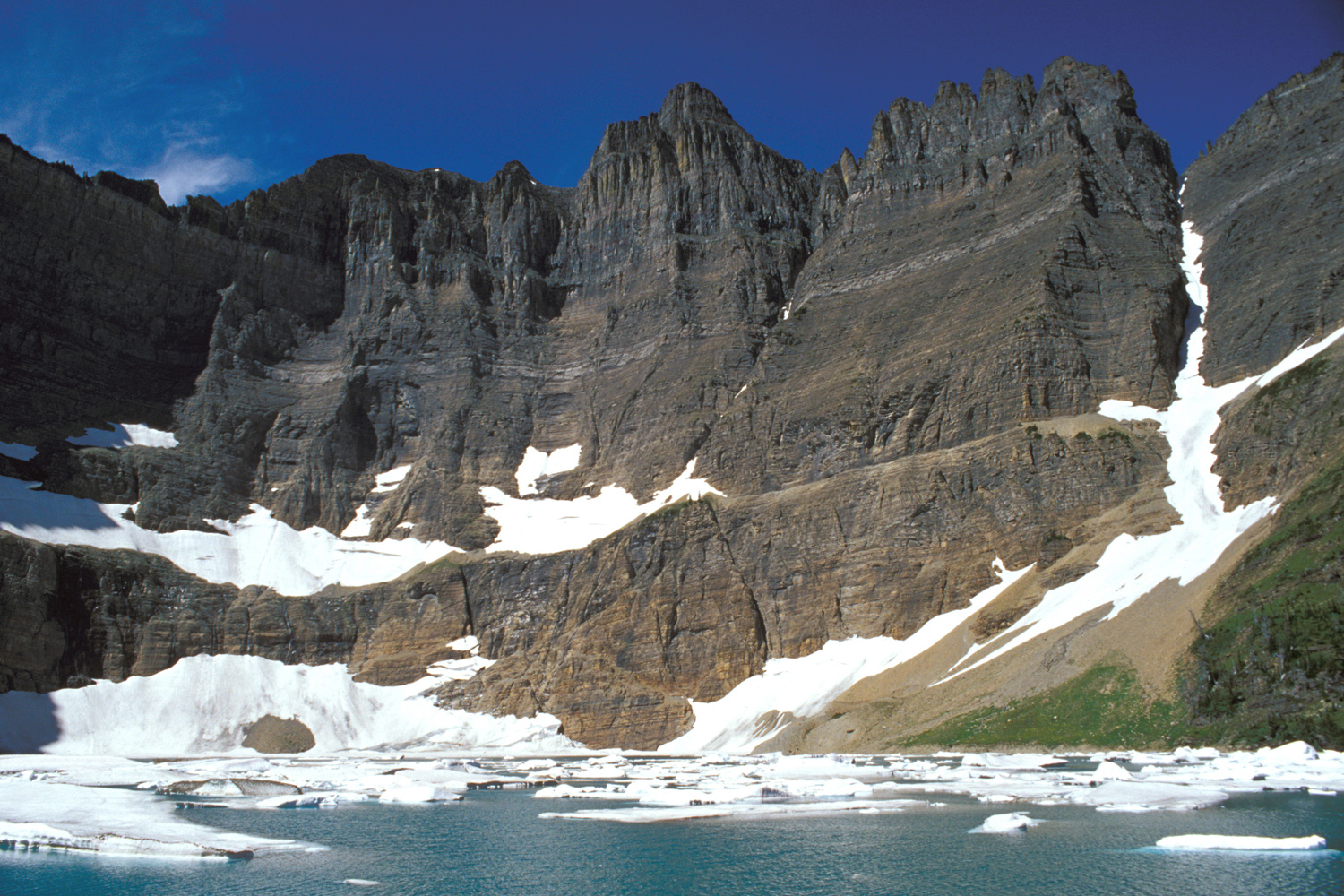
Iceberg Lake is a 5.9- mile hike from Many Glacier Hotel on the east side of Montana’s Glacier National Park. The lake, which is frozen over during the winter months, is named for the chunks of ice that float in it throughout the summer. It’s one of the most popular trails in the area.
En route to the lake from the hotel, the elevation increases 1,200 feet, however most of the uphill sections of the trail are gradual. For those who haven’t yet gotten used to the elevation or long walks, the hike provides a half-day of exercise.
In his book The Best of Glacier National Park, Alan Leftbridge lists Iceberg Lake as one as one of Glacier’s seven best day hikes. His level of difficulty for the hike is moderate. Hiking in Glacier calls the hike strenuous. (I guess it depends of whether or not one is out of shape!) If you don’t have a hiking guidebook, this web site provides a good overview of the trip.
How I Used it In the Story
Trail to Iceberg Lake – Photo by GlacierGuyMT
Young Emily Walker and her family travel from Florida to Glacier National Park for a family vacation. She accompanies her father on the hike while her mother spends the day around the hotel. Since she occasionally talks to birds and spirits, she knows something unusual will happen at the lake.
Why I Used the Lake
Iceberg Lake
Emily and her father are used to the sinkhole lakes and blackwater rivers in the Florida Panhandle. I wanted to put them into a new environment. The arête in the picture is called the Garden Wall and it not only provides a lot of ice and snow to look at, but frequent mountain goats as well.
The lake sits in a cirque, a carved-out bowl left by ancient glaciers, and since it’s such a popular spot, hikers will almost always find ground squirrels and chipmunks there begging for food. The lake sits in bear country, so it’s always good to check with the rangers for to see if there have been any grizzly bears in the area before you begin your hike.
The hike also features many wild flowers as well as some very different views of the mountains than one sees from the hotel. There are good views of many rock formations and other features of glaciation,
The first mile of the hike is on the paved road that connects the hotel complex to the camp store and the campground; park your car at the store to save a bit of walking.
Excerpt from Emily’s Stories
Available on Kindle and as an audio book
The horizon was hidden by a grey wall of rock which, according to the pack, also concealed incoming storms; now, carrying rain jackets on a sunny day made sense. By the time they passed the noisy waterfall and strolled through lacey-white bear grass (without bears) and scattered Indian paintbrush that gentled the grey rock (“limestone,” her dad said, descriptively), Emily was ready for lunch.
Deep snow lay hard-packed around the lake’s far shore where the limestone wall created a playground for mountain goats running across their grey and white world as nimbly as Southern chameleons ran along the Walters’ brick house. Sunny Florida was, as advertised, sunny and hot, but here deep summer had only melted the ice off half of the lake’s surface.
“I am astonished,” said Emily, dropping her knapsack on the ground and running down to the water. The water was as cold as it looked.
“Punkin, ‘astonished’ is a new word for you,” her dad said. He knelt down and splashed water over his
face.
–
Summing Everything Up
My teenaged protagonist talks to birds and spirits, so her stories are always set outdoors. Like other visitors to the hotel, the hike to the lake is one she would probably take. It provides great scenery for Emily to experience with her father as long with the possibility a bear might appear.
I worked at the hotel as a bellman for two summers and walked up to this lake many times. Using it in the story is an example of a writer writing what he knows.
The fifteen stories in this finely honed and well-polished collection have the power to cut away assumptions and alter a reader’s focus and direction as only a storyteller’s magic can do. Borrowed and reshaped from older folktales out of Anita Endrezze’s heritage and imagination, these stories take on new life in their contemporary settings.
In her author’s note, Endrezze writes, “I hope Butterfly Moon will take you adrift in another world that challenges and transforms your perceptions, yet leads you back home to yourself.”
Reality, the oldest shapeshifter we know, dances lightly on the pages of Butterfly Moon and often gives way to enchantments, supernatural events, and the whims of gods and fate. As prospective blessings for the reader’s journey, these stories don’t necessarily fit the traditional narrative arc of a problem leading to a climax. Endrezze’s tales are often unresolved slice-of-life glimpses into her characters and settings that end with a dire occurrence, an acceptance of fate, a troubling paradox or the workings of karma.
The joy, anger, life, and death in Endrezze’s vision are not bound by time, nor are they distinctly separate from the active and sentient world in which they’re set. “On This Earth” begins with the words, The house was a forest remembering itself. The pine trees that held up the walls dreamed of stars dwelling in their needles. When Desetnica leaves home to roam the world in “The Dragonfly’s Daughter” because she is the tenth child, it’s clear that the forest is watching when The blackberry bushes parted their thickets as I waded through green knots of fruit. After I passed, still following the dragonfly, the vines knitted together again, so that I was lost to the other side of kinship and orphaned into the unnamed forest.
While tightly knit into the stories’ plots, myth and symbolism add depth without intruding into the author’s economy of words, understated approach and matter-of-fact reverence to the cultural origins of her material. Endrezze does not explain or editorialize, but her omniscient care is everywhere through this collection from the paradoxes of “Raven’s Moon” to the grim unfolding of “The Vampire and the Moth Woman” to the humor of “Jay (Devil-may-care!)”
For the lovers of myths, legends, and folktales, this collection is highly recommended and a unique delight.
Malcolm R. Campbell is the author of paranormal short stories and contemporary fantasy novels, including the recently released mix of love and fate called “The Seeker.”
Today’s guest post by Laura K. Cowan (The Little Seer) examines speculative supernatural fiction and its relationship to fantasy. As authors, we often like to push the envelope, so to speak, and explore new realms. Speculative fiction of all kinds has been a popular arena of late.
It’s difficult to sort through all the variables that make for good fiction as new genres and sub-genres come on the scene, but one important consideration is the readers’ comfort level. Some fantasy readers stick to one area, while others see all the colors and hues of fantasy as a tempting smorgasbord. I’m always tempted to try new treats. How about you?
Speculative Supernatural Novels and the Growing Fantasy Genre
The fantasy genre is a diverse one, from the elves of high fantasy to pookas and werewolves at the intersection of fantasy and fairy tales, all the way to the dark fantasy of authors like Neil Gaiman with mainstream appeal. But a growing number of writers not satisfied with the status quo is beginning to write a new sub-genre called speculative supernatural. What is it and why should fantasy readers care?
Well, as a speculative writer, I suppose I’m biased, but I think readers of fantasy will embrace the speculative supernatural genre for one reason: it’s never boring! In a similar way that science fiction takes a “What if?” question of technology or science and stretches it into the future, speculative supernatural takes a “What if?” question and pushes into the spiritual or supernatural. Everything from weird ghost stories to spiritual warfare novels with warring angels and demons, to the cosmological stories that explore the physical and metaphysical nature of the world can fall under speculative supernatural, and that can take a reader and a writer down a very deep rabbit hole indeed. Isn’t that where all the best fantasy fiction goes?
Angels, Demons and Dreams
This week, my debut novel The Little Seer was pushed to the top of the Amazon Bestseller lists for free fiction when I made the first book of the novella trilogy, Exodus, free for 5 days. We all love free, but what I think really made this book an instant hit with readers was the premise. The story follows a young girl who wakes from a nightmare that her church is destroyed by a tornado and her pastor orders crows to peck out her eyes, only to discover deep cuts on her arms where she was attacked. And it only gets stranger from there, as her dreams unfold in her waking life and she finds herself the focus of a spiritual war over her life and town that could decide the fate of millions.
The supernatural angle of this book is obvious: angels, demons, and a behind-the-veil look at heaven as it manifests itself in our minds and around us at all times. But in order to make this story really gripping, I had to bring the supernatural into the natural in a literal way. “What if your dreams could really hurt you?” I asked myself. “What if what appears to be the safe choice spiritually could not only devastate your soul but risk your life?” “What if God wasn’t who you were told he was, and neither were you? How would you find the truth? ” And suddenly my character was an armchair theologian no more. She found herself diving deep into symbolic prophetic dreams and the depths of her own mind to seek answers to pressing questions, even as her family and church and community fell to pieces.
A Viable Fantasy Sub-Genre
The books I’m working on for the next few years all contain a similar thread of speculative thought and supernatural themes, but I’m excited to see how this work doesn’t fit in a box. It’s too out there for the Christian market even when it does contain angels and demons, but it’s too spiritual for a mainstream market. I think fantasy is the ideal home for my work, because my next novel Music of Sacred Lakes deals with a mystical connection with nature through a haunting that saves a young man’s life, and my upcoming short story collection The Thin Places: Supernatural Tales of the Unseen actually takes 30 separate speculative “What if?” questions and spins them in all directions, from modern mythology to the marriage of fairy tales and time travel. Like I said, never boring, and who knows interesting stories better than fantasy fans?
Welcome to the speculative supernatural genre. Let’s jump in together and see how deep the rabbit hole goes.
–
On February 19th, Amber McCallister, who often reviews speculative fiction, will overview The Little Seer and provide an excerpt on her Wonderings of One Person weblog. Erin El Mehairi will be interviewing Laura on February 20 at Oh for the Hook of a Book!
The Little Seer is available on Amazon in paperback and on Kindle.
You can also find Laura at her website and on Facebook and Twitter at @laurakcowan. And, I would like to thank her for stopping by Malcolm’s Round Table today.
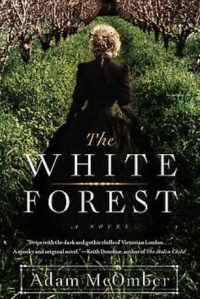
Adam McComber’s The White Forest (which I’m currently reading when I should be working) introduces protagonist Jane Silverlake, a young lady with an affinity for man-made objects that transcends psychometry. It’s as though they have souls and agendas that are much more than simply the traces of those who made them or owned them.
The novel is set in Victorian England at a time when some people are interested in the latest frontiers of spiritualism while others think anyone with odd talents is a witch. Jane has only shared her talent with two close friends and, soon after the novel begins, one of them disappears. Jane’s best friend is distraught as well as suspicious, and the police are looking at everybody.
From the publisher
In this hauntingly original debut novel about a young woman whose peculiar abilities help her infiltrate a mysterious secret society, Adam McOmber uses fantastical twists and dark turns to create a fast-paced, unforgettable story.
Young Jane Silverlake lives with her father in a crumbling family estate on the edge of Hampstead Heath. Jane has a secret—an unexplainable gift that allows her to see the souls of man-made objects—and this talent isolates her from the outside world. Her greatest joy is wandering the wild heath with her neighbors, Madeline and Nathan. But as the friends come of age, their idyll is shattered by the feelings both girls develop for Nathan, and by Nathan’s interest in a cult led by Ariston Day, a charismatic mystic popular with London’s elite. Day encourages his followers to explore dream manipulation with the goal of discovering a strange hidden world, a place he calls the Empyrean.
A year later, Nathan has vanished, and the famed Inspector Vidocq arrives in London to untangle the events that led up to Nathan’s disappearance. As a sinister truth emerges, Jane realizes she must discover the origins of her talent, and use it to find Nathan herself, before it’s too late.
Praise from the Chicago Sun-Times
“What sets “The White Forest” apart from other contemporary novels is Adam McOmber’s careful attention to language. While it is the Columbia College professor’s first full-length novel, “The White Forest” is written with an imaginative and haunting prose reminiscent of H.P Lovecraft.”
Praise from Kirkus Reviews
“Teeming with as many twists and turns and shadowy characters as the narrow Victorian streets in which the tale is partially set, McOmber creates a . . . supernatural mystery that bombards the senses with rich dialogue and imagery.”
Opening Lines
“When Nathan Ashe disappeared from the ruined streets of Southwark, I couldn’t help but think the horror was, at least in part, my own design. I’d infected him, after all, filled im up with my so-called disease. The rank shadows and gaslight in the human warens beyond Blackfriars Bridge did the rest. Madeline Lee, my dearest friend, would come to hate me for what I’d done.”
–
This well-written mystery/historical/fantasy has lured me into another world.
“Fantasy: A general term for any kind of fictional work that is not primarily devoted to a realistic representation of the known world. This category includes several literary genres describing imagined worlds in which magical powers and other impossibilities are accepted.” – The Concise Oxford Dictionary of Literary Terms
When I tell people I write contemporary fantasy, sometimes they say, “wow, cool” and sometimes they say, “I read the Chronicles of Narnia when I was little, but know little about the genre.”
There are so many types, styles, flavors an sub-genres in fantasy, the wealth of material out there to read is often hard to explain to those wanting to know more. I agree with Terry Pratchett when he says that “Fantasy is an exercise bicycle for the mind. It might not take you anywhere, but it tones up the muscles that can. Of course, I could be wrong.” However, here are a few links and ideas that are a bit more specific.
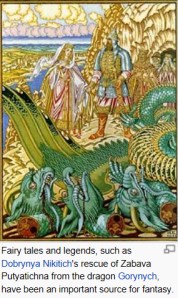
Wikipedia has a decent article on fantasy that works as a starting point. (Click on the graphic to read it.) The main article branches off into a series of additional links for sub-genres, books, and authors.
When people want to know more about the types of fantasies, I often send them to sites like Focus on Fantasy for a quick overview and Top 50 SciFi & Fantasy Novels blogs where they can sample some of the viewpoints and commentary out there.
I like Best Fantasy Books because it introduces newcomers to fantasy by listing books in various groupings and then, for each book, showing others that are similar to it. If you look at this site, you’ll find stand-alone books, books in a series, influential books, and a cool list called “Fantasy That Blows Your Mind.”
To keep up with recent books and new titles, you can subscribe to Amazon’s list via RSS. This puts it on your browser where you can click on it easily and see the names of the titles. You’ll find recent fantasy book reviews on Fantasy Book Critic. This site also displays an excellent blogroll that will send you off on an exploration of fantasy blogs, most of which links you to more blogs.
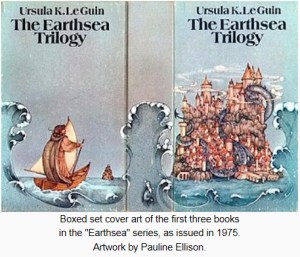
Once you find a favorite author and genre, s/he will often be another source via comments, interviews and viewpoints in a personal blog or web site. Fantasy is so diverse, that it’s really hard to nail it down and say that any one book of series is representative of the genre. Personally, I like contemporary fantasy the best because it overlaps are known world as J. K. Rowling did with her Harry Potter series. Rowling, though, is apples and oranges different from, say, Tolkien, or Erin Morgenstern’s recent The Night Circus or Ursula K. Le Guin’s classic Earthsea series.
Kindle, Nook and other e-readers make it easy to sample a variety of fantasy books at a lower cost before adding your newly discovered favorites to your bookshelf in hardcover or paperback. You can even find some of the older fantasies available on Project Gutenberg and other sites as free downloads. Happy exploring!
–Malcolm
Malcolm R. Campbell is the author of contemporary fantasy, including “The Sun Singer,” “Sarabande,” and the upcoming “The Seeker” (March 2013).















 Malcolm's Round Table