Crown of the Continent Resources

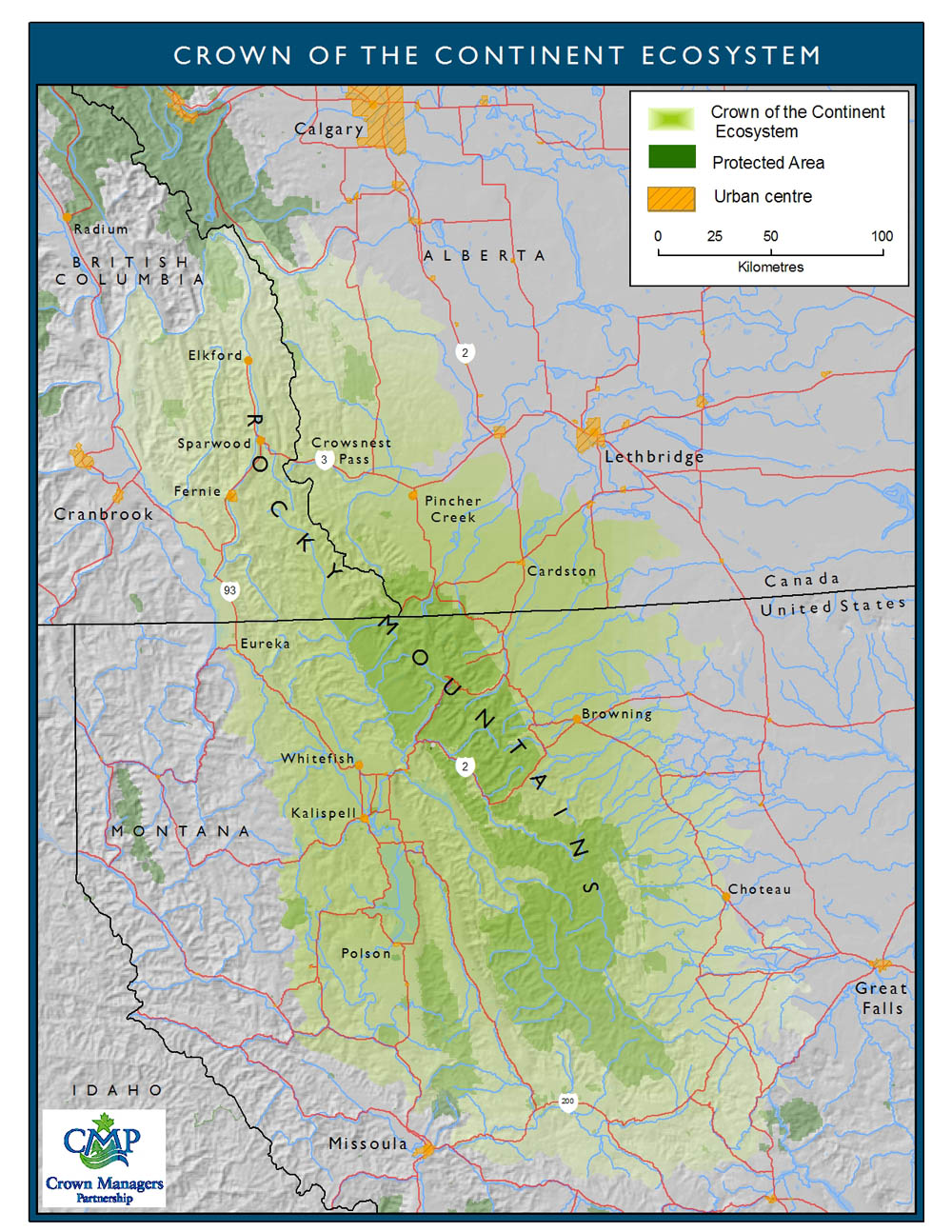
The ‘Crown of the Continent’ ecosystem is one of North America’s most ecologically diverse and jurisdictionally fragmented ecosystems. Encompassing the shared Rocky Mountain region of Montana, British Columbia and Alberta, this 28,000 square mile / 72,000 square kilometre ecological complex spreads across two nations; across one state and two provinces; and across numerous aboriginal lands, municipal authorities, public land blocks, private properties, working and protected landscapes. — Crown Managers Partnership

As national headlines focus on whether a potential lack of funding at the federal level will jeopardize national parks and water quality standards, I thought I would focus on the positive work being one throughout the Alberta/Montana/British Columbia Crown of the Continent Ecosystem by listing a few of the organizations you can turn to for information, programs and advocacy.

Alberta Wilderness AssociationAlberta Wilderness Association (AWA) is the oldest wilderness conservation group in Alberta dedicated to the completion of a protected areas network and the conservation of wilderness throughout the province.

Bob Marshall Wilderness ComplexTogether, the Great Bear Wilderness, the Bob Marshall Wilderness and the Scapegoat Wilderness form the Bob Marshall Wilderness Complex, an area of more than 1.5 million acres.

Crown of the Continent EcosystemEncourage and support coordination and cooperation among individuals, organizations, and agencies whose purpose is to educate and inform people of all ages and backgrounds about the human and natural resources of the Crown of the Continent Ecosystem.

Citizens for a Better FlatheadTo inform and empower citizens in cooperative community development that respects and encourages stewardship of the Flathead Valley’s natural beauty and resources.

Flathead National ForestStretching along the west side of the continental divide from the US Canadian border south approximately 120 miles lies the 2.3 million acre Flathead National Forest. The landscape is built from block fault mountain ranges sculpted by glaciers, and covered with a rich thick forest.

Headwaters MontanaWe are working to secure the highest level of protection possible for pristine public lands, such as watersheds in the Swan, Mission, Whitefish and Yaak ranges and untouched Crown lands across our border with Canada.

National Park Service, Glacier National ParkCome and experience Glacier’s pristine forests, alpine meadows, rugged mountains, and spectacular lakes. With over 700 miles of trails, Glacier is a hiker’s paradise for adventurous visitors seeking wilderness and solitude.

Nature Conservancy – MontanaOur mountains, rivers, grasslands and forests make Montana a natural paradise.

Waterton Lakes National ParkRugged, windswept mountains rise abruptly out of gentle prairie grassland in spectacular Waterton Lakes National Park.

While there’s much to be done on behalf of our environment, we can, I think, make better progress by making commitments to positive change as individuals and groups rather than standing on the sidelines and preaching to the choir about what we don’t like. We know what we need to do–or, we can learn.

Malcolm

Malcolm R. Campbell is the author of two novels set partially within the Crown of the Continent ecosystem, “The Sun Singer” and “Garden of Heaven.” The e-book edition of his comedy/satire, “Jock Stewart and the Missing Sea of Fire,” is currently on sale for only 99 cents at Smashwords and on Kindle.
In Wildness is the Preservation of the World

North Georgia Christmas
“Machinery and convenience are too often mistaken for civilization nowadays, but in fact civilization can be measured only by whether we live in harmony with nature, with one another, and with the divine.” — Arthur Versluis in “Island Farm”

In her excellent post called “Winter Walks and the Wild,” author and editor Zinta Aistars ponders the reasons she is drawn away from suburbia into the bitterly cold, snowy countryside of Michigan. She’s looking for a connection with the wild and, when she finds it, she also finds harmony.

She’s been reading Arthur Versluis’ “Island Farm,” a book that author James Cowan calls “a Walden for our time.” The book matches Aistars’ experience and for those who cannot—or who have not yet—gone in search of nature in its most basic form, the book tells us what we are missing and what we have lost.

What we are missing is our connection with the rest of the planet. By this I don’t mean our ability to watch breaking news from the far side of the world as it happens or to communicate with others through blogs and Facebook. The wonders of our technology obscure its deficits.

When Thoreau wrote the words “in wildness is the preservation of the world” in “Walking” in 1862, he went on to say that “the founders of every state which has risen to eminence, have drawn their nourishment and vigor from a similar wild source.” The comforts of our civilization have, I believe, not only blocked the flow of understanding and energy from that source, they have blocked our respect for the source as a viable source.

Nonetheless, we are hearing more about about nature and spirituality and connections these days. When we first heard such thoughts, we—as a modern society—tended to label them as tree-hugger platitudes and new age mumbojumbo. Now we’re starting to see that there might possibly be something happening behind the fog of platitudes and mumbojumbo. Hard science documents some of it and personal experience, like that of Zinta Aistars, documents some of it.

At present, we’re not yet sure just how big “it” is. We’re drawn more and more to the wild, but we’re not yet ready to plunge into it with a point-of-no-return attitude: “I want to become one with the deer from the comfort of my toasty warm car.”

The nearest shaman in our neighborhood still has a lot of teach us about connecting with the wild. And we still have a lot of listening to do before we’ll understand once and for all that our lives depend on that wildness more than on our technology.

“Civilization has so cluttered this elemental man-earth relationship with gadgets and middlemen that awareness of it is growing dim. We fancy that industry supports us, forgetting what supports industry.” — Aldo Leopold in “A Sand County Almanac”

Only $5.99 at OmniLit

‘The Wolverine Way’

“These animals’ off-the-charts strength and survival skills had become a source of inspiration for me by now. Even so, I was never going to get used to dealing with the intensity of a wolverine when it’s up close and cornered.” — Douglas Chadwick, National Parks Magazine, Winter 2011

Seven years ago, author and biologist Douglas Chadwick volunteered for The Wolverine project, a five-year study conducted in Glacier National Park by The Wolverine Foundation. Chadwick has compiled his experiences into The Wolverine Way, a 250-page book released in May by Pantagonia. (There’s a detailed story in the June18th issue of The Missoulian.)

Chadwick’s book and the related article in the current issue of National Parks may help dispel some of the myths and misunderstandings about this seldom-seen animal that is, as Chadwick says, “more complex than the legends that surround it.

As the non-profit Wolverine Foundation notes on its website, it is focusing on the wolverine not “because we feel the wolverine is in danger of extinction, but because it is in need of attention.” The site includes links to the growing database of wolverine information that will suit the needs of wildlife biologists and the general public.

The Wolverine Way is a nice addition to the library of those with a passion for Glacier National Park.

One can only stand in awe of an animal with a strategy that Chadwick suggests might sound like this:  “Go hard, and high, and steep, and never back down, not even from the biggest grizzly, and least of all from a mountain.”

Set partly in Glacier Park, the e-book edition of this novel is only $5.99

Glacier Artist-in-Residence Applications Due by February 15

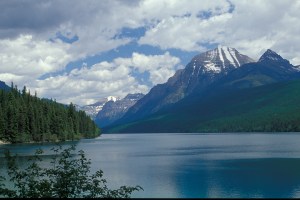
Bowman Lake - NPS photo

Glacier National Park’s artist-in-residence program is open to artists and writers who want to experience the wonder of the park for four weeks this coming summer and, while there, donate their time, inspiration and creative work in support of the park’s environmental education program.

Applicants for the summer of 2011 will be reviewed based on their ability to “produce children’s educational art and materials including scientific illustrations, drawings and graphics; poetry, prose and stories; puppet shows, plays, and song lyrics (for existing or original music); music; and educational lesson plans and resource information guides. These products must be about Glacier and its plants, animals, habitats, geology, natural processes, history and beauty and suitable for use with elementary and middle school children. Thus, the 2011 Artist-in-Residence Program is open to children’s artists, writers, poets, composers, song writers, musicians and academics with relevant experience and backgrounds.”

Applications must be postmarked by February 15, 2011. Click here for information and the address for submissions. The National Park Service will make its selection of one or two individuals for the program in March for residencies to be conducted between mid-June and Labor Day.

Malcolm

A Glacier Park Adventure Available on Kindle

Francine Cousteau: Danube Delta Water Monitoring Needed

from the Cousteau Society:

Since October 4, Hungary has suffered from an unprecedented environmental catastrophe: a reservoir belonging to Magyar Aluminum (MAL), ruptured, for unknown reasons, and poured a mini-tsunami of more than 1.1 million cubic meters of red sludge full of heavy metals and acids into the Raab River, a tributary of the Danube. The caustic mud devastated everything in its path, killed half-a-dozen people and destroyed the fauna and flora in its way.

Since October 10, water samples have shown that the pollution has reached the Danube. The flow of the sludge could ravage the entire ecosystem—plants and animals. Days after this spill, while Hungary fears a second flood of toxic mud, the retaining walls of the reservoir are showing major cracks.

This sludge is part of the wastes inherent in the production of aluminum: for every ton of aluminum, three tons of red mud are produced. This mud is made up of iron, aluminum oxide and lead, among other things. According to initial reports, the reservoir ruptured because it was filled beyond capacity with waste. For its part, the company states that it abided by all safety measures. But now that Europe’s great river, the Danube, has been affected, the problem is an international one: Romania will inherit the catastrophe and, ultimately, it is in the delta that the deadly mud, however diluted, will end up.

As President of the Cousteau Society and Equipe Cousteau and ambassadress for the Danube Delta, I call for responsibility on the part of the countries that border the Danube to create a common authority to monitor and oversee installations that pose such risks and to adopt rigorous common measures to manage the aquatic environment in order to protect against such risks. Moreover, I demand that a legal system be quickly put in place, which will apply to all 18 countries that border the Danube, as well as a Permanent International Court of the Environment where polluters will be judged.

In 2010, Europe can no longer tolerate an “every man for himself” approach to water management. In cooperation with scientists from the region, Francine Cousteau is organizing an urgent on-site mission to analyze all the consequences of this major environmental catastrophe.

Finding Your Sacred Ground

When I think of sacred ground, I do not necessarily mean churches, shrines, disaster areas, or the holy places of Native Americans. While any of these sites may be sacred for one person or another, they aren’t all there is.

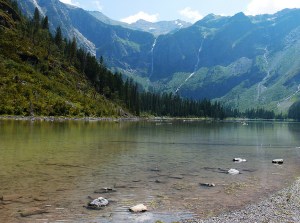
Cirque, Glacier National Park by cloudsoup on Flickr
For me, sacred ground is a special place, public or private, where I am comfortable, in harmony with the plants and animals and landforms, and am able to tune into the place at a spiritual level and “hear” it speak to me.

Such a place might be the garden in one’s back yard, a public park or recreational area, a family farm, a hiking trail in a national forest, or a state or national park. For some people it can even be a city, whether hardscape or park, where they find a multitude of values from culture to creature comforts to their psychic health.

My approach to wild places leads me to “hear” not only the place itself, but the people who have been there over time. Places tend to store up the emotions of the people who frequent them, so the comfort or discomfort I may feel in them is not simply because I either like or feel intimidated by the view or the vegetation or the animals there. The place includes the joys and sorrows of its visitors.

Of course, when we like a place, we tend to go back there again and again, and that builds up not only a personal history but an increased sensitivity to what the place has to say to us. Once there, one can tune into the place simply by sitting on a mountain summit and watching the clouds or by walking along the shore and simply being there with the waves wrapping around our feet. One can tune in by quietly observing wildlife or (if nobody’s around to make us feel self conscious), we can talk to the trees or the water or the animals.

Other people prefer to “open themselves up” to a place by sleeping beneath a tree or sipping water in a sunny meadow or through various meditation techniques. It’s been my experience that if one goes into a place while thinking of the office and the economic crunch and the impending car repairs, they might leave the place feeling better than they did when they walked into it.

Yet, if one walks into their backyard garden or a few miles down their favorite trail attending to the place itself rather than to projects and worries that don’t belong there, they will be better able to hear the place and leave at the end of the day with greater understanding, serenity and appreciation for their sacred ground.

Resources

You can see what others are saying about the value of one’s sense of place at The Powers of Place Initiative and Craig Chalquist’s article “Education for a Sense of Place.”

The Junior Earth Mage Club, based on the work of author Smoky Trudeau (“Observations of an Earth Mage”), presents inspiration and activities that teach young people respect for nature and how to best experience the out of doors.

Malcolm R; Campbell is the author of two novels set in Glacier National Park, his sacred ground. Purchases of “The Sun Singer” and the e-book edition of “Garden of Heaven” benefit the park through donations from Vanilla Heart Publishing.

Don’t fence me in

“I categorically resent the trash talk on the street that Atlanta is ‘Marching through Georgia.’ We’re paving through Georgia.” –Jack MacAdam, Metro Sprawl, Inc. in “Worst of Jock Stewart”

“Did you know that only two percent of the land in the Lower 48 is protected under the designation of Wilderness while the overwhelming majority of our nation’s land is open to development and industrial uses?” — The Wilderness Society

When the Homestead Act was passed in 1862, a horde of people–ultimately some 1,465,346 of them–rushed into our untamed areas and began meeting the challenge of “proving up” their 160-acre parcels of land. Successful homesteaders got to keep their land by making improvements to the property.

The Homestead Act has been viewed as significant, enduring, ground-breaking legislation. Nebraska’s National Monument created by President Roosevelt in 1936, reminds us “of the hardships and the pioneer life through which the early settlers passed in the settlement, cultivation and civilization of the Great West.”

Almost 150 years after the passage of the Homestead Act, we’re still being brainwashed by two of its principles, ideas that, while historically valid, are long out of date: (1) Unused land = available land, (2) Improved land is better than improved land.

We enjoy the benefits of civilization: roads, city centers, factories, stores, schools, farms and comfortable houses. Yet, I cannot help but view “developers” with a jaundiced eye because they are so willing to prove-up everything that is as yet unpaved. Like a wild horse, the ground needs to be broken, or so they say.

We need to fix what has already been broken instead of breaking what doesn’t need to be fixed.

Those of us living in the still-rural Jackson County Georgia are watching the tidal wave known as Atlanta gobbling up the countryside in all directions. Here, sixty miles away, one can almost hear the hordes of homeowners, builders, road builders and other advocates of sprawl racing up Interstate 85 in our direction.

It’s too late now to fix the prove-up attitude in north Georgia, though, if I had my way, I would build a giant fence around Atlanta and mandate that everyone who is inside must stay inside. Those of us who don’t like being fenced in by buildings, fast-food restaurants and all the other clutter of the nearby metro area will gladly stay outside the fence without any mandates whatsoever.

The land, I think, is perfect as it is, and we cannot improve upon it. Today, when we meet the kinds of challenges that were noble as part of the Homestead Act, we do so with poor results from loss of animal habitats to the destruction of watersheds to the fouling of forests and wetlands that we–ultimately–need for our survival.

As I look at the smaller and smaller amount of land that has yet to be “improved,” I think of Margaret Murie’s words, “I hope that the United States of America is not so rich that she can afford to let these wildernesses pass by. Or so poor that she cannot afford to keep them.”

Malcolm R. Campbell is the author of “Garden of Heaven” and “The Sun Singer,” adventure novels from which a portion of the sales is donated to Glacier National Park, Montana.

Let’s stop Underfunding the National Parks

“Our national parks and monuments support $13.3 billion of local private-sector economic activity and 267,000 private-sector jobs. Yet our national parks suffer from a $580-million annual operating shortfall and a backlog of maintenance projects that exceeds $9 billion. — National Parks & Conservation Association (NPCA)

According to the NPCA, tourism in the National Parks was up 5% last year. This brought money into many local economies as visitors stopped at restaurants and service stations, bought souvenirs, stopped at grocery stores for picnic supplies, and stayed in hotels that are either locally owned or that employ many people from the region.

To my way of thinking, investing in the National Parks isn’t optional. At a time when more funds are needed, the President’s requested National Park Service budget for 2011 is $21.6 million less than the 2010 budget. Bluntly put, this is backwards thinking.

We’re looking at a sinking ship that keeps taking on more and more passengers.

In 2008, Dr. Dwight Pitcaithley, a former NPS chief historian, said that “the chronic under-funding of the National Park Service is not now and has not been for the past 50 years a matter of money – it is a matter of priorities!” That year, the $5 billion needed for the park service represented only 0.002 percent of the President’s proposed budget.

As I think of this, I’m reminded of many people I’ve known who purchase a new car every other year, go out to eat several times a week, hold a weekly barbecue and beer party in the back yard for their friends, and then complain that they can’t put a dime in a savings account, attend a concert or buy a novel. They love having skewed priorities and then complaining about how the results are not their fault.

The parks are the same way. When we overlook the the cost of handling the crowds, maintaining roads and trails, fighting fires and floods, and keeping the entire NPS infrastructure sound, we justify the unconscionably low NPS budget request by saying “why the hell do we need to spend all this money on a bunch of trees and lakes?”

We need to spend it because it’s where we live. It’s where our children will live. And it’s all connected to our spirituality and our culture and our air quality and our food supply and our water supply and our weather and to each of us–even if we never set foot on a trail or take a canoe ride down a river.

As the NPCA says, “Investing in the National Parks is investing in America.”

Malcolm

Purchases of my Glacier National Park adventure novel “The Sun Singer” and the e-book edition of my contemporary mythic saga “Garden of Heaven” benefit Glacier National Park through Vanilla Heart Publishing’s “Drop in the Bucket” Program.

Kinnikinnik: Plants of Glacier Park

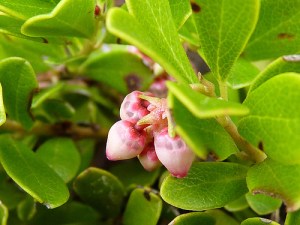
In the woods and along the lower slopes in Glacier National Park, it’s easy to walk past a low, trailing shrub called Kinnikinnik (also Kinnickinnik). It’s rather unobtrusive when the white and pinkish flowers aren’t blooming in June and when the bright red berries haven’t shown up yet in the fall.

from FancyLady on Flickr
The plant is better known as the Common Bearberry (Arctostaphylos uva-ursi), dwarf manzanita and other local names. You’ll find it in the northern hemisphere from Scottish heaths to California gardens to the mountains of the Rocky Mountain Front.

In folk medicine, the bark and leathery evergreen leaves have been used for teas and infusions, typically for their diuretic properties. The name Kinnikinnik refers specifically to smoking mixtures used by Native Americans that, in addition to tobacco, red willow bark, etc.) included the bearberry’s leaves and purplish-red bark. The name kinnikinnik rather stuck to the bearberry.

According to the Kinnickinnick Native Plant Society, “It is pronounced KINNY-kin-ICK, or Kinn-ICK-innick, and comes from the aboriginal – most scholars say the Alonquin – meaning “smoking mixture.” Although the plant was native here, it seems to have been the fur traders’ employees who brought the name west with them. Its other common name, Bear Berry, comes from its genus ARCTOSTAPHYLOS, from the Greek word for bear – Arktos and staphylos – a bunch of grapes, which its berries resemble. The species name of “uva-ursi” is apparently from the Latin “uva” (grape) and “ursus” (bear).”

In Glacier, the shrub often grows in large mats along park roads. You can see it along the lake level trails near Many Glacier Hotel.

In my novel “The Sun Singer,” Robert Adams was told he could always remember the name of this plant because it was spelled the same way from both directions.

Wanted: Dead Rather Than Alive

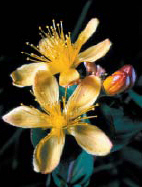
St. Johnswort - NPS Photo
When they arrive in Glacier National Park, it’s not necessarily by the dead of night, for seeds are so small most people don’t notice them. They’re blowing on the wind, carried by birds, hidden on your trousers and shoes, clinging to your backpack, and even on your car and pop-up camper.

We’re talking about plants out of place, better known as noxious invasive weeds such as St. Johnswort and spotted knapweed. Unfortunately, such weeds are hardy and adaptable. Worse yet, they disrupt the natural plants in otherwise well-balanced park habitats including wildlife.

Spotted Knapweed - NPS Photo
According to the Crown of the Continent Research Center, there are 126 invasive plant species in Glacier, fifteen of which are considered noxious. One of those–spotted knapweed–is so nasty that it kills nearby plants by secreting a toxic chemical into the soil!

Wanted: Dead, if Not Gone: Glacier’s Noxious Weeds

Spotted Knapweed
Canada Thistle
Leafy Spurge
Dalmatian Toadfl ax
Yellow Toadfl ax
Sulfur Cinquefoil
St. Johnswort
Oxeye Daisy
Houndstongue
Common Tansy
Field Bindweed
Orange Hawkweed
Meadow Hawkweed Complex
Tall Buttercup
Tansy Ragwort

Citizen Scientists

On Friday, July 30th, the park will hold its first annual Noxious Weed Blitz. Noxious Weed Blitz participants will be trained to assist Glacier’s Invasive Plant Management Program by learning to identify, map and pull invasive plants. They’re encouraged to bring water, clothes suitable for hiking, and heavy gloves.

The heavy gloves will be used after lunch as volunteers head out on the western side of the park to pull weeds. Interested in weeding Glacier National Park? Contact the Crown of the Continent Research Center at 406-888-7986 or via e-mail to sign up.

Volunteers will assemble at the West Glacier Community Building. The blitz will run from 10 a.m. to 4 p.m. Participants will be provided with a free lunch and a noxious weeds field guide.

Sales of this Glacier Park novel benefit the park.