Old Man River

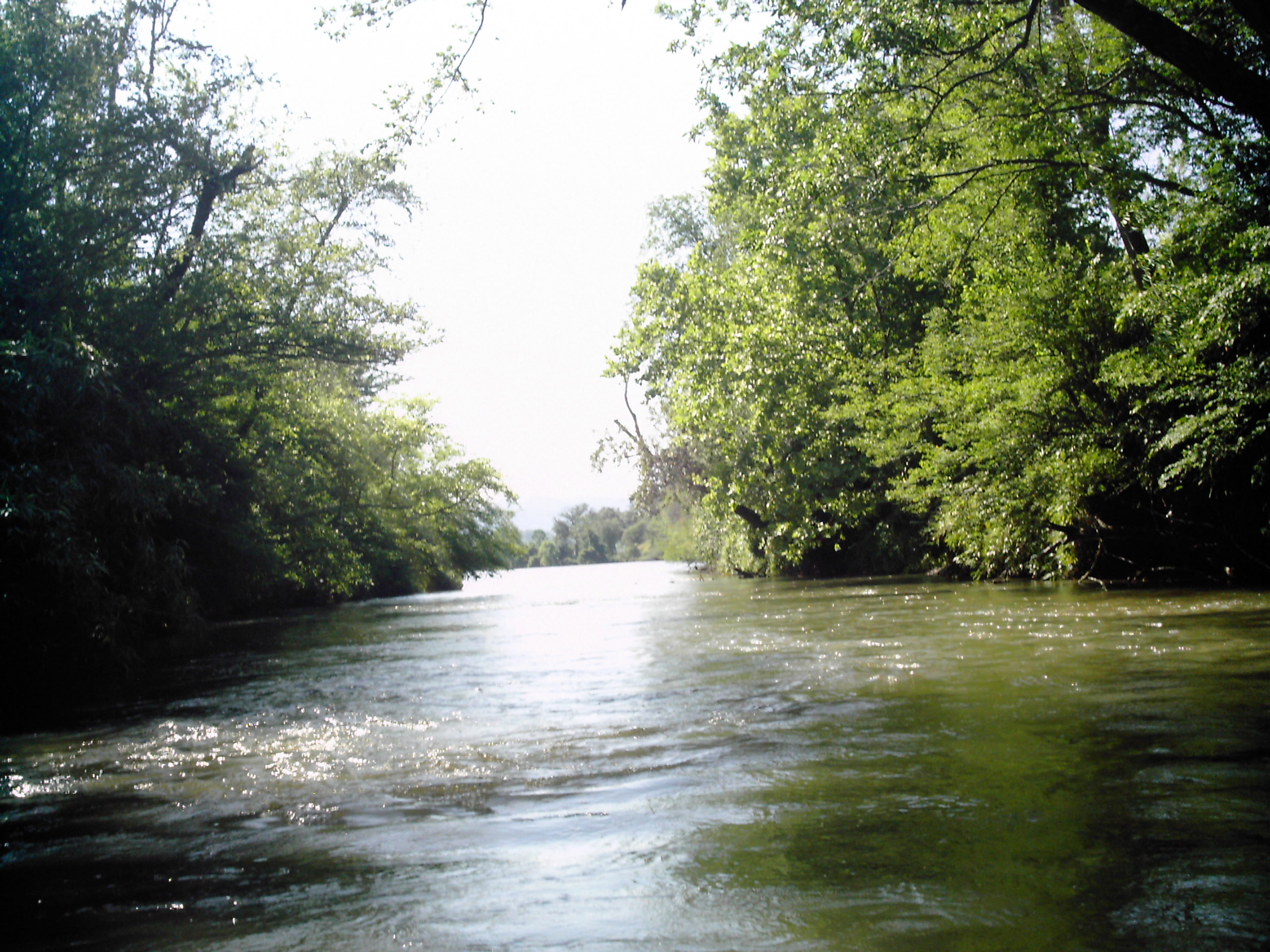
French Broad River, North Carolina – M. R. Campbell photo

Science tells us that 2.5% of the Earth’s water is fresh water, that only 1.3% of that fresh water is surface water (as opposed to ground water, glaciers and ice caps), and that .46% of that surface water can be found in rivers. Using the numbers from Igor Shiklomanov’s work in 1993, rivers contain 2,120 cubic kilometers of the Earth’s 1,338,000,000 cubic kilometers of water.

How fascinated we are with this 2,120 cubic kilometers of water. We see its beauty, we feel its impact (especially during droughts and floods), and we find ways around it or over it. The statistics relating to water can be staggering. In the U.S., the Mississippi alone drains 40% of the 48 contiguous states, or 1,243,000 square miles.

As a novelist, I follow a long tradition of using the symbolism of rivers in my work. In my contemporary fantasy Sarabande, rivers symbolize change, movement and journeys. Other authors have used rivers to symbolize time, strength, danger, freedom, spirituality, eternity, transportation, food, renewal and a rather endless list of other meanings.
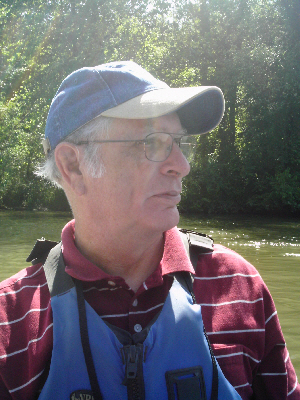
Malcolm on float trip

Here are a few of my favorite river quotations for your labor day weekend:

  • “No man ever steps in the same river twice, for it’s not the same river and he’s not the same man.” — Heraclitus
  • “Time is the substance from which I am made. Time is a river which carries me along, but I am the river; it is a tiger that devours me, but I am the tiger; it is a fire that consumes me, but I am the fire.” — Jorge Luis Borges
  • “A river seems a magic thing. A magic, moving, living part of the very earth itself—for it is from the soil, both from its depth and from its surface, that a river has its beginning.” — Laura Gilpin
  • “It is only in appearance that time is a river. It is rather a vast landscape and it is the eye of the beholder that moves.” – -Thornton Wilder
  • “I am an intelligent river which has reflected successively all the banks before which it has flowed by meditating only on the images offered by those changing shores.” — Victor Hugo
  • “A good river is nature’s life work in song.” — Mark Helprin
  • “He who postpones the hour of living is like the rustic who waits for the river to run out before he crosses.” — Horace
  • “Ol’ man river, dat ol’ man river, He must know sumpin’, but don’t say nothin’, He just keeps rollin’, He keeps on rollin’ along.” — Oscar Hammerstein II
  • “The miracle of light pours over the green and brown expanse of saw grass and of water, shining and slowly moving, the grass and water that is the meaning and the central fact of the Everglades. It is a river of grass.” — Marjory Stoneman Douglas
  • “Eventually, all things merge into one, and a river runs through it. The river was cut by the world’s great flood and runs over rocks from the basement of time. On some of the rocks are timeless raindrops. Under the rocks are the words, and some of the words are theirs.
    I am haunted by waters.” — Norman Maclean

–Malcolm

A heroine’s journey for your Kindle

Event: The Environmental Crisis and the Living Quest of the Embodied Psyche, a dialogue

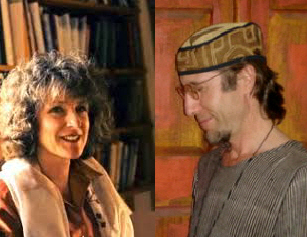
Two of my favorite authors, Patricia Damery and David Abram, will present a dialogue entitled “The Environmental Crisis and the Living Quest of the Embodied Psyche” on Friday, February 10, 2012, 7:00 to 9:30 p.m. at the The David Brower Center, 2150 Allston Way Berkeley, CA 94704. The event is hosted by the C.G. Jung Institute of San Francisco. Click here for tickets to the event.

Event Description from the Institute

Dammery and Abram

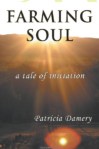
David Abram is a cultural ecologist and environmental philosopher whose lyrical evocations in his books, The Spell of the Sensuous and Becoming Animal: An Earthly Cosmology, have captivated a generation of readers. Patricia Damery, an analyst member of the C.G. Jung Institute, first learned to love the land as a child growing up on a farm in the Midwest and now farms a Biodynamic ranch in Napa, California. Patricia’s memoir, Farming Soul: A Tale of Initiation, as well as her novel, Snakes, address the preservation of our connection to the environment and explore the interconnected fabric of consciousness.

She and David Abram will explore the interplay of the embodied psyche and the destruction of whole ecological systems. What is the nature of the challenges with which we are presented? Is there evolutionary potential? This dialogue promises to be generative and exploratory in spirit—a truly unique event.

A Few Personal Thoughts

I cannot help but notice the fact that this event is taking place less than a mile from the house I lived in when I was born. However, my current residence is 2,168 miles away and, travel, food and lodging expenses being rather high, I’ll have to hope the event is recorded and then released as a video or printed transcript. The environment, I think, is our first duty. It is, so to speak, not only our nest but the nest of many thousands of other lives who are depending on a common-sense and loving collaborative effort with humankind to protect the place where we are born and live out our lives.

The  books by David Abram and Patricia Dammery celebrate our community nest. What a wonderful evening their dialogue will be. I am happy to echo the words Patricia wrote in a recent blog post: “Please enter this dialogue with your presence! Never has it been so important to renew our conversations with the not-human and the natural world. David is a lively and thoughtful speaker, and we are very fortunate to have him this evening in the Bay Area.”

Malcolm

Falling Trees: Part of the ‘joy’ of owning a home

Our house was built in 2001 on a heavily wooded old farm near Jefferson, Georgia some 60 miles north of Atlanta. We liked the fact that the developers had kept the old trees. However, we were also aware that they had graded too close to many of them, ensuring that they would die off in less than ten years. Add to that the drought conditions we’ve experienced during many of the years we’ve lived here, and you’ve got a recipe falling trees.

The day after we got back home from the Thanksgiving holidays, one of the trees in the tree island in the front hard toppled over and damaged the roof over the garage. Fortunately, our insurance covered the repairs and allowed a little something for having the tree removed before the home owners association sent us a note saying, “Do you know you have a fallen tree in your yard?” Since this was the third tree to fall in 2011, we didn’t want another snippy note.

On new year’s day, two more trees fell. Fortunately, these missed the house. Unfortunately, the dead one knocked over a live one on the way down. While the tree people were here cleaning up the mess, they cut down four other trees that seemed to be aimed at the house. We hope we don’t have to call them again any time soon.

When I see advertisements for houses on wooded lots, I often think: “Yeah right, the lot is wooded now, but how long will it stay that way?” Growing up in a subdivision in Florida where care was taken with the grading, I got a bit spoiled. We had 40 trees on the lot when we moved in and none of them fell down in the 33 years the family owned the house. Maybe we were lucky: they were all slash pines and several hurricanes came through town. We always had plenty of pine straw!

As a tree city, our town keeps track of its percentage of tree canopy. Looks like the next survey (using aerial photographs) is going to show a few gaps in our neighborhood.

Malcolm

Common Forest Trees of Florida – How being a packrat saves time

Looking at the pamphlet shown here, I can say that I have no idea how and when I got it, who scribbled on the cover, or even why the handy little pocket guide published in 1956 didn’t get buried in one of the numerous boxes of packrat stuff in the garage or attic.

Today, of course, a writer can Google just about anything. If he’s persistent, he can sort through all the hobby sites and find information he can count on. While writing my 2010 novel Garden of Heaven: an Odyssey, I needed a handy reference to Florida’s trees. And there it was: right on my shelf less then six feet from my desk.

Published by the Florida Board of Forestry since 1925, I’m guessing I stole or borrowed or received this pocket guide while I was in the Boy Scouts in North Florida. The guide contrains black and white drawings of leaves, acorns and cones along with a descriptive text for each tree. This makes it easy for a hiker or a Boy Scout in Tate’s Hell Forest, the Apalachicola National Forest, or the swamps and estuaries along the Gulf Coast to identify what he’s looking at.

I grew up around Baldcypress, Chinkapin, Tupelo, Sweetbay Magnolia, Sassafras, Cabbage Palmetto, and Swamp Cottonwood trees. So, one would think I’d be a walking encyclopedia about their common attributes, the quick  kinds of details a writer needs when he writes a sentence such as “David stood beneath the ______ leaves of the ____-foot tall Swamp Popular.” But  no, I’ve been away from Florida too long to remember even the simplest details.

If only I had a photographic memory!

I include a lot of detail in my novels about mountains, trees, lakes and wildlife. That helps anchor the magic and fantasy in the story while making the location settings three dimensional. There’s a risk, though. If you make a mistake, somebody’s going to write you a letter or focus his review on the fact that while the hero of the novel was in a gun battle fighting for his life beneath a Chinkapin Oak, you forgot to mention that the three- to seven-inch leaves are toothed or that the trees are between fifty and eighty feet tall. Nice to have a quick reference book!

When it came down to quick reference materials, I found it much faster to grab this old pamphlet off the shelf than to search online. Sorry, Google, but I rather enjoy being a packrat and every once in a while I can actually justify it.

Malcolm

Dreams, Inspirations and Trees

Welcome to the Malcolm’s Round Table edition for the Sleigh Bells and Inkwells Blog Hop

 DREAMS, INSPIRATIONS AND TREES

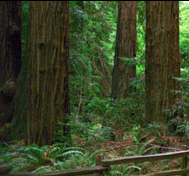
Muir Woods - NPS photo

“When you enter a grove peopled with ancient trees, higher than the ordinary, and shutting out the sky with their thickly inter-twined branches, do not the stately shadows of the wood, the stillness of the place, and the awful gloom of this doomed cavern then strike you with the presence of a deity?” –   Seneca

I love forests, especially coniferous forests.

Two of my earliest memories of forests are polar opposites. I saw the towering redwoods of Muir Woods and rode through an Oregon forest fire before I was in the first grade. Forest imprinting, I think: those early moments when I first experienced the beauty and wisdom of trees as well as the pain of their destruction.

The blue-grey aura of a tree is larger than the tree.

When one walks through a forest, s/he cannot help but touch the overlapping souls of the redwoods, firs or cedars gathered there. When I stop by the woods on a snowy evening or come to myself in a dark wood, I think of John Muir saying that “I only went out for a walk, and finally concluded to stay out till sundown, for going out, I found, was really going in.”

In a forest, I am within the spirits of the trees and within myself. At Yule, the ancient traditions bring the deity into the house with the greenery, creating a sanctuary of scents and spirits around the decorated tree, the boughs lying along the mantel, the wreaths greeting and guarding at doorways and the holly in the center of the table. As a child sneaking through the darkened living room on Christmas Eve, I strongly felt the watchful presence of the blue spruce waiting for the happy morning. I still do.

limber pine

As I wondered what I should write for a Sleigh Bells and Inkwells post, trees came to mind as the perfect subject. I wasn’t surprised. Trees have always found a way to live in my writing.

The cast of characters in my novels isn’t limited to the two-legged creatures—Gem, Robert, David, Siobhan—who walk between the pages. My favorite trees have made sure they also had roles to play. The Sun Singer features spruce, whitebark pine and a grandfather oak. Garden of Heaven: an Odyssey contains multiple worlds of cottonwood, boxelder, lodgepole pine, cypress and rowan. Sarabande includes cottonwood and a limber pine next to the River of Sky. My love of trees fills my stories, even in the action sequences such as this one in “Sarabande:”

Sarabande wedged herself between two branches of a floating cottonwood deadfall as the Mni Sose [the Missouri River] approached a bridge at the western edge of a reservoir. The relative calm she had experienced while passing the high canyons and breaks topped by Ponderosa Pine slipped away as the water eddied into twisted shapes beneath the cloud draped moon. She felt watched. The tree caught briefly on the bridge pier closest to the center of the river. Then she saw the silhouette of Danny Jenks’s truck. The velvet drapery of spider webs between the piers transformed into a trot line. When she screamed, one of the hooks caught inside her mouth and was jerked tight, piercing her cheek. She was pulled away from her river and raised up through a tender breeze that carried in its heart the cries of owls and nighthawks.

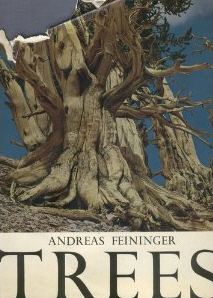
For 43 years, one book has always remained accessible on the bookshelves in all the towns I’ve lived in since it was published: Tallahassee, Syracuse, San Francisco, Waukegan, Zion (IL), Indianapolis, Rome (GA), Smyrna (GA), Marietta (GA), Norcross (GA), Jefferson (GA), and it is simply called Trees. Andreas Feinniger’s cover photograph reminds me that even though the aura of a “dead” tree is mostly gone, the tree remains wise, and bids those who come and go to sit and lean against its old trunk and listen.

When I find myself in the presence of redwoods on a foggy morning, subalpine fir around a lake on a sunny high country afternoon, or a snowy woods that are, as Robert Frost wrote, “lovely, dark and deep,” I am always called to stay even though I, too, still have promises to keep on my writer’s journey.

Thank you for stopping by my figurative forest today. Now, to continue your festive blog hop journey, click here to visit author T. K. Thorne.

Your trip also includes posts by:

Smoky Zeidel

Patricia Damery

Debra Brenegan

Anne K. Albert

Elizabeth Clark-Stern

Collin Kelley

Sharon Heath

Melinda Clayton

Ramey Channell

Leah Shelleda

Breathing in the Land

Virginia Falls - NPS photo

During the summers I worked in Glacier National Park, I hiked the same trails many times, partly because they served as feeder trails to longer hikes, or somebody suggested going for an after breakfast walk, or the sky and the air seemed to be offering an invitation.

Over the course of three summers, I learned a lot about my favorite trails. Most of it was five-senses knowledge. The number of miles between one place and another. The steepest climbs. The best-tasting water. Mountain sheep meadows. Wildflowers. Birds. But, over time, a fair amount of what I picked up was intuitive knowledge. I came to know those trails the way one knows any good friend. And, like what we know about a good friend, that knowledge as in large measure a felt thing.
In earlier times before we became entertained and enslaved by such distractions as cars, cell phones and the Internet, people walked the same paths everyday to get to school, work, the high pasture, the fishing hole, or to buy supplies. While the walking was focused on the practical need to get somewhere and do something, it nonetheless became a ritual, supplying the individual with a great deal of felt knowledge over time.
Breathing in the Land
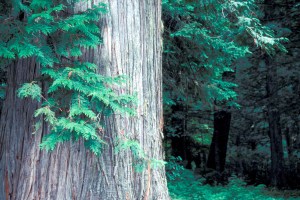
Glacier cedars - NPS photo

As a writer in love with symbols and metaphors, I like thinking of what I learn about the land as breathing it in. It takes time and commitment to breathe in anything or anyone. You don’t walk into the woods once and come away with a head full of knowledge any more than you learn everything about your prospective soul mate on the first date.

Anthropologist Mary Catherine Bateson calls this breathed-in-over-time knowledge a longitudinal epiphany. In her book Peripheral Visions: Learning along the Way, she likens this knowledge with what a husband and wife experience from taking time to have breakfast together every day for 40 years or in making it a habit to go somewhere and watch the autumn leaves falling every year.
Our attention spans have become too short for very much ritual whether it’s formal, as in a religious service or a meditation, or whether it’s informal as in eating dinner with one’s spouse every night or hiking between Many Glacier Hotel and Grinnell Glacier every morning while in the national park.
Bateson writes that “Rituals use repetition to create the experience of walking the same path again and again with the possibility of discovering new meaning that would otherwise be invisible.” One has to walk the path, I think, to gain the knowledge; you don’t learn it by reading what somebody else experienced on the path or by using MapQuest or Google Earth to look at the path.
A Favorite Tree or Meadow
One need not visit their favorite national park and can hike, for example, around Lake Josephine every evening at dusk or listen to the water at Virginia Falls at the break of day. Like the Glacier Park cedar in the photograph, the old oak tree in your backyard will work or, perhaps, a meadow, lake or stream in a nearby park.
Decide how much time you can spend, and then sit in or walk through or around this place once a day, once a week, or once a month. Listen, observe, smell, touch with nothing on your mind other than where you are and what you are breathing in with your five senses and your  intuition.
Don’t expect a psychic experience the first night that fills your head with a hundred years worth of history nobody knows about the place. Instead, experience the changes from visit to visit.In time, you will form a relationship with that place.
You will trust it and know it because you have made the commitment to go there and be there. In time, you will know that place through the loving ritual of your walking and your breathing in everything you encounter.
–Malcolm
contemporary fiction set in Glacier Park

Reflections on Good News for Our National Parks

More often than not, the daily news brings us more bad news about threats to the environment and Congress’ continued threats to reduce National Parks funding even more than they have already. Next week, Congress will decide whether to vote for a “Dirty Water Bill” that would undo much of the rivers, lakes and watersheds progress implemented with the 1972 Clean Water Act.

I have been a member of the National Parks and Conservation Association (NPCA) ever since the days when George Hartzog was the high-impact director of the National Park Service between 1964 and 1972. There’s an indepth feature about Hartzog in the current issue of National Parks.

The greatest threat to the environment, is much larger than the issue of a Dirty Water Bill or an oil spill in the Gulf of Mexico: it is, quite simply, the fact we have to keep fighting to save and protect something that ought to be a top priority for everyone.

While it’s almost criminal that we–as a society–should have to fight so long and at such great expense to create good news for our environment and our National Parks, such news brings hope and a chance to reflect upon what kind of world we would have if the good news occurred so often, it was no longer newsworthy.

Reading the first 14 pages of the Summer 2011 issue of National Parks was a true pleasure:

  • Once again, the Gettysburg National Military Park has been spared from the disruption and sprawl of a casino on its doorstep. According to the NPCA, opposition to the casino by prominent historians, NPCA members and supporters, and a 30,000-signature peition helped persuade the Pennsylvania Gaming Control Board to do the right thing.
  • Kaiser Ventures has been trying since 1988 to create the largest landfill in the United States on land adjactent to Joshua Tree National Park. Had the company been allowed to do so, 20,000 tons of trash per day would have been dumped next to a fragile ecosystem. In 2009, the U.S. 9th Circuit Court of Appeals said “no,” and the U.S. Supreme Court has refused to hear an appeal from Kaiser. Until Kaiser finds a new way to build the dump, Joshua Tree has much to celebrate on its 75th anniversary.
  • It has taken eleven years for the NPCA, its allies and its lawyers to force the Tennesee Valley Authority to stop polluting the Great Smoky Mountains National Park. On days when the pollution is at its worst, vistors to the park can see only 17 miles. On a clear day, visitors can see 77 miles. With the settlemen agreement, there will be many more clear days. The TVA will  reduce nitrogen oxide emissions by 69% and sulfur dioxide emissions by 67% by phasing out 18 coal-fired units and by installing modern pollution controls on 36 other units by 2018.

I look forward to the time when clear victories will bring us the kind of clear days that allow us to see forever-–insofar as clean air and clean water are concerned. Until then, every success brings infinite relfections on what is possible.

You May Also Like: Beauty and Heartbreak in Arroyo Pescadero – The Whittier, California city council wants to drill for oil in this environmentally sensitive arroyo east of Los Angeles.

Malcolm

99 cents

Malcolm R. Campbell is the author of the recently released Bears; Where they Fought: Life in Glacier Park’s Swiftcurrent Valley, a glimpse at the dramatic history of the most beautiful place on Earth. A Natural Wonderland… Amazing Animals… Early Pioneers…Native Peoples… A Great Flood… Kinnickinnick… Adventures… The Great Northern Railway.

“Give a month at least to this precious reserve. The time will not be taken from the sum of your life. Instead of shortening, it will indefinitely lengthen it and will make you truly immortal. — John Muir, “Our National Parks,” 1901

Glacier Park Fund Continues Trail Maintenance Support

The Glacier National Park Fund partners with the National Park Service in the Save the Trails Project. Past work has included the McDonald Creek overlook and the reconstruction of the Horse Bridge.

This year, most of the park’s historic hotels and campgrounds will be open by mid-June and hikers will be out on their favorite hikes. Trail flooding is just one of the yearly spring problems that necessitates maintenance.

If you would like to help support Glacier year-around, the Glacier Park Fund offers a way to do it. Click here for information. In addition to maintenance, work will continue this year on a wheelchair accessible trail across the lake from Many Glacier Hotel and the Hidden Lake trail boardwalk.

Budget cuts at the federal level make volunteer help and donations via the Glacier Park Fund urgent. Keeping over 700 miles of trails in good shape takes a fair amount of effort. Those who have been going to Glacier for years will remember that the park once advertised over a thousand miles of trails. Let’s not lose any more of them.

Malcolm

Vanilla Heart Publishing announced today the release of a new satirical e-book in the “Jock Talks Series.” Authored by Smoky Trudeau Zeidel and Malcolm R. Campbell, Jock Talks Lightning Safety is a parody of the summertime helpful hints articles that often run in daily newspapers. Along with the fun, the book takes a look at safety myths which really are nothing more than myths.

Click on the link for Amazon and on the cover for OmniLit.

No need to destroy a Georgia mountain to build a new road

When I lived in Rome, Georgia in the late 1970s, driving to Atlanta—a mere 56 miles to the southeast, as the crow flies—became problematic in Bartow County. Quite simply, the route that began as a four-lane highway at Rome turned into a mess of urban sprawl before one reached I-75 South for the remainder of the trip.

Today, when I visit friends in Rome, the US 41/411/SR 20 interchange has another 30 years worth of development around it to make it a driver’s nightmare. The Georgia Department of Transportation (GDOT) has a proposed a 411 Connector solution.

For reasons that are not easy to comprehend, DGOT favors a costly and an environmentally unsound solution (Route D-VE) that includes the destruction of the beautiful Dobbins Mountain.

Members of the Coalition for the Right Road (CORR) want a 411 Connector. But they believe alternative routes are not only cheaper, but also avoid destroying a mountain.

If you live in northeast Georgia and believe it’s important to guard the environment against massive and unnecessary civil engineering projects that also represent a waste of taxpayer dollars, you can sign the petition here asking GDOT to select a cheaper and shorter route.

According to the latest CORR update, GDOT has announced it is studying up to three modified routes for the 411 connector. The cost of the original GDOT “solution” may be as high as $279.5 million. The estimated cost of at least one alternative route is $98.4 million.

Upcoming CORR events

  • Saturday, April 30: Taste of Cartersville at Friendship Plaza in downtown Cartersville.
  • Saturday, April 30: Southern Veterans Festival at Adairsville Middle School from 10 am to 7 pm.
  • Saturday, May 7: Spring Fling Festival in Kingston from 11 am to 4 pm.
  • Saturday, May 14: Duck Derby Day at Riverside Park Day Use Area in Cartersville from 10 am to 5 pm.
  • Monday, July 4: Stars, Stripes & Cartersville at Dellinger Park in Cartersville. Parade starts at 9 am; activities at 10 am.

We Need a Road

Drivers between Rome and Atlanta need the new road. It will cut time off the trip and reduce gasoline usage. Those who live and work around the current US 41/411/SR 20 interchange need long-distance traffic removed from their surface streets.

We just don’t need to move a mountain to make this happen.

Malcolm

CORR graphic showing proposed mountain cut

Kalispell Workshop: Getting Kids Engaged with Nature

Free copy for each participant
from NPS Glacier National Park

On Saturday, April 9 the education staff at Glacier National Park, in conjunction with the Flathead Community of Resource Educators (CORE), will offer a free workshop for parents, educators, and others who work with children focused on how to get children outside and engaged with nature. The full-day session will be held at Lone Pine State Park (see map) in Kalispell from 9 a.m. to 3:30 p.m.

Topics to be covered include how to encourage youth to spend time outdoors, fun activities that connect children with nature, and places in the local community for outdoor play. In addition to Glacier National Park staff, Flathead CORE partners for the day include the Flathead Conservation District, Ravenwood Outdoor Learning Center, Flathead National Forest, and Montana Fish, Wildlife, and Parks.

A large portion of the day will be spent outdoors, so participants should come prepared to be outside, regardless of the weather. Participants should also bring a bagged lunch. A variety of information resources will be provided.

As more and more children and adults become disconnected from the natural world, Glacier National Park hosts this workshop to support goals of the National Park Service Children in Nature effort: “To reconnect our youth and their families with the land, create a new generation of stewards, and improve the physical and mental health of our Nation.”

This is the third year this workshop has been made possible through a grant from the Glacier National Park Fund. Thanks to this generous financial support, all workshop participants will receive a free annual Glacier National Park pass, valid for unlimited visits to Glacier National Park for 12 months plus a copy of Richard Louv’s book ‘Last Child in the Woods – Saving Our Children from Nature- Deficit Disorder.’

The workshop is limited to the first 40 registrants. Staff from Ravenwood Outdoor Learning Center will provide a free concurrent children’s camp for up to 20 school-aged children that accompany parents attending the workshop.

Contact Debby Mensch at debby_mensch@nps.gov or (406) 888-7942 to register and/or ask questions.