Glacier Artist-in-Residence Applications Due by February 15

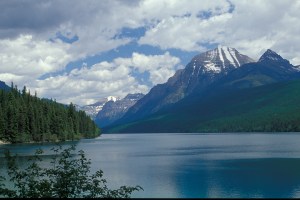
Bowman Lake - NPS photo

Glacier National Park’s artist-in-residence program is open to artists and writers who want to experience the wonder of the park for four weeks this coming summer and, while there, donate their time, inspiration and creative work in support of the park’s environmental education program.

Applicants for the summer of 2011 will be reviewed based on their ability to “produce children’s educational art and materials including scientific illustrations, drawings and graphics; poetry, prose and stories; puppet shows, plays, and song lyrics (for existing or original music); music; and educational lesson plans and resource information guides. These products must be about Glacier and its plants, animals, habitats, geology, natural processes, history and beauty and suitable for use with elementary and middle school children. Thus, the 2011 Artist-in-Residence Program is open to children’s artists, writers, poets, composers, song writers, musicians and academics with relevant experience and backgrounds.”

Applications must be postmarked by February 15, 2011. Click here for information and the address for submissions. The National Park Service will make its selection of one or two individuals for the program in March for residencies to be conducted between mid-June and Labor Day.

Malcolm

A Glacier Park Adventure Available on Kindle

Expanded Waterton-Glacier Watershed Protections Needed

from National Parks and Conservation Assn:

Former National Park Superintendents Call for Waterton-Glacier Expansion, Watershed Protections

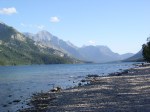
Waterton Lakes - Chris Phan photo

Whitefish, MT — An international coalition of retired superintendents from Waterton Lakes National Park in Canada and Glacier National Park in the United States has voiced their concern for the future of those parks and the need for immediate actions by both countries to complete park protection measures begun earlier this year.

“Waterton-Glacier International Peace Park is a treasure that we all share as North Americans,” said former Glacier Superintendent Mick Holm.  “In joining our voice with our Canadian counterparts, we’re hoping public officials in both countries will view our communication as a call to action on behalf of this globally significant World Heritage site.”

Waterton Lakes - Lesa Campbell photo

The letter, signed by nearly all of the parks’ former superintendents, comes in the closing days of Glacier’s centennial year, as Congress considers a bi-partisan public-lands omnibus bill (America’s Great Outdoors Act of 2010) that includes several key park-protection measures. The package legislation encompasses more than 110 individual bills, aimed at protecting the country’s land, water and wildlife resources. Senate Majority Leader Harry Reid has said he would like to see passage before Congress adjourns early in the New Year.

In their letter, the former superintendents endorse a long-standing proposal for Canada to expand Waterton Lakes National Park westward, into one-third of the British Columbian Flathead.  They also call for Canada to establish a wildlife management area connecting Waterton-Glacier to other Canadian Rocky Mountain parks, including Banff.

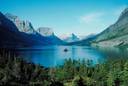
Glacier - St. Mary's Lake - NPS

The former superintendents noted the historic nature of recent steps taken by both countries to prohibit coal strip-mines, hard-rock mining, and oil and gas leases on public lands upstream from Waterton-Glacier, including action to protect 400,000 acres in Canada and the voluntary relinquishment of 200,000 acres of oil and gas leases by energy companies in the United States. They note, however, that legislation to finalize the mining and drilling ban has yet to become law in the United States, and urge prompt action on that front.

They also call for expanded environmental cooperation across the border, and a formal international agreement between both countries to protect Waterton-Glacier and the surrounding Crown of the Continent ecosystem in Montana, British Columbia, and Alberta.

“To have nearly every retired superintendent from Waterton and Glacier calling for these measures is beyond significant,” said Tim Stevens, Northern Rockies regional director of the National Parks Conservation Association.  “These individuals spent their entire careers managing protected areas.  They understand better than anyone what steps are needed to ensure the ecological integrity and clean headwaters of Waterton-Glacier.”

In 2009, proposed mining activities in the Canadian Flathead Valley gained the attention of the UNESCO World Heritage Committee, which voted unanimously to send an international team of scientists to investigate whether the negative impacts of proposed coal strip mines warranted listing Waterton-Glacier as a “World Heritage site in Danger.”  The UNESCO report concluded that the proposed strip-mine would result in environmental harm to the World Heritage site.

Only $3.99 on Kindle

Songs and Whispers of the Living Earth

“On a quiet day, however, those walking alongside the relatively recent Lake Sherburne reservoir may hear the voice of grandfather rock whispering a secret: within the scope of geologic time, all rivers are new, and the men and women who follow them are as ephemeral as monarch butterflies on a summer afternoon.” — Malcolm R. Campbell in “Bears, Where They Fought,” Nature’s Gifts Anthology

Perhaps you’ve heard the Earth’s Goddess call your name. If not, wade in the rolling surf along the edge of the sea or hike through the heart of a desert or wait quietly at the summit of a mountain where old stone touches the sky. Some hear the Goddess voice more clearly at night beneath a full moon.

If your own heart holds a strong passion for a place, then that is where you will best hear Earth whispering her secrets. Calm your breath and your mind’s ever-chattering thoughts. Then, take off your shoes and gloves and touch that which is ancient with the young soles of your feet and your neophyte fingertips.

Listen.

The songs and whispers of the living earth may come to you as a breath of wind, the roar of surf or a mountain stream, the faint rasp of sage brush against cooling sand, the hollow echoes of rain, or the sharp clatter of stone falling on stone. You may find a message within seemingly mundane signs.

Yet, what you hear, you may not hear with your ears. The Earth may speak to you with a voice inside your heart, clear and distinct from your own thoughts. When the Goddess speaks, you may hear her voice as you would recall a memory or the almost audible music within seemingly inert water, sand or stone beneath the watchful eye of the moon.

Your right-now sense of Earth’s message may be strong in the moment of contact or it may catch your attention later in dreams and daydreams. One way or another, you will know when the Goddess has called your name, for her song brings with it a great comfort whether she imparts a secret or asks of you a favor.

Like fluttering butterflies, we are momentary visitors upon the surface of a world that is incomprehensibly ancient, yet when we hear Earth’s voice, we know to a certainty that we are not separate from sand and water and stone.

Malcolm

“Thank you for stopping by my Blog! Please explore all this Blog has to offer, then jog on over to “Mysteries and My Musings.” If you would like to visit a different Blog in the jog, go to Blog Jog Day.

47,000 Miles and Counting

47,000 miles. That’s the combined length of all the trails in the U.S. National Trails System. Created by Congress in 1968, the system began with two, well-known established trails, the 2,158-mile Appalachian and the 2,648 Pacific Crest. Since that time, the system has been increased to include eight scenic and 18 historic trails.

The trails in the system are variously maintained and managed by the National Park Service, Department of Agriculture and Bureau of Land Management.

In March of this year, the National Park Service announced grants to five “Connect the Trails to Parks” projects totaling $333,000. According to acting director of the NPS Dan Wenk, the grant program (established last year) “will enable our visitors to better appreciate both the national parks and the national trails that touch or cross the parks through new connections, better information systems, and upgraded facilities. It is wonderful way to commemorate the anniversary of the National Trails System.”

For an excellent overview article (with a title I borrowed for this post) about the National Trails System, see the digital edition of Land & People produced by the Trust for Public Land.

If you click on the Appalachian and Pacific Crest links above, you’ll see examples of associations that support and help maintain two of the trails in this system. Volunteer opportunities and hiking information are available for most trails in the system.

Volunteer hours come into play when trail maintenance needs exceed the Federal funding. For example, as reported in Land & People, volunteer hours for trails across the system totaled 720,000 with a “sweat equity” value of $22 million in 2007.

Work continues to enlarge the system as evidenced by the upcoming 12 Conference on Scenic and Historic Trails in Missoula, Montana July 12-15. The conference will address the following general issues: (1) Expanding Outreach about the National Trails to all Americans; (2) Protecting the natural and cultural resources and completing the on-the-ground trails; and (3) Increasing the Capacity of public agencies and non-profit organizations to sustain the trails and their resources.

For a list of trails and their associated nonprofit agencies, click here.

While you may never have the time and energy to be a thru-hilker, one who completes an entire trail, you’ll find many sites and sounds and a lot of good exercise hiking bits and pieces of this marvelous system.

Sportsmen, Conservationists Cheer America’s Wildlife Heritage Act

from Trout Unlimited:

WASHINGTON—Representatives Ron Kind (D-WI) and Walter Jones (R-NC) introduced a bill in the House of Representatives June 10th that will help improve populations of fish and wildlife on America’s National Forests and BLM lands.

“The America’s Wildlife Heritage Act is a bill that is good for America’s sportsmen and women because it will compel the federal land management agencies to do a much better job of prioritizing the needs of fish and wildlife populations in their planning processes,” said Steve Williams, President of the Wildlife Management Institute. “Fish and wildlife have taken a back seat to oil and gas leasing and other uses of federal lands for too long, and this bill will level the playing field as our nation’s multiple use laws have always intended,” said Williams.

The America’s Wildlife Heritage Act would end years of litigation and uncertainty surrounding the fish and wildlife planning protocols for federal lands by providing the Forest Service and the Bureau of Land Management (BLM) with clear directives and science-based tools to sustain and monitor healthy populations of fish and wildlife and their lands. The bill further would require improved coordination between federal and state agencies to achieve their mutual objectives.

“In addition to creating standards for establishing fish and wildlife population objectives to which BLM and FS land management plans are to aspire, the bill significantly directs and facilitates that these population objectives be achieved based on an evaluation and monitoring program that is designed and implemented in cooperation with the state fish and wildlife agencies”, said Gary Taylor, Legislative Director of the Association of Fish and Wildlife Agencies. “States have principal authorities and responsibilities for managing fish and wildlife within their borders, including on most federal lands, and it is vitally important that the states and federal land managers work closely together to enhance the sustainability of fish, wildlife and their habitats on these important multiple-use public lands”, concluded Taylor.

Forest Service and BLM lands hold some of the best remaining for big game and sport fish species, provide habitat for countless other species, both imperiled and common, and protect some 3,400 public water supplies. But they are also under increasing pressure oil and gas planned development and the serious changes wrought by global warming.

“Hunters and anglers are do-ers, and we are sometimes skeptical of planning and monitoring,” said Steve Moyer, Vice President of Government Affairs at Trout Unlimited. But we know that with the many forces of habitat destruction on our public lands, especially the adverse affects of climate change, our federal land managers must plan and monitor better if we are to enjoy hunting and fishing in coming generations,” said Moyer.


For more information about Trout Unlimited, click here.

For a summary of the act, click here.

Recent News: “Glacier National Park: The First Hundred Years” Wins Benjamin Franklin Award

Malcolm

Reconnecting Children with Nature

WEST GLACIER, MONT. – The education staff at Glacier will offer a free workshop for professionals and others who work with children focused on how to get children outside and engaged with nature. The full-day session will be held on Saturday, April 18 at the West Glacier Community Building from 9 a.m. to 3 p.m.

The workshop is geared toward adults who work with youth in various capacities. Topics to be covered include how to encourage youth to spend time outdoors and fun activities that connect children with nature.

A large portion of the day will be spent outdoors, so participants should come prepared to be outside, regardless of the weather. Lunch and a variety of information resources will be provided.

This workshop is made possible through a grant from the Glacier National Park Fund. Thanks to this generous financial support, all workshop participants will receive a free annual park pass, valid for unlimited visits to Glacier National Park for 12 months plus a copy of Richard Lou’s book ‘Last Child in the Woods – Saving Our Children from Nature-Deficit Disorder.’

“More and more children and adults are becoming disconnected from the natural world. Glacier National Park is hosting this workshop to support goals of the National Park Service Children in Nature effort: To reconnect our youth and their families with the land, create a new generation of stewards, and improve the physical and mental health of our Nation,” noted Park Superintendent Chas Cartwright.

Availability is limited to the first 40 registrants. The registration deadline is Tuesday, April 14. Contact Debby Mensch at debby_mensch@nps.gov or 406-888-7935 to register and/or to ask questions.

Court Orders Feds to Stop Utah Leasing

National Resources Defense Council News Release:

More than 110,000 acres of Utah wilderness will be protected from oil and gas companies as a result of a ruling Saturday night by Judge Ricardo M. Urbina of the U.S. District Court. Judge Urbina granted a temporary restraining order that prevents the Bureau of Land Management (BLM) from moving forward with these leases. A coalition of environmental groups — led by the Natural Resources Defense Council (NRDC), the Southern Utah Wilderness Alliance, the Wilderness Society, and Earthjustice — filed a lawsuit on December 17, 2008 to prevent the leasing of public lands.

“This ruling is a huge victory in protecting our nation’s pristine wilderness from destruction due to oil and gas drilling,” said Sharon Buccino, senior attorney for NRDC. “We do not need to sacrifice our wild lands to achieve a secure energy future.”
In his ruling, Judge Urbina found that the conservation groups “have shown a likelihood of success on the merits” and that the “‘development of domestic energy resources’ … is far outweighed by the public interest in avoiding irreparable damage to public lands and the environment.” The merits of the case will be heard later in 2009. Until that time, BLM is prohibited from cashing the checks issued for the contested acres of Utah wilderness.
“We’re thrilled with this decision,” said Stephen Bloch, Conservation Director for the Southern Utah Wilderness Alliance. “BLM’s attempt to sell these leases just before the Bush administration left office has been showcased for what it really is — a parting gift to the oil and gas industry. Judge Urbina’s decision firmly puts the brakes on these plans.”
The contested areas near Arches and Canyonlands National Parks, Dinosaur National Monument, and Nine Mile Canyon include lands that contain the nation’s greatest density of ancient rock art and other cultural resources. These lands were recently made available to industry through hastily approved resource management plans that have serious ramifications for 3 million acres of public lands.
“Under the Bush administration, the Bureau of Land Management pushed through Resource Management Plans that treated some of America’s most sensitive and spectacular public lands as the private playgrounds of the oil and gas companies,” said Bill Hedden, Executive Director of Grand Canyon Trust. “Today’s heartening court decision gives these unique places a last second pardon from forever sacrificing their archaeological treasures, pristine air and remote wildness in order to sate only an hour or two of our national addiction to oil and gas.”
“When we begin to allow oil drilling in the backdrop of an icon like Arches National Park, we know something needs to change,” said Sierra Club representative Myke Bybee. “It’s time to stop handing over our natural treasures just so the oil industry can make more money. Instead, we could be investing in efficiency and the kind of clean energy that will benefit all of us and leave our best wild places intact.”

Bush administration rushes to strip protections from Northern Rockies wolves

Defenders of Wildlife News Release:

WASHINGTON, DC. – Today, in a last-ditch effort by the Bush administration to undermine environmental protections, the U.S. Fish and Wildlife Service (FWS) announced that the Northern Rockies gray wolf will be taken off the Endangered Species List.  This decision is yet another attempt to prematurely strip wolves of legal protection before the clock runs out next Tuesday on the most anti-environment administration in American history.

The Bush administration’s prior effort to delist the Northern Rockies wolf was rebuffed in federal court and then voluntarily withdrawn by the FWS shortly afterwards.  This latest attempt to remove federal protection for wolves is not based on new science and does not fix the legal deficiencies cited by the federal court when it blocked the previous delisting attempt.  Moreover, in rushing to again delist wolves, the Bush administration ignored calls by Defenders of Wildlife and others to involve stakeholders throughout the region in developing a strategy that addresses inadequate state wolf management plans, particularly in Wyoming and Idaho, and meets the requirements of the Endangered Species Act.

Below is a statement by Rodger Schlickeisen, president of Defenders of Wildlife, regarding today’s announcement.

“This blatantly political maneuver is hardly surprising. The Bush administration has been trying to strip Endangered Species Act protections from the Northern Rockies wolf since the day it took office – no matter the dire consequences of delisting wolves prematurely and without adequate state protections in place.

“The Bush administration is forcing the future of wolves in the region to play out in the courts by finalizing a delisting rule in its last hours in office. We intend to challenge this poorly constructed decision in court as soon as the law allows.  It is outrageous that the Bush administration has chosen to create this unnecessary legal problem for the new Obama administration to deal with as it takes office.

“It is nonsensical to rush this rule through when states have plans in place to kill hundreds of wolves as soon as they’re delisted from federal protection.  If the wolf population drops to the minimum of 300 to 450 wolves in the entire region, we already know, based on the most current science, that it cannot remain genetically viable for the long-term.

“We need to slow the process down and make sure it is done right – using science as the benchmark for recovery goals. Today’s delisting rule fails adequately to address biologists’ concerns about the lack of genetic exchange among wolf populations in the Northern Rockies.

“If allowed to stand, this rule would mean that the Northern Rockies wolf population could be slashed by as much as two-thirds, placing approximately 1,000 of the region’s roughly 1,450 wolves in peril.  This is a loss from which they most likely would be unable to recover.”

“We trust that the Obama administration will see this for what it is, one last anti-environment blast from the most anti-environment administration in American history.  We look forward to working with the new administration to fix this and to ensure wolf recovery that truly merits taking wolves off the endangered species list.  That will be an accomplishment to celebrate.”

Below is a statement from Suzanne Asha Stone, Defenders of Wildlife representative for the Northern Rockies:

“Ramming through a flawed plan that has already been rejected by the courts doesn’t make any sense. The bottom line is wolves are a wildlife resource and an important part of our natural resources heritage.  Wolves should be managed to maintain sustainable healthy populations, the way we manage mountain lions, bears and other wildlife.  The states should not be allowed to kill two thirds of our regional wolf population just because wolves lose federal protection.

Our regional residents need a science based delisting plan that addresses the needs of both wolves and people. Instead of forcing this issue back into the courts, the Service should help bring all interested parties to the table, allowing stakeholders to iron out solutions to the management conflicts.  We can move forward to delisting, and we should, but only under rationale conditions.

Our only reasonable course of action is again to challenge the delisting in court until the Service takes a science based approach towards long term recovery goals for wolves in the Northern Rockies.”

###

Defenders of Wildlife is dedicated to the protection of all native animals and plants in their natural communities.  With more than 1 million members and activists, Defenders of Wildlife is a leading advocate for innovative solutions to safeguard our wildlife heritage for generations to come.  For more information, visit http://www.defenders.org.