 Every few weeks or so, I see an online article about one expert or another who states that climate change is a hundred times worse than s/he thought.
Such statements or predictions are probably published in the hope they’ll wake people up. I wonder if they have the opposite impact. Perhaps they make the problem too large to grasp or make it sound like it’s too large for anyone to do anything about.
Personally, I would rather see climate change information disseminated in bite-sized chunks that include things individuals can do rather than in large-scale reports that no individual can address.
Most people don’t have the money, knowledge, clout, or other means of addressing large-scale warnings, much less separating the wheat from the chaff when politicians and experts are not on the same page about the dangers or the remedies.
We need facts we can trust. For example, some people say it’s pointless buying an electric car when the power for recharging facilities comes from power plants using fossil fuels. What about this? Can we have a discussion without bumping into people and groups with a vested interest?
Some people say that California’s approach–making everything connected to fossil fuels illegal–is the route all states need to follow. But is it? On the surface, that approach is pricing everything out of the range of manufacturers and buyers.
When the issue becomes partisan, we all lose and have no idea what we can personally due to benefit the planet.
–Malcolm
 Malcolm R. Campbell is the author of contemporary fantasy, paranormal, and magical realism short stories and novels. Save money by buying all four Florida Folk Magic novels in one Kindle volume.
 “Our biggest crisis regarding the climate emergency is humanity’s massive state of denial that it exists on the scale it does. Yet a willingness to recognize the depth of the problem is a prerequisite to our solving it. It is a psychological and moral challenge to face the horror of what stands before us over the next ten years should we not act; yet there – in our standing raw before the truth that it confronts us with – lies our only hope for surviving it.
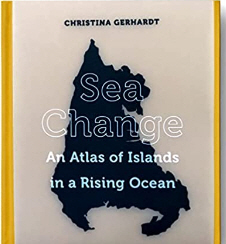 I cannot help but think of the title of Rachel Carson’s 1951 masterpiece The Sea Around Us as I write here about Christina Gerhardt’s University of California Press book that will be released May 23. If you live on an island, the sea has always been around you, but with climate change, the sea may soon be above you. The book, which New Scientist calls One of the Best Science Books of 2023, is available for
 Malcolm's Round Table