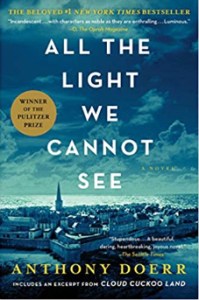
Okay, I finished reading Micky Spillane’s Kiss Me, Deadly–which ended with a lot of people getting killed–and am now re-reading Anthony Doerr’s book while waiting for my Cormac McCarthy book to arrive. Quite a change of pace moving from rough and tumble private eye stuff to this beautifully written Pulitzer Prize-winning novel.
 While I enjoy re-reading books, I would prefer reading factory-fresh new books, though neither my budget nor the space in our small house will support the arrival of two or three new books per week. So, like a lot of you (perhaps), I spend more time re-reading than first-time reading.
As an author, I spend time writing, though oddly enough, I write better when the little grey cells (as detective Poirot always said of his brain) are engaged in an interesting book. The books I read are nothing like the books I write; that means I never have to worry about inadvertent plagiarism. As far as I know, nobody writes like me, so I can’t even accidentally borrow another author’s plots or dialogue.
Doerr has a few blurbs about this book on his website including the comment by “Vanity Fair” that ““Anthony Doerr again takes language beyond mortal limits.” We would all like reviews like that. Sadly, books written by small press authors are never seen by reviewers who write comments like that. We are more or less anonymous and invisible, the upside being that few writers are likely to “borrow” plots and dialogue from our books.
Like most authors, I read better than I write. All The Light We Cannot See is a gem, the kind of work I feel fortunate to have on my shelf to I have something to do at an age when, as some bad writer once said, my get up and go as got up and went.
How about you? Do you find yourself reading cereal boxes or re-reading old stuff on your bookshelf more often than reading something new?
–Malcolm
 Malcolm R. Campbell is the author of magical realism, paranormal, and contemporary fantasy novels and short stories.
A readers’ advisory for this collection of nine stories forecasts widely scattered ghosts with a chance of rain. Caution is urged at the following uncertain places: an abandoned mental hospital, the woods behind a pleasant subdivision, a small fishing village, a mountain lake, a long-closed theater undergoing restoration, a feared bridge over a swampy river, a historic district street at dusk, the bedroom of a girl who waited until the last minute to write her book report from an allegedly dead author, and the woods near a conjure woman’s house.
In effect from the words “light of the harvest moon was brilliant” until the last phrase “forever rest in peace,” this advisory includes—but may not be limited to—the Florida Panhandle, northwest Montana, central Illinois, and eastern Missouri.
 So, you can see how easy it is to burn books or–as we often see in the movies–incriminating notes in an ashtray.
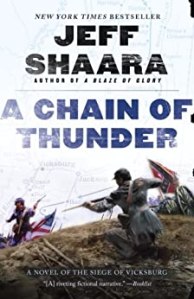 As adults, some of us still do that. We watch movies multiple times. We re-read books multiple times. Each time that happens, we learn or notice something new. Right now, I’m re-reading Jeff Shaara’s A Chain of Thunder about Grant’s siege of Vicksburg and George Wald’s Therefore Choose Life (first mentioned in my blog
  One interesting point in the book is that man has no specifications and continues to evolve. Technological creations always have specifications and–not counting where AI might take us– technology is engraved in stone once it’s become a product. That is, it cannot evolve. Wald was well-known outside of scientific circles during the 60s and 70s because he was an outspoken opponent of the Vietnam War.
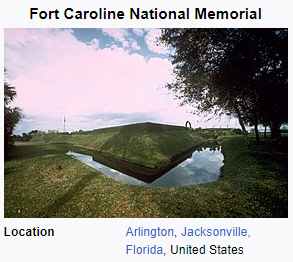 “Fort Caroline was an attempted French colonial settlement in Florida, located on the banks of the St. Johns River in present-day Duval County. It was established under the leadership of René Goulaine de Laudonnière on 22 June 1564, following King Charles IX’s enlisting of Jean Ribault and his Huguenot settlers to stake a claim in French Florida ahead of Spain. The French colony came into conflict with the Spanish, who established St. Augustine in September 1565, and Fort Caroline was sacked by Spanish troops under Pedro Menéndez de Avilés on 20 September. The Spanish continued to occupy the site as San Mateo until 1569.” –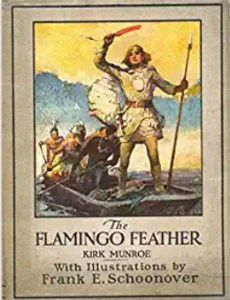
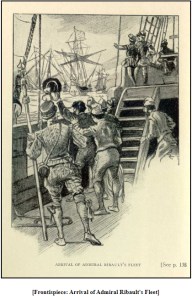 other nations. Within the United States, you may freely copy and distribute this work, as no entity (individual or corporate) has a copyright on the body of the work. As a reproduction of a historical artifact, this work may contain missing or blurred pages, poor pictures, errant marks, etc. Scholars believe, and we concur, that this work is important enough to be preserved, reproduced, and made generally available to the public. We appreciate your support of the preservation process, and thank you for being an important part of keeping this knowledge alive and relevant.”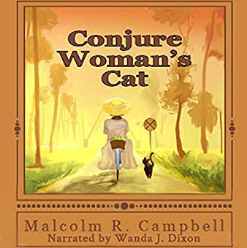
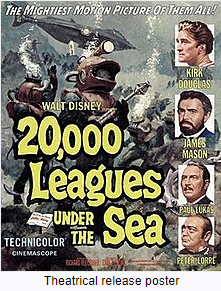
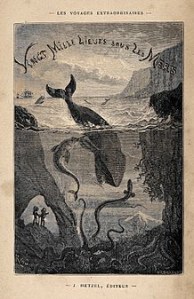 In All the Light We Cannot See, the blind French girl Marie-Laure Leblanc is reading the novel in braille, sometimes alone, sometimes to her uncle, and sometimes into the microphone of an old short-wave radio transmitter. Captain Nemo and his submarine Nautilus become an important motif in the book. For me, the inclusion of Jules Verne’s story was a bit haunting since the novel, and even the Disney movie adaptation released in 1954, was one of my favorite novels. In fact, I think I ended up reading most of Jules Verne’s work.
 I loved the accuracy of short-wave radio scenes in All the Light We Cannot See because I was once a ham radio operator. I built my own transmitter and used a 1940s-era short-wave receiver. It was always fun late at night, talking to people around the world as well as listening to commercial broadcasts originating thousands of miles away. In those days, DXing was popular and we prided ourselves in identifying commercial broadcasts, telling the stations what we heard, and getting a postcard by mail that verified we had heard the station on the date and time we said we did. I finally gave away that old SuperPro short-wave receiver a few years ago to a ham radio operator who was likely to repair it and get it working again.
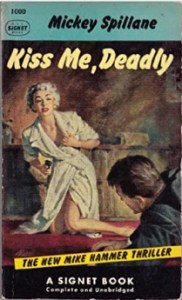
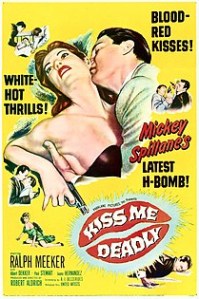 The book was made into a film by the same name in 1955 starring Ralph Meeker as Hammer. According to Wikipedia, “Critics have generally viewed the film as a metaphor for the paranoia and fear of nuclear war that prevailed during the Cold War era. “The great whatsit,” as Velda [Mike’s assistant] refers to the object of Hammer’s quest, turns out to be a mysterious valise, hot to the touch because of the dangerous, glowing substance it contains, a metaphor for the atomic bomb. The film has been described as “the definitive, apocalyptic, nihilistic, science-fiction film noir of all time – at the close of the classic noir period.” A leftist at the time of the Hollywood blacklist, Bezzerides denied any conscious intention for this metaphor in his script, saying that “I was having fun with it. I wanted to make every scene, every character, interesting.”
 How the hell did it happen. Joan Baez, whom I had a school-boy crush on years ago, is now 82. I approved of her songs, and her anti-war stance, but not her relationship with Bob Dylan. While she can’t hit the high notes the way she did when she was young, I will like to hear her sing.
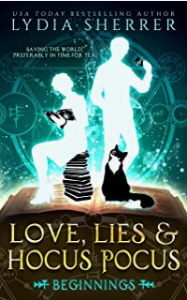 I enjoyed Lydia Sherrer’s Love, Lies, and Hocus Pocus. I left a four-star review on Amazon
  I think that whatever the hell’s inside a toilet tank is made in hell because it randomly breaks for no apparent reason, forcing one to buy a new one (also made in hell) and install it with the worse curses on the planet. At least our secondary bathroom is functional again, though we probably won’t trust it for a while. While looking at the problem, it appeared that the water was going into the closet in the next room rather than the septic tank. It wasn’t, but emptying out an entire closet was the last thing we needed in the middle of the night. Maybe this will make a good short story, “Hell’s Toilet.”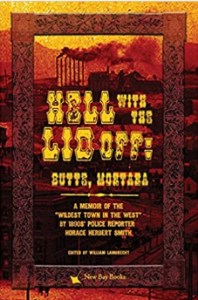
 Malcolm's Round Table