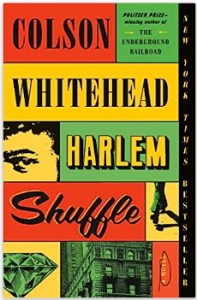
‘Harlem Shuffle’ by Colson Whitehead

“The twin triumphs of The Underground Railroad (2016) and The Nickel Boys (2019) may have led Whitehead’s fans to believe he would lean even harder on social justice themes in his next novel. But by now, it should be clear that this most eclectic of contemporary masters never repeats himself, and his new novel is as audacious, ingenious, and spellbinding as any of his previous period pieces.” – Kirkus Reviews

This book’s been out a while (August 9, 2022)  and Whitehead’s most recent book Crook Manifesto will be released tomorrow, so it’s past time to say something about it. It’s good. Actually, it’s better than good. The New York Times calls it “A sizzling heist novel” and the San Francisco Chronicle says it’s “Fast-paced, keen-eyed and very funny.”
From the Publisher

“Ray Carney was only slightly bent when it came to being crooked…” To his customers and neighbors on 125th Street, Carney is an upstanding salesman of reasonably priced furniture, making a decent life for himself and his family. He and his wife Elizabeth are expecting their second child, and if her parents on Striver’s Row don’t approve of him or their cramped apartment across from the subway tracks, it’s still home. 

“Few people know he descends from a line of uptown hoods and crooks, and that his façade of normalcy has more than a few cracks in it. Cracks that are getting bigger all the time. 

“Cash is tight, especially with all those installment-plan sofas, so if his cousin Freddie occasionally drops off the odd ring or necklace, Ray doesn’t ask where it comes from. He knows a discreet jeweler downtown who doesn’t ask questions, either. 

“Then Freddie falls in with a crew who plan to rob the Hotel Theresa—the “Waldorf of Harlem”—and volunteers Ray’s services as the fence. The heist doesn’t go as planned; they rarely do. Now Ray has a new clientele, one made up of shady cops, vicious local gangsters, two-bit pornographers, and other assorted Harlem lowlifes. 

“Thus begins the internal tussle between Ray the striver and Ray the crook. As Ray navigates this double life, he begins to see who actually pulls the strings in Harlem. Can Ray avoid getting killed, save his cousin, and grab his share of the big score, all while maintaining his reputation as the go-to source for all your quality home furniture needs? 

“Harlem Shuffle’s ingenious story plays out in a beautifully recreated New York City of the early 1960s. It’s a family saga masquerading as a crime novel, a hilarious morality play, a social novel about race and power, and ultimately a love letter to Harlem.” 

About the Author

Arch Colson Chipp Whitehead (born November 6, 1969) is an American novelist. He is the author of eight novels, including his 1999 debut work The IntuitionistThe Underground Railroad (2016), for which he won the 2016 National Book Award for Fiction and the 2017 Pulitzer Prize for Fiction; and The Nickel Boys, for which he won the Pulitzer Prize for Fiction again in 2020. He has also published two books of non-fiction. In 2002, he received a MacArthur Genius Grant.” –Wikipedia
Malcolm

‘Lady Tan’s Circle of Women’ by Lisa See

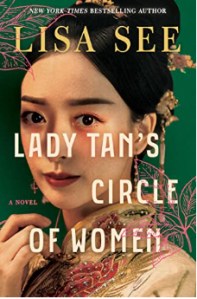
I read all the books released by a select group of authors, making release dates special occasions.  Lady Tan’s Circle of Women was released on June 6th, making that an auspicious date, as were other dates going back to 1995’s On Gold Mountain, 1997’s Flower Net, 1999’s The Interior, and many others up to 2019’s The Island of Sea Women. Her mother, Carolyn See, was the author of ten books. You can learn more about Carolyn See here and explore Lisa See’s website here.

From the Publisher

The latest historical novel from New York Times bestselling author Lisa See, inspired by the true story of a woman physician from 15th-century China—perfect for fans of See’s classic Snow Flower and the Secret Fan and The Island of Sea Women.

According to Confucius, “an educated woman is a worthless woman,” but Tan Yunxian—born into an elite family, yet haunted by death, separations, and loneliness—is being raised by her grandparents to be of use. Her grandmother is one of only a handful of female doctors in China, and she teaches Yunxian the pillars of Chinese medicine, the Four Examinations—looking, listening, touching, and asking—something a man can never do with a female patient.

From a young age, Yunxian learns about women’s illnesses, many of which relate to childbearing, alongside a young midwife-in-training, Meiling. The two girls find fast friendship and a mutual purpose—despite the prohibition that a doctor should never touch blood while a midwife comes in frequent contact with it—and they vow to be forever friends, sharing in each other’s joys and struggles. No mud, no lotus, they tell themselves: from adversity beauty can bloom.

But when Yunxian is sent into an arranged marriage, her mother-in-law forbids her from seeing Meiling and from helping the women and girls in the household. Yunxian is to act like a proper wife—embroider bound-foot slippers, pluck instruments, recite poetry, give birth to sons, and stay forever within the walls of the family compound, the Garden of Fragrant Delights.

How might a woman like Yunxian break free of these traditions, go on to treat women and girls from every level of society, and lead a life of such importance that many of her remedies are still used five centuries later? How might the power of friendship support or complicate these efforts? Lady Tan’s Circle of Women is a captivating story of women helping other women. It is also a triumphant reimagining of the life of a woman who was remarkable in the Ming dynasty and would be considered remarkable today.

From Kirkus Reviews

Lisa See

Tan Yunxian was a real historical figure who published a book about her career as a physician, but little is known about her personal life. See creates a rich story about a girl born into an aristocratic family. That accident of birth should have written her fate: limited education, bound feet, arranged marriage, childbirth, and a life spent entirely behind the walls of family compounds. She doesn’t escape all of those things, but after the early death of her mother, she’s raised by her paternal grandparents, who are both doctors, and given an unusually advanced education, including in the healing arts they practice. Yunxian’s life is constrained by rules governing her class and gender, and she is literally never alone—even when she sleeps, her maid sleeps at the foot of her bed. Her family’s wealthy extended household has an elaborate structure, and she learns early to negotiate the gradations among first wives, second wives, and concubines and to recognize that, like them, she is valued for beauty and fertility and little else.

Reading Lisa See’s novels is always an education mixed with a good story, and that means the auspicious dates when her books arrive are open doors to time well spent.

Malcolm

Eddie Muller’s ‘Noir Bar: Cocktails Inspired by the World of Film Noir’

Eddie Muller  (Dark City: The Lost World of Film Noir) is, perhaps, the reigning noir expert and champion, and he’s now writing about the booze people drank in the shadows. Those of you who watch Turner Classic Movies know him as the host of “Noir Alley,” the network’s weekly presentation of noir films which, I’m happy to say, will probably continue now that Hollywood has rallied behind TCM (which the parent company was thinking about sending to the chopping block) as a valuable curator and presenter of classic cinema.

From the Publisher

Eddie Muller—host of TCM’s Noir Alley, one of the world’s leading authorities on film noir, and cocktail connoisseur—takes film buffs and drinks enthusiasts alike on a spirited tour through the “dark city” of film noir in this stylish book packed with equal parts great cocktail recipes and noir lore.
“Eddie Muller’s Noir Bar pairs carefully curated classic cocktails and modern noir-inspired libations with behind-the-scenes anecdotes and insights on 50 film noir favorites. Some of the cocktails are drawn directly from the films: If you’ve seen In a Lonely Place and wondered what’s in a “Horse’s Neck”—now you’ll know. If you’re watching Pickup on South Street you’ll find out what its director, Sam Fuller, actually drank off-screen. Didn’t know that Nightmare Alley’s Joan Blondell inspired a cocktail? It may become a new favorite. Meanwhile, Rita Hayworth is toasted with a “Sailor Beware,” an original concoction which, like the film that inspired it (The Lady From Shanghai), is unique, complex, and packs a wallop.

​”Featuring dozens of movie stills, poster art, behind-the-scenes imagery, and stunning cocktail photography, Noir Bar is both a stylish and exciting excursion through classic cinema’s most popular genre.”

Sample Recipe

CORPSE REVIVER NO. 2 INSPIRED BY 1946’S DECOY

“A Corpse Reviver is the obvious choice to accompany this film. There are many derivations of this cocktail, so-called because it was purported to be a foolproof hangover cure. My preference is the No. 2, popularized by Harry Craddock at the Savoy Hotel. The original called for Kina Lillet, which is no longer available. I use Cocchi Americano. If you want to be cheeky, substitute Blue Curaçao for the Cointreau and call it a Methylene Blue.

“NICK AND NORA GLASS, chilled

SHAKER, strained

1 ounce gin

¾ ounce Cointreau

¾ ounce Cocchi Americano

½ ounce lemon juice

Absinthe rinse (or Pernod)

Garnish lemon peel twist”

This is a tasty cocktail. I ordered one in an Alexandria Restaurant because I liked the name. It was very good! Go with the absinthe version if you can. If you like booze, dark movies, and dark drinks (as I do) this book’s for you.

–Malcolm

Malcolm R. Campbell normally drinks Scotch or red wine while writing. These cocktails are tempting, but setting up a bar with all the ingredients costs a lot of dough.

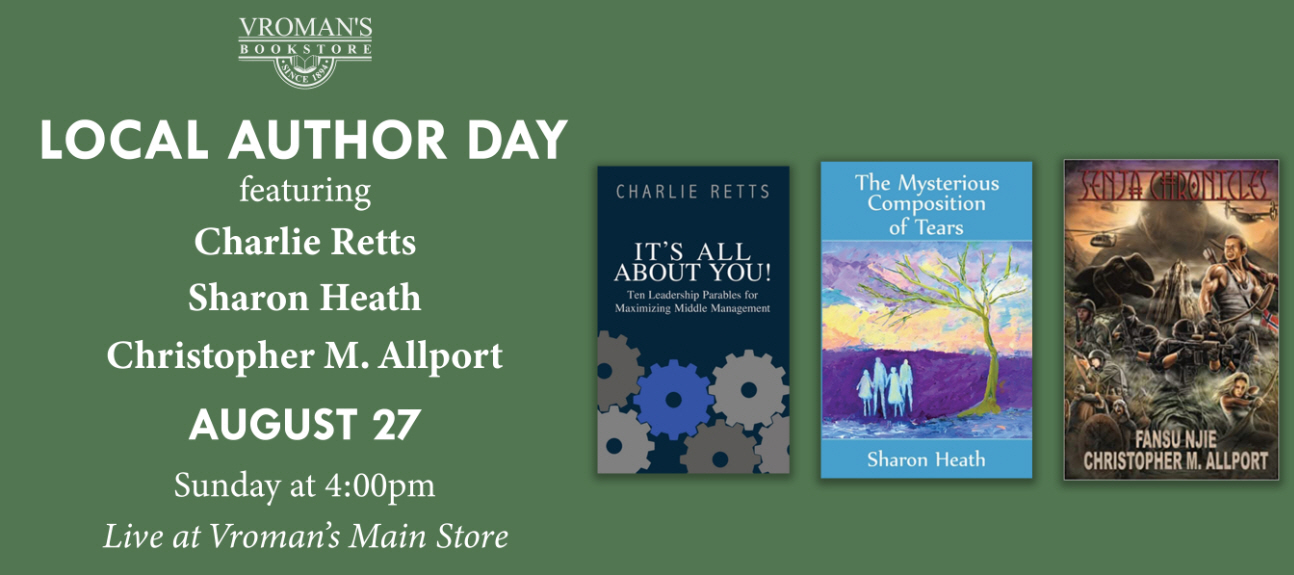
Sharon Heath (‘The Mysterious Composition of Tears’) at VROMAN’S in Pasadena August 27

Sharon Heath will be reading and signing The Mysterious Composition of Tears at Vroman’s Bookstore at 695 E Colorado Blvd, Pasadena, CA on August 27th.

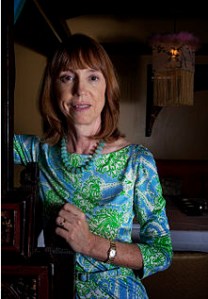
Since Sharon and I are both published by Thomas-Jacob Publishing in Florida, I can’t write a review and tell you how great I think this novel is. But I can provide a description of what it’s about:

Heath

“After a series of climate calamities, physicist Fleur Robins takes off for deep space in a desperate attempt to save the species from extinction. During her mysteriously prolonged absence, the internet has crashed, fire and flood have devastated whole countries, and End of Times cults have proliferated. There have been some intriguingly hopeful changes, too-nanoparticle holograms have replaced electronic devices, young people are witnessing exquisitely colorful “Shimmers,” and the most gifted of them converse regularly with animals and trees.

“While Fleur’s distraught husband Adam leads their Caltech physics team in frantic efforts to pinpoint her whereabouts, and Fleur herself plots her return home, their teenaged children Callay and Wolf fall in love with surprising partners. But when the charming son of an End of Times pastor crosses Wolf’s path during a particularly vibrant Shimmer, events are set in motion that will upend everyone’s life and transform planet Earth itself.

“This latest installment of Sharon Heath’s saga of the quirky Nobelist Fleur is simultaneously a vision of what awaits us in a post-Covid world, a wild romp through quantum reality, and a deep sea dive into the dark and light vagaries of the human heart.”

I’ve gotta ask, who doesn’t enjoy a wild romp through quantum reality? The Mysterious Composition of Tears follows The History of My Body, Tizita, and Return of the Butterfly. You can learn more about these books on Sharon’s website.

–Malcolm

Malcolm R. Campbell, who is a quantum mechanic at all Exxon stations, writes contemporary fantasy, magical realism, and paranormal stories and novels in his spare time. That is to say, reality as we know it.

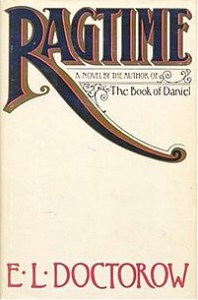
I hope people still read Doctorow’s novel ‘Ragtime’

“Edgar Lawrence Doctorow (January 6, 1931 – July 21, 2015) was an American novelist, editor, and professor, best known for his works of historical fiction.
“He wrote twelve novels, three volumes of short fiction and a stage drama, including the award-winning novels Ragtime (1975), Billy Bathgate (1989), and The March (2005). These, like many of his other works, placed fictional characters in recognizable historical contexts, with known historical figures, and often used different narrative styles. His stories were recognized for their originality and versatility, and Doctorow was praised for his audacity and imagination.”Wikipedia

Doctorow’s novels, especially Ragtime and The March rank high on my list of great storytelling and great writing. Those who aren’t among his fans dislike his mix of historical and fictional characters, calling it “audacity.” The movie version of Ragtime, Cagney’s last role after a twenty-year hiatus from films, is well worth seeing for the ambiance and the actors (many new) who had difficult parts to play. Among these was Howard E. Rollins, Jr. as Coalhouse Walker, Jr.  (“I read music so good, white folks think I’m fakin’ it.”)

Nesbit

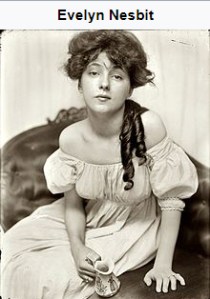
As historical fiction, Ragtime captures the flavor of the world of ragtime that basically ran from the 1890s to the 1910s along with now-iconic events such as the murder of architect Stanford White in 1906 by Harry Thaw for White’s rape of fashion model Evelyn Nesbit  (and ultimately Thaw’s wife). Thaw was acquitted for the reason of insanity.

The primary story is about the character Coalhouse Walker a professional musician who plays ragtime music on the piano. As Wikipedia puts it, “Things go well until he is humiliated by a racist fire crew, led by Will Conklin, who vandalize his Model T Ford. He begins a pursuit of redress by legal action but discovers he cannot hope to win because of the inherent prejudice of the system. Sarah is killed in an attempt to aid him, and Coalhouse uses the money he was saving for their wedding to pay for an extravagant funeral.”

The mix of historical that figures into the sad story of Coalhouse Walker is one of the novel’s triumphs, I think, and may obscure (for some readers) what is fact and what is fiction. Some critics hate this sort of mix while I applaud it.

One comes away from both the novel and the movie with an appreciation for the times and the times’ abuses and systemic injustice.

–Malcolm

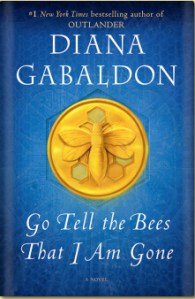
Okay, I’ve ordered the latest installment in Diana Gabaldon’s ‘Outlander Series’

Go Tell the Bees That I Am Gone was released in 2021 and now that the prices have come down, I can afford to order the book that (due to its length) costs more than my house when it’s new.

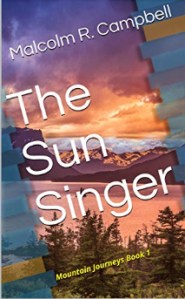
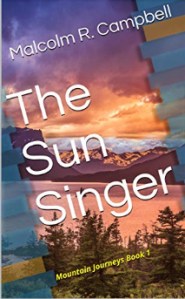
I “knew” Diana online on the old CompuServe Litforum when Outlander, the first book in the series, was released in 1991. She was very helpful to those of us who were early on in our writing careers. She wrote a blurb for my novel The Sun Singer, and my wife and I met her once when she was in Atlanta for a book signing. The series, of which “Bees” is the 9th book, has been airing on Starz. I watched a few of the early episodes but took issue with the production and didn’t stay with it. However, I did approve of the series’ use of Scots Gaelic.

On her website, Diana writes, “Where did the title for this book come from? Talking to your bees is a very old Celtic custom (known in other parts of Europe, too) that made it to the Appalachians. You always tell the bees when someone is born, dies, comes or goes—because if you don’t keep them informed, they’ll fly away.”

The first three books in the series came out fairly close together, so I hoped that would continue. Then the books got longer, took more time to write, and have been released slowly. So I debated whether I want to stay with the series inasmuch as each installment represents quite an investment in time. But, once I get into the story, I won’t leave it,

From the Publisher

War leaves nobody alone. Neither the past, the present, nor the future offers true safety, and the only refuge is what you can protect: your family, your friends, your home.


Jamie Fraser and Claire Randall were torn apart by the Jacobite Rising in 1746, and it took them twenty years of loss and heartbreak to find each other again. Now it’s 1779, and Claire and Jamie are finally reunited with their daughter, Brianna, her husband, Roger, and their children, and are rebuilding their home on Fraser’s Ridge—a fortress that may shelter them against the winds of war as well as weather.

But tensions in the Colonies are great: Battles rage from New York to Georgia and, even in the mountains of the backcountry, feelings run hot enough to boil Hell’s teakettle. Jamie knows that loyalties among his tenants are split and it won’t be long before the war is on his doorstep.

Brianna and Roger have their own worry: that the dangers that provoked their escape from the twentieth century might catch up to them. Sometimes they question whether risking the perils of the 1700s—among them disease, starvation, and an impending war—was indeed the safer choice for their family.

Not so far away, young William Ransom is coming to terms with the mysteries of his identity, his future, and the family he’s never known. His erstwhile father, Lord John Grey, has reconciliations to make and dangers to meet on his son’s behalf and on his own, and far to the north, Young Ian Murray fights his own battle between past and future, and the two women he’s loved.

Meanwhile, the Revolutionary War creeps ever closer to Fraser’s Ridge. Jamie sharpens his sword, while Claire whets her surgeon’s blade: It is a time for steel.

While I’m reading, I know I will feel it’s time well spent.

–Malcolm

“The Sun Singer is gloriously convoluted, with threads that turn on themselves and lyrical prose on which you can float down the mysterious, sun-shaded channels of this charmingly liquid story” – Diana Gabaldon

‘The Civilian Conservation Corps Cookbook,’ by Amy Bizzarri

One bonus of learning what the CCC fed its volunteers is, as Arcadia Publishing notes, this book released in May “features over 80 historic recipes adapted for today’s home kitchen.” The Texas Highways Magazine review notes that those recipes include pineapple fritters, snowflake potatoes, sloppy joes, and wacky cake. What’s not to like?

From the Publisher

“The Civilian Conservation Corps was a voluntary government work relief program that offered nearly 3 million unemployed, unmarried men the job of restoring and conserving America’s public lands, forests, and parks. The wages weren’t the only draw–the program also threw in three square meals a day served in the camp mess hall. The Civilian Conservation Corps Cookbook features the recipes that sustained not only the CCC during the Great Depression but also our grandparents and great-grandparents. Budget-friendly, with ingredients that can easily be found–if not in your very own pantry then at your local grocer–these recipes reflect the ‘make do’ attitude of Depression-era home cooks.”

About the Author

“Amy Bizzarri has written four books focused on Chicago history, but her experiences don’t stop there. She’s a teacher, tour guide, and certified wine expert. When she’s not exploring her beloved Chicago by bicycle, you’ll find her hiking the trails of a state or national park. Oh, yes, she’s a mermaid, too, having trained with the celebrated sirens at Florida’s Weeki Wachee Springs.”


I visited Weeki Wachee as a kid. I have a feeling that was before her time. <g>

–Malcolm

Malcolm R. Campbell is the author of contemporary fantasy, magical realism, and paranormal books and short stories.

Set in Glacier National Park, the novel follows the “hero’s journey” motif as outlined by Joseph Campbell in “The Hero With the Thousand Faces.”

What Makes a Novel Stand Out on Submission? Susan DeFreitas on Jane Friedman’s Blog

It has to have a sense of meaning.

“Meaning is subjective, of course. But even so, there are story elements that intersect directly with issues that we as human beings tend to find important, moving, and compelling: Moral questions, and the way they stir strong emotion. Characterization, and what it reveals about human nature. The way the story reflects the truths of our own reality—and the sense that this story actually has something to say.”

Source: What Makes a Novel Stand Out on Submission? | Jane Friedman

If a story doesn’t have more going for it than an interesting tale to tell, action-packed thought it may be, it falls flat when all is said and done. DeFreitas focuses on four major areas:

Addresses moral issues
Reflects on the truth of reality
Has complex characters
Has something to say

There may be other considerations, but an author’s consideration and implementation of each of these brings his/her story into a higher, and more interesting realm of writing than the garden-variety novel.

In terms of something so say, for example, DeFreitas writes, “What I mean is that the story is conscious of the way it uses themes to make a complex point, whether that has something to do with the importance of gritty realism over pie-in-the-sky idealism (Elizabeth Gilbert’s The Signature of All Things), the impossibility of living as a queer woman under conservative gender norms (Megan Giddings’s The Women Could Fly), or the ways that secrets corrupt us from within (Donna Tartt’s The Goldfinch).”

Needless to say (almost) is that something to say must be a solid part of the story rather than pasted into the work as an afterthought. What the story “says” has to be inseparable from the plot, theme, and characters like the air they breathe.

–Malcolm

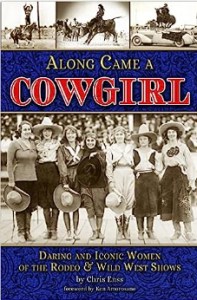
‘Along Came a Cowgirl’ by Chris Enss

Prolific Western author Chris Enss released this book last September via Montana’s Farcountry Press. She has been writing about women of the old west for over 20 years. She’s the author of forty published books and the recipient of multiple awards for her work.

From the Publisher

Enss

In Along Came a Cowgirl: Daring and Iconic Women of the Rodeos and Wild West Shows, New York Times best-selling author Chris Enss introduces readers to the world of the early rodeo – and to the stories of the women whose names resounded in rodeo arenas across the nation in the early twentieth century. These cowgirls dared to break society’s traditional roles in the male-dominated rodeo and trick-riding world. Some of the iconic cowgirls included in the book are Prairie Rose Henderson, Fox Hastings, Lucille Mulhall, and Ruth Roach. With the desire to entertain crowds and armed with grit and determination, these talented bronc riders, trick ropers, and steer wrestlers were able to saddle up and follow their dreams. Along Came a Cowgirl includes a foreword by Cowgirl magazine editor and publisher Ken Amorosano.”

Farcountry Press

“For more than 40 years, Farcountry Press has been a leader in regional publishing, specializing in stunning photography books, fun educational books for children, adventure guidebooks, and thought-provoking history titles. Farcountry’s award-winning books celebrate our nation’s cities, states, and national parks, and explore our shared heritage.

“Farcountry publishes more than 50 books annually; the backlist has grown to more than 300 titles.”

I follow Farcountry Press because I like Montana and other western states’ history. I’m never disappointed.

–Malcolm

Malcolm R. Campbell’s two contemporary fantasies, “The Sun Singer” and “Sarabande” are set in Montana where he is a long-time member of the Montana Historical Society.

We lost a literary giant

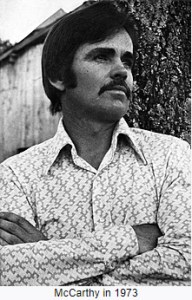
Since reading is personal and visceral and very subjective, I cannot say what drew me to Cormac McCarthy’s novels year after year.  I liked his plots, his mix of minimalism and lyrical passages, the closeness of the land in his work, his ear for authentic dialogue, and a writing approach that dragged readers kicking and screaming into some of the most beautiful and the most violent tales they ever experienced.

As quoted in Wikipedia, In 2003, literary critic Harold Bloom named McCarthy as one of the four major living American novelists, alongside Don DeLilloThomas Pynchon, and Philip Roth. His 1994 book The Western Canon had listed Child of God, Suttree, and Blood Meridian among the works of contemporary literature he predicted would endure and become ‘‘canonical’“. Bloom reserved his highest praise for Blood Meridian, which he called ‘the greatest single book since Faulkner’s As I Lay Dying’“, and though he held less esteem for McCarthy’s other novels he said that ‘to have written even one book so authentically strong and allusive, and capable of the perpetual reverberation that Blood Meridian possesses more than justifies him. … He has attained genius with that book.'”

Oddly enough, his Pulitzer Prize Winning novel The Road is probably my least favorite, though I like journey stories in general. In many ways, I think it got the Pulitzer for the same reason actors sometimes win Academy Awards: the powers that be realize the recipient should have gotten the award for an early book/movie and hand out the honor as a last-ditch chance to even things up. I would have picked Blood Meridian over The Road, but I wasn’t consulted. <g>

There are quite a few McCarthy retrospectives and homages online today. It’s nice to see them because there are times when I think he’s “underread” by people who prefer lesser stuff and don’t think of him when new titles are announced.

I liked the subhead in the story in The Atlantic: “The worlds depicted in his novels are not built for mortal humans like you and me.”  CNN said, “Despite accolades, McCarthy remained relatively obscure for much of his career; as recently as 1992, 27 years after his first book was published, the New York Times Book Review said he “may be the best unknown novelist in America.”

Typical of his work are these quotes:

“You never know what worse luck your bad luck has saved you from.”

“War was always here. Before man was, war waited for him. The ultimate trade awaiting its ultimate practitioner.”

“Your heart’s desire is to be told some mystery. The mystery is that there is no mystery.”

“A man’s at odds to know his mind cause his mind is aught he has to know it with. He can know his heart, but he dont want to. Rightly so. Best not to look in there. It aint the heart of a creature that is bound in the way that God has set for it. You can find meanness in the least of creatures, but when God made man the devil was at his elbow. A creature that can do anything. Make a machine. And a machine to make the machine. And evil that can run itself a thousand years, no need to tend it.”

“That night he dreamt of horses in a field on a high plain where the spring rains had brought up the grass and the wildflowers out of the ground and the flowers ran all blue and yellow far as the eye could see and in the dream he was among the horses running and in the dream he himself could run with the horses and they coursed the young mares and fillies over the plain where their rich bay and their rich chestnut colors shone in the sun and the young colts ran with their dams and trampled down the flowers in a haze of pollen that hung in the sun like powdered gold and they ran he and the horses out along the high mesas where the ground resounded under their running hooves and they flowed and changed and ran and their manes and tails blew off of them like spume and there was nothing else at all in that high world and they moved all of them in a resonance that was like a music among them and they were none of them afraid neither horse nor colt nor mare and they ran in that resonance which is the world itself and which cannot be spoken but only praised.”

McCarthy always gave us a story and left us with divine PTSD.

–Malcolm